🎬 Video Lesson Available
Watch the full 7-slide video lesson for Non-chordate Phyla with AI teacher narration and visual explanations.
Non-chordate Phyla — Master Non-chordate phyla from Porifera to Arthropoda. Detailed features, NEET examples, and classification for Class 11 Biology exams.
01Defining Non-chordates: The Foundation of Animal Diversity
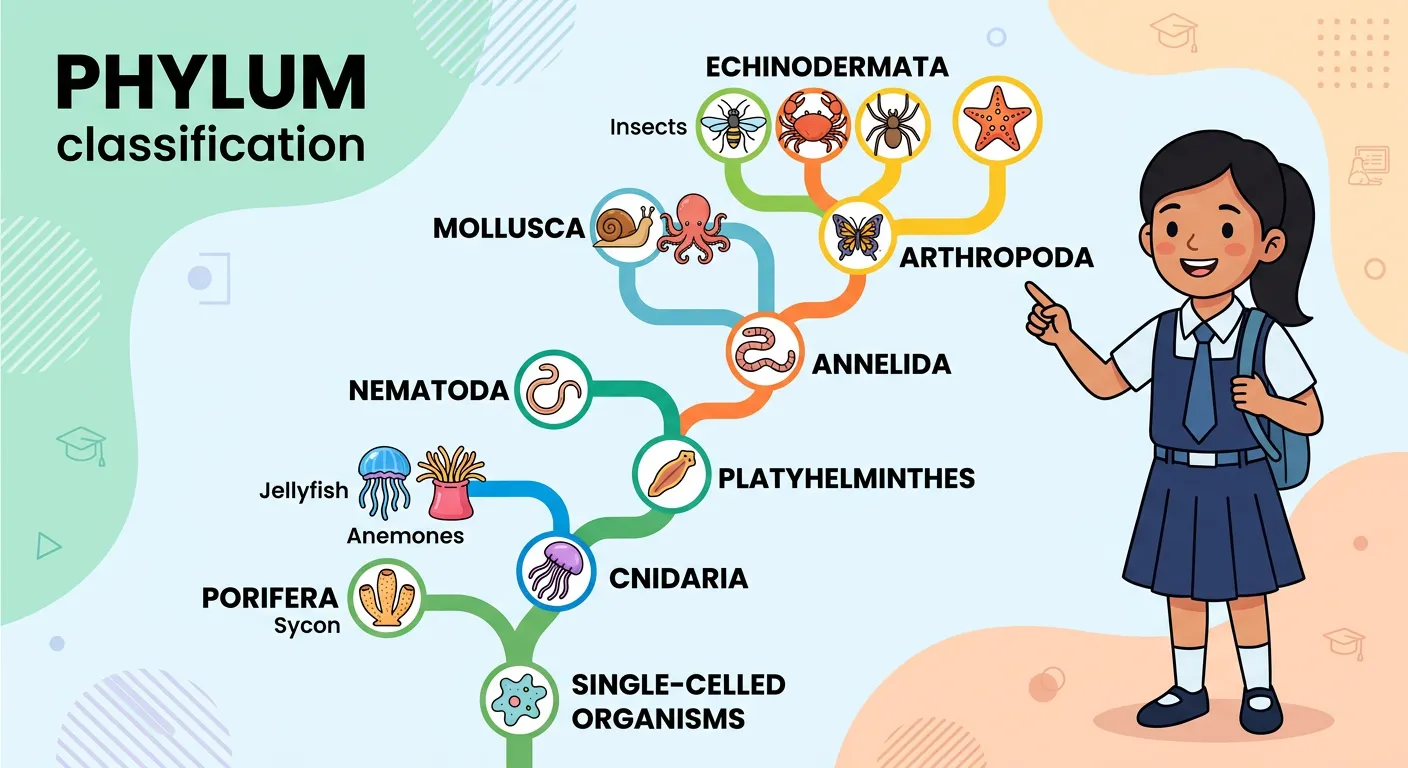
“Welcome, NEET warriors! Today, we’re simplifying the animal kingdom. Non-chordates are animals without a backbone. Think of them as the diverse neighbors in our biological apartment building. We'll explore their features, from simple sponges to complex insects, to ace those tricky exam questions!”
To master the Animal Kingdom, you must first understand the fundamental divide between those with a notochord and those without. Non-chordate phyla represent a massive, diverse group of animals that lack the rod-like notochord at any stage of their life cycle. For a NEET aspirant, this section is high-yield because it introduces the 'Basis of Classification'—the set of rules that helps us group everything from a microscopic sponge to a giant squid. When we talk about non-chordates, we are looking at the vast majority of the animal kingdom, spanning from the simplest Porifera to the highly complex Hemichordata.
The evolutionary journey of non-chordates is a story of increasing complexity. We begin with the cellular level of organization, where individual cells perform specific tasks without forming true tissues. As we move up the taxonomic ladder, we see the development of tissues, then organs, and finally full-fledged organ systems. This progression is accompanied by changes in symmetry—transitioning from asymmetrical sponges to radially symmetrical jellyfish, and eventually to the bilaterally symmetrical organisms that dominate the planet. Understanding these patterns is crucial because NTA frequently asks questions that require you to identify an organism based on a combination of these fundamental features.
Beyond just body plans, we look at the 'germ layers.' Are they diploblastic (two layers) or triploblastic (three layers)? This isn't just a definition; it determines how complex the animal's internal organs can be. Furthermore, the presence or absence of a coelom (body cavity) serves as a major diagnostic feature. As you study each phylum, always keep the classification flowchart in your mind to avoid confusion during the exam. Remember that non-chordates lack a dorsal nerve cord; instead, their nerve cord, if present, is usually ventral, solid, and double.
Quick Revision Points
- Absence of Notochord: The defining characteristic across all non-chordate phyla.
- Level of Organization: Ranges from cellular (Porifera) to organ-system (Arthropoda and beyond).
- Symmetry Spectrum: Asymmetrical (sponges), Radial (Cnidaria), and Bilateral (Platyhelminthes onwards).
- Germ Layers: Diploblastic organisms (ectoderm and endoderm) vs. Triploblastic (addition of mesoderm).
- Coelom Status: Acoelomates, Pseudocoelomates, and True Coelomates are critical distinctions for identification.
NEET Exam Angle
- Match the Following: NTA loves linking specific phyla to their level of organization or symmetry.
- Comparative Analysis: Expect questions comparing the coelom type between different phyla, like Aschelminthes vs. Annelida.
| Phylum | Level of Organization | Symmetry | Coelom Type |
|---|---|---|---|
| Porifera | Cellular | Mostly Asymmetrical | Acoelomate |
| Cnidaria | Tissue | Radial | Acoelomate |
| Annelida | Organ-system | Bilateral | Coelomate |
02Phylum Porifera: Primitive Multicellularity and the Water Canal System
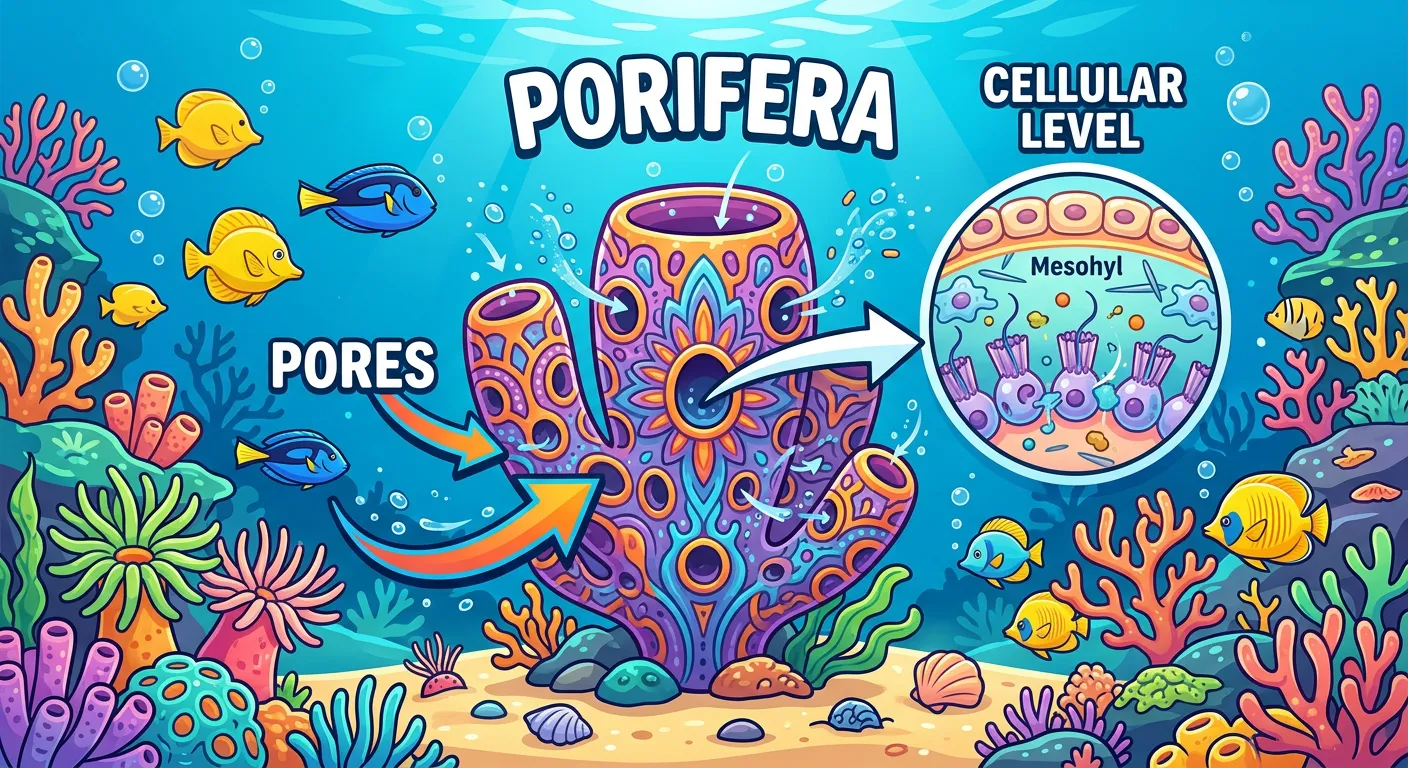
“First up, Phylum Porifera. These are the sponges! Think of them as living water filters. They have a cellular level of organization and thousands of tiny pores called ostia for water flow. Examples include Sycon and Spongilla. Remember, they are the simplest multicellular organisms!”
Phylum Porifera, commonly known as sponges, represents the most primitive multicellular animals. While they are multicellular, they lack true tissues; instead, they exhibit a cellular level of organization. This means that while different cells have specific jobs (division of labor), they do not work together as a cohesive tissue unit. Most sponges are marine and exhibit an asymmetrical body plan, though a few show radial symmetry. Their simplicity is their strength, allowing them to thrive as stationary (sessile) organisms on the ocean floor.
The most distinctive feature of Porifera is their Water Transport or Canal System. Imagine the sponge as a living pump. Water enters through thousands of minute pores called 'Ostia' into a central cavity known as the 'Spongocoel,' and eventually exits through a large opening called the 'Osculum.' This flow of water is not just for show; it is the animal's lifeline, facilitating food gathering, respiratory exchange, and the removal of metabolic waste. This system is a classic NEET topic, often tested for its directional flow and functional significance.
Inside the sponges, you will find specialized cells called Choanocytes, or 'collar cells.' These are flagellated cells that line the spongocoel and the canals. Their primary role is to maintain water flow and capture food particles for intracellular digestion. Sponges also possess a skeletal framework made of spicules (calcareous or siliceous) or spongin fibers, which provides structural support. In terms of reproduction, they are hermaphrodites, producing both eggs and sperms. They can reproduce asexually through fragmentation or sexually via gamete formation. Development is indirect, meaning they have a larval stage which is morphologically distinct from the adult.
Quick Revision Points
- Cellular Level: The simplest form of multicellularity where cells perform specialized functions independently.
- Water Canal System: Ostia (entry) → Spongocoel (cavity) → Osculum (exit).
- Choanocytes: Unique flagellated cells essential for digestion and water circulation.
- Skeleton: Composed of calcareous or siliceous spicules or proteinaceous spongin fibers.
- Digestion: Strictly intracellular, occurring within the cells rather than in a stomach-like cavity.
NEET Exam Angle
- Identification Questions: Be prepared to identify 'Spongilla' as the unique freshwater sponge and 'Scypha' (Sycon) as a typical marine example.
- Unique Features: Choanocytes are the 'trademark' cells of this phylum; if a question mentions collar cells, the answer is always Porifera.
03Phylum Cnidaria: Coelenterates and the Evolution of Tissues
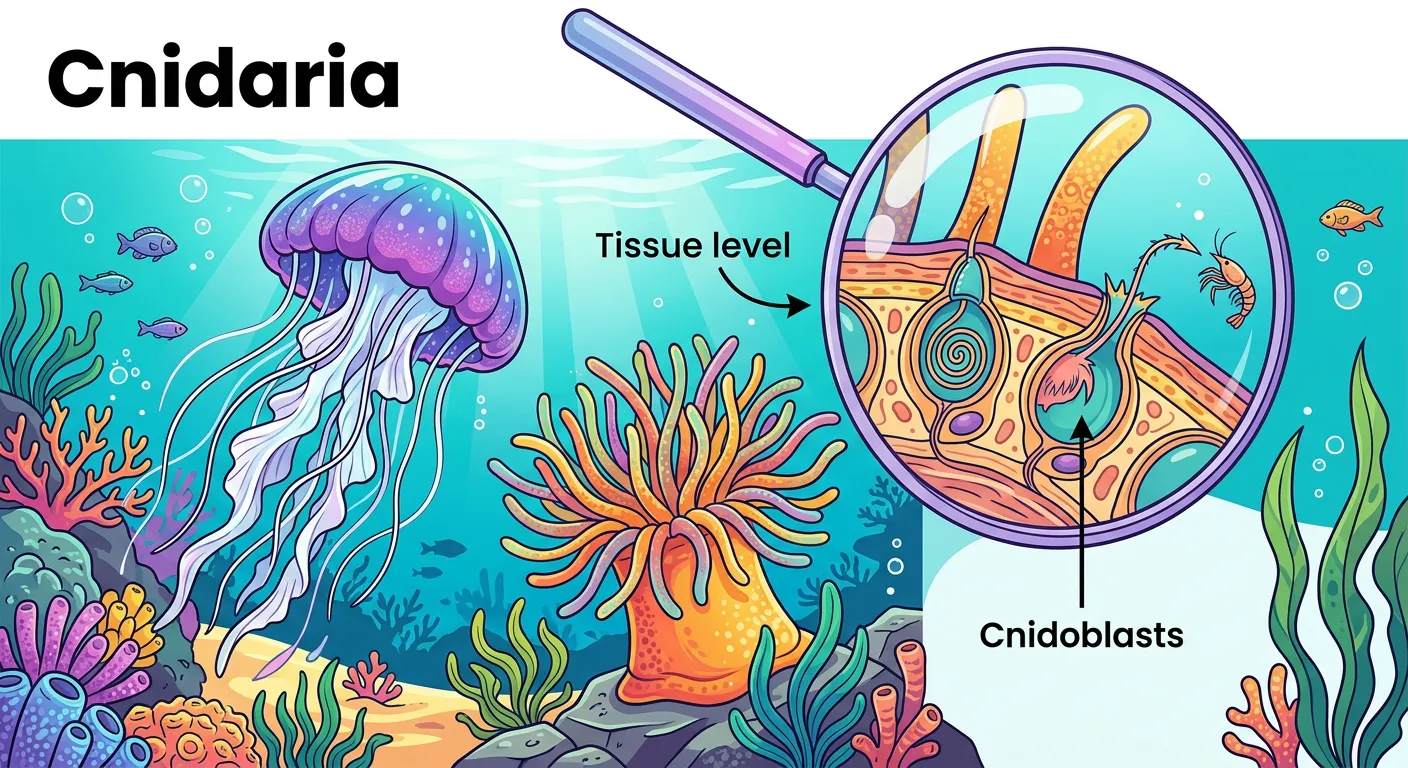
“Next, Phylum Cnidaria! Meet the masters of defense. They exhibit tissue-level organization and have special stinging cells called cnidoblasts. Just like a cactus warns you, these cells protect them! Common examples are Physalia, the Portuguese man-of-war, and Adamsia, the sea anemone.”
Moving up the evolutionary ladder, we encounter Phylum Cnidaria, formerly known as Coelenterata. These animals show a significant advancement: tissue-level organization. They are diploblastic, meaning their bodies are derived from two embryonic layers—the ectoderm and the endoderm—with an undifferentiated layer called mesoglea in between. Most cnidarians are marine and exhibit radial symmetry, which is perfect for their often-sedentary or floating lifestyles, allowing them to sense their environment from all directions equally.
The name 'Cnidaria' is derived from 'Cnidoblasts' (or cnidocytes), which are specialized stinging cells located primarily on the tentacles and the body. These cells contain stinging capsules called nematocysts. Cnidoblasts are the ultimate multi-purpose tools: they are used for anchorage, defense against predators, and capturing prey. This phylum also features a central gastro-vascular cavity with a single opening, the hypostome, which serves as both the mouth and the anus (blind sac body plan). Digestion is both extracellular (in the cavity) and intracellular (inside cells).
A fascinating aspect of Cnidarians is their polymorphism, appearing in two basic body forms: Polyp and Medusa. The Polyp is a sessile, cylindrical form (like Hydra or Adamsia), while the Medusa is umbrella-shaped and free-swimming (like Aurelia or jellyfish). Some cnidarians, like Obelia, exhibit an alternation of generation known as Metagenesis, where polyps produce medusae asexually and medusae produce polyps sexually. Additionally, some cnidarians like corals have a skeleton composed of calcium carbonate.
Quick Revision Points
- Cnidoblasts: Specialized cells used for defense and prey capture; containing nematocysts.
- Gastro-vascular Cavity: A single-opening digestive system (Hypostome).
- Diploblastic & Radial: Key body plan features to remember for classification questions.
- Polyp vs. Medusa: Sessile/cylindrical (Polyp) vs. Free-swimming/umbrella-like (Medusa).
- Metagenesis: The specific lifecycle pattern seen in organisms like Obelia.
NEET Exam Angle
- Example Association: Know 'Physalia' as the Portuguese man-of-war and 'Adamsia' as the sea anemone.
- Terminology: Focus on 'Hypostome' and 'Metagenesis' as these terms are frequently used in NCERT-based MCQs.
| Feature | Polyp Form | Medusa Form |
|---|---|---|
| Shape | Cylindrical | Umbrella-like |
| Mobility | Sessile (Fixed) | Free-swimming |
| Example | Hydra, Adamsia | Aurelia (Jellyfish) |
04Phylum Platyhelminthes: The Specialized Anatomy of Flatworms
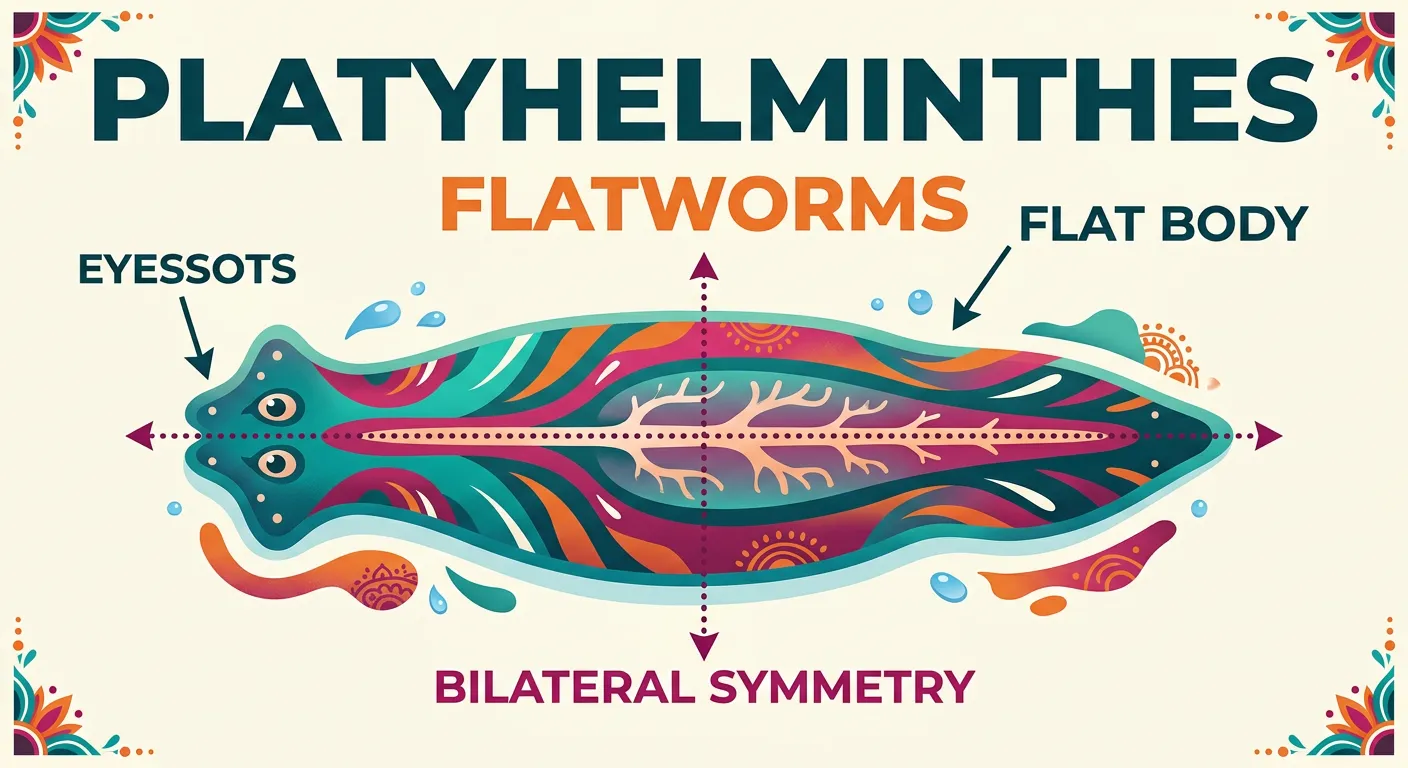
“Phylum Platyhelminthes, the flatworms! Their bodies are dorso-ventrally flattened, just like a ribbon. They show bilateral symmetry and have organs. Some are free-living, but many are nasty parasites! Classic NEET exam examples are Taenia, the tapeworm, and Fasciola, the liver fluke. Stay alert!”
Phylum Platyhelminthes includes organisms commonly known as flatworms. The most defining physical trait is their dorso-ventrally flattened body, which makes them look ribbon-like or leaf-like. This flattening is a brilliant evolutionary adaptation for their often parasitic lifestyle, allowing for a high surface-area-to-volume ratio which aids in nutrient absorption directly through their body surface via diffusion. They are the first group of animals in our study to show bilateral symmetry and a triploblastic body plan, meaning they possess three germ layers: ectoderm, mesoderm, and endoderm.
Unlike higher non-chordates, flatworms are acoelomates. This means there is no body cavity (coelom) between the gut and the outer body wall; the space is instead filled with a solid tissue called parenchyma derived from the mesoderm. Most members of this phylum are endoparasites found in animals, including humans. Parasitic forms possess specialized structures like hooks and suckers for firm attachment to the host's internal tissues. Some, like the tapeworm (Taenia), have lost their digestive system entirely and absorb pre-digested nutrients directly from the host's gut.
A key physiological highlight for NEET is the presence of 'Flame Cells' (also called protonephridia). These specialized, flickering cells are responsible for osmoregulation and excretion. Without them, the flatworm would be unable to maintain its internal fluid balance against the osmotic pressure of its environment. In terms of reproduction, most are hermaphrodites (bisexual) with internal fertilization. Some members, like Planaria, are legendary in biology for their incredible regeneration capacity—a single small piece of the body can regenerate into a complete, whole organism. This phylum generally exhibits an organ level of organization, making them more complex than cnidarians.
Quick Revision Points
- Dorso-ventrally Flattened: The unique body shape that gives them the name 'flatworms.'
- Triploblastic Acoelomates: They have three germ layers but no body cavity.
- Flame Cells: Specialized excretory structures for osmoregulation and nitrogenous waste removal.
- Parasitic Adaptations: Presence of hooks, suckers, and direct nutrient absorption.
- Regeneration: Extremely high capacity seen in free-living forms like Planaria.
NEET Exam Angle
- Excretion focus: If a question asks about 'Flame Cells,' Platyhelminthes is the correct answer.
- Pathogen identification: Remember 'Taenia' is the tapeworm and 'Fasciola' is the liver fluke.
| Character | Platyhelminthes (Flatworms) |
|---|---|
| Body Cavity | Acoelomate (Absent) |
| Symmetry | Bilateral |
| Excretory Organ | Flame Cells (Protonephridia) |
| Level | Organ level |
05Phylum Aschelminthes: Roundworms and the Pseudocoelomate Plan
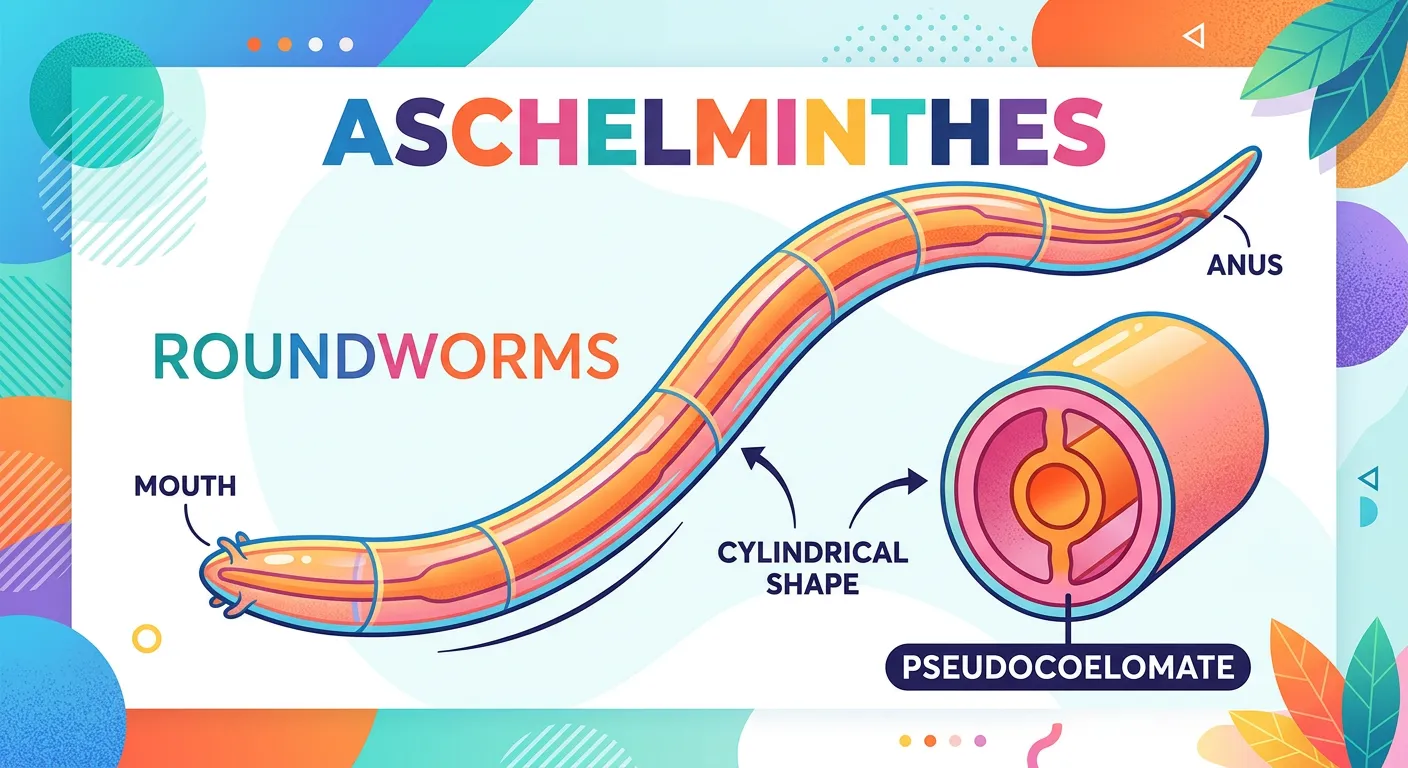
“Phylum Aschelminthes, the roundworms! Unlike the flat ones, these are cylindrical in cross-section. They are special because they are 'pseudocoelomates,' meaning they have a fake body cavity. Famous troublemakers include Ascaris, the roundworm, and Wuchereria, which causes elephantiasis. Study them well!”
Phylum Aschelminthes, or roundworms, represent a significant evolutionary step toward a complex internal body structure. Unlike the flatworms, these animals are circular in cross-section, hence the name 'roundworms.' They can be free-living (found in aquatic or terrestrial habitats) or parasitic in both plants and animals. They exhibit an organ-system level of organization and bilateral symmetry, making them physiologically much more advanced than the previous phyla. Their body surface is covered by a tough, resistant cuticle that protects them from the digestive enzymes of their hosts.
The 'star' feature of Aschelminthes for competitive exams like NEET is the Pseudocoelom. In these animals, the body cavity is present but is not completely lined by mesoderm; instead, the mesoderm is present as scattered pouches between the ectoderm and endoderm. This 'false coelom' is a diagnostic character you must memorize, as no other major phylum shares this specific trait. Another major advancement is the development of a complete alimentary canal with a well-developed muscular pharynx. This allows for one-way traffic of food—entry at the mouth and exit at the anus—which is far more efficient for continuous nutrient processing.
Aschelminthes also exhibit marked sexual dimorphism, meaning males and females are distinct and easily recognizable. In many species, such as Ascaris (the common roundworm), the females are significantly longer and thicker than the males. Males often have a curved posterior end and possess cloacal apertures. Fertilization is strictly internal, and development can be direct (the young resemble the adult) or indirect (involving one or more larval stages). Many roundworms are notorious human pathogens, causing significant diseases that are often covered in the 'Human Health' unit of your syllabus.
Quick Revision Points
- Pseudocoelomate: The only phylum characterized by mesoderm in scattered pouches.
- Complete Alimentary Canal: Features both a mouth and an anus, with a muscular pharynx.
- Sexual Dimorphism: Clear physical differences between males (shorter/curved) and females (longer).
- Bilateral Symmetry: Triploblastic organisms with an organ-system level of organization.
- Pathogenic Examples: Ascaris (Roundworm), Wuchereria (Filarial worm), and Ancylostoma (Hookworm).
NEET Exam Angle
- Cavity Questions: Aschelminthes is the only phylum categorized as pseudocoelomate; this is a very common 'Match the following' option.
- Human Disease Link: Study 'Wuchereria' carefully as it links to Human Health and Disease (causing Elephantiasis/Filariasis).
06Phylum Annelida: Metamerism and True Coelomate Organization
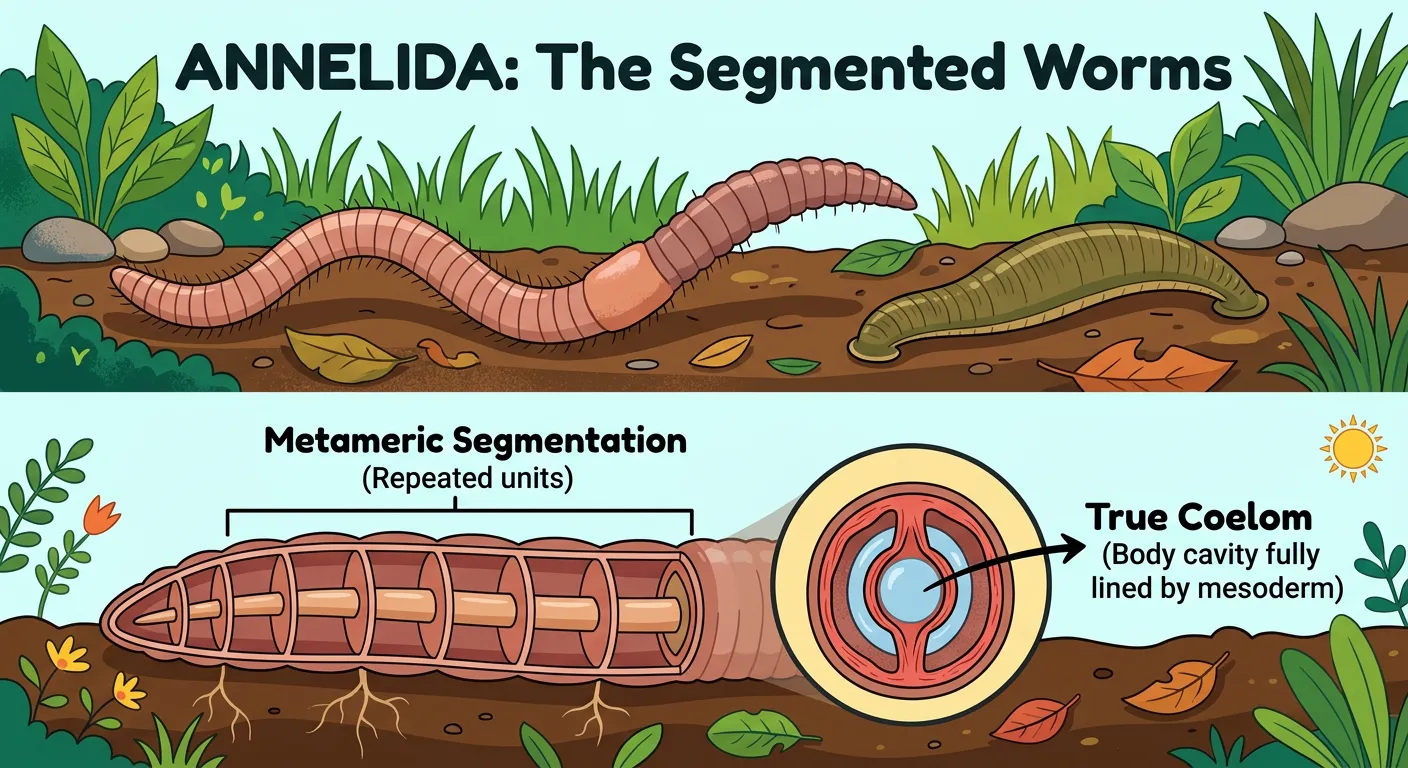
“Phylum Annelida are the segmented worms. See those rings on an earthworm? That’s 'metameric segmentation.' They have a true coelom and a closed circulatory system. Earthworms are our farmers' best friends, and leeches are classic bloodsuckers. Examples: Pheretima and Hirudinaria.”
Phylum Annelida introduces us to the world of segmented worms. These animals can be found in diverse environments: aquatic (both marine and freshwater) or terrestrial, and they can be free-living or occasionally parasitic. The hallmark of this phylum is 'Metamerism,' or true segmentation. If you look closely at an earthworm, you will see the body divided into distinct segments or metameres. This internal and external division is not just superficial; it allows for better coordination and specialized movement using the integrated action of longitudinal and circular muscles.
Annelids are the first triploblastic, bilaterally symmetrical, and true coelomate animals in the animal kingdom. This means they possess a body cavity that is completely lined by mesoderm on both sides, providing the necessary space and protection for complex organ systems to develop. Interestingly, they also possess a closed circulatory system (with the notable exception of some leeches), which is a massive evolutionary jump. In a closed system, blood is confined to vessels, allowing for higher blood pressure and more efficient oxygen delivery. Their blood contains respiratory pigments like hemoglobin, which is typically dissolved in the plasma.
For locomotion, aquatic annelids like Nereis possess lateral appendages called 'Parapodia,' which are highly effective for swimming. Terrestrial forms like earthworms rely on Setae and muscular contractions. For excretion and osmoregulation, annelids utilize specialized tubular structures called Nephridia. Their nervous system is well-developed, consisting of paired ganglia connected by lateral nerves to a double ventral nerve cord. Common examples include Pheretima (the earthworm), which is vital for soil aeration and nutrient cycling, and Hirudinaria (the blood-sucking leech), which was historically used in medicinal bloodletting.
Quick Revision Points
- Metamerism: True body segmentation both internally and externally into metameres.
- Coelomate: The first group in our study with a true body cavity lined by mesoderm.
- Closed Circulatory System: Blood flows within vessels, an advanced feature for worm-like organisms.
- Nephridia: Specific tubular organs for excretion and maintaining fluid-electrolyte balance.
- Locomotory Organs: Parapodia (in Nereis) and setae/muscles (in Earthworms).
NEET Exam Angle
- Structure-Function: Questions often ask to match 'Parapodia' with swimming in Nereis.
- Organ System Identification: Be sure to distinguish 'Nephridia' (Annelida) from 'Flame Cells' (Platyhelminthes) and 'Malpighian Tubules' (Arthropoda).
07Phylum Arthropoda: Evolutionary Success of Jointed Appendages
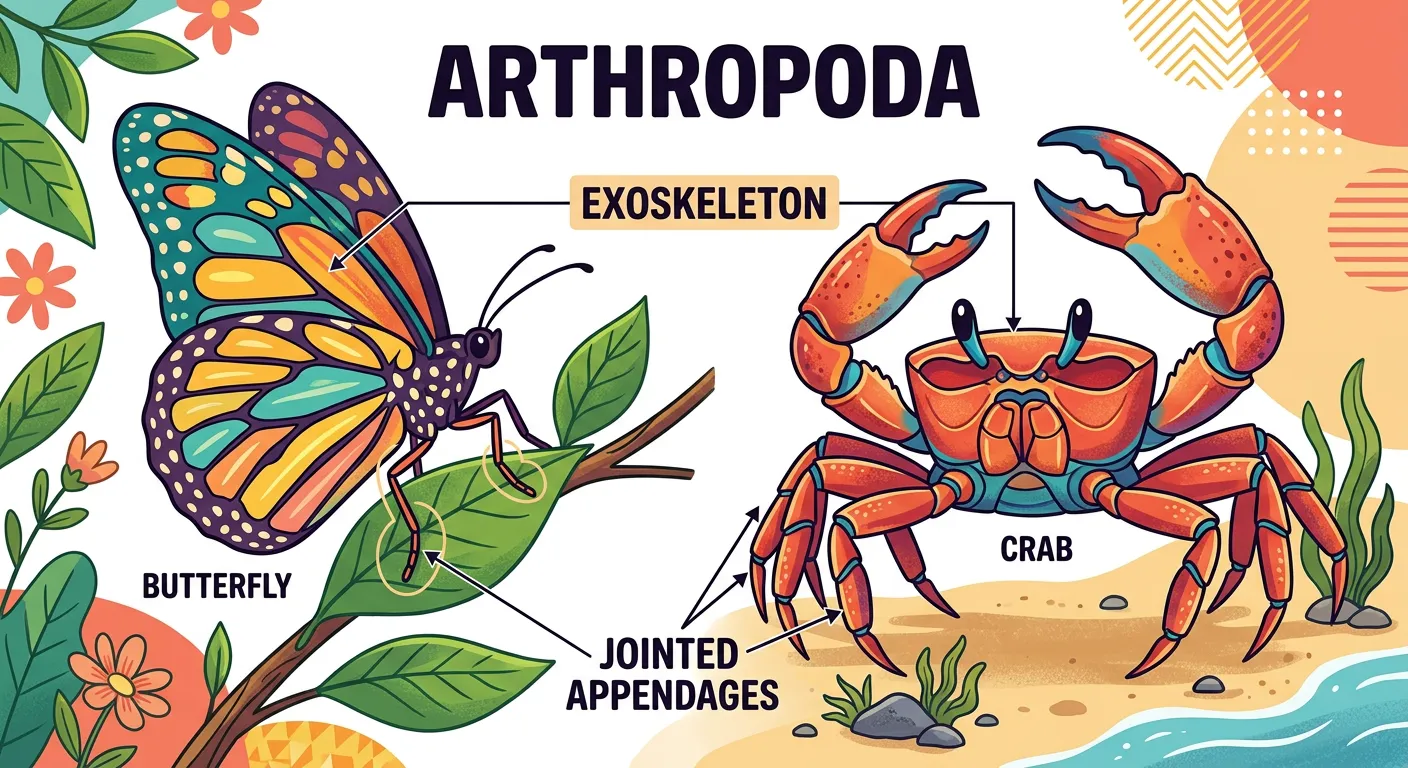
“Finally, the giants: Phylum Arthropoda! These are the kings of diversity, possessing jointed appendages and a tough chitinous exoskeleton. They are everywhere, from your garden to your kitchen! Examples include the industrious Apis (honeybee) and the mighty Bombyx, the silkworm. You've mastered them all!”
We conclude our exploration with the biological heavyweights: Phylum Arthropoda. This is the largest phylum of the Animalia kingdom, encompassing over two-thirds of all named species on Earth. Their unprecedented success is attributed to several key evolutionary innovations, most notably their jointed appendages (Arthro = jointed, poda = foot). These limbs allow for incredible mobility and are specialized for a wide range of functions, including walking, swimming, flying, feeding, and sensory perception.
Another critical feature is the Chitinous Exoskeleton. This tough, waterproof outer shell provides protection and prevents desiccation (water loss), allowing arthropods to conquer almost every habitat on Earth, from deep oceans to dry deserts. However, this shell is rigid and does not grow with the animal, so they must periodically shed it and grow a larger one—a process called 'ecdysis' or molting. The body is typically divided into three regions: the head, thorax, and abdomen. They exhibit an open circulatory system, where the heart pumps blood (hemolymph) into large body spaces called sinuses, which collectively form the hemocoel.
Arthropods have highly specialized respiratory organs depending on their environment: gills for aquatic forms like prawns, book gills (found in Limulus or King Crabs), book lungs (in Scorpions and Spiders), or a complex tracheal system (in Insects). Excretion is mostly handled by Malpighian tubules in terrestrial forms and green glands in aquatic forms like prawns. Sensory organs are highly developed, including antennae, simple and compound eyes, and statocysts for balance. From honeybees (Apis) to silkworms (Bombyx), arthropods have massive economic and ecological importance.
Quick Revision Points
- Largest Phylum: Comprises more than 80% of all known animal species.
- Chitinous Exoskeleton: Provides protection and requires molting (ecdysis) for growth.
- Jointed Appendages: The namesake feature allowing for versatile and efficient movement.
- Open Circulatory System: Blood directly bathes the internal organs in the hemocoel.
- Malpighian Tubules: The primary excretory organs in most terrestrial arthropods.
NEET Exam Angle
- Respiratory Organs: Frequently tested; you must know which animal uses book lungs vs. book gills.
- Economic Importance: NTA often asks to identify 'Economically important insects' (Apis, Bombyx, Laccifer) vs vectors.
| Organism | Respiratory Organ | Excretory Organ |
|---|---|---|
| Prawn | Gills | Green Glands (Antennal Glands) |
| Insect | Tracheal System | Malpighian Tubules |
| Scorpion | Book Lungs | Malpighian Tubules |
| King Crab | Book Gills | Coxal Glands |
Recommended Reading
Explore related Biology topics to build deeper chapter connections for NEET.
- What is Living · Topic 1.1
- Kingdom Fungi · Topic 1.10
- Lichens · Topic 1.11
- Viruses and Viroids · Topic 1.12
- Algae · Topic 1.13
- Bryophytes · Topic 1.14
- Jump to Key Terms (Quick Revision)
- Review Common NEET Mistakes
- Solve NEET Practice MCQs
- Read Topic FAQs
- Practice NEET MCQs
- Solve NEET PYQs
📚 Key Terms
⚠️ Common NEET Mistakes
- 1Confusing the water canal system of Porifera with the water vascular system of Echinodermata.
- 2Thinking that 'Pseudocoelomate' applies to all worms; it specifically only applies to Aschelminthes (roundworms).
- 3Assuming all Cnidarians are free-swimming; remember that Polyps like Hydra and Adamsia are sessile.
- 4Misidentifying the excretory organs: Flame cells (Platyhelminthes), Nephridia (Annelida), and Malpighian tubules (Arthropoda).
- 5Believing that sponges have tissues because they are multicellular; they only have a cellular level of organization.
📝 NEET PYQ & Practice Questions
Test your understanding of Non-chordate Phyla with NCERT-aligned sample questions.
Which of the following statements is correct regarding "Non-chordate" in the context of NEET Biology?
In NEET question papers, questions related to "Non-chordate Phyla" predominantly test:
Consider Cnidoblasts associated with Non-chordate Phyla. What is the primary characteristic expected in NEET MCQs?
Master Non-chordate Phyla with NeetQ AI Tutor
Practice 50+ topic-wise MCQs, previous 15 years NEET questions, and get step-by-step doubt resolution instantly.
❓ Frequently Asked Questions
What is the primary difference between a coelomate and a pseudocoelomate?
In coelomates (like Annelida), the body cavity is completely lined by mesoderm. In pseudocoelomates (Aschelminthes), the mesoderm is present only as scattered pouches between the ectoderm and endoderm.
Why are Cnidarians also known as Coelenterates?
They were historically called Coelenterates because they possess a single large central body cavity called the coelenteron (gastro-vascular cavity) which functions as both a digestive and circulatory system.
Which phylum is characterized by the presence of flame cells for excretion?
Phylum Platyhelminthes (Flatworms) uses specialized flame cells, also known as protonephridia, for osmoregulation and excretion.
What is the significance of the water canal system in Phylum Porifera?
The water canal system is vital for sponges as it brings in food (nutrition), allows for gas exchange (respiration), and carries away waste (excretion) through the flow of water via ostia, spongocoel, and osculum.
How does metameric segmentation differ from regular body division?
Metameric segmentation (in Annelida) involves the body being divided both externally and internally into linear segments called metameres, where several organs are repeated in each segment. Regular division might only be superficial.
Why is Phylum Arthropoda considered the most successful and largest group of animals?
Arthropods are successful because of their protective chitinous exoskeleton, jointed appendages for varied movement, and highly specialized respiratory and sensory organs, allowing them to occupy nearly every habitat.
Written By
NEET Content Strategist & Biology Expert
Sangita Kumari is a NEET educator and content strategist with over 6 years of experience teaching Biology, Chemistry, and Physics to Class 11 and 12 aspirants. She helps bridge the gap between traditional NCERT preparation and modern AI-powered learning. Her content is trusted by thousands of NEET aspirants across India.