🎬 Video Lesson Available
Watch the full 7-slide video lesson for Lysosomes with AI teacher narration and visual explanations.
Lysosomes — Master Lysosomes for NEET! Understand hydrolytic enzymes, why they are called 'Suicidal Bags', and their origin from Golgi. Essential NCERT-based notes.
01The Cellular Cleanup Crew: Introduction to Lysosomes in the Endomembrane System
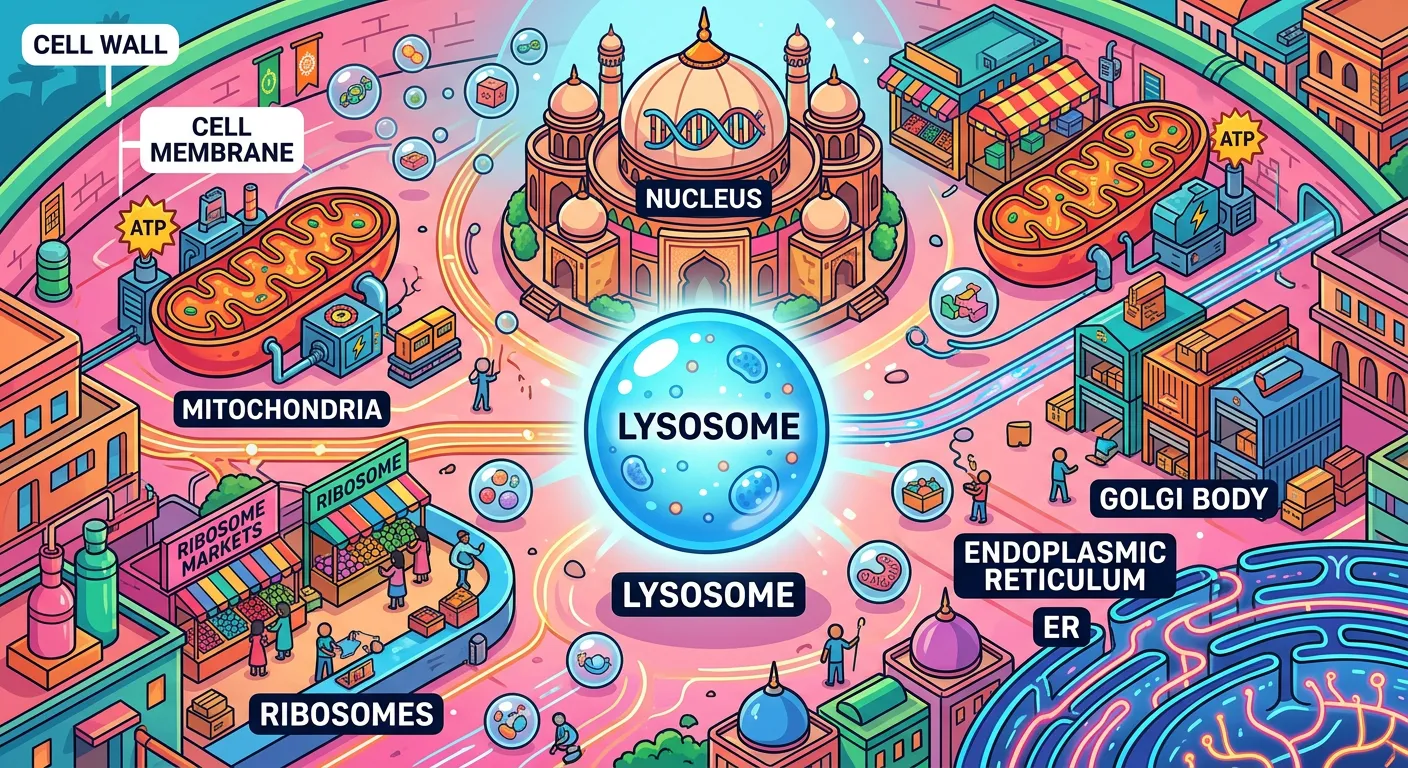
“Welcome, NEET warriors! Imagine the cell as a bustling Indian city. Every city needs a cleanup crew to manage waste, right? Meet the Lysosome—the cell's very own 'Swachh Bharat' mission commander! These tiny, spherical bags are packed with powerful enzymes ready to keep the cell sparkling clean.”
Welcome back, NEET aspirants! As we dive deeper into the world of Cell Biology, it is essential to look at how a cell manages its internal logistics. Imagine a bustling Indian city—traffic everywhere, factories producing goods, and people consuming resources. Without a dedicated waste management system, the city would soon be buried under its own trash. In the cellular world, this 'Swachh Bharat' mission is led by the Lysosome. Discovered by the Belgian cytologist Christian de Duve in 1955, these organelles were initially described as 'pericanalicular dense bodies' before their true digestive nature was understood.
Lysosomes are not isolated islands; they are vital components of the Endomembrane System. This system is a collaborative network consisting of the Endoplasmic Reticulum (ER), Golgi complex, Lysosomes, and Vacuoles. While the ER and Golgi focus on synthesis and packaging, the lysosome is the final destination for materials that need to be broken down. Morphologically, they appear as small, spherical, or irregular membrane-bound sacs. Because they are found in almost all eukaryotic animal cells (and some plant cells like those in the root tip), they are often referred to as the 'cellular disposal system' or 'garbage trucks' of the cell.
One of the most fascinating aspects of lysosomes is their polymorphism. Unlike the nucleus or mitochondria, which have relatively stable shapes, lysosomes can change their appearance depending on the stage of digestion they are in. This flexibility allows them to handle everything from tiny nutrient molecules to large, invading bacteria. For a medical aspirant, understanding lysosomes is the first step toward understanding several metabolic and storage diseases that occur when these 'cleanup crews' fail to do their job.
Quick Revision Points
- Lysosomes are membrane-bound vesicular structures formed by the process of packaging in the Golgi apparatus.
- They were discovered by Christian de Duve and are part of the Endomembrane System.
- They are typically spherical and measure about 0.2 to 0.5 micrometers in diameter.
- They are essentially absence in prokaryotes and mature mammalian RBCs.
- Their primary role is waste management and intracellular digestion.
NEET Exam Angle
- NCERT Focus: Remember that lysosomes are part of the endomembrane system; questions often ask to identify which organelles do NOT belong to this group (e.g., Mitochondria and Chloroplasts are NOT part of it).
- Discovery: While Christian de Duve's name is rarely asked directly now, his 'Suicidal Bag' nomenclature is a perennial favorite.
- Polymorphism: Be prepared for statement-based questions regarding why lysosomes exhibit different shapes and sizes.
02Biochemical Composition: The Potency of Acid Hydrolases and Hydrolytic Enzymes
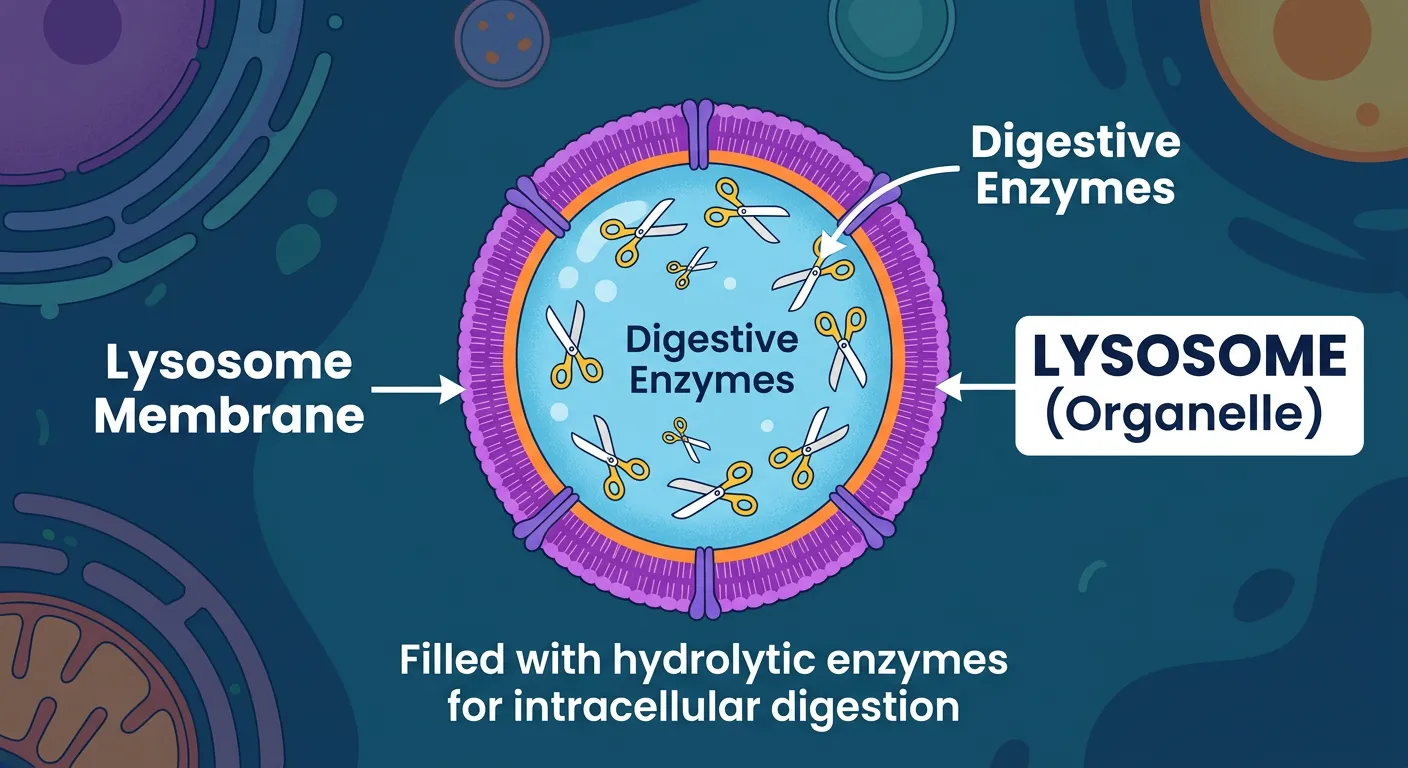
“What’s inside this cleanup crew? Lysosomes are essentially membrane-bound vesicles filled with hydrolytic enzymes. Think of these enzymes as biological scissors. They are experts at breaking down complex molecules—proteins, lipids, and carbohydrates—into simpler, usable forms. Efficiency is their middle name!”
What makes a lysosome so effective? It isn't just the membrane; it is the powerful chemical cocktail stored inside. These vesicles are filled with a variety of hydrolytic enzymes, collectively known as 'Acid Hydrolases.' These are biological catalysts designed specifically to perform hydrolysis—the process of breaking down chemical bonds by adding water. These enzymes are remarkably versatile, capable of digesting almost all organic materials found within or outside the cell, including proteins, nucleic acids, lipids, and complex carbohydrates.
A critical detail for your NEET preparation is the environment in which these enzymes operate. Most enzymes in our body work best at a neutral pH (~7.0), but lysosomal enzymes are 'acid-loving' (acidophilic). They are most active at an acidic pH between 4.5 and 5.0. How does the cell maintain this acidity inside the lysosome? The lysosomal membrane contains specialized proton pumps (H+ ATPases) that actively pump hydrogen ions from the cytosol into the lysosome against the concentration gradient. This ensures that even if a lysosome accidentally leaks, the neutral pH of the surrounding cytoplasm (pH 7.2) will deactivate the enzymes, preventing the cell from digesting itself prematurely.
Think of these enzymes as high-precision 'biological scissors.' If you need to break down a protein, the Proteases come into play; for lipids, it's the Lipases; for carbohydrates, it's the Carbohydrases; and for DNA or RNA, the Nucleases take charge. This specialized internal chemistry is what allows the cell to recycle complex macromolecules into their basic building blocks.
| Enzyme Category | Target Substrate | Breakdown Product |
|---|---|---|
| Proteases | Proteins | Amino Acids |
| Lipases | Fats and Lipids | Fatty Acids & Glycerol |
| Carbohydrases | Polysaccharides | Monosaccharides (Sugars) |
| Nucleases | DNA and RNA | Nucleotides |
Quick Revision Points
- Lysosomal vesicles are rich in almost all types of hydrolytic enzymes (hydrolases).
- These enzymes are optimally active at the acidic pH (pH 5).
- The acidity is maintained by active transport of H+ ions into the vesicle.
- The single unit membrane of the lysosome is resistant to its own internal enzymes due to heavy glycosylation of the inner proteins.
NEET Exam Angle
- Enzyme List: NCERT specifically mentions Lipases, Proteases, and Carbohydrases. Know this list by heart for 'All of these' type questions.
- pH Condition: A frequent question asks: 'Lysosomal enzymes are active at...?' The answer is always 'Acidic pH'.
- Proton Pumps: Understanding that energy (ATP) is required to maintain the acidic pH is a high-yield conceptual point.
03Intracellular Digestion: Heterophagy and Nutrient Recycling Mechanisms
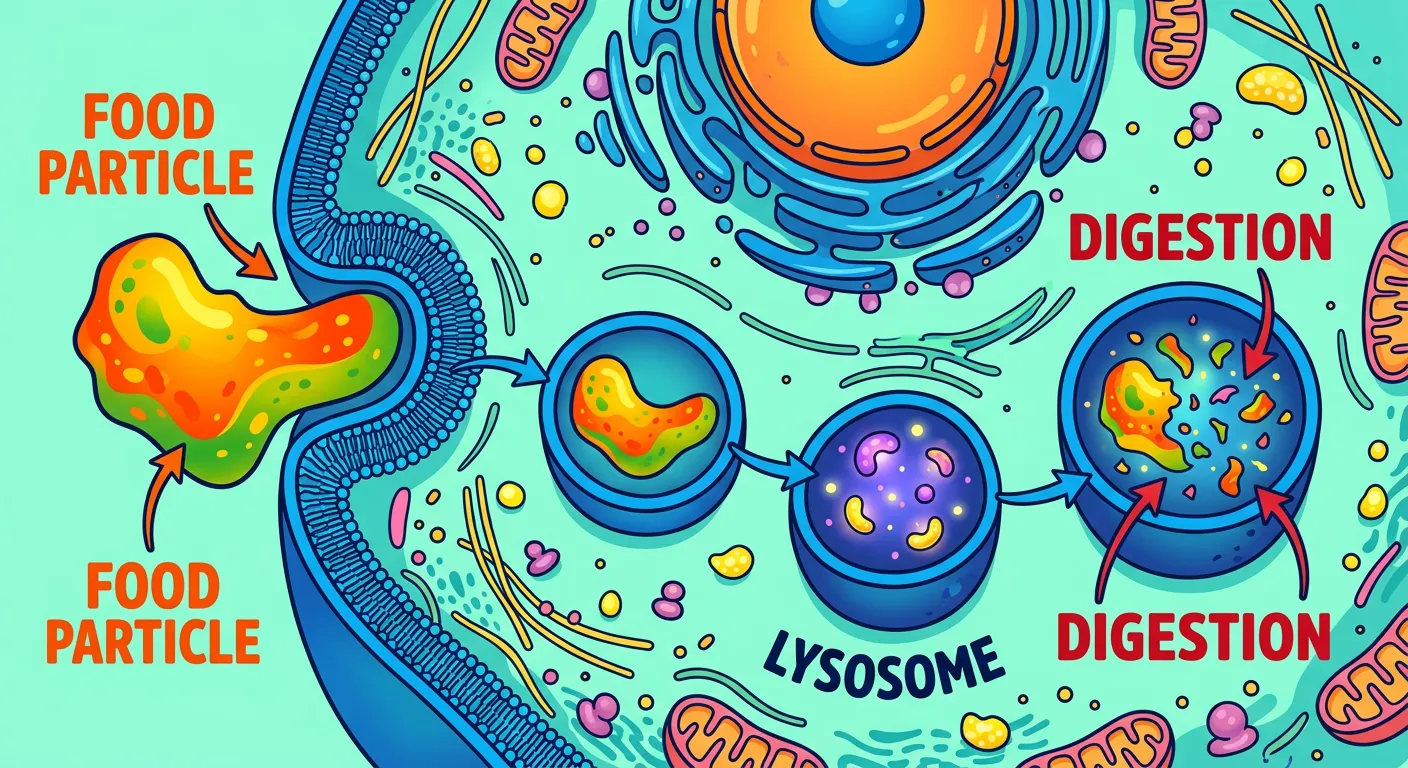
“Lysosomes are the masters of intracellular digestion. When the cell takes in food particles, lysosomes fuse with them, pouring their enzymes to digest the contents. It’s like a tiny, high-speed recycling plant turning raw trash into valuable nutrients that the cell can actually use!”
One of the primary functions of a lysosome is Heterophagy, which literally means 'eating others.' This occurs when the cell takes in substances from the external environment through processes like phagocytosis (cell eating) or pinocytosis (cell drinking). Imagine a White Blood Cell (WBC) in your body encountering a bacterium. The WBC engulfs the bacterium, forming a 'phagosome.' However, the phagosome by itself cannot kill the invader; it needs the 'weaponry' of the lysosome.
The process begins when a 'Primary Lysosome' (a newly formed vesicle containing inactive enzymes) fuses with the phagosome. This fusion creates a 'Secondary Lysosome,' also known as a Phagolysosome. Once the enzymes are mixed with the foreign material and the pH is adjusted, digestion begins. The complex organic matter is broken down into simple molecules like glucose, amino acids, and fatty acids. These nutrients then diffuse across the lysosomal membrane into the surrounding cytosol, where the cell can use them for energy or growth. This is a brilliant example of how the cell turns potential threats (like bacteria) or waste into valuable resources.
But what happens to the stuff that cannot be digested? Not everything can be broken down by hydrolases. The remnants stay inside the vesicle, which is now called a 'Residual Body.' In many organisms, these residual bodies move to the plasma membrane and dump their contents outside via exocytosis (ephagy). In some human cells, however, these bodies accumulate over time, which is associated with the aging process.
| Term | Description |
|---|---|
| Phagosome | A vesicle containing material taken in from outside the cell |
| Primary Lysosome | A storage vesicle with newly synthesized, inactive enzymes |
| Secondary Lysosome | The active digestive vacuole formed by fusion |
| Residual Body | The vesicle containing undigested 'trash' |
Quick Revision Points
- Heterophagy involves the digestion of exogenous (outside) materials.
- Secondary lysosomes are the actual sites of active digestion.
- Soluble products of digestion are absorbed into the cytoplasm for recycling.
- This process is crucial for defense (immunity) and nutrition in unicellular organisms like Amoeba.
NEET Exam Angle
- Mechanism: Identify the sequence: Phagosome + Primary Lysosome = Secondary Lysosome.
- Human Physiology Link: Relate this to the function of Neutrophils and Macrophages in the immune system.
- Residual Bodies: Know that the accumulation of residual bodies is a key feature of 'cellular aging.'
04Autophagy: The Cell’s Self-Maintenance and Rejuvenation Strategy
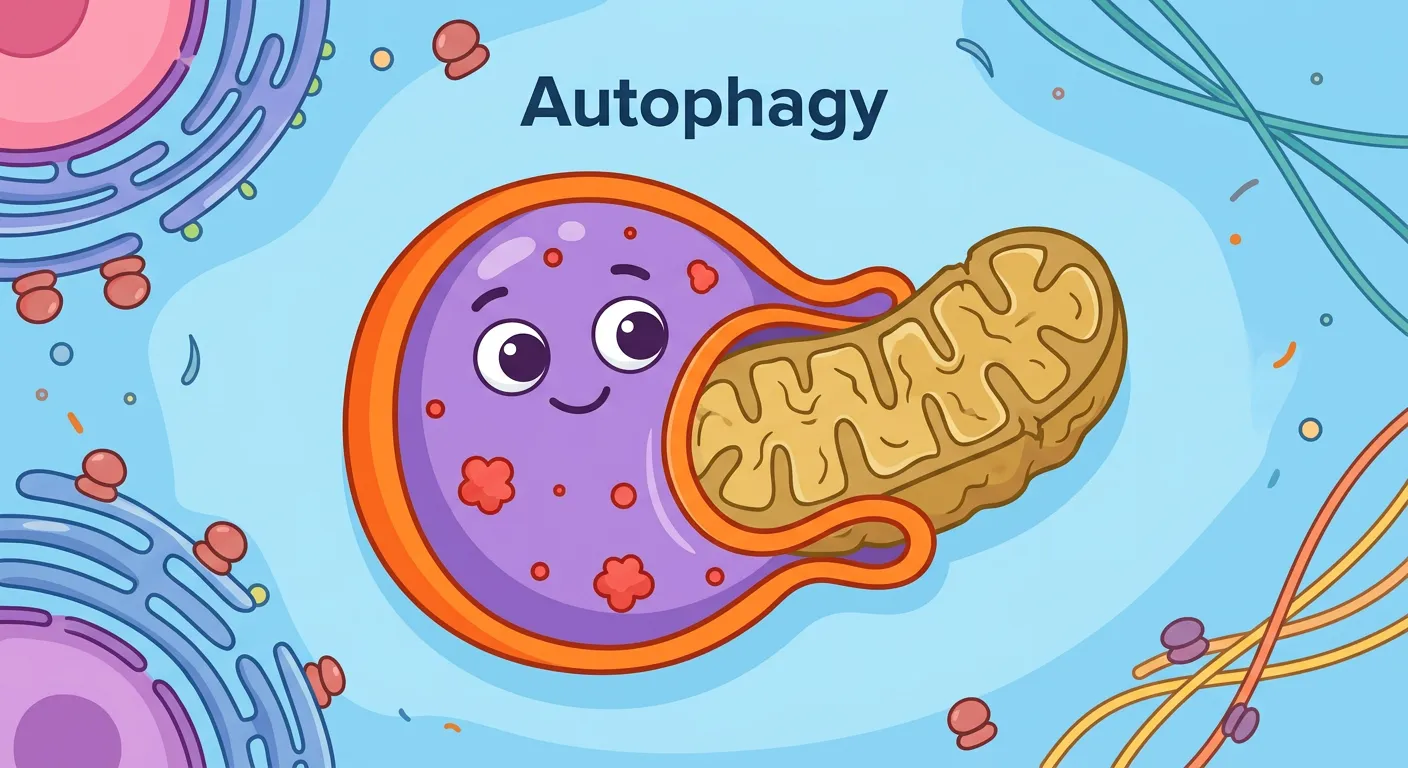
“Ever heard of 'Autophagy'? It means 'self-eating'. When a part of the cell gets old or stops working, the lysosome isn't sentimental. It swallows the damaged organelle and recycles it! It ensures the cell stays youthful and free from dead weight. It’s ultimate cell maintenance.”
While heterophagy deals with external threats, Autophagy—or 'self-eating'—is all about internal housekeeping. Cells are incredibly busy places, and over time, organelles like mitochondria or fragments of the Endoplasmic Reticulum become damaged, old, or non-functional. A malfunctioning mitochondrion isn't just 'dead weight'; it can leak harmful reactive oxygen species that damage the rest of the cell. To prevent this, the cell uses lysosomes to 'recycle' its own parts.
During autophagy, a double membrane (often derived from the ER) wraps around the worn-out organelle to form an 'autophagosome.' This structure then fuses with a lysosome to form an autophagic vacuole. The hydrolytic enzymes then get to work, stripping the organelle down to its constituent molecules. This process serves two main purposes: first, it clears out cellular debris that could become toxic, and second, it provides a source of energy and raw materials during times of starvation. If you haven't eaten for a long time, your cells start 'eating' their own non-essential components to keep the vital functions running.
Autophagy is a highly regulated process. In fact, the discovery of the mechanisms for autophagy was so significant that it earned Yoshinori Ohsumi the Nobel Prize in 2016. When autophagy fails, it is linked to serious conditions like Parkinson's disease, Alzheimer's, and even cancer. By keeping the cell youthful and efficient, lysosomes act as the ultimate anti-aging agents at a microscopic level.
Quick Revision Points
- Autophagy is the digestion of the cell's own internal components.
- It helps in the disposal of old, non-functional organelles (e.g., mitochondria).
- It is a survival mechanism during starvation, providing nutrients from non-essential parts.
- Autophagic vacuoles are formed by the fusion of autophagosomes with lysosomes.
NEET Exam Angle
- Conceptual Hook: Understand the difference between heterophagy (eating outside stuff) and autophagy (eating inside stuff).
- Physiology: Autophagy is peak during fasting or starvation—this is a common logic-based question in medical entrances.
- Clinical Link: While not deeply in NCERT, knowing that defective lysosomes lead to 'storage diseases' (like Tay-Sachs) adds depth to your understanding of why this recycling matters.
05The Suicidal Bag Phenomenon: Autolysis and Programmed Cell Death
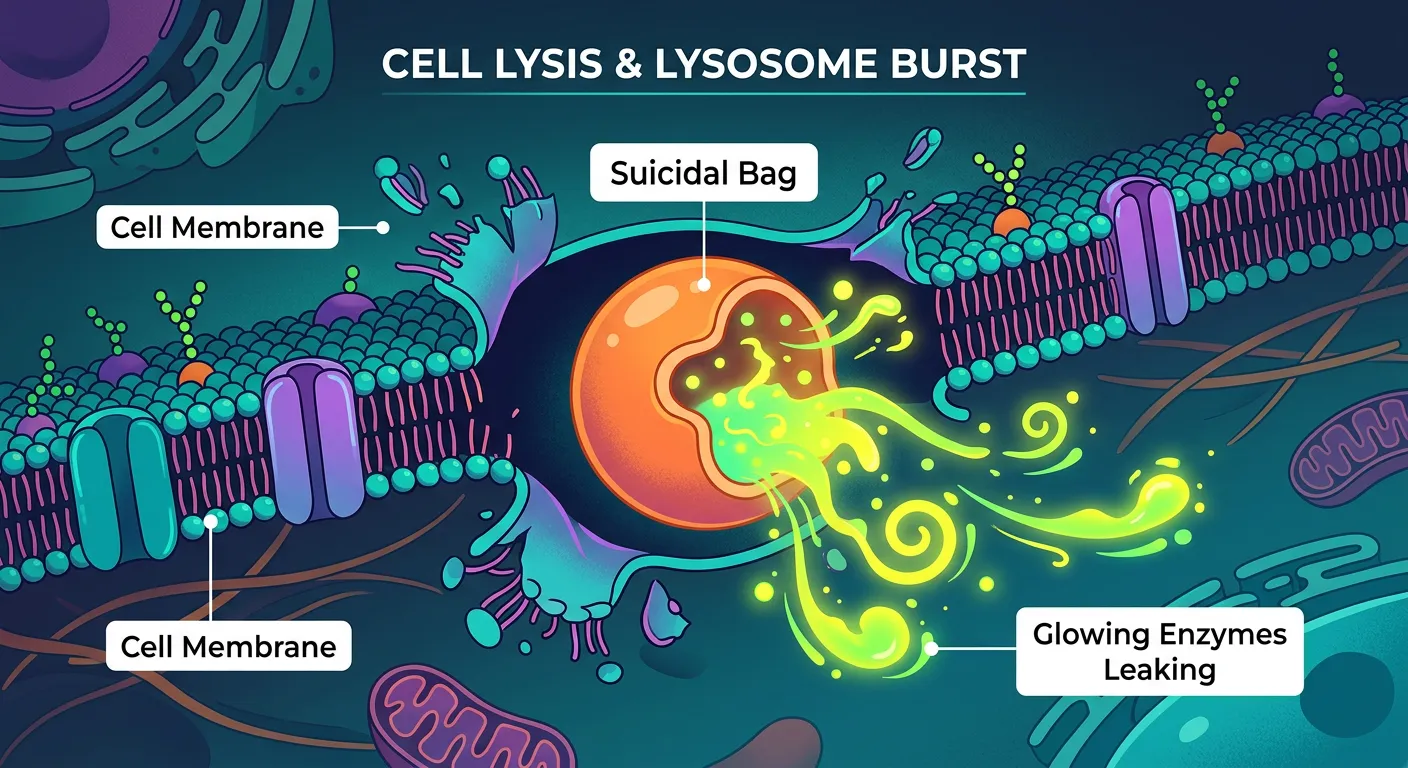
“Here’s the famous NEET exam favorite: Why are lysosomes called 'Suicidal Bags'? If a cell is damaged beyond repair, the lysosome bursts, releasing enzymes that digest the entire cell. It’s the cell’s ultimate sacrifice for the greater good of the organism. Total dedication!”
Perhaps the most famous nickname for the lysosome is the 'Suicidal Bag.' But why would a cell have a built-in self-destruct button? This process is known as Autolysis. Unlike autophagy, where only parts of the cell are digested, autolysis involves the total destruction of the entire cell. When a cell is severely damaged by injury, infection, or is simply at the end of its natural lifespan, the lysosomal membranes rupture, releasing all those 'acid hydrolases' into the cytoplasm. Since there are so many lysosomes in a cell, the sheer volume of enzymes overcomes the cytoplasmic buffering capacity, and the cell literally digests itself from the inside out.
Autolysis is not always a bad thing; in fact, it is a crucial part of development and metamorphosis. A classic example often cited in biology textbooks and NEET exams is the disappearance of a tadpole's tail as it transforms into a frog. The cells of the tail are systematically destroyed by lysosomal activity to allow the adult form to emerge. Similarly, during human embryonic development, we have webbed fingers; autolysis helps in the removal of those webs to give us separate fingers.
It is important to distinguish between Autolysis and Apoptosis. Apoptosis is 'programmed cell death'—a neat, organized 'suicide' that doesn't necessarily involve the bursting of lysosomes as the primary trigger. Autolysis is more like a 'bursting of the dam' that leads to rapid digestion of the cell.
| Context | Role of Autolysis |
|---|---|
| Metamorphosis | Digestion of larval organs (e.g., Tadpole tail) |
| Development | Removal of tissue between digits (fingers/toes) |
| Injury | Removal of dead or damaged cells from a tissue area |
| Disease | Rapid cell death in response to toxic levels of pathogens |
Quick Revision Points
- Autolysis is the process of self-destruction of a cell by its own lysosomal enzymes.
- Lysosomes are called 'Suicidal Bags' because their rupture leads to the death of the cell.
- This process is essential for the resorption of tissues during metamorphosis.
- Autolysis helps in cleaning up the site of an injury by removing dead cells.
NEET Exam Angle
- Terminology: Ensure you don't confuse 'Autolysis' (cell death) with 'Autophagy' (organelle recycling).
- Metamorphosis: The tadpole tail example is a high-probability question for Morphology/Cell Biology integration.
- Reasoning Question: 'Why are lysosomes called suicidal bags?' – Look for the option mentioning 'rupture of membrane' and 'digestion of its own cell.'
06Biogenesis: The Origin of Lysosomes from the Golgi Apparatus
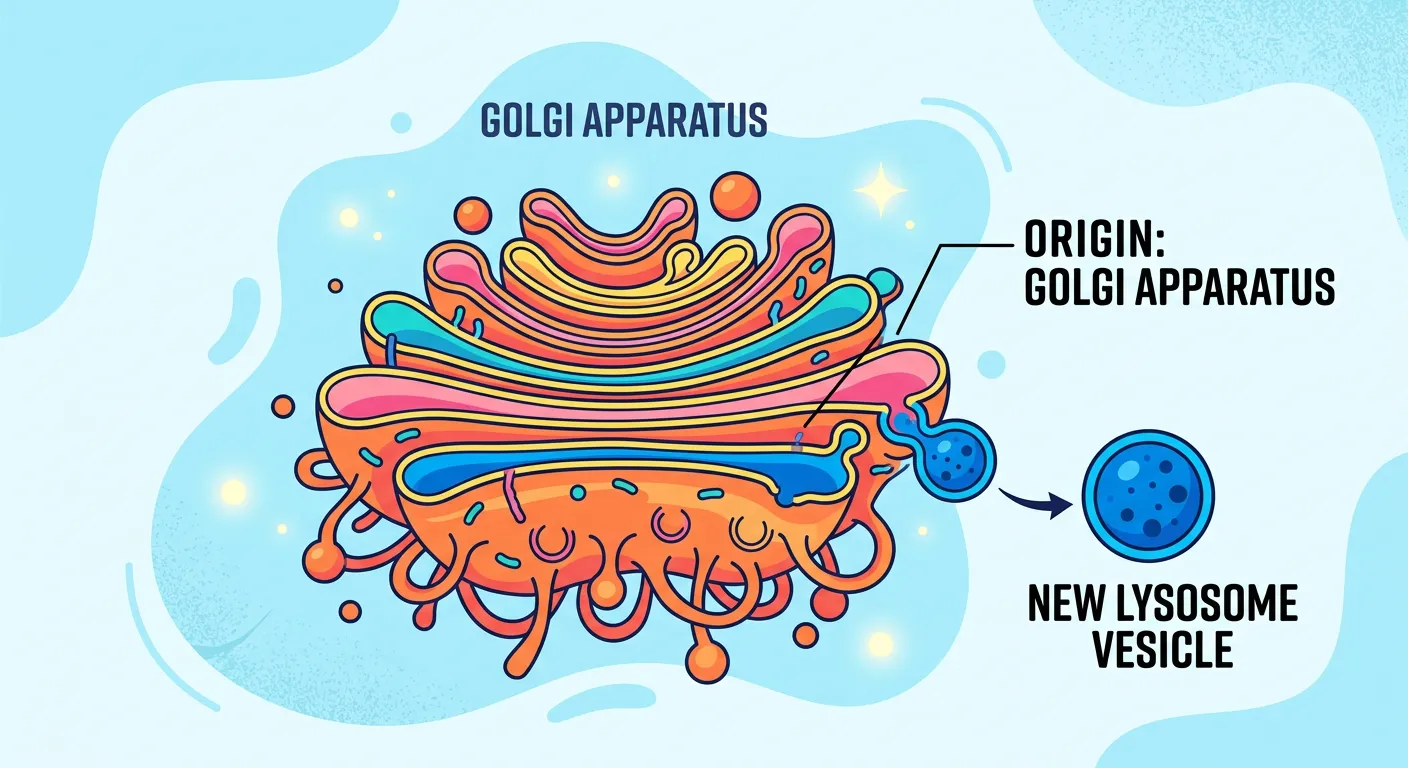
“Where do these warriors come from? They are born from the Golgi Apparatus! The Golgi packages these digestive enzymes into tiny, membrane-bound spheres. It’s like a factory shipping out specialized cleaning robots to every corner of the cell. Biology is truly organized, isn't it?”
Understanding where lysosomes come from is a favorite topic for examiners because it links multiple organelles together. The journey begins in the Rough Endoplasmic Reticulum (RER). Since the hydrolytic enzymes are proteins, they are synthesized by the ribosomes attached to the RER. These enzymes are then transported into the lumen of the ER and sent via transition vesicles to the 'cis' face of the Golgi apparatus.
Inside the Golgi, these enzymes undergo vital modifications. One of the most important steps is the 'tagging' of these enzymes with a sugar molecule called Mannose-6-Phosphate (M6P). This tag acts like a shipping label, telling the Golgi that these proteins are destined for a lysosome and not for secretion outside the cell. Once they reach the 'trans' face of the Golgi, they are sorted and packaged into small, spherical vesicles that bud off. These newly formed vesicles are the 'Primary Lysosomes.'
This interconnected system is often referred to as the GERL complex (Golgi-Endoplasmic Reticulum-Lysosome). It highlights the perfect assembly line of the cell: the ER builds the 'parts' (enzymes), the Golgi 'labels and packages' them, and the Lysosome 'deploys' them for action. This is why NCERT states that lysosomes are 'formed by the process of packaging in the Golgi apparatus.' Without the Golgi's sorting mechanism, the enzymes might end up in the wrong place, potentially causing chaos within the cell.
Quick Revision Points
- Lysosomal enzymes are synthesized on the Rough ER.
- The Golgi apparatus is responsible for the modification and packaging of these enzymes.
- Primary lysosomes bud off specifically from the 'trans' face of the Golgi.
- The 'GERL' complex concept explains the functional relationship between these three organelles.
NEET Exam Angle
- Direct Question: 'Which organelle is involved in the formation of lysosomes?' Answer: Golgi Apparatus (NCERT direct line).
- Synthesis vs. Packaging: Be careful—enzymes are synthesized in the RER but formed/packaged into lysosomes in the Golgi.
- Sequence: RER → Transition Vesicle → Golgi → Primary Lysosome. Remember this flow for 'correct sequence' questions.
07NEET High-Yield Checklist: Essential Facts and Exam Strategy
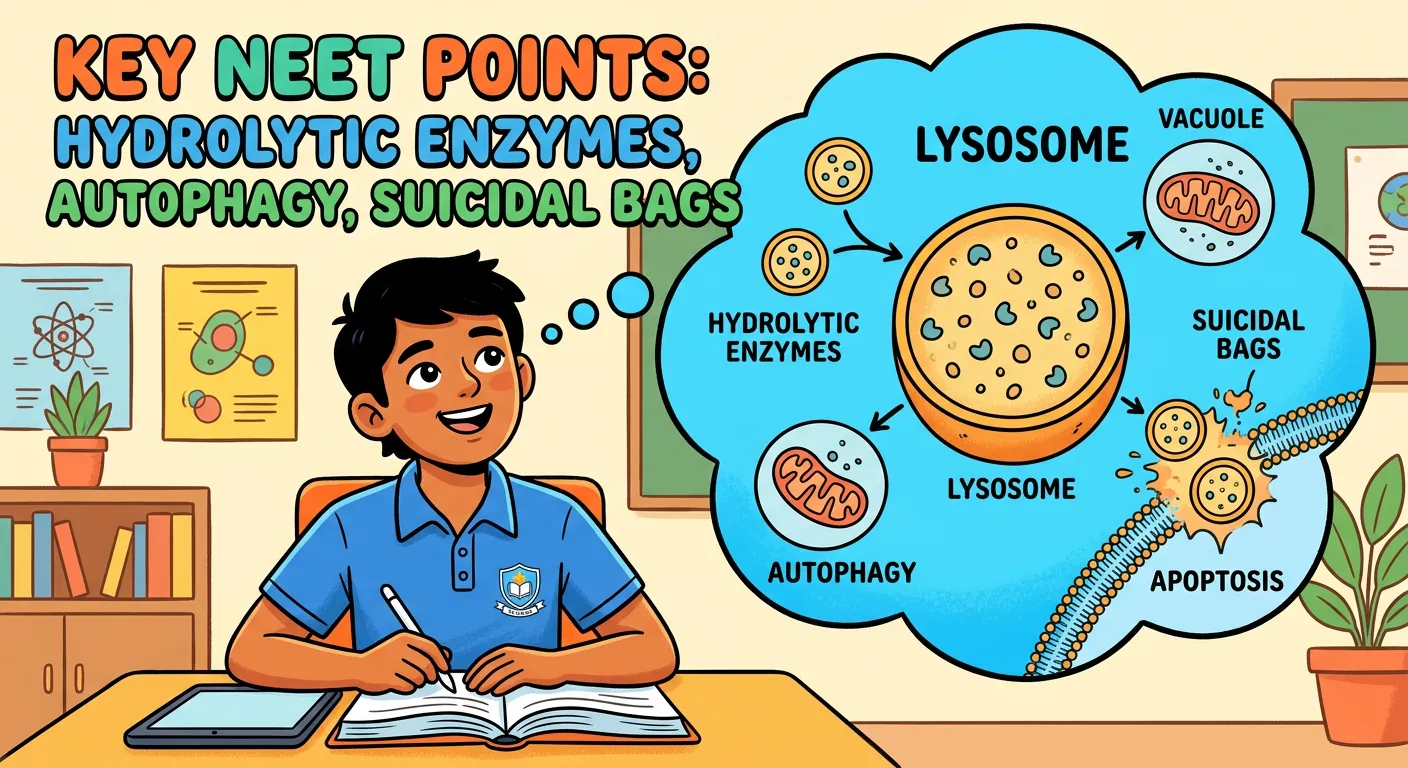
“Quick NEET recap: Remember, lysosomes are membrane-bound, rich in hydrolytic enzymes, and originate from the Golgi. They handle digestion and autophagy, earning the nickname 'Suicidal Bags'. Keep this in mind, and you'll crush those questions! Stay curious and keep studying, future doctors!”
As we wrap up our study of Lysosomes, it's time to consolidate the 'must-know' facts for the NEET exam. This organelle is a favorite for examiners because it allows them to test your knowledge of biochemistry (enzymes/pH), cell structure (membranes), and physiology (digestion/immunity) all at once. The most frequent question pattern involves matching the organelle to its specific function or identifying it based on its acidic enzyme content.
Remember the concept of Polymorphism one last time. There are four distinct types of lysosomes you should be aware of: Primary Lysosomes (newly formed), Secondary Lysosomes (active digestion), Residual Bodies (undigested waste), and Autophagic Vacuoles (self-digestion). Knowing these stages helps you visualize the 'life cycle' of a lysosome. Also, do not confuse Lysosomes with Peroxisomes (which handle hydrogen peroxide) or Vacuoles (which are primarily for storage and maintaining turgor pressure in plants).
To master this topic, focus on the keywords: 'Membrane-bound,' 'Hydrolases,' 'Acidic pH,' 'Golgi origin,' and 'Suicidal bags.' If you can link these terms together, you are ready to tackle any question that comes your way. Biology is all about understanding the 'why' behind the 'what.' Once you realize that the lysosome is the cell's way of maintaining order in a chaotic environment, the facts become much easier to remember.
| Feature | Lysosome | Peroxisome | Vacuole |
|---|---|---|---|
| Enzymes | Hydrolases | Oxidases/Catalases | Mostly storage (water/waste) |
| pH | Acidic (pH 5) | Basic/Neutral | Varies (often acidic in plants) |
| Function | Digestion | Detoxification | Storage/Turgidity |
| Membrane | Single | Single | Single (Tonoplast in plants) |
Quick Revision Points
- Memory Hook for enzymes: CLPN (Carbohydrases, Lipases, Proteases, Nucleases).
- Lysosomes are single-membrane bound vesicles.
- They are absent in prokaryotes (who use the periplasmic space for digestion instead).
- Primary lysosomes + Phagosome = Secondary lysosome.
NEET Exam Angle
- Match the Following: Lysosomes often appear in Column A with 'Intracellular Digestion' or 'Hydrolases' in Column B.
- Statement Accuracy: Watch out for 'double-membrane'—this is a common trap! Lysosomes have a single membrane.
- NCERT Focus: Stick closely to the 3-4 paragraphs in Chapter 8; 90% of questions come from those lines.
Recommended Reading
Explore related Biology topics to build deeper chapter connections for NEET.
- Cell Theory · Topic 3.1
- Golgi Bodies · Topic 3.10
- Vacuoles · Topic 3.12
- Plastids · Topic 3.15
- Prokaryotic and Eukaryotic Cell · Topic 3.2
- Plant and Animal Cell · Topic 3.3
- Jump to Key Terms (Quick Revision)
- Review Common NEET Mistakes
- Solve NEET Practice MCQs
- Read Topic FAQs
- Practice NEET MCQs
- Solve NEET PYQs
📚 Key Terms
⚠️ Common NEET Mistakes
- 1Thinking lysosomes have a double membrane like mitochondria (they are single-membrane bound).
- 2Assuming lysosomal enzymes work at neutral pH (they strictly require an acidic pH around 5).
- 3Confusing the site of enzyme synthesis (Rough ER) with the site of lysosome formation (Golgi).
- 4Believing that lysosomes are found in prokaryotic cells (they are unique to eukaryotes).
- 5Confusing autolysis (entire cell death) with autophagy (recycling of specific organelles).
📝 NEET PYQ & Practice Questions
Test your understanding of Lysosomes with NCERT-aligned sample questions.
Which of the following statements is correct regarding "Hydrolytic Enzymes" in the context of NEET Biology?
In NEET question papers, questions related to "Lysosomes" predominantly test:
Consider Polymorphism associated with Lysosomes. What is the primary characteristic expected in NEET MCQs?
Master Lysosomes with NeetQ AI Tutor
Practice 50+ topic-wise MCQs, previous 15 years NEET questions, and get step-by-step doubt resolution instantly.
❓ Frequently Asked Questions
Why are lysosomes called suicidal bags of the cell?
If a cell is damaged or aging, lysosomes may rupture, releasing their powerful hydrolytic enzymes into the cytoplasm. These enzymes then digest the cell's own components, leading to its death. This self-destruction is why they are called 'Suicidal Bags'.
Which organelle is responsible for the formation of lysosomes?
The Golgi apparatus is responsible for the formation of lysosomes. Specifically, the hydrolytic enzymes are synthesized in the Rough ER and then packaged into vesicles by the Golgi complex.
At what pH are lysosomal enzymes most active?
Lysosomal enzymes (acid hydrolases) are most active at an acidic pH, typically between 4.5 and 5.0.
What is the difference between autophagy and heterophagy?
Heterophagy is the digestion of foreign materials taken in from outside the cell (like food or bacteria), while autophagy is the digestion of the cell's own internal components, such as worn-out organelles.
What are the four types of hydrolytic enzymes found in lysosomes?
The four main types are Proteases (digesting proteins), Lipases (digesting lipids), Carbohydrases (digesting carbohydrates), and Nucleases (digesting nucleic acids).
Do lysosomes have a single or double membrane?
Lysosomes are bound by a single unit membrane. This distinguishes them from organelles like mitochondria or chloroplasts, which have double membranes.
Written By
NEET Content Strategist & Biology Expert
Sangita Kumari is a NEET educator and content strategist with over 6 years of experience teaching Biology, Chemistry, and Physics to Class 11 and 12 aspirants. She helps bridge the gap between traditional NCERT preparation and modern AI-powered learning. Her content is trusted by thousands of NEET aspirants across India.