🎬 Video Lesson Available
Watch the full 7-slide video lesson for Plastids with AI teacher narration and visual explanations.
Plastids — Master Plastids for NEET Biology. Detailed guide on Chloroplasts, Chromoplasts, and Leucoplasts, their structure, functions, and semi-autonomous nature.
01Introduction to Plastids: Distribution and Double-Membrane Architecture
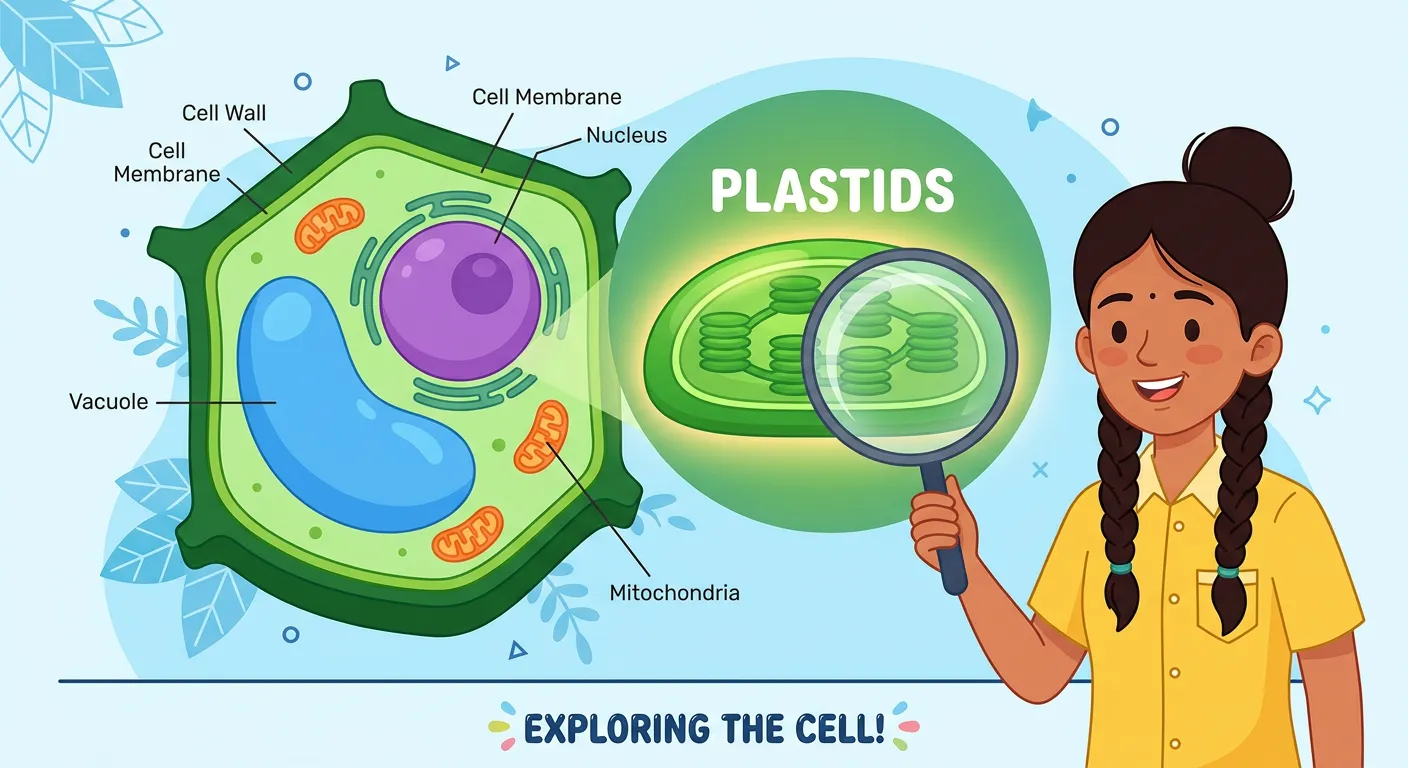
“Welcome, future doctors! Imagine your house has a power plant and a warehouse. In plants, we call these 'Plastids'. They are double-membrane organelles found only in plants and euglenoids. They are the true masters of energy and color in the botanical world!”
When you look at a lush green forest or a vibrant field of flowers, you are witnessing the work of one specific organelle: the Plastid. For NEET aspirants, understanding plastids is not just about memorizing a definition; it is about grasping the fundamental difference between how plants and animals manage energy. Plastids are large, double-membrane bound organelles found in all plant cells and in euglenoids. Unlike mitochondria, which are found in almost all eukaryotic cells, plastids are the exclusive 'manufacturers' and 'warehouses' of the plant world. One of the first things you should note for your exams is their size. Plastids are quite large, making them easily observable under a standard light microscope without the need for complex electron microscopy techniques often required for smaller organelles like ribosomes.
The architecture of a plastid is defined by its double-membrane system. This isn't just a structural layer; it creates a distinct compartmentalization that allows the organelle to maintain an internal environment completely different from the surrounding cytoplasm. This separation is vital for specialized metabolic processes like the light-dependent reactions of photosynthesis. In your study of 'Biological Classification,' you might recall that Euglenoids like Euglena possess these organelles, which allows them to act as mixotrophs—behaving like plants in the light and like heterotrophs in the dark. This cross-chapter connection is a favorite for NTA when framing tricky MCQ options.
From an evolutionary perspective, the presence of plastids in plants and their absence in animal cells highlights the divergent paths of life. While we animals must consume organic matter to survive, plants use these double-membraned 'solar panels' to synthesize their own food. This fundamental shift in energy management is why plastids are often considered the most important organelles for the survival of life on Earth. As you prepare, remember that the double membrane isn't just a shell; it’s a gateway that regulates the flow of materials into the 'solar factory' of the cell.
Quick Revision Points
- Found exclusively in plant cells and euglenoids (Protista).
- Large size makes them easily visible under a light microscope.
- Bound by a double-membrane system for specialized compartmentalization.
- Function as the primary sites for food synthesis and storage.
- Absent in all animal cells, marking a major eukaryotic distinction.
NEET Exam Angle
- Microscopy: Questions often ask which organelle is easily seen under a light microscope; the answer is typically Plastids or the Nucleus.
- Taxonomy Link: Remember the link between Plastids and Kingdom Protista (specifically Euglenoids).
- Structure: The 'double-membrane' nature is frequently compared to Mitochondria and the Nucleus in 'matching' type questions.
02The Three Pillars of Plastid Classification: Pigment-Based Diversity
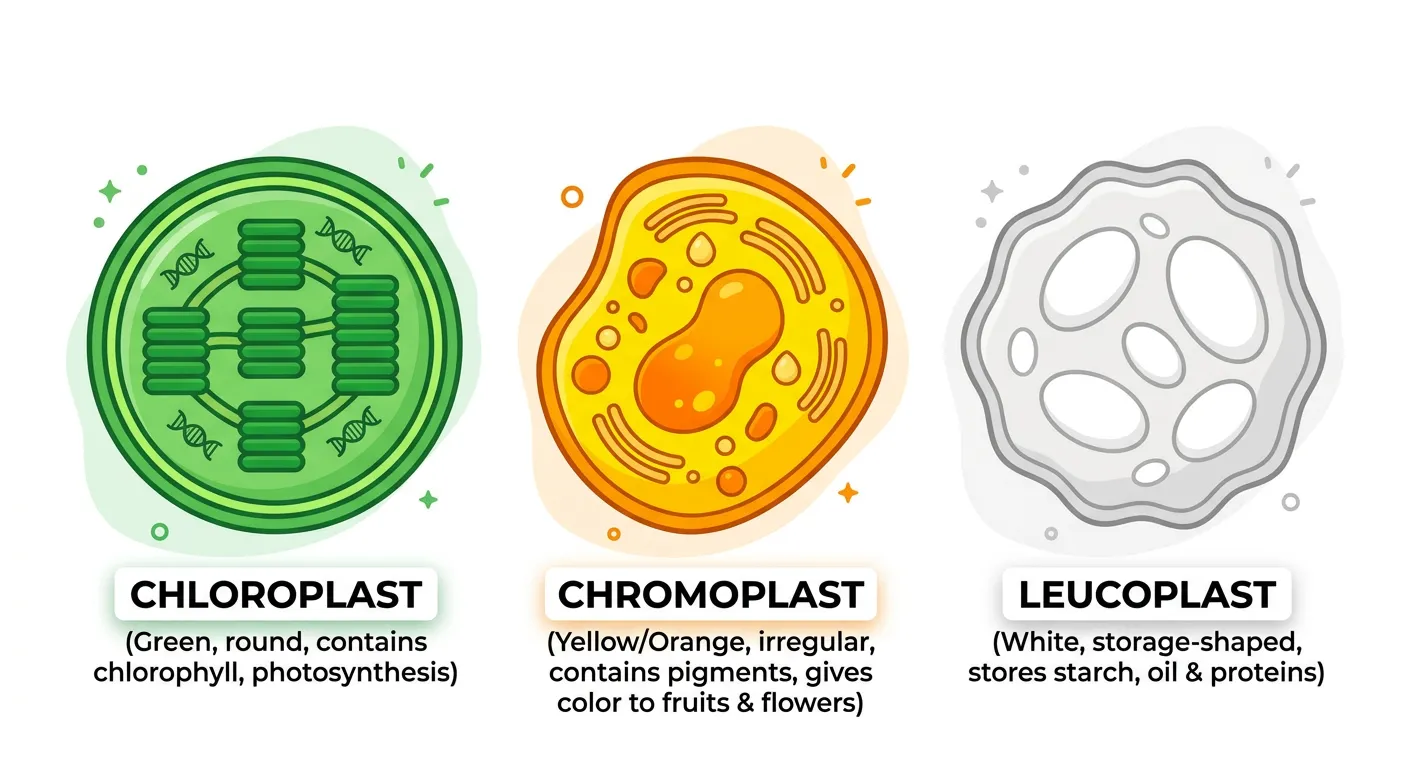
“There are three main types of plastids based on pigments. First, the Chloroplast for photosynthesis. Second, the Chromoplast, carrying colorful pigments like carotene and xanthophyll. Finally, the Leucoplast, the colorless storage units. Like a pantry, they store what the plant needs most!”
Not all plastids are green, and not all plastids are meant for photosynthesis. In the NEET syllabus, the classification of plastids is strictly based on the type of pigments they contain. This determines their color and, ultimately, their function. We categorize them into three main groups: Chloroplasts, Chromoplasts, and Leucoplasts. Chloroplasts are the most famous, containing chlorophyll and carotenoid pigments that trap light energy. Chromoplasts contain fat-soluble carotenoid pigments like carotene and xanthophylls, giving plants their brilliant yellow, orange, or red hues. Finally, Leucoplasts are the 'quiet workers'—colorless plastids of varied shapes and sizes that focus entirely on nutrient storage.
An interesting concept often touched upon in 'Morphology of Flowering Plants' is the interconvertibility of plastids. Have you ever wondered why a green tomato turns red as it ripens? This is a classic biological transition where chloroplasts (green) transform into chromoplasts (red) as chlorophyll degrades and carotenoids are synthesized. This flexibility allows the plant to change its strategy from energy production to attracting animals for seed dispersal. Think of it as a rebranding exercise for the plant's 'marketing department.'
When studying these, use the 'pantry analogy.' The chloroplast is the stove where the meal is cooked, the chromoplast is the brightly colored plate that makes the meal attractive, and the leucoplast is the pantry or cupboard where the extra ingredients are stored for later use. This functional distinction is the bedrock of plant physiology and a frequent source of 'Assertion-Reasoning' questions in the medical entrance exam.
| Plastid Type | Primary Pigments | Main Function |
|---|---|---|
| Chloroplast | Chlorophyll, Carotenoids | Photosynthesis (Food production) |
| Chromoplast | Carotene, Xanthophyll | Attraction of pollinators & dispersers |
| Leucoplast | None (Colorless) | Storage of starch, oils, or proteins |
Quick Revision Points
- Classification is strictly based on the presence/absence of specific pigments.
- Chloroplasts contain chlorophyll; Chromoplasts contain carotene/xanthophyll.
- Leucoplasts lack pigments and are used for storage.
- Plastids can often convert from one type to another during development (e.g., fruit ripening).
- Pigments in chromoplasts are fat-soluble, not water-soluble.
NEET Exam Angle
- Pigment Matching: Be ready to match 'Carotenoids' with Chromoplasts and 'Chlorophyll' with Chloroplasts.
- Interconversion: A common question asks about the change in color of chilies or tomatoes during ripening.
- Basis of Classification: Remember that the primary criteria is 'pigmentation.'
03Detailed Anatomy of the Chloroplast: Grana and Thylakoids
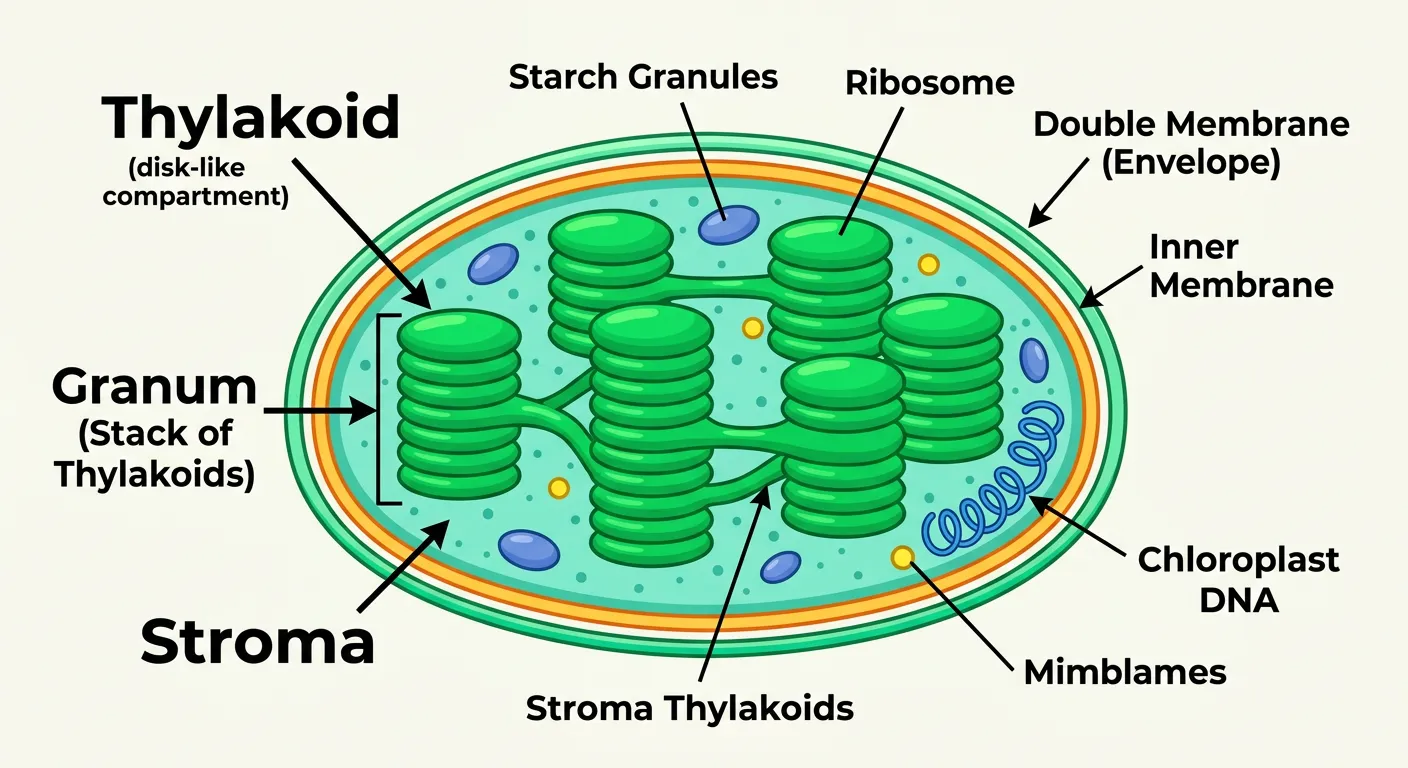
“Let’s zoom into the Chloroplast! It’s the kitchen where plants cook food. Inside, we have flat, coin-like stacks called Thylakoids, clustered into 'Grana'. They float in a fluid called Stroma. Think of it like a solar-powered factory, generating energy for the entire plant system.”
Let's dive deep into the 'Solar Factory' of the cell: the Chloroplast. While we often think of it as a simple green bean, its internal structure is a masterpiece of biological engineering. Inside the double membrane lies a space called the stroma, which contains a system of organized flattened membranous sacs called thylakoids. Think of thylakoids as individual coins. When these 'coins' are stacked on top of one another, they form structures called grana (singular: granum). These stacks are interconnected by flat membranous tubules called the stroma lamellae. This arrangement maximizes the surface area available for capturing sunlight.
The thylakoid membrane is the actual site where chlorophyll and carotenoid pigments reside. It is here that the 'Light Reaction' of photosynthesis occurs. The space inside the thylakoid is known as the lumen. NEET questions often focus on the spatial arrangement: the pigments are in the membrane, and the proton gradient (which you'll learn about in the Photosynthesis chapter) is built across this membrane. The 'Solar Factory' analogy is perfect here because the thylakoids act like solar panels, absorbing light and converting it into chemical energy (ATP and NADPH).
It is crucial to distinguish between the grana and the stroma lamellae. While both are part of the membranous system, grana are specialized for the full range of light-harvesting reactions, whereas stroma lamellae typically lack certain components like Photosystem II. Understanding this subtle difference helps when tackling higher-order thinking questions regarding the Z-scheme of photosynthesis. For a NEET student, visualizing this 'stack of coins' structure is the key to mastering the structural basis of plant energy.
Quick Revision Points
- Thylakoids: Flattened sacs; the basic unit of the membranous system.
- Grana: Stacks of thylakoids; the primary site of the Light Reaction.
- Stroma Lamellae: Membranous tubules connecting different grana.
- Lumen: The internal space enclosed by the thylakoid membrane.
- Chlorophyll: Located specifically within the thylakoid membranes.
NEET Exam Angle
- Site of Reaction: Know that the light reaction happens in the grana/thylakoids.
- Connectivity: Identify 'stroma lamellae' as the connecting links between grana stacks in diagram-based questions.
- Terminology: Don't confuse 'Stroma' (fluid) with 'Stomata' (pores in leaves).
04The Stroma Matrix: The Enzymatic Laboratory of the Cell
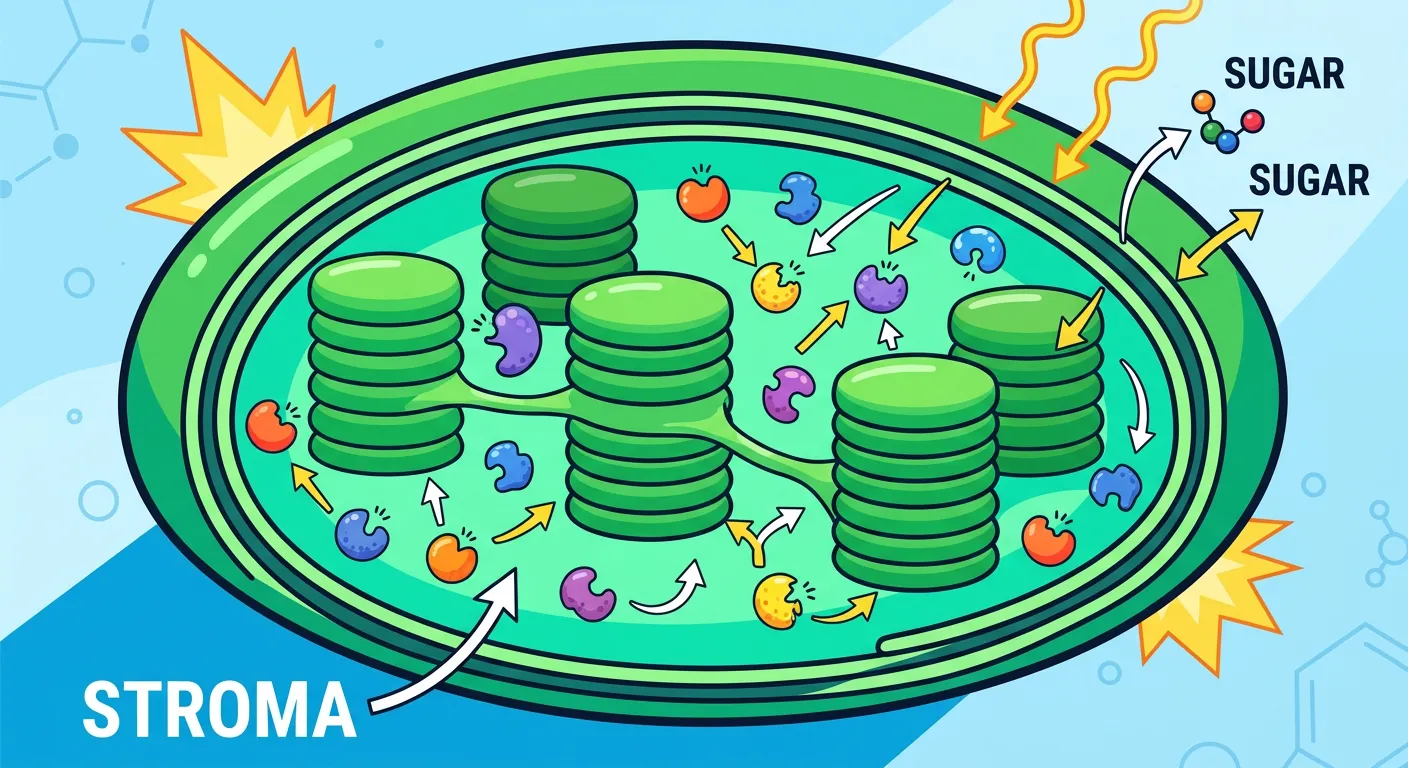
“The Stroma is more than just fluid; it’s the enzymatic hub! Here, enzymes work day and night to synthesize carbohydrates, proteins, and even DNA. It’s the plant’s internal laboratory, keeping everything running smoothly while the sun provides the power.”
Surrounding the thylakoid stacks is a colorless, proteinaceous matrix called the stroma. If the thylakoids are the solar panels, the stroma is the chemical laboratory where the actual 'cooking' of food takes place. The stroma contains a variety of enzymes required for the synthesis of carbohydrates and proteins. This is the site of the 'Dark Reaction' or the Calvin Cycle, where carbon dioxide is fixed into glucose. Because this process relies on the enzymes present in the stroma fluid, the temperature and pH of the stroma are tightly regulated by the cell.
Beyond just enzymes, the stroma holds the secrets to the plastid’s independence. It contains small, double-stranded circular DNA molecules and ribosomes. If you recall the 'Cell Theory' and 'Prokaryotic Cells,' you will notice something striking: the ribosomes in the stroma are 70S, which is smaller than the 80S ribosomes found in the surrounding cytoplasm. This prokaryotic-like setup is a major piece of evidence for the Endosymbiotic Theory, suggesting that plastids were once free-living bacteria that entered into a symbiotic relationship with early eukaryotic cells.
The stroma isn't just 'empty space'—it is a concentrated soup of metabolic activity. It manages the storage of starch grains (temporary storage after photosynthesis) and oil droplets. For your exams, always associate the stroma with enzymatic action, carbon fixation, and the 'semi-autonomous' hardware (DNA/ribosomes) of the organelle. It is the brain of the chloroplast, managing both the production line and the blueprint for its own replication.
| Feature | Grana (Thylakoids) | Stroma (Matrix) |
|---|---|---|
| Nature | Membranous stacks | Fluid matrix |
| Function | Light-dependent reaction | Light-independent (Dark) reaction |
| Pigments | Contains Chlorophyll | Lacks pigments |
| Key Product | ATP and NADPH | Glucose (Carbohydrates) |
Quick Revision Points
- Stroma: The fluid-filled space outside the thylakoids.
- Enzymes: Contains all machinery for the Calvin Cycle (C3 cycle).
- Ribosomes: Specifically 70S type (identical to bacterial ribosomes).
- DNA: Small, circular, and double-stranded.
- Synthesis: Responsible for making carbohydrates and proteins.
NEET Exam Angle
- Ribosome Size: A very common MCQ focuses on the 70S vs 80S distinction within the plant cell.
- DNA Type: Remember that plastid DNA is 'circular,' similar to mitochondrial and bacterial DNA.
- Site of Dark Reaction: Always mark 'Stroma' for enzymatic carbon fixation.
05Chromoplasts: Carotenoids and the Biology of Attraction
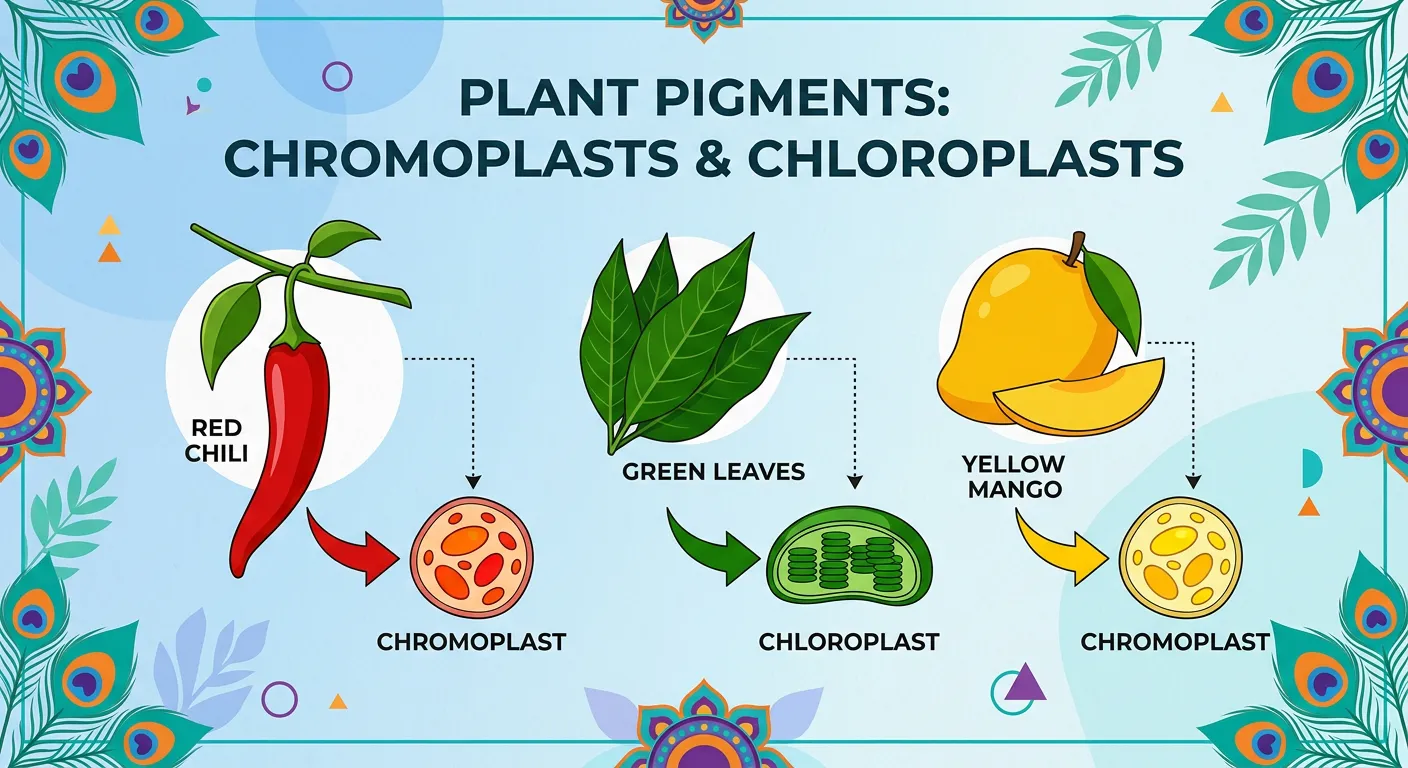
“Why do flowers and fruits have such bright colors? It’s all thanks to Chromoplasts! They store fat-soluble carotenoid pigments. They turn plants into magnets for pollinators and seed dispersers, ensuring the next generation survives. They are the marketing department of the plant kingdom!”
Why is a marigold yellow and a carrot orange? The answer lies in the Chromoplasts. These specialized plastids are responsible for the non-green colors in plants. They store fat-soluble carotenoid pigments, primarily carotene and xanthophylls. Unlike chlorophyll, which is designed to catch energy, these pigments are designed to reflect specific wavelengths of light to create a visual signal. This is why you find chromoplasts concentrated in the petals of flowers and the pericarp (walls) of fruits.
From an ecological standpoint, chromoplasts act as the plant’s 'marketing department.' By coloring flowers, they attract specific pollinators like bees, butterflies, and birds. By coloring fruits, they signal to animals that the fruit is ripe and ready to be eaten, which facilitates the dispersal of seeds over long distances. In NEET Biology, it’s important to link this back to 'Sexual Reproduction in Flowering Plants.' The vibrant colors aren't just for beauty; they are essential survival mechanisms for the species.
A technical point to remember: Carotenoids are fat-soluble. This means they are stored in plastoglobuli (oil droplets) within the chromoplast. While they do assist in light-harvesting in chloroplasts, in chromoplasts, their primary role is purely pigmentary. They lack the organized grana structure found in chloroplasts because their main mission isn't photosynthesis—it's attraction. When you see a red bell pepper, you are looking at a tissue packed with chromoplasts that have replaced their predecessor chloroplasts.
Quick Revision Points
- Pigments: Carotene and Xanthophyll (fat-soluble carotenoids).
- Colors: Provide yellow, orange, and red hues.
- Location: Found in petals, ripening fruits, and some roots (like carrots).
- Function: Attraction of insects for pollination and animals for seed dispersal.
- Structure: Lacks a complex thylakoid system; contains pigment-rich droplets.
NEET Exam Angle
- Pigment Solubility: Remember that carotenoids are fat-soluble, which distinguishes them from water-soluble pigments like anthocyanins (found in vacuoles).
- Functional Role: Questions may ask why chromoplasts are abundant in petals; the answer is always related to pollination.
- Types of Pigments: Be specific—Carotene is orange, Xanthophyll is typically yellow.
06Leucoplasts: Specialized Storage Units for Essential Nutrients
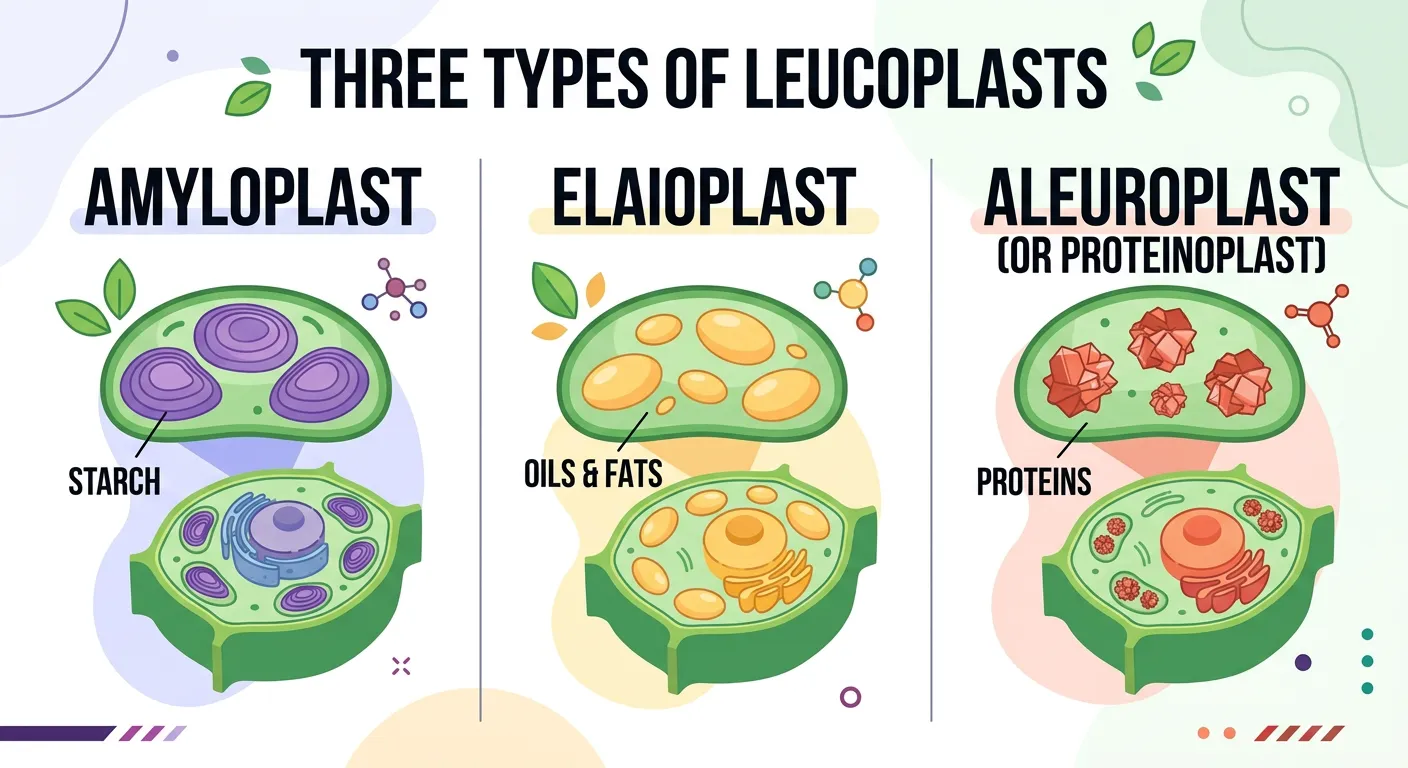
“Leucoplasts are the humble storage experts. Amyloplasts store starch, Elaioplasts hold oils and fats, and Aleuroplast store proteins. Just like your kitchen storing grains, fats, and pulses, these plastids store essential nutrients, ensuring the plant never goes hungry during tough times.”
While the chloroplasts and chromoplasts get all the attention for their colors, the Leucoplasts are the unsung heroes of plant survival. These are colorless plastids that specialize in storing various types of organic nutrients. Depending on what they store, they are sub-classified into three categories: Amyloplasts, Elaioplasts, and Aleuroplasts. This classification is a 'hot zone' for NEET MCQs, as the names are often used in matching-column questions.
Amyloplasts are the most common and are responsible for storing carbohydrates in the form of starch. You can find them in abundance in tubers like potatoes or in cereal grains. Elaioplasts (sometimes called Lipidoplasts) store fats and oils. These are typically found in seeds that are rich in oil, such as castor or mustard seeds. Finally, Aleuroplasts (or Proteinoplasts) specialize in storing proteins. They are frequently found in the aleurone layer of maize and other grains. The prefix 'Aleuro-' comes from the Greek word for flour/meal, hinting at their protein-rich nature.
The presence of leucoplasts is vital for a plant's lifecycle. During seed germination, the plant cannot photosynthesize because it is underground and has no leaves. It survives entirely by 'digesting' the starch, fats, and proteins stored within these leucoplasts. This link between cell biology and 'Plant Growth and Development' is essential for a holistic understanding of the NEET syllabus. Think of leucoplasts as the long-term savings account of the plant.
| Type of Leucoplast | Stored Nutrient | Common Example |
|---|---|---|
| Amyloplast | Starch (Carbohydrate) | Potato Tuber |
| Elaioplast | Oils and Fats | Castor Seed |
| Aleuroplast | Proteins | Maize Grain (Aleurone layer) |
Quick Revision Points
- Leucoplasts: Colorless, vary in shape and size.
- Amyloplast: Stores starch; think 'Amylase' enzyme (which breaks starch).
- Elaioplast: Stores oils/fats; found in oily seeds.
- Aleuroplast: Stores proteins; found in protein-rich layers of seeds.
- Physiological Role: Provide energy during germination and dormancy.
NEET Exam Angle
- Matching Questions: This is the most likely format—matching the name (e.g., Elaioplast) to its stored substance (Fat).
- Examples: Remember the potato example for Amyloplasts, as it is specifically mentioned in many reference materials.
- Terminology: Do not confuse 'Aleuroplast' with 'Amyloplast'; remember 'Amyl-' is for starch.
07The Semi-Autonomous Nature: DNA, Ribosomes, and Replication
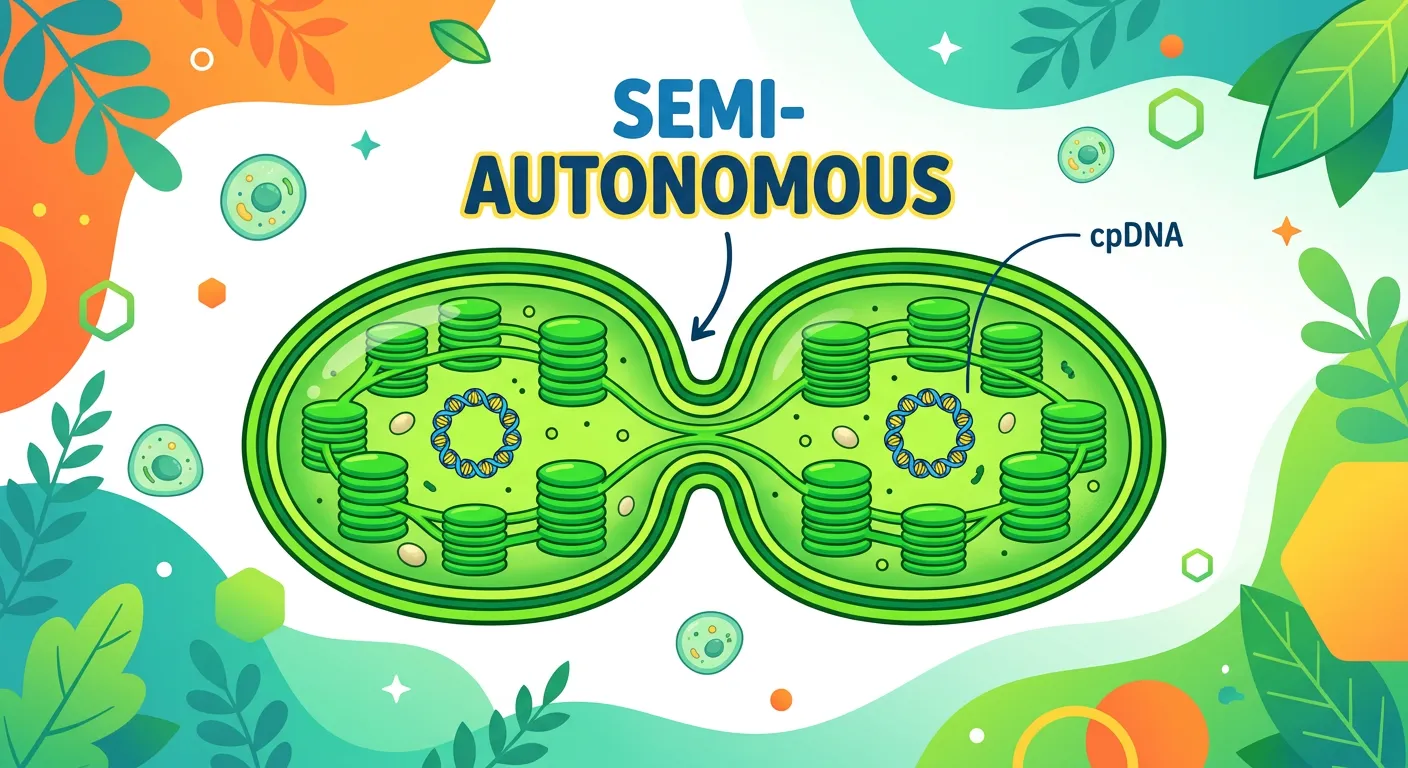
“Did you know plastids have their own DNA? That makes them 'semi-autonomous'! They can replicate independently, just like mitochondria. They are like independent business units within the cell. Mastering these concepts is a step closer to your dream seat in medical college. Keep studying!”
One of the most fascinating aspects of plastids is that they behave like 'cells within a cell.' Along with mitochondria, plastids are considered semi-autonomous organelles. This means they have the machinery to perform some functions independently of the cell's nucleus. This 'independence' is granted by two key components found in the stroma: double-stranded circular DNA and 70S ribosomes. Because they have their own genetic blueprint, plastids can synthesize some of their own structural proteins and enzymes.
Another trait that supports their semi-autonomous status is their method of replication. Plastids do not usually form de novo (from scratch); they multiply by a process similar to binary fission, much like bacteria. This is a crucial point for NEET—while the cell's division is controlled by the nucleus, the replication of plastids can occur independently to meet the metabolic demands of the cell. If a cell needs more energy, it can trigger the division of its chloroplasts.
This semi-autonomy has significant implications for inheritance. In most plants, plastids are inherited only from the mother (maternal inheritance) because the pollen usually does not contribute plastids to the zygote. This 'extra-nuclear inheritance' is a recurring theme in genetics. For NEET aspirants, mastering the prokaryotic characteristics of plastids (70S ribosomes and circular DNA) is essential, as these facts bridge the gap between Cell Biology, Evolution, and Genetics. It is also a key point of comparison with mitochondria, as both organelles share this unique evolutionary history.
| Feature | Plastids | Mitochondria |
|---|---|---|
| Ribosomes | 70S | 70S |
| DNA | Circular, dsDNA | Circular, dsDNA |
| Division | Fission-like | Fission-like |
| Autonomy | Semi-autonomous | Semi-autonomous |
| Double Membrane | Present | Present |
Quick Revision Points
- Semi-autonomous: Capable of independent protein synthesis and replication.
- Genetic Material: Possess their own circular, double-stranded DNA.
- Protein Machinery: Contain 70S ribosomes (different from cytoplasmic 80S).
- Division: Multiply by a fission-like process.
- Endosymbiosis: These traits suggest they originated from ancient prokaryotes.
NEET Exam Angle
- Comparison: Questions often ask which two organelles contain their own DNA; the answer is Mitochondria and Plastids.
- Ribosome Type: Always check if the question is asking for the organelle's ribosomes (70S) or the cell's ribosomes (80S).
- Inheritance: Remember that plastid DNA is involved in cytoplasmic/maternal inheritance.
Recommended Reading
Explore related Biology topics to build deeper chapter connections for NEET.
- Cell Theory · Topic 3.1
- Golgi Bodies · Topic 3.10
- Lysosomes · Topic 3.11
- Vacuoles · Topic 3.12
- Prokaryotic and Eukaryotic Cell · Topic 3.2
- Plant and Animal Cell · Topic 3.3
- Jump to Key Terms (Quick Revision)
- Review Common NEET Mistakes
- Solve NEET Practice MCQs
- Read Topic FAQs
- Practice NEET MCQs
- Solve NEET PYQs
📚 Key Terms
⚠️ Common NEET Mistakes
- 1Thinking all plastids contain chlorophyll (only chloroplasts do).
- 2Confusing 70S ribosomes (found in plastids) with 80S ribosomes (found in the plant cell cytoplasm).
- 3Mistaking water-soluble pigments (like anthocyanins in vacuoles) for the fat-soluble carotenoids in chromoplasts.
- 4Swapping the functions of Amyloplasts, Elaioplasts, and Aleuroplasts in matching questions.
- 5Assuming plastids are found in all eukaryotes (they are absent in animals and fungi).
📝 NEET PYQ & Practice Questions
Test your understanding of Plastids with NCERT-aligned sample questions.
Which of the following statements is correct regarding "Plastids" in the context of NEET Biology?
In NEET question papers, questions related to "Plastids" predominantly test:
Consider Chromoplast associated with Plastids. What is the primary characteristic expected in NEET MCQs?
Master Plastids with NeetQ AI Tutor
Practice 50+ topic-wise MCQs, previous 15 years NEET questions, and get step-by-step doubt resolution instantly.
❓ Frequently Asked Questions
What are the main differences between Chloroplasts, Chromoplasts, and Leucoplasts?
The main differences lie in their pigments and functions. Chloroplasts contain chlorophyll/carotenoids for photosynthesis. Chromoplasts contain fat-soluble carotenoids (carotene/xanthophyll) for attracting pollinators with color. Leucoplasts are colorless and specialize in storing starch (amyloplasts), fats (elaioplasts), or proteins (aleuroplasts).
Why are plastids called semi-autonomous organelles?
They are called semi-autonomous because they possess their own circular DNA and 70S ribosomes, allowing them to synthesize some of their own proteins and replicate independently of the nucleus via fission-like division.
Which type of Leucoplast is responsible for storing proteins in seeds?
Aleuroplasts (also known as proteinoplasts) are the specific type of leucoplast responsible for storing proteins, commonly found in the aleurone layer of seeds like maize.
In which organisms besides plants are plastids found?
Plastids are also found in Euglenoids, which are a group of unicellular protists. They are absent in all animal cells and fungi.
How does the structure of Grana differ from the Stroma?
Grana are stacks of flattened membranous sacs called thylakoids where the light reaction occurs. The stroma is the fluid-filled matrix surrounding the grana, containing enzymes for the dark reaction, DNA, and 70S ribosomes.
What pigments are primarily responsible for the red and yellow colors in fruits?
Fat-soluble carotenoid pigments, specifically carotene (orange/red) and xanthophylls (yellow), located within the chromoplasts, are responsible for these colors.
Written By
NEET Content Strategist & Biology Expert
Sangita Kumari is a NEET educator and content strategist with over 6 years of experience teaching Biology, Chemistry, and Physics to Class 11 and 12 aspirants. She helps bridge the gap between traditional NCERT preparation and modern AI-powered learning. Her content is trusted by thousands of NEET aspirants across India.