🎬 Video Lesson Available
Watch the full 7-slide video lesson for Prokaryotic and Eukaryotic Cell with AI teacher narration and visual explanations.
Prokaryotic and Eukaryotic Cell — Master Prokaryotic and Eukaryotic cell structures for NEET. Detailed analysis of 70S/80S ribosomes, nucleoids, and membrane-bound organelles for Class 11.
01Cellular Architectures: Understanding the Open-Plan vs. Compartmentalized Logic
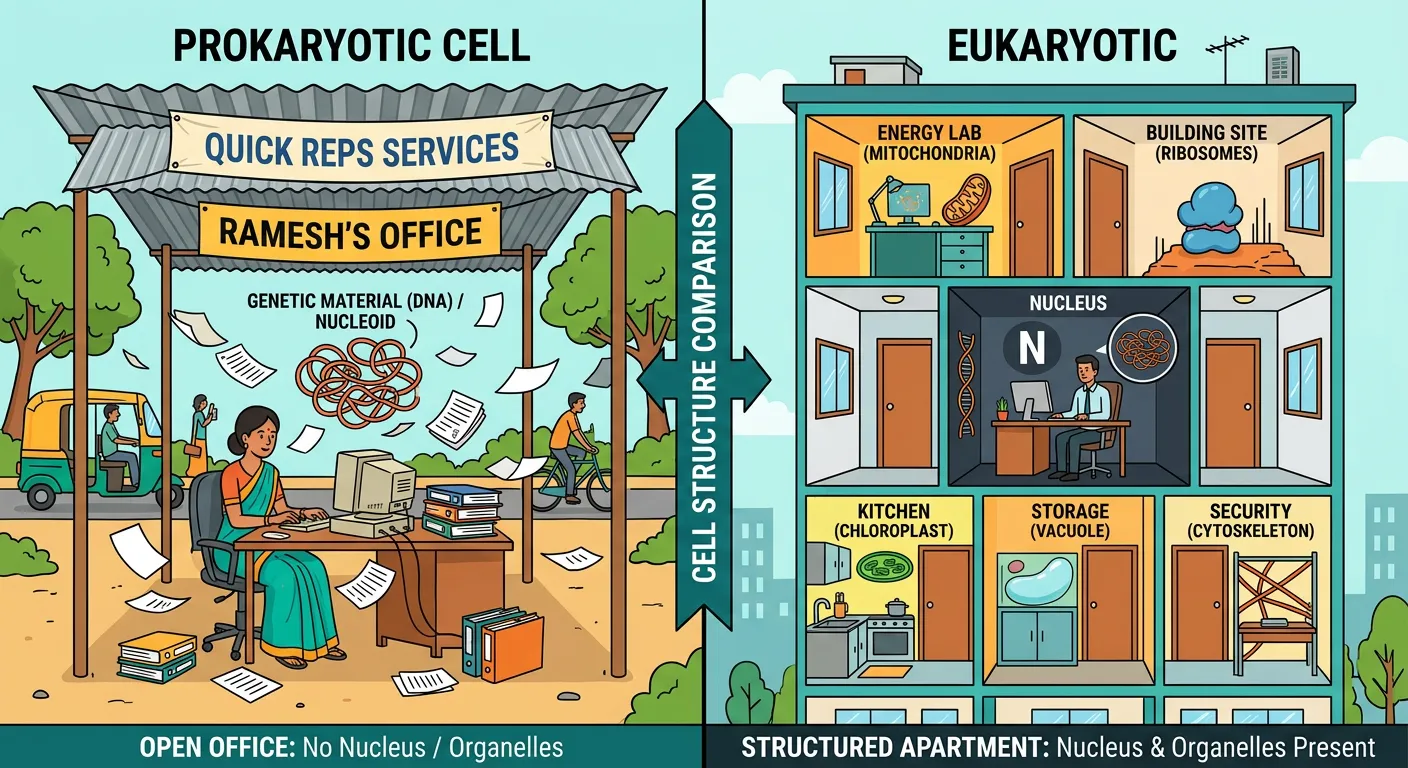
“Welcome! Imagine a cell as a living workspace. Prokaryotes are like a chaotic, open-plan office where everything happens in one room. Eukaryotes, however, are like a modern apartment complex with separate rooms for every function. Today, we’ll explore how this structural difference changes everything in biology.”
In the study of biology, the distinction between prokaryotic and eukaryotic cells is arguably the most fundamental concept you will encounter. To visualize this, imagine the difference between an open-plan warehouse and a high-tech modular laboratory. The prokaryotic cell, typical of bacteria, operates like that warehouse—one large, open space where all metabolic activities, from protein synthesis to DNA replication, happen in the same ‘room.’ This lack of internal boundaries makes prokaryotes incredibly efficient at responding quickly to environmental changes, though it limits their overall size and structural complexity.
Eukaryotic cells, on the other hand, represent a massive evolutionary leap toward compartmentalization. These cells are organized like a modern apartment complex or a laboratory with specialized rooms for specific tasks. By isolating chemical reactions within membrane-bound organelles, eukaryotes can perform highly specific and often conflicting metabolic processes simultaneously without interference. This structural logic is what allowed life to move from single-celled simplicity to the complex multicellular organisms we see today, including humans, plants, and fungi. Understanding this organization is vital for NEET, as it forms the basis for questions in both Cell Biology and Biological Classification.
From an evolutionary perspective, the jump from prokaryotic to eukaryotic life wasn't just about getting bigger; it was about managing energy more effectively. While a prokaryote is restricted by its surface-area-to-volume ratio, the internal membranes of a eukaryote provide additional surfaces for enzymatic activity. This allows eukaryotic cells to grow much larger—often 10 to 100 times the size of a typical bacterium—while maintaining high metabolic efficiency. As we dive into these structures, keep this 'efficiency through organization' theme in mind.
Quick Revision Points
- Prokaryotes are found in Kingdom Monera (Bacteria, Cyanobacteria, Mycoplasma).
- Eukaryotes comprise Kingdom Protista, Fungi, Plantae, and Animalia.
- The absence of membrane-bound organelles is the hallmark of prokaryotic life.
- Eukaryotic cells use compartmentalization to separate biochemical pathways.
- Surface-area-to-volume ratio dictates why prokaryotes remain small and eukaryotes can scale up.
NEET Exam Angle
- Focus on the size range: Prokaryotes (1-10 µm) vs. Eukaryotes (10-100 µm).
- Remember that Mycoplasma (prokaryote) is the smallest living cell (~0.3 µm) and lacks a cell wall.
- Questions often link this topic to the 'Basis of Classification' in Kingdom Monera.
02The Prokaryotic Nucleoid: Efficient Genetic Storage Without a Nuclear Envelope
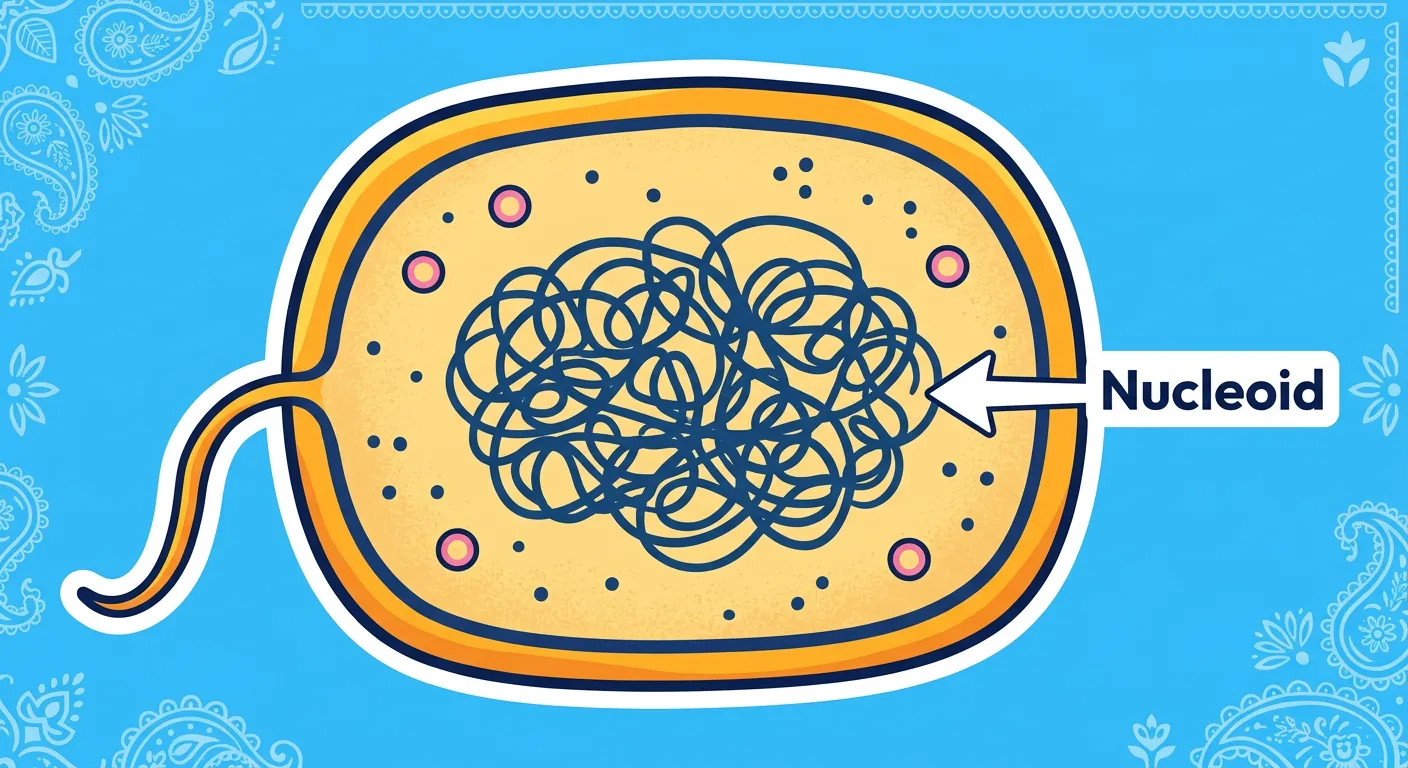
“First, the heart of the cell. Prokaryotes don't have a formal office for their DNA—a nucleus. Instead, their genetic material just floats freely in the cytoplasm, gathered in a region called the 'Nucleoid'. It’s unorganized, compact, and super efficient for quick replication during binary fission.”
One of the most frequent points of confusion for students is the difference between a 'Nucleus' and a 'Nucleoid.' In prokaryotes, there is no physical wall or double membrane separating the genetic material from the rest of the cytoplasm. Instead, the DNA is concentrated in an irregular, non-membrane-bound region called the nucleoid. Because there is no nuclear envelope, the DNA is in direct contact with the cytoplasm, which leads to a fascinating biological phenomenon: transcription and translation can occur simultaneously. In prokaryotes, as a messenger RNA (mRNA) molecule is being synthesized from the DNA, ribosomes can immediately attach to it and start building proteins. This 'coupling' is impossible in eukaryotes, where the nuclear envelope acts as a physical gatekeeper.
The nature of the DNA itself is also distinct. Prokaryotic DNA is typically a single, circular, double-stranded molecule. Unlike eukaryotic DNA, it is 'naked,' meaning it is not wrapped around histone proteins to form complex nucleosomes. This simplicity is a key driver behind the incredible speed of bacterial reproduction. When a bacterium like E. coli divides via binary fission, it doesn't need to go through the elaborate steps of mitosis; it simply replicates its circular loop and splits. For NEET, you must distinguish this genomic simplicity from the complex, linear, histone-bound chromosomes found in eukaryotes.
Furthermore, many prokaryotes possess small, circular, extra-chromosomal DNA molecules called plasmids. These are not part of the main nucleoid but carry specific 'bonus' genes, such as those for antibiotic resistance. While the nucleoid contains the 'must-have' genes for survival, plasmids provide the 'nice-to-have' traits that allow bacteria to survive in harsh or medical environments. Understanding the nucleoid is essential for grasping how bacteria evolve and replicate so rapidly compared to complex eukaryotes.
Quick Revision Points
- The nucleoid lacks a nuclear membrane and nucleolus.
- Genomic DNA is single, circular, and double-stranded (dsDNA).
- Prokaryotic DNA is 'naked' (no histones), though polyamines may help in packaging.
- Transcription and translation are coupled due to the lack of a nuclear barrier.
- Plasmids provide extra-chromosomal genetic advantages like drug resistance.
NEET Exam Angle
- Be careful with the term 'naked DNA'; in NEET, this specifically refers to the absence of Histone proteins.
- Frequent question: 'Where is the genetic material found in a bacterium?' Answer: The Nucleoid.
- Remember the significance of transcription-translation coupling as a prokaryote-only feature.
0370S Ribosomes: Decoding the Protein Synthesis Machinery of Prokaryotes
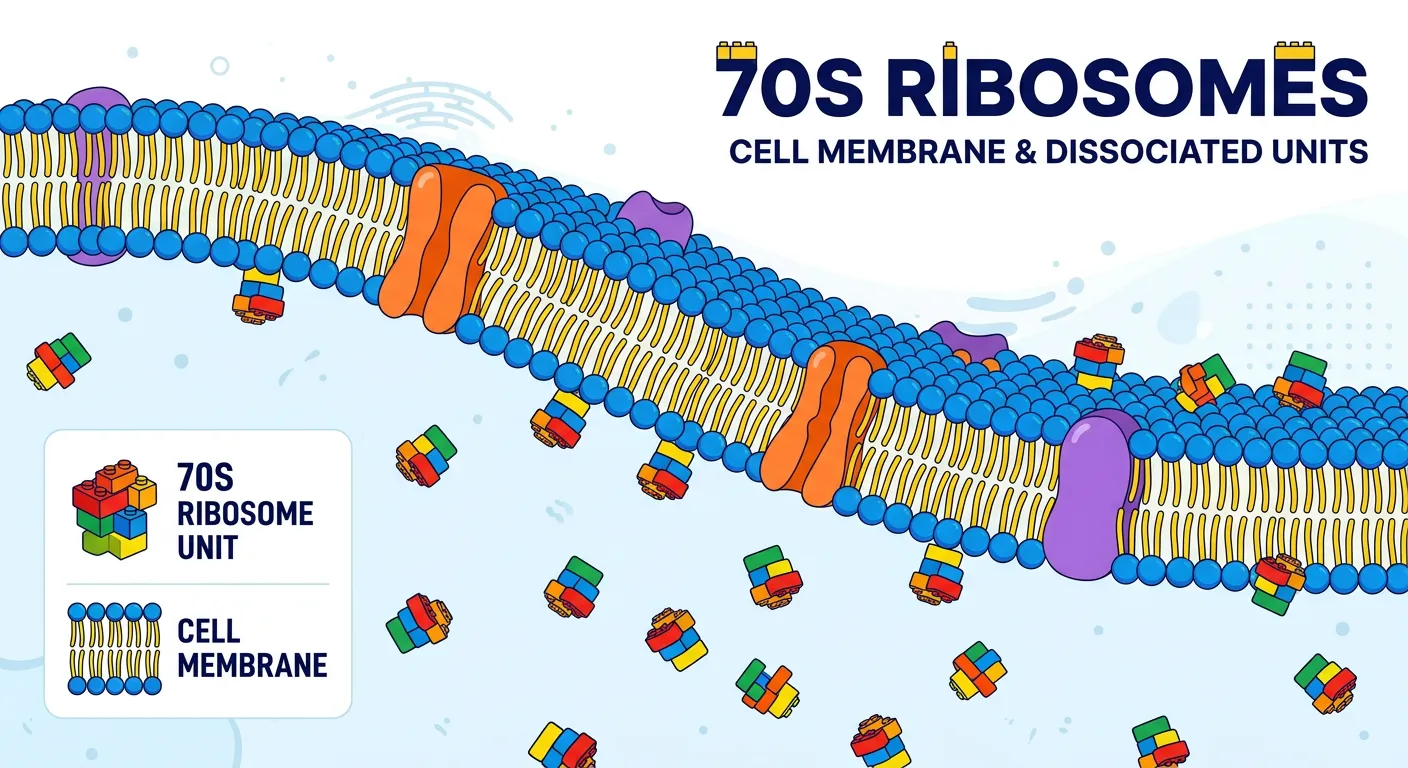
“Next, the protein factory! Prokaryotes use 70S ribosomes—think of them as smaller, simpler sewing machines for making proteins. They are scattered everywhere in the cytoplasm, working tirelessly to keep the cell running. In the NEET exam, remember: 70S is the hallmark of prokaryotic machinery.”
Ribosomes are often called the 'workhorses' of the cell, and they are the only organelle found in both prokaryotes and eukaryotes—though they aren't 'organelles' in the traditional sense because they lack a membrane. In prokaryotes, ribosomes are of the 70S variety. If you've ever wondered what the 'S' stands for, it is the Svedberg Unit (S), a measure of the sedimentation coefficient. This value reflects how fast a particle settles in a centrifuge, which depends on its density and shape rather than just its weight. This is why 50S and 30S subunits don't 'add up' to 80S; when they join together to form the 70S ribosome, their total surface area and density change.
Prokaryotic ribosomes are scattered throughout the cytoplasm and can also be found attached to the plasma membrane. A unique feature to watch for in your exam prep is the formation of 'Polysomes' or 'Polyribosomes.' This happens when several ribosomes attach to a single strand of mRNA simultaneously, creating a chain that looks like beads on a string. This allows a single gene to be translated into multiple copies of a protein very quickly, which is a major reason why bacteria can double their population every 20 minutes in ideal conditions.
From a medical perspective, the difference between prokaryotic 70S ribosomes and eukaryotic 80S ribosomes is life-saving. Many antibiotics, like Streptomycin or Tetracycline, are designed to specifically target and disable the 70S ribosome. Because our human cells primarily use 80S ribosomes, the antibiotic can kill the invading bacteria without harming the host’s protein synthesis machinery. This biochemical distinction is a favorite topic for NEET examiners.
| Feature | Small Subunit | Large Subunit | Complete Ribosome |
|---|---|---|---|
| Prokaryotic | 30S | 50S | 70S |
| Eukaryotic | 40S | 60S | 80S |
| Location | Cytoplasm | Cytoplasm | Cytoplasm/ER |
Quick Revision Points
- 70S ribosomes consist of two subunits: 50S (large) and 30S (small).
- The 'S' (Svedberg unit) measures density and sedimentation rate.
- Polysomes allow multiple ribosomes to translate a single mRNA strand simultaneously.
- These ribosomes are smaller and less dense than the 80S ribosomes found in eukaryotes.
NEET Exam Angle
- Remember: 70S ribosomes are also found inside eukaryotic mitochondria and chloroplasts (Endosymbiosis evidence).
- Identify 'Polysomes' as the structure translating mRNA into proteins in prokaryotes.
- Subunit math: 50 + 30 = 70 (Prokaryotic) and 60 + 40 = 80 (Eukaryotic).
04The Bacterial Cell Envelope: Glycocalyx, Cell Wall, and Plasma Membrane Triple-Shield
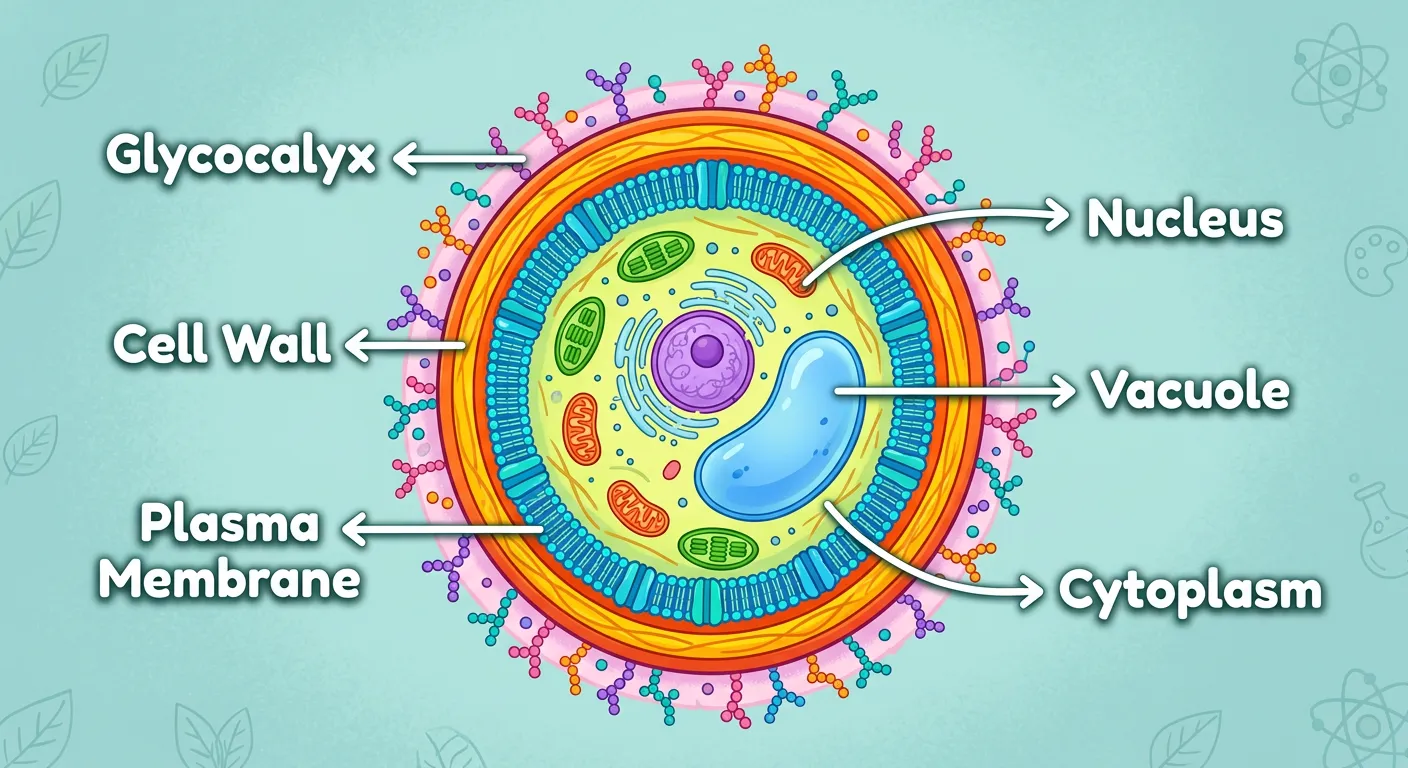
“Prokaryotes are tough! They have a complex triple-layer protection: the innermost plasma membrane, a rigid cell wall for shape, and an outermost slimy 'Glycocalyx'. This layer helps bacteria stick to surfaces and hide from our immune system. It’s like wearing a raincoat, a jacket, and an armor vest!”
Bacteria don't just have a skin; they have a sophisticated triple-layered defense system known as the cell envelope. The outermost layer is the glycocalyx. Depending on its consistency, it can be a loose, sticky 'slime layer' that helps the bacteria adhere to surfaces (like your teeth!), or a thick, tough 'capsule' that protects the cell from being eaten by white blood cells. This capsule is a major virulence factor; many pathogenic bacteria only cause disease if they possess this protective coating to evade the host's immune system.
Beneath the glycocalyx lies the cell wall, primarily composed of a unique polymer called peptidoglycan (or murein). This wall provides structural rigidity and prevents the cell from bursting due to osmotic pressure. It is important to note that while plants have cell walls made of cellulose, bacteria use peptidoglycan—a mix of sugars and amino acids. The differences in this wall thickness are what allow us to categorize bacteria into Gram-positive and Gram-negative groups using the Gram stain technique, a procedure frequently mentioned in NEET Biology modules.
The final layer is the plasma membrane, which is semi-permeable and regulates the flow of materials. In prokaryotes, the plasma membrane often folds inward to form specialized structures called mesosomes. Since bacteria lack mitochondria, mesosomes (and the plasma membrane itself) host the enzymes necessary for cellular respiration and DNA replication. This is a brilliant example of how prokaryotes adapt to the lack of organelles by using their outer boundary for internal work.
| Envelope Layer | Composition | Primary Function |
|---|---|---|
| Glycocalyx | Polysaccharides/Proteins | Protection/Attachment |
| Cell Wall | Peptidoglycan | Shape/Osmotic Protection |
| Plasma Membrane | Phospholipid Bilayer | Selective Permeability |
Quick Revision Points
- The cell envelope acts as a single protective unit but has three distinct layers.
- Capsule (thick/tough) vs. Slime Layer (loose/sticky) are types of glycocalyx.
- Peptidoglycan is the defining component of the bacterial cell wall.
- Mesosomes are membranous extensions involved in respiration and cell wall secretion.
NEET Exam Angle
- Question focus: Gram-positive bacteria have a thick peptidoglycan layer, while Gram-negative have a thin layer and an outer membrane.
- Note that mesosomes are analogous (not homologous) to mitochondria in function.
- Remember: Mycoplasmas are prokaryotes that completely lack a cell wall.
05Eukaryotic Specialization: The Role of Membrane-Bound Organelles and the True Nucleus
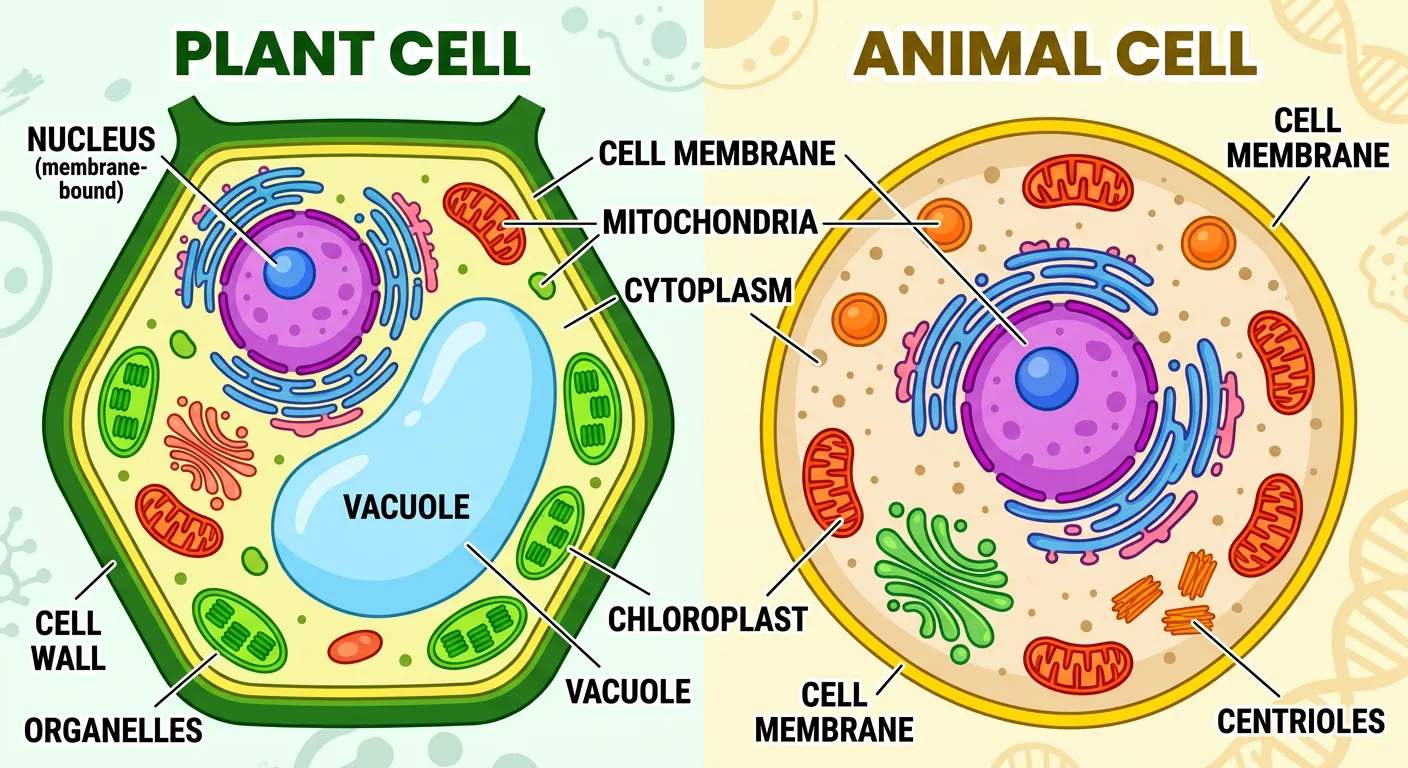
“Now, let’s step into the sophisticated Eukaryotic world. Here, the DNA is safely tucked inside a double-membrane nucleus, like a CEO in a private office. We also have specialized 'departments' called membrane-bound organelles—like mitochondria for energy and lysosomes for waste—making the cell incredibly efficient.”
Transitioning to eukaryotic cells is like moving from a studio apartment to a massive mansion. The most defining feature is the 'True Nucleus.' Unlike the messy nucleoid of prokaryotes, a eukaryotic nucleus is encased in a double-membrane nuclear envelope. This envelope is peppered with nuclear pores that act as high-security gates, controlling exactly which proteins enter and which RNA molecules exit. Inside, the DNA is linear and organized into chromatin via its association with histone proteins—alkaline proteins that act as spools for the DNA thread.
The real secret to eukaryotic success, however, is compartmentalization. By using membrane-bound organelles, the cell creates specialized environments. For example, lysosomes maintain an acidic pH to digest waste using hydrolytic enzymes; if these enzymes were loose in the cytoplasm, they would destroy the entire cell. Similarly, mitochondria act as power plants, sequestering the high-energy reactions of the electron transport chain within their inner membranes. This spatial separation allows for a level of metabolic complexity that prokaryotes simply cannot match.
Furthermore, eukaryotes possess an extensive endomembrane system, including the Endoplasmic Reticulum (ER) and the Golgi apparatus. The ER facilitates protein and lipid synthesis, while the Golgi acts as the post office, packaging and shipping molecules to their correct destinations. When studying for NEET, always think of these organelles as a coordinated system rather than isolated parts. The presence of a cytoskeleton (microtubules and microfilaments) also allows these larger cells to maintain their shape and move organelles around internally, a feature largely absent in the prokaryotic world.
| Organelle | Membrane Type | Key Function |
|---|---|---|
| Nucleus | Double Membrane | Genetic Control Center |
| Mitochondria | Double Membrane | ATP Production (Respiration) |
| Lysosome | Single Membrane | Intracellular Digestion |
| Ribosome | Non-Membranous | Protein Synthesis |
Quick Revision Points
- Eukaryotes have a true nucleus with a double-membrane envelope and a nucleolus.
- DNA is linear and associated with Histone proteins (Chromatin).
- Membrane-bound organelles (Mitochondria, Golgi, ER, Lysosomes) are present.
- Compartmentalization allows for simultaneous, specialized chemical reactions.
- The cytoskeleton provides structural support and facilitates intracellular transport.
NEET Exam Angle
- Remember the 'Double Membrane' organelles: Nucleus, Mitochondria, and Chloroplasts.
- Identify non-membranous structures: Ribosomes, Centrioles (animal cells), and Nucleolus.
- Focus on the role of histones in DNA packaging, a major eukaryotic distinction.
06The 80S Ribosome: Powering Complex Multicellular Life Forms
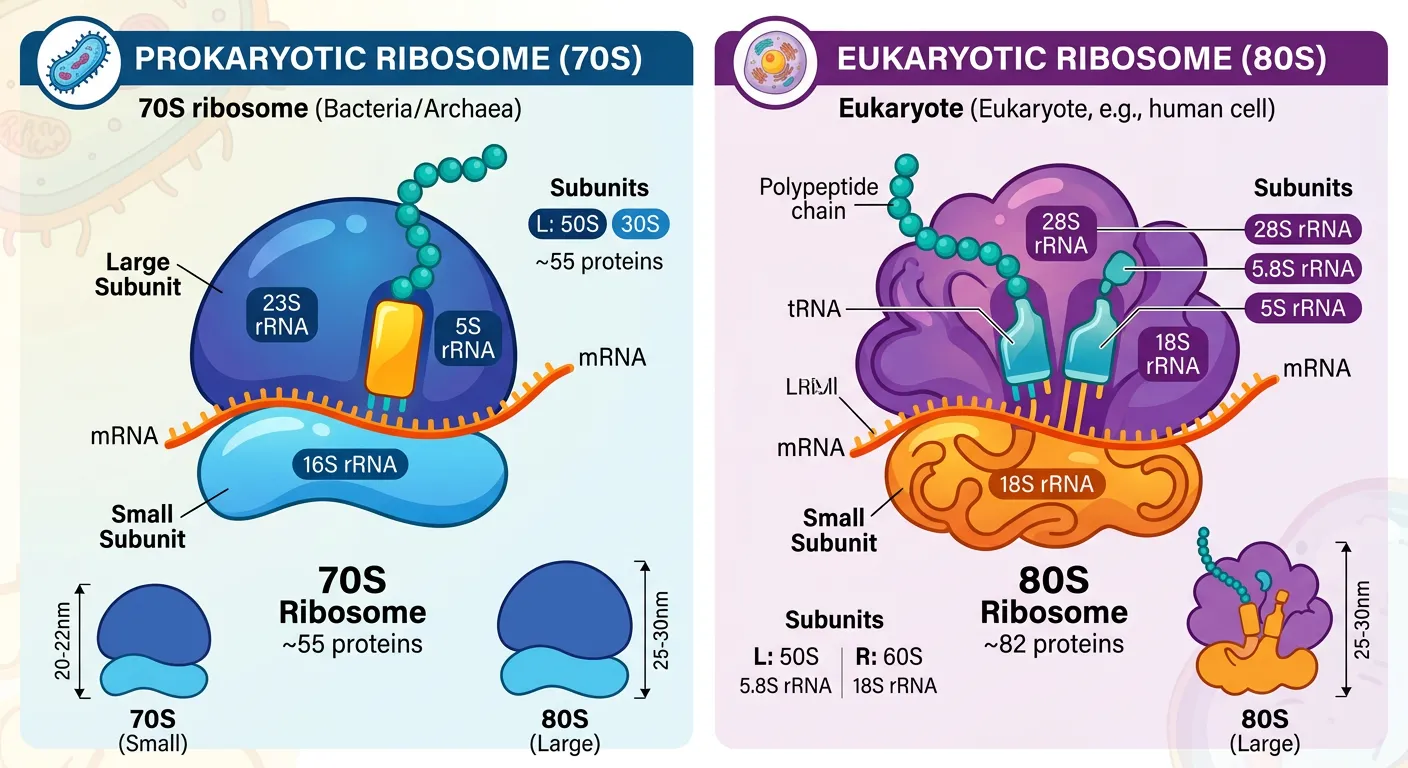
“Notice the upgrade? Eukaryotes utilize larger 80S ribosomes. These are the heavy-duty machinery required to support more complex life forms. Whether you're a human or a plant, these 80S ribosomes are the backbone of your massive protein synthesis needs. Always distinguish 70S vs 80S for your MCQs!”
In the eukaryotic cytoplasm, the protein factories get an upgrade to the 80S ribosome. These are larger and more complex than the 70S ribosomes of bacteria. Composed of a 60S large subunit and a 40S small subunit, these ribosomes are responsible for synthesizing the vast array of proteins required by complex organisms. You will find them in two states: 'free' ribosomes floating in the cytosol, which usually make proteins for use within the cell, and 'bound' ribosomes attached to the Rough Endoplasmic Reticulum (RER), which synthesize proteins destined for secretion or membrane insertion.
However, there is a fascinating 'biological twist' that often appears in NEET exams. While the main cytoplasm of a plant or animal cell contains 80S ribosomes, the mitochondria and chloroplasts inside that same cell contain 70S ribosomes! This is one of the strongest pieces of evidence for the Endosymbiotic Theory, which suggests that these organelles were once free-living bacteria that were swallowed by a larger host cell. This means that a single eukaryotic cell actually contains two different types of protein-synthesis machinery.
Why does size matter? The 80S ribosome is capable of more complex regulation and can handle the translation of much longer and more intricate mRNA sequences. This is necessary because eukaryotes have a much larger 'proteome' (the entire set of proteins expressed by a genome) than prokaryotes. As you prepare for your exam, always double-check whether a question is asking about 'cytoplasmic ribosomes' or 'organellar ribosomes' in eukaryotes, as the answer will vary between 80S and 70S.
Quick Revision Points
- Eukaryotic cytoplasmic ribosomes are 80S (Subunits: 60S and 40S).
- Ribosomes can be free (in cytosol) or bound (to the RER).
- Mitochondria and Chloroplasts contain 70S ribosomes, similar to prokaryotes.
- 80S ribosomes are larger and more complex than prokaryotic 70S ribosomes.
- They are non-membranous structures made of rRNA and proteins.
NEET Exam Angle
- Critical Fact: 70S ribosomes are found in BOTH prokaryotes AND eukaryotic organelles (Mitochondria/Plastids).
- The 'S' value is not additive (60 + 40 ≠ 80). It depends on sedimentation speed.
- Ribosomes are the 'universal' organelle, present in all living cells except viruses.
07Evolutionary Summary: Contrast and Convergence in Cell Biology
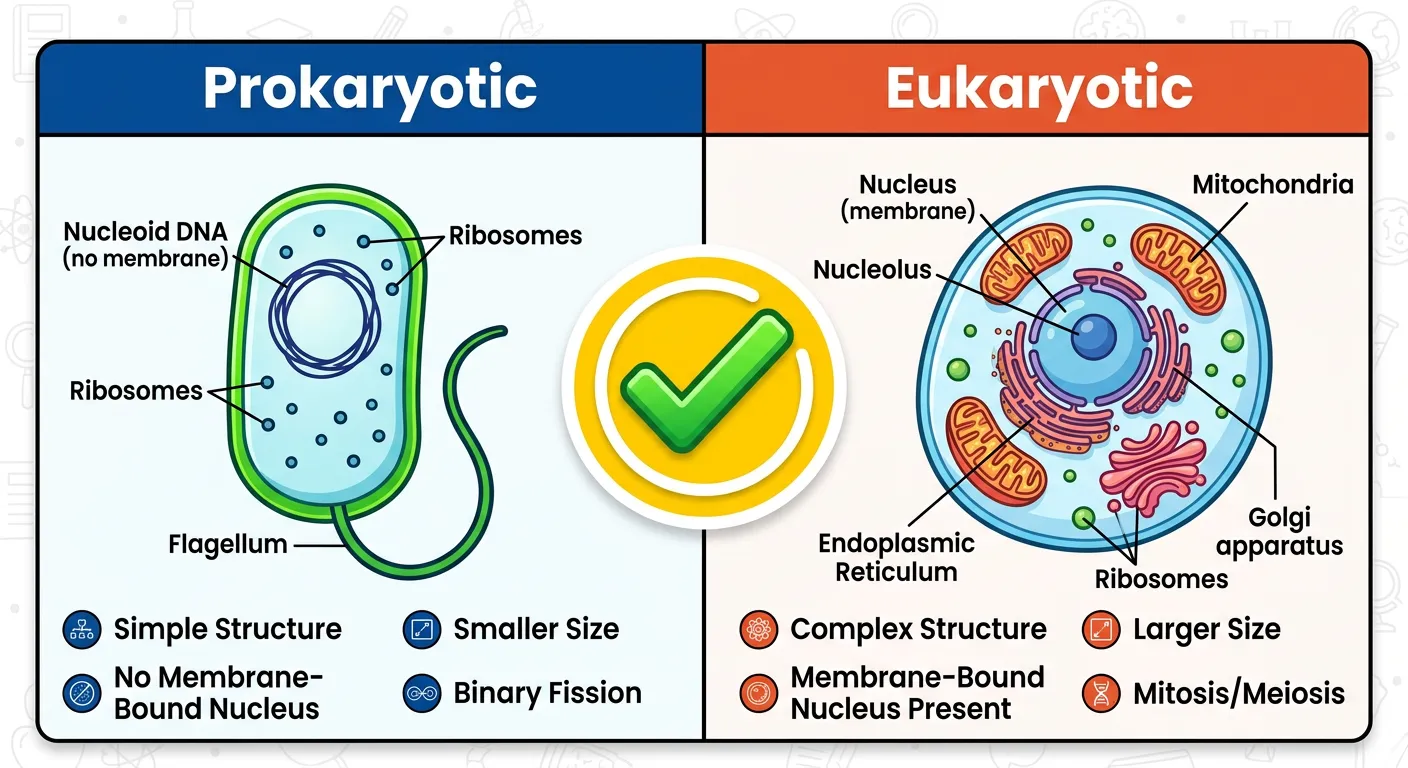
“To wrap up: Prokaryotes are small, simple, and membrane-less, like bacteria. Eukaryotes are large, complex, and organized, like us! Remember, life’s diversity starts with this basic structural choice. Master these basics, and you've already conquered the foundation of Cell Biology for your NEET exam. Keep learning!”
To master this topic for NEET, you must be able to compare these two cell types side-by-side across various parameters. Prokaryotes represent the 'minimalist' approach to life—fast, efficient, and resilient. Eukaryotes represent the 'specialist' approach—organized, complex, and highly adaptable. Despite their differences, both share a universal 'biological currency': they both use DNA as genetic material, they both have a plasma membrane, and they both use ribosomes to make proteins. This commonality points toward a single common ancestor for all life on Earth.
The Endosymbiotic Theory serves as the bridge between these two worlds. It explains why eukaryotes, despite being so different, carry 'prokaryotic relics' like 70S ribosomes and circular DNA inside their mitochondria. For your final revision, ensure you can distinguish organisms not just by their cell type, but by their specific characteristics, such as the presence of peptidoglycan in bacteria versus chitin in fungi or cellulose in plants.
In the NEET exam, questions often test your ability to identify 'exceptions.' For instance, while most prokaryotes have a cell wall, Mycoplasma does not. While most eukaryotes have a nucleus, mature human Red Blood Cells (RBCs) and sieve tube cells in plants lose theirs to become more efficient at their specialized roles. Mastery of these nuances, along with the fundamental structural differences, will ensure you are well-prepared for any cell biology question thrown your way.
| Feature | Prokaryotes | Eukaryotes |
|---|---|---|
| Nucleus | Absent (Nucleoid) | Present with Nuclear Envelope |
| Genetic Material | Circular, Naked DNA | Linear DNA with Histones |
| Ribosomes | 70S | 80S (70S in organelles) |
| Organelles | Membrane-bound absent | Membrane-bound present |
| Cell Division | Binary Fission | Mitosis and Meiosis |
Quick Revision Points
- Prokaryotes (Bacteria/Archaea) vs. Eukaryotes (Protists, Fungi, Plants, Animals).
- Endosymbiotic Theory explains the origin of mitochondria and chloroplasts.
- Commonalities: Plasma membrane, Cytoplasm, DNA, and Ribosomes.
- Eukaryotic complexity enables multicellularity and specialized tissue systems.
NEET Exam Angle
- Revision Key: Focus on the 'Exceptions' (RBCs, Sieve tubes, Mycoplasma).
- Always check for 'Incorrect' vs 'Correct' statements regarding cell organelles in PYQs.
- Remember: Prokaryotes lack a cytoskeleton, while it is highly developed in eukaryotes.
Recommended Reading
Explore related Biology topics to build deeper chapter connections for NEET.
- Cell Theory · Topic 3.1
- Golgi Bodies · Topic 3.10
- Lysosomes · Topic 3.11
- Vacuoles · Topic 3.12
- Plastids · Topic 3.15
- Plant and Animal Cell · Topic 3.3
- Jump to Key Terms (Quick Revision)
- Review Common NEET Mistakes
- Solve NEET Practice MCQs
- Read Topic FAQs
- Practice NEET MCQs
- Solve NEET PYQs
📚 Key Terms
⚠️ Common NEET Mistakes
- 1Thinking that 50S + 30S subunits should add up to 80S mathematically; remember, Svedberg units are based on density and shape, not mass.
- 2Assuming all prokaryotes have a cell wall—always remember that Mycoplasma is the major exception.
- 3Confusing the location of 70S ribosomes; they are not just in bacteria, but also inside eukaryotic mitochondria and chloroplasts.
- 4Believing that 'naked DNA' means the DNA has no protection; it specifically means the absence of Histone proteins.
- 5Mistaking mesosomes for a type of organelle; they are actually just extensions of the plasma membrane.
📝 NEET PYQ & Practice Questions
Test your understanding of Prokaryotic and Eukaryotic Cell with NCERT-aligned sample questions.
Which of the following statements is correct regarding "Nucleoid" in the context of NEET Biology?
In NEET question papers, questions related to "Prokaryotic and Eukaryotic Cell" predominantly test:
Consider Glycocalyx associated with Prokaryotic and Eukaryotic Cell. What is the primary characteristic expected in NEET MCQs?
Master Prokaryotic and Eukaryotic Cell with NeetQ AI Tutor
Practice 50+ topic-wise MCQs, previous 15 years NEET questions, and get step-by-step doubt resolution instantly.
❓ Frequently Asked Questions
What is the main structural difference between a nucleoid and a nucleus?
A nucleoid is a non-membrane-bound region in prokaryotes where circular DNA is located, while a nucleus is a double-membrane-bound organelle in eukaryotes containing linear DNA and a nucleolus.
Why are prokaryotic ribosomes called 70S while eukaryotic ones are 80S?
The 'S' refers to Svedberg units, a measure of sedimentation rate in a centrifuge. Prokaryotic ribosomes are smaller and less dense (70S), whereas eukaryotic cytoplasmic ribosomes are larger and denser (80S).
Which organelles in a eukaryotic cell contain 70S ribosomes?
Mitochondria and chloroplasts (in plants) contain 70S ribosomes, which supports the Endosymbiotic Theory of their bacterial origins.
What is the function of the glycocalyx in bacterial cells?
The glycocalyx provides protection and helps in adhesion. As a 'capsule,' it protects pathogenic bacteria from the host's immune system; as a 'slime layer,' it helps bacteria stick to surfaces.
Do all eukaryotic cells have a cell wall?
No. Plant cells (cellulose), fungal cells (chitin), and some protists have cell walls, but animal cells completely lack a cell wall.
Are membrane-bound organelles present in any prokaryotic species?
No, the defining characteristic of all prokaryotes is the total absence of membrane-bound organelles like mitochondria, ER, or Golgi bodies.
Written By
NEET Content Strategist & Biology Expert
Sangita Kumari is a NEET educator and content strategist with over 6 years of experience teaching Biology, Chemistry, and Physics to Class 11 and 12 aspirants. She helps bridge the gap between traditional NCERT preparation and modern AI-powered learning. Her content is trusted by thousands of NEET aspirants across India.