🎬 Video Lesson Available
Watch the full 7-slide video lesson for Endoplasmic Reticulum with AI teacher narration and visual explanations.
Endoplasmic Reticulum — Master the Endoplasmic Reticulum (ER) for NEET. Detailed guide on RER protein synthesis, SER lipid production, and detoxification for Class 11 Biology.
01The Cellular Assembly Line: An Introduction to the Endoplasmic Reticulum System
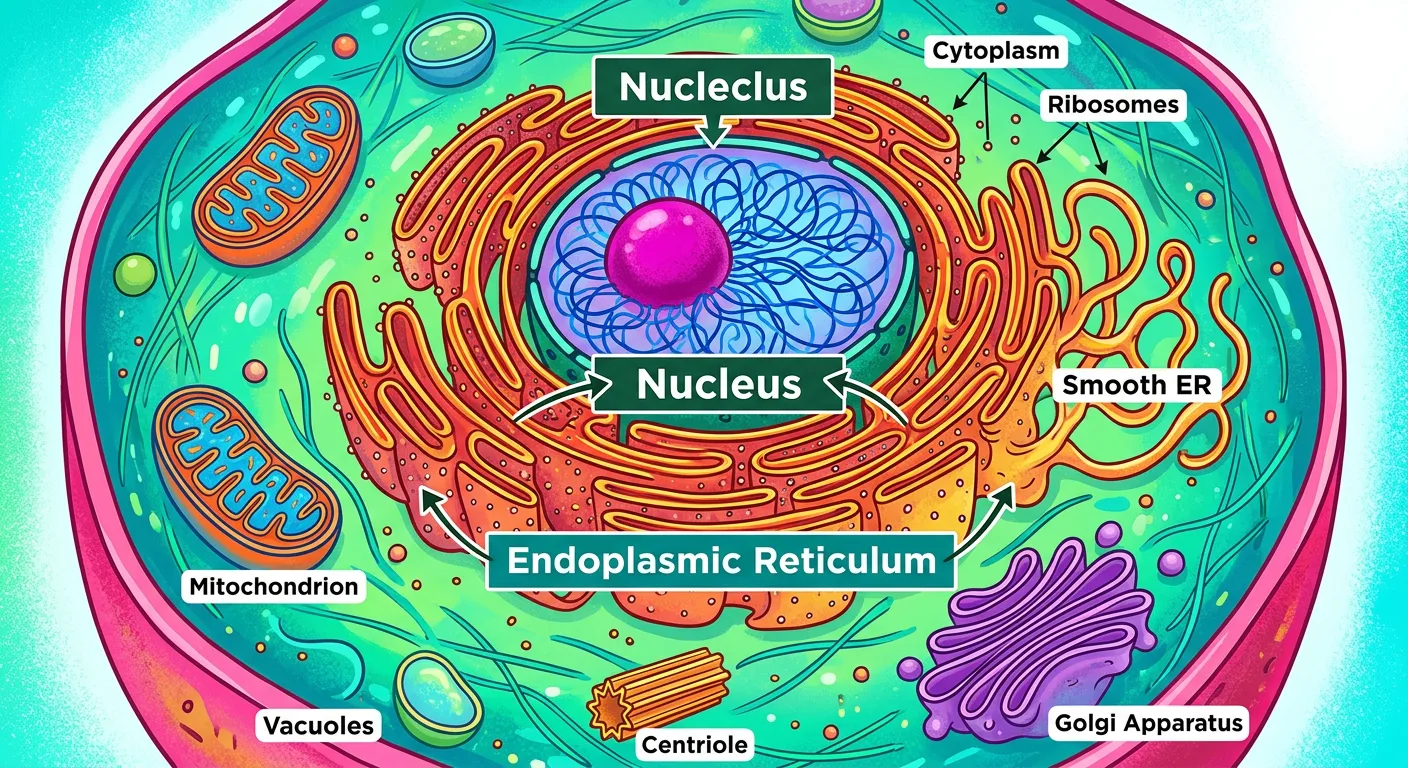
“Welcome, future doctors! Imagine the cell as a bustling Indian kitchen. Today, we visit the Endoplasmic Reticulum, or the ER. Think of it as the extensive conveyor belt system or the main assembly line spread throughout the cytoplasm, essential for the cell's daily production.”
In the complex world of the cell, organization is everything. Think of the Endoplasmic Reticulum (ER) as the primary manufacturing and logistics hub. Discovered by scientists like Keith Porter, Albert Claude, and Ernest Fullam, the ER is an extensive network of membrane-bound channels, tubules, and sacs called cisternae that occupy a significant portion of the cytoplasm. For a NEET aspirant, it is crucial to understand that the ER doesn't just float aimlessly; it is a structured system that divides the intracellular space into two distinct compartments: the luminal space (inside the ER) and the extra-luminal space (the cytoplasm outside the ER).
If we imagine the cell as a busy Indian kitchen, the ER serves as the massive conveyor belt system that spans across the entire room. It provides the mechanical support to the cytoplasm and acts as a highway for the transport of materials. In eukaryotic cells, except for mature mammalian Red Blood Cells (RBCs) and certain embryonic cells, the ER is nearly ubiquitous. Its presence is so foundational that the very identity of the endomembrane system begins with its structural continuity.
The complexity of the ER varies depending on the metabolic activity of the cell. Cells that are highly active in protein or lipid synthesis will have a more extensive and branched ER network. This structural plasticity allows the cell to adapt to its physiological needs, whether it is producing digestive enzymes in the pancreas or synthesizing steroid hormones in the adrenal glands. Understanding this 'logistics expert' is your first step toward mastering cell biology for the exam.
Quick Revision Points
- The ER is a network of tiny tubular structures scattered in the cytoplasm.
- It divides the intracellular space into luminal and extra-luminal compartments.
- Found in almost all eukaryotic cells (absent in mature RBCs and prokaryotes).
- Provides a large surface area for various metabolic activities and enzymatic reactions.
- It is the 'skeleton' of the cell, providing internal structural support.
NEET Exam Angle
- Focus on the discovery: Porter, Claude, and Fullam (1945).
- Remember the compartment division: Luminal vs. Extra-luminal is a frequent NCERT-based question topic.
- Note the absence in RBCs: This is a common point of comparison in cellular physiology questions.
| Feature | Description for NEET |
|---|---|
| Nature | Pleomorphic (exists in multiple forms like cisternae and tubules) |
| Discovery | Electron microscopy was essential for its detailed study |
| Origin | Originates from the outer nuclear membrane |
02Rough Endoplasmic Reticulum (RER): The Ribosome-Studded Protein Factory
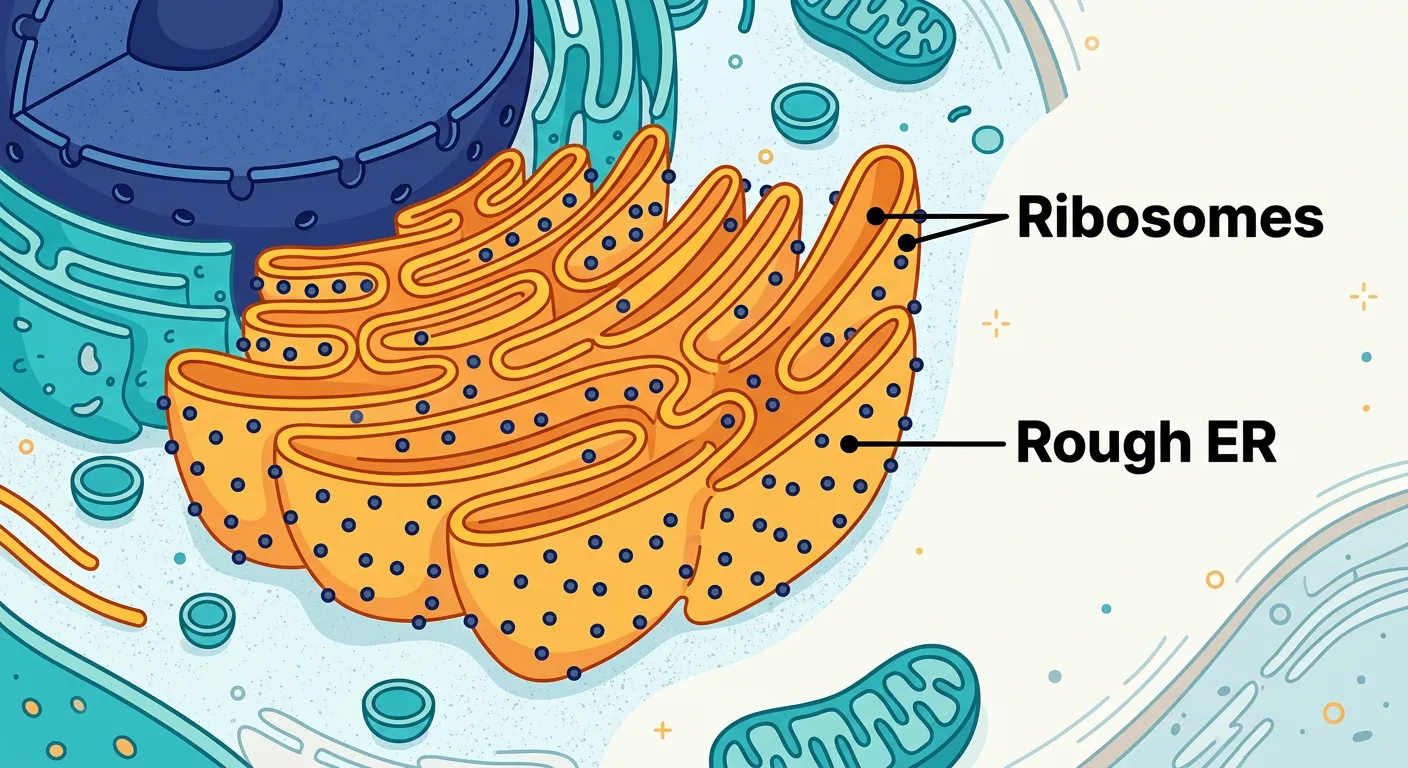
“Meet the Rough ER! Why rough? Because it is studded with tiny dots called ribosomes. Just like a busy spice-grinding machine in our kitchen, these ribosomes are protein factories. They attach to the ER membrane to synthesize proteins that the cell desperately needs to function.”
The Rough Endoplasmic Reticulum (RER) earns its name from its appearance under an electron microscope. It is 'studded' with tiny granular structures called ribosomes on its outer surface. These ribosomes are not just decoration; they are the protein-making machines of the cell. The RER is predominantly composed of cisternae—flattened, sac-like structures that are often arranged in parallel rows. This organization is perfect for cells that are specialized for protein secretion, such as the cells of the pancreas that produce insulin or digestive enzymes.
When a protein is being synthesized, the ribosome attaches to the RER membrane via specific docking proteins called translocons. These proteins ensure that the newly formed polypeptide chain is injected directly into the ER lumen. Inside the lumen, the protein undergoes its first round of folding and quality control. This is why the RER is always continuous with the outer nuclear membrane—it needs to be close to the source of genetic instructions (mRNA) coming from the nucleus.
For NEET, remember that the prevalence of RER is a direct indicator of the cell's function. If a cell is designed to secrete proteins, its RER will be highly developed and extensive. Conversely, cells that primarily synthesize lipids or don't secrete much protein will have very little RER. The RER also plays a role in producing membrane proteins that eventually end up in the plasma membrane or the membranes of other organelles like lysosomes.
Quick Revision Points
- RER has ribosomes attached to its outer surface (cytosolic side).
- It is primarily composed of cisternae and is more stable than the SER.
- Main function: Synthesis and secretion of proteins.
- Often found in cells like pancreatic acinar cells and goblet cells.
- RER is continuous with the outer nuclear envelope.
NEET Exam Angle
- Match the following: RER → Protein Secretion (a classic PYQ pattern).
- Know the attachment: Ribosomes attach to the ER membrane via glycoproteins called Ribophorin I and II.
- High-Yield: RER is extensive in cells active in 'protein synthesis and secretion' (exact NCERT phrasing).
| Cell Type | ER Status | Primary Reason |
|---|---|---|
| Pancreatic Cell | Extensive RER | High demand for enzyme production |
| Fibroblast | Extensive RER | Synthesis of collagen and other proteins |
| Muscle Cell | Specialized SER | Storage of calcium (Sarcoplasmic Reticulum) |
03Smooth Endoplasmic Reticulum (SER): Specialized Lipid and Steroid Synthesis
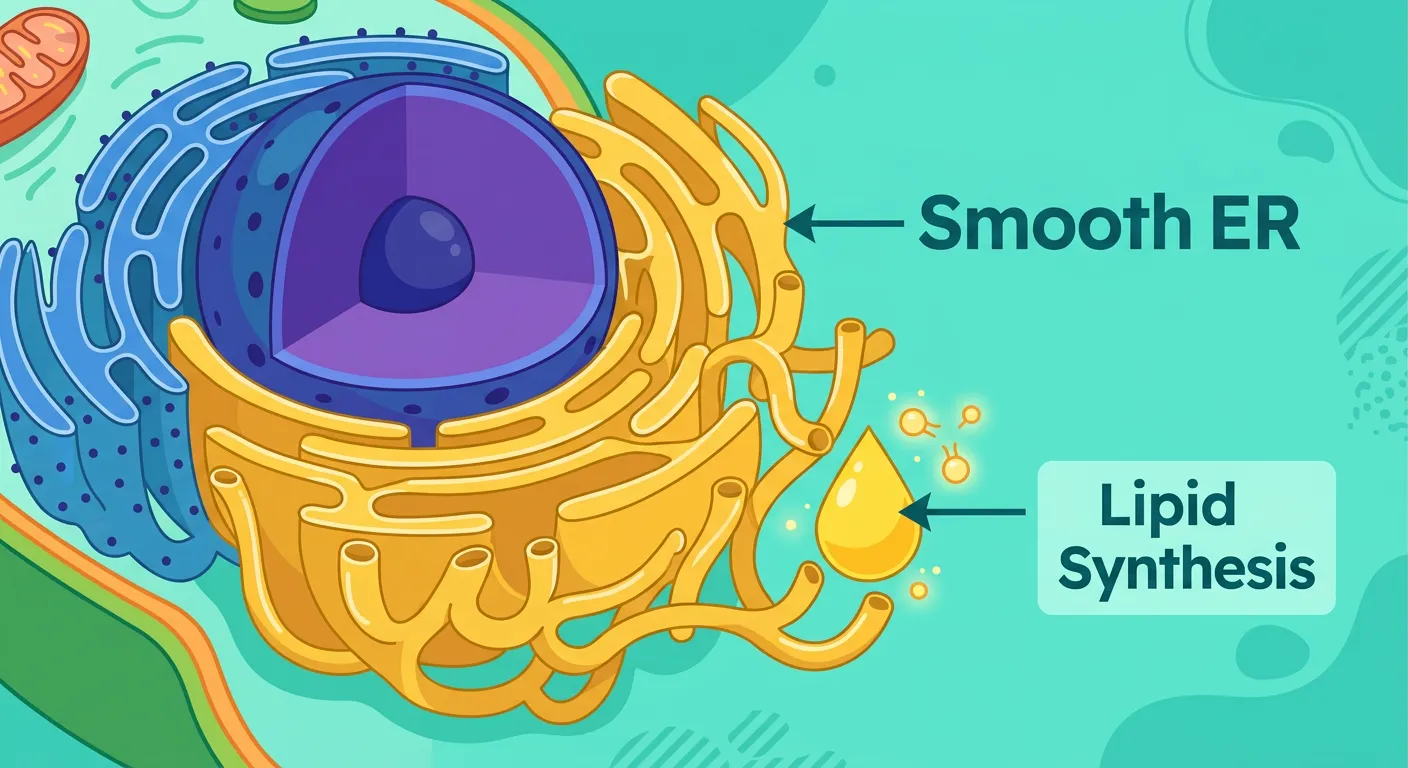
“Next is the Smooth ER, which lacks ribosomes. It looks like a smooth network of tubules. Its primary job is manufacturing lipids, or fats. In our kitchen analogy, if the Rough ER is the protein station, the Smooth ER is the oil and butter production center.”
Moving away from the protein-heavy zones, we encounter the Smooth Endoplasmic Reticulum (SER). As the name suggests, it lacks ribosomes on its surface, giving it a smooth, tubular appearance. Unlike the RER, which is mostly cisternae, the SER is primarily composed of a network of branching tubules. This structural difference is the first clue to its functional difference: the SER is the world's best 'oil and fat' production factory. It is the major site for the synthesis of lipids, including phospholipids and cholesterol, which are essential for repairing and building cell membranes.
In animal cells, the SER takes on an even more specialized role. It is responsible for the synthesis of lipid-like steroid hormones. If you think about the organs in your body that produce these hormones—like the testes (testosterone), ovaries (estrogen), and adrenal cortex (cortisol)—you will find that their cells are packed with SER. This is a high-yield point for NEET because it connects Unit 3 (Cell) with Unit 5 (Human Physiology).
Another critical role of the SER is its participation in carbohydrate metabolism. It helps in the process of gluconeogenesis and the breakdown of glycogen (glycogenolysis) in the liver. Because it lacks ribosomes, it doesn't participate in protein synthesis, but its role in maintaining the 'chemical balance' of the cell is unparalleled. Without a healthy SER, our cells would literally run out of the building blocks for their own boundaries.
Quick Revision Points
- SER lacks ribosomes; hence it appears smooth.
- Primary site for lipid synthesis (phospholipids, cholesterol).
- Site for steroid hormone synthesis in animal cells.
- Primarily composed of branching tubules rather than cisternae.
- Involved in carbohydrate metabolism and glycogen storage.
NEET Exam Angle
- Steroid hormones: SER is the site for testosterone and estrogen precursors. Keep this in mind for match-the-column questions.
- Location: SER is highly developed in cells of the sebaceous glands and gonads.
- Structure: Know that SER is often found near the cell periphery, unlike RER which is perinuclear.
| Feature | Rough ER (RER) | Smooth ER (SER) |
|---|---|---|
| Surface | Ribosomes present | Ribosomes absent |
| Shape | Mostly Cisternae | Mostly Tubules |
| Function | Protein synthesis | Lipid/Steroid synthesis |
04The Master Detoxifier: How the Smooth ER Protects the Internal Environment
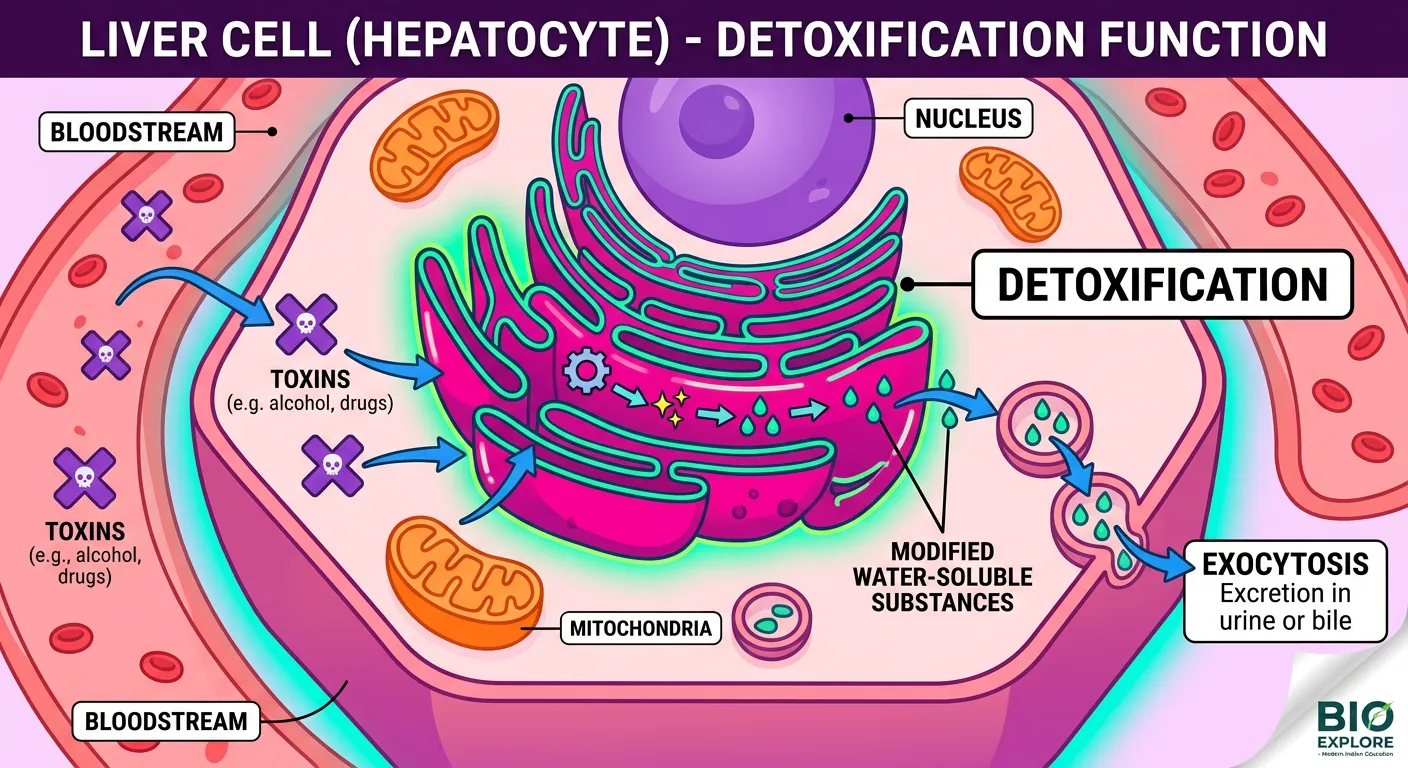
“Did you know the Smooth ER is a master detoxifier? In liver cells, it works like a water purifier, neutralizing toxic substances and drugs. It ensures that the harmful stuff doesn't damage our system, keeping the internal environment of the cell safe and clean for everyone.”
While lipid synthesis is its 'day job,' the Smooth Endoplasmic Reticulum has a critical 'night job': detoxification. This function is most prominent in the liver cells (hepatocytes). Every time you take a medication or if toxic substances enter your bloodstream, the SER in your liver goes into overdrive. It uses a family of enzymes, most notably the Cytochrome P450 family, to make these toxic substances more water-soluble. This process allows the toxins to be safely excreted from the body through urine or bile.
Think of the SER in the liver as the cell's personal water purifier. Without it, drugs like phenobarbital or environmental toxins would linger in our systems, eventually reaching lethal levels. Interestingly, the SER is 'inducible.' If a person regularly consumes a certain drug, the liver cells will actually increase the amount of SER to handle the increased toxic load. This is one of the reasons why people develop a tolerance to certain medications over time.
Beyond detoxification, the SER has a specialized form in muscle cells known as the Sarcoplasmic Reticulum. Here, its main job isn't making lipids or cleaning toxins; it is the storage and release of calcium ions ($Ca^{2+}$). When a muscle needs to contract, the Sarcoplasmic Reticulum releases a flood of calcium into the cytoplasm. When the muscle needs to relax, it pumps the calcium back inside. This makes the SER essential for every movement your body makes, from blinking your eyes to running a marathon.
Quick Revision Points
- Liver SER is responsible for the detoxification of drugs and poisons.
- Uses Cytochrome P450 enzymes for metabolic processing.
- Sarcoplasmic Reticulum (a type of SER) stores calcium ions in muscle cells.
- Plays a role in releasing glucose from the liver via the G6P enzyme.
- It is highly adaptable and can increase in volume based on metabolic demand.
NEET Exam Angle
- High-Yield: Sarcoplasmic Reticulum stores $Ca^{2+}$. This is a very common question in the Locomotion and Movement unit as well.
- Detoxification location: Always associate 'Detoxification' with 'SER' and 'Liver'.
- Enzyme focus: Glucose-6-phosphatase is located on the SER membrane.
| Specialization | Name | Primary Function |
|---|---|---|
| Muscle Cells | Sarcoplasmic Reticulum | Calcium storage/Muscle contraction |
| Liver Cells | Hepatic SER | Detoxification of drugs/toxins |
| Nerve Cells | Nissl's Granules | Actually RER/Ribosomes (Don't confuse with SER!) |
05Cellular Logistics: Vesicle Packaging and the Golgi Connection
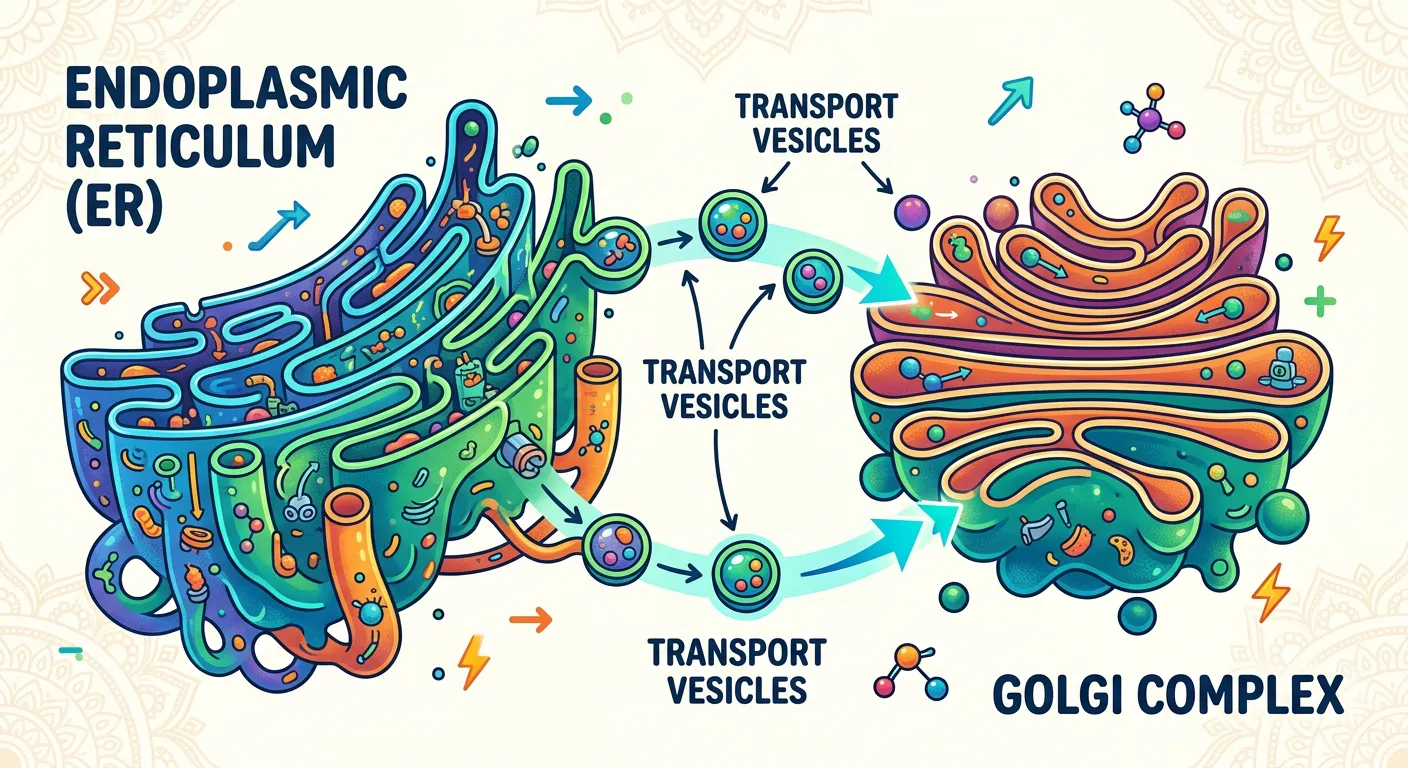
“The ER isn't just a producer; it is a logistics expert. Once proteins and lipids are made, the ER packages them into little bubbles called vesicles. These act like delivery vans, transporting materials from the ER to the Golgi apparatus for further processing and final packing.”
The Endoplasmic Reticulum does not work in isolation; it is a vital member of the endomembrane system, which also includes the Golgi apparatus, lysosomes, and vacuoles. Once the RER has synthesized a protein or the SER has manufactured a lipid, these products need to be shipped to their final destinations. This is where the ER's role as a logistics expert comes into play. The materials are packaged into small, membrane-bound sacs called transport vesicles.
These vesicles bud off from specialized areas of the ER known as the 'transitional ER.' Think of these as the loading docks of the assembly line. From here, the vesicles travel through the cytoplasm to reach the 'cis' face (the receiving side) of the Golgi apparatus. This pathway is a one-way street for most secretory proteins. The constant budding of vesicles from the ER and their fusion with the Golgi is what keeps the cellular 'supply chain' moving.
In the context of NEET, it is important to understand that the ER and Golgi are functionally linked. If the ER stops producing vesicles, the Golgi will eventually disappear because it relies on the incoming ER membrane to maintain its own structure. This relationship is why the ER is often found in such close proximity to the Golgi. The efficient transfer of materials via bulk transport ensures that the cell can secrete hormones, enzymes, and structural proteins exactly when and where they are needed.
Quick Revision Points
- ER packages products into transport vesicles for shipping.
- These vesicles travel to the cis-face (forming face) of the Golgi apparatus.
- The 'Transitional ER' is the specific site for vesicle budding.
- This process is part of the coordinated endomembrane system.
- Vesicles protect the cargo from being degraded by cytoplasmic enzymes.
NEET Exam Angle
- Flow of materials: ER → Cis-Golgi → Trans-Golgi → Plasma Membrane/Lysosome.
- NCERT Concept: Materials to be packaged in the form of vesicles from the ER fuse with the cis face of the Golgi apparatus.
- Note on 'Bulk Transport': This is the mechanism for exporting large molecules.
| Step | Location | Activity |
|---|---|---|
| 1 | ER Lumen | Protein folding and modification |
| 2 | Transitional ER | Vesicle formation (budding) |
| 3 | Cytoplasm | Vesicle transport to Golgi |
| 4 | Cis-Golgi | Fusion and delivery of cargo |
06The Nuclear Bridge: Continuity Between the Nucleus and Cytoplasm
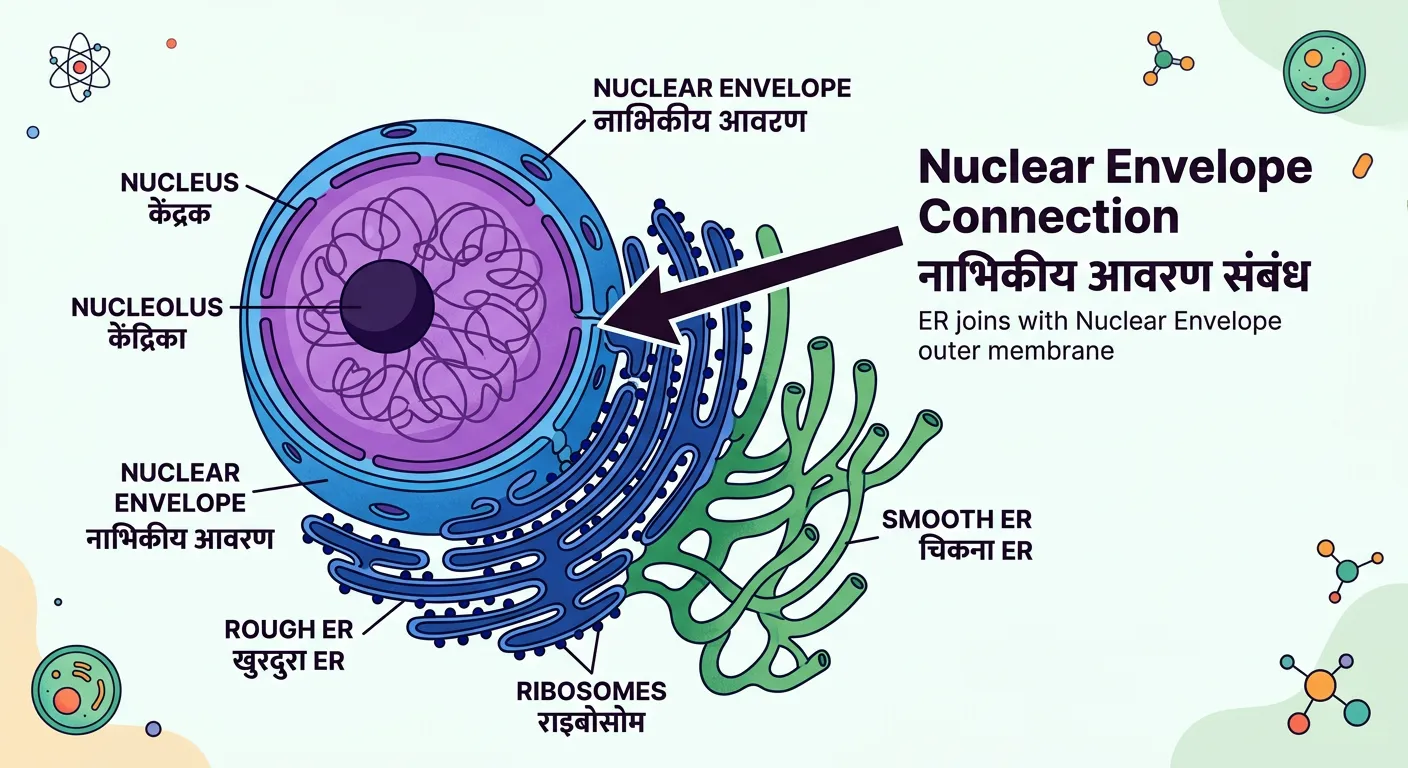
“Observe the structure carefully: the ER membrane is directly continuous with the nuclear envelope. It acts as the bridge between the cell’s command center and the rest of the cytoplasm, ensuring a smooth flow of instructions and materials throughout the entire cell factory.”
One of the most striking features of the Endoplasmic Reticulum is its physical relationship with the nucleus. The ER is not a detached organelle; its membrane is directly continuous with the outer membrane of the nuclear envelope. This creates a shared space called the perinuclear space, which is continuous with the lumen of the ER. This structural bridge is vital for the functional flow of the cell.
When the nucleus sends out instructions in the form of messenger RNA (mRNA), those instructions pass through nuclear pores and often immediately encounter the ribosomes waiting on the RER. By being physically attached to the nucleus, the RER ensures that there is no delay in translating genetic code into functional proteins. It also provides a structural framework that helps anchor the nucleus in its specific position within the cell.
During cell division (mitosis), this relationship becomes even more interesting. In the prophase, the nuclear envelope and the ER both fragment and disappear. Later, in the telophase, the ER pieces help in the reconstruction of the new nuclear envelopes for the daughter cells. This highlights that the ER is not just a factory; it is a dynamic structural component that is essential for the cell's life cycle and its ability to communicate its genetic 'blueprint' to the rest of the cytoplasm.
Quick Revision Points
- ER membrane is continuous with the outer nuclear membrane.
- The space between the two nuclear membranes is continuous with the ER lumen.
- This continuity facilitates the rapid translation of mRNA.
- ER provides mechanical support and anchors the nucleus.
- ER plays a key role in reforming the nuclear envelope during cell division.
NEET Exam Angle
- Perinuclear Space: Know that this space is 10-50 nm wide and connects to the ER.
- Nuclear Pores: These are the exit points for mRNA that then 'land' on the RER.
- Mitosis Connection: Remember that ER and Golgi disappear during late prophase and reappear in telophase.
| Structure | Relationship | Significance |
|---|---|---|
| Outer Nuclear Membrane | Directly continuous with ER | Physical and functional bridge |
| Nuclear Pores | Embedded in the envelope | Regulated exit for mRNA to reach ER |
| Perinuclear Space | Fluid-filled gap | Continuous with the luminal compartment |
07NEET Exam Strategy: Mastering RER vs. SER for High-Yield Scores
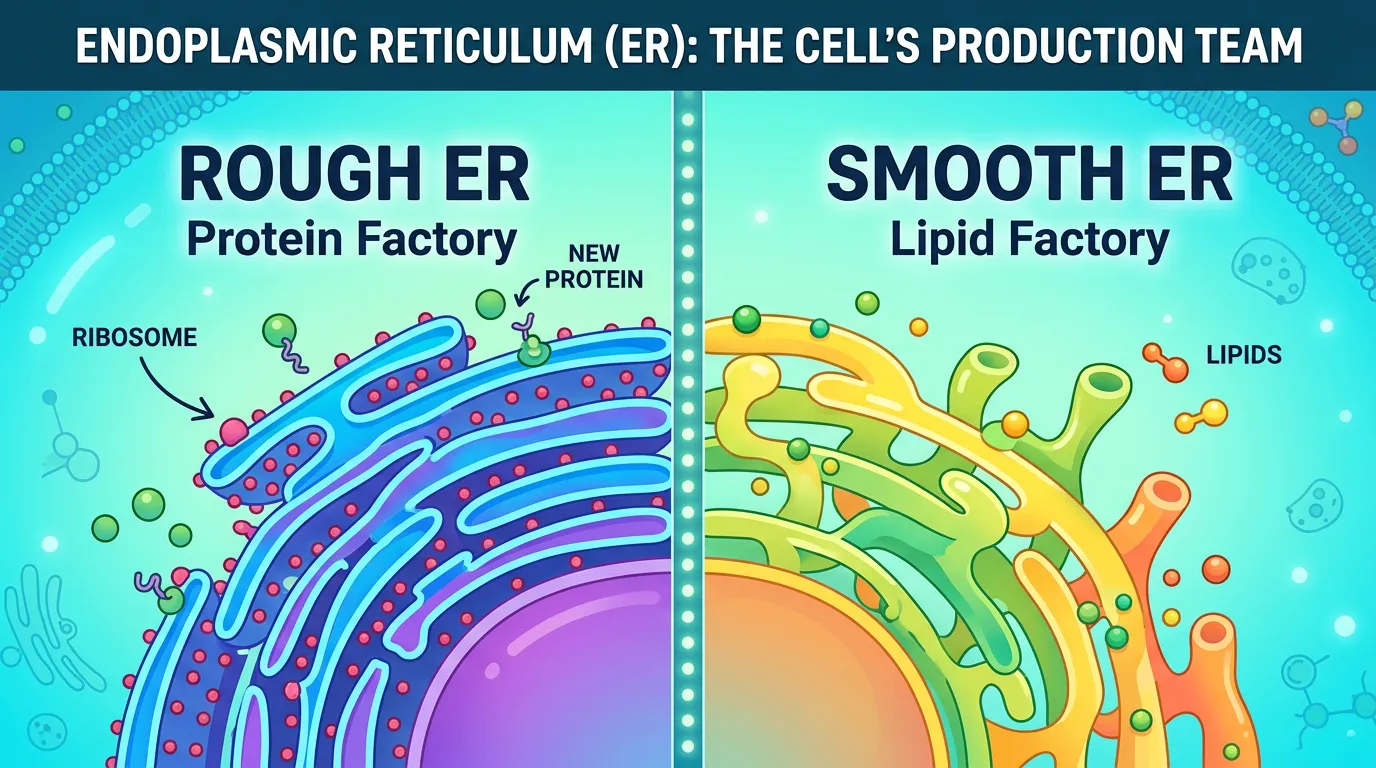
“To wrap up: Rough ER is for proteins, Smooth ER is for lipids and detoxification. Master these two, and you have conquered one of the most important organelles for your NEET exam. Keep studying, keep growing, and see you in the next lecture!”
As we wrap up our deep dive into the Endoplasmic Reticulum, let's focus on what will get you those 4 marks in the NEET exam. The most common questions center on the functional differences between the Rough ER and the Smooth ER. You must be able to instantly associate RER with 'Protein Synthesis and Secretion' and SER with 'Lipid/Steroid Synthesis and Detoxification.' If you see a question about a cell with a high concentration of ribosomes, your mind should immediately go to RER. If it's about a cell in the liver or the gonads, look for SER.
Another high-yield area is the 'Endomembrane Flow.' Remember the sequence: Genetic instructions in the Nucleus → Protein synthesis in the RER → Packaging into vesicles → Modification in the Golgi → Final delivery. This flow is the basis of how a cell interacts with its environment. Also, keep the 'Kitchen Analogy' in mind: RER is the station for solid food (proteins), SER is the station for oils and fats (lipids), and the whole system is the conveyor belt that keeps the restaurant (cell) running.
Finally, pay attention to the specific NCERT terminology. Phrases like 'network of tiny tubular structures' and 'luminal vs extra-luminal' are frequently lifted directly from the textbook for exam options. Do not ignore the structural components: cisternae, vesicles, and tubules. While they all form the ER, their proportions change depending on whether it is RER or SER. Practice these distinctions, and you will be well-prepared for any question on this organelle.
Quick Revision Points
- RER = Ribosomes = Protein Synthesis/Secretion.
- SER = No Ribosomes = Lipid/Steroid Synthesis + Detoxification.
- ER provides the framework for the endomembrane system.
- Vesicles are the 'delivery vans' of the ER.
- ER is essential for cytoplasmic volume division and structural support.
NEET Exam Angle
- Common Trap: Don't confuse SER with Nissl's granules (found in neurons, these are actually RER).
- High-Yield Organ: The Liver is the best example of highly developed SER.
- Match the Column: Practice matching 'Sarcoplasmic Reticulum' with 'Calcium Storage'.
- Exam Frequency: ER questions appear in nearly 70% of previous years' papers in some form.
| Area of Interest | Key Word for NEET | Likely Context |
|---|---|---|
| RER | Secretion | Pancreas, Goblet cells |
| SER | Steroids | Adrenal cortex, Testes |
| Calcium | SER | Muscle contraction |
| Detoxification | SER | Liver (Hepatocytes) |
Recommended Reading
Explore related Biology topics to build deeper chapter connections for NEET.
- Cell Theory · Topic 3.1
- Golgi Bodies · Topic 3.10
- Lysosomes · Topic 3.11
- Vacuoles · Topic 3.12
- Plastids · Topic 3.15
- Prokaryotic and Eukaryotic Cell · Topic 3.2
- Jump to Key Terms (Quick Revision)
- Review Common NEET Mistakes
- Solve NEET Practice MCQs
- Read Topic FAQs
- Practice NEET MCQs
- Solve NEET PYQs
📚 Key Terms
⚠️ Common NEET Mistakes
- 1Thinking that ribosomes are found on both RER and SER. Remember: RER is 'rough' because of ribosomes; SER is 'smooth' because it lacks them.
- 2Confusing the roles: Students often swap the functions of RER and SER. Link 'R' in RER to 'Ribosomes' and 'P' in Proteins.
- 3Assuming all cells have the same amount of ER. In reality, the RER/SER ratio depends entirely on the cell's specialized function.
- 4Forgetting that the ER is absent in prokaryotes and mature mammalian RBCs. This is a common comparative biology question.
- 5Confusing Nissl's granules in neurons with SER. Nissl's granules are actually RER and free ribosomes involved in protein synthesis.
📝 NEET PYQ & Practice Questions
Test your understanding of Endoplasmic Reticulum with NCERT-aligned sample questions.
Which of the following statements is correct regarding "Rough Endoplasmic Reticulum (RER)" in the context of NEET Biology?
In NEET question papers, questions related to "Endoplasmic Reticulum" predominantly test:
Consider Cisternae associated with Endoplasmic Reticulum. What is the primary characteristic expected in NEET MCQs?
Master Endoplasmic Reticulum with NeetQ AI Tutor
Practice 50+ topic-wise MCQs, previous 15 years NEET questions, and get step-by-step doubt resolution instantly.
❓ Frequently Asked Questions
What are the primary differences between RER and SER in terms of structure and function?
Structural difference: RER has ribosomes on its surface and is mainly made of flattened cisternae, while SER lacks ribosomes and is primarily composed of branching tubules. Functional difference: RER is the site for protein synthesis and secretion; SER is the site for lipid synthesis, steroid hormone production, and detoxification.
Why is the Smooth ER highly developed in liver cells compared to other cells?
Smooth ER is highly developed in liver cells (hepatocytes) because the liver is the primary organ for detoxifying drugs, poisons, and metabolic wastes. The SER contains enzymes like Cytochrome P450 that facilitate these detoxification processes.
How does the Endoplasmic Reticulum facilitate the production of steroid hormones?
In animal cells, the Smooth ER contains the enzymes necessary to convert cholesterol into various steroid hormones, such as testosterone in the testes, estrogen in the ovaries, and cortisol in the adrenal cortex.
What is the relationship between the Endoplasmic Reticulum and the Golgi Apparatus?
The ER and Golgi are functionally linked members of the endomembrane system. Proteins and lipids synthesized in the ER are packaged into transport vesicles that bud off and fuse with the 'cis' (forming) face of the Golgi for further processing and sorting.
Is the lumen of the Endoplasmic Reticulum connected to the nuclear space?
Yes. The ER membrane is continuous with the outer nuclear membrane. This means the space between the two nuclear membranes (perinuclear space) is directly connected to the internal space (lumen) of the ER.
Which type of ER is dominant in cells involved in active protein secretion like the pancreas?
Rough Endoplasmic Reticulum (RER) is dominant in such cells. Because the pancreas must secrete large amounts of digestive enzymes (which are proteins), it requires an extensive network of RER and ribosomes.
Written By
NEET Content Strategist & Biology Expert
Sangita Kumari is a NEET educator and content strategist with over 6 years of experience teaching Biology, Chemistry, and Physics to Class 11 and 12 aspirants. She helps bridge the gap between traditional NCERT preparation and modern AI-powered learning. Her content is trusted by thousands of NEET aspirants across India.