🎬 Video Lesson Available
Watch the full 7-slide video lesson for Five Kingdom Classification with AI teacher narration and visual explanations.
Five Kingdom Classification — Master the Five Kingdom Classification for NEET. Explore Monera, Protista, Fungi, Plantae, and Animalia with R.H. Whittaker’s criteria and expert exam tips.
01The Dawn of Modern Taxonomy: R.H. Whittaker’s 1969 Classification System
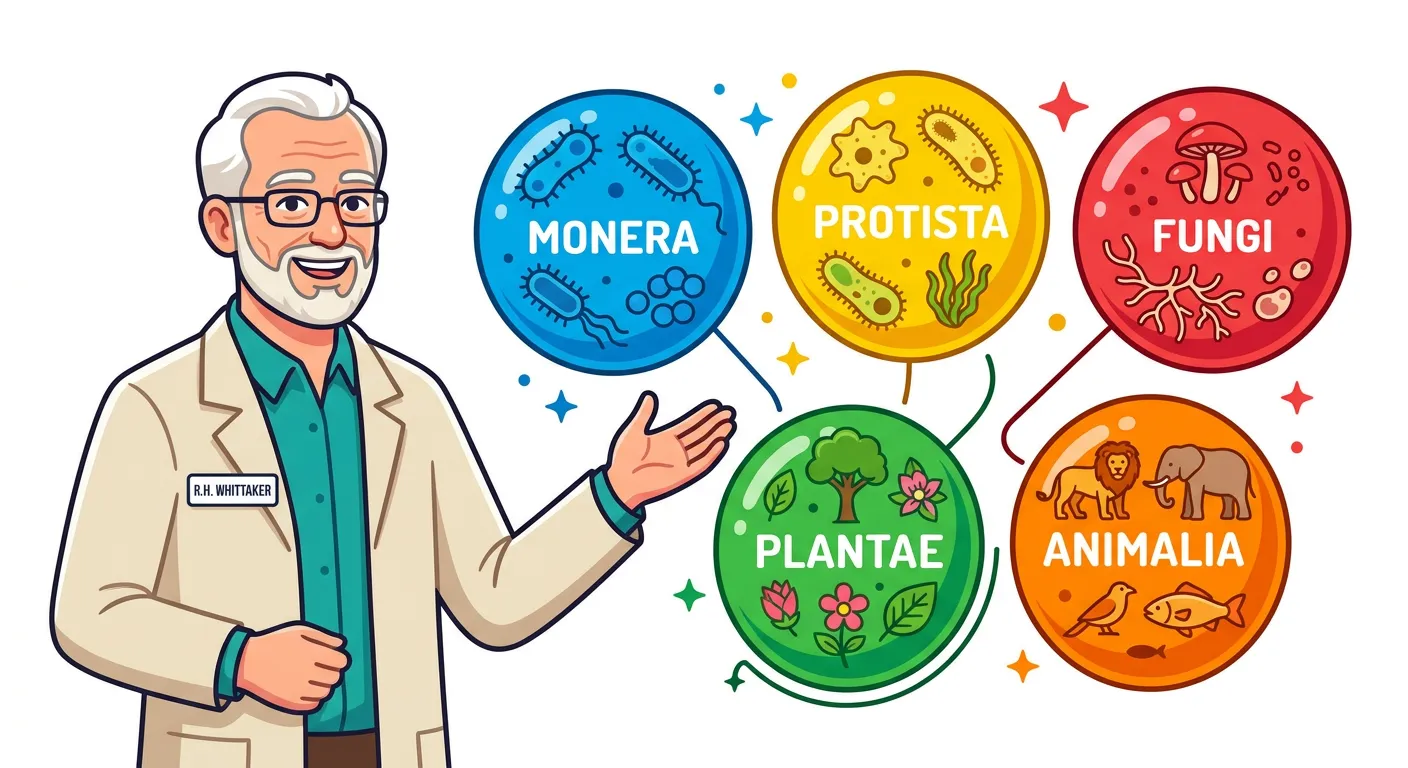
“Welcome, future doctors! In 1969, R.H. Whittaker proposed the Five Kingdom system. Imagine sorting a chaotic market into organized zones—that is what this classification does! It groups every living organism based on cell structure, body organization, and mode of nutrition to make biology easier to master.”
For centuries, the biological world was divided into a simple binary: Plants and Animals. This system, popularized by Carolus Linnaeus, served its purpose when our tools were limited to the naked eye. However, as microscopy advanced, scientists realized that grouping a bacterium with a sunflower or a mushroom with a mango tree was fundamentally flawed. The Two-Kingdom system failed to distinguish between eukaryotes and prokaryotes, unicellular and multicellular organisms, and photosynthetic and non-photosynthetic life forms. It was like trying to organize a modern library using only two shelves.
In 1969, American ecologist Robert H. Whittaker revolutionized taxonomy by proposing the Five Kingdom Classification. This wasn't just a random addition of categories; it was a systematic overhaul based on specific biological complexities. Whittaker looked beyond the surface, focusing on how cells are built and how organisms acquire energy. His system brought much-needed clarity by moving fungi into their own kingdom and separating prokaryotes from eukaryotes. This remains the gold standard for NEET aspirants because it forms the structural backbone of biological classification.
Whittaker’s system is anchored by five critical criteria: Cell structure (prokaryotic vs. eukaryotic), Thallus organization (body complexity), Mode of nutrition (the most important criterion), Reproduction, and Phylogenetic relationships (evolutionary history). By incorporating phylogeny, Whittaker shifted taxonomy from a static 'snapshot' to a dynamic 'family tree' of life.
Quick Revision Points
- Timeline: Proposed by R.H. Whittaker in 1969.
- Criteria: Cell type, body organization, nutrition, reproduction, and evolutionary lineage.
- Key Shift: Mode of nutrition (Autotrophic vs. Heterotrophic) became a primary defining feature.
- Resolution: It solved the 'Fungi Problem' by recognizing they are non-photosynthetic decomposers.
- Inclusion: It brought all prokaryotes under Kingdom Monera, regardless of their visual appearance.
NEET Exam Angle
- High-Yield Fact: Phylogenetic relationship is often cited in PYQs as the criterion that makes this system modern and evolutionary.
- NCERT Focus: Be prepared to identify which criteria were not used by Linnaeus but were used by Whittaker.
- Common Question: Which kingdom was the last major addition to bridge the gap between simple and complex life? (Kingdom Protista).
| System | Number of Kingdoms | Main Deficiency |
|---|---|---|
| Linnaeus | 2 | No distinction between Prokaryotes and Eukaryotes |
| Whittaker | 5 | Does not account for acellular life (Viruses/Viroids) |
02Kingdom Monera: The Diverse World of Unicellular Prokaryotes
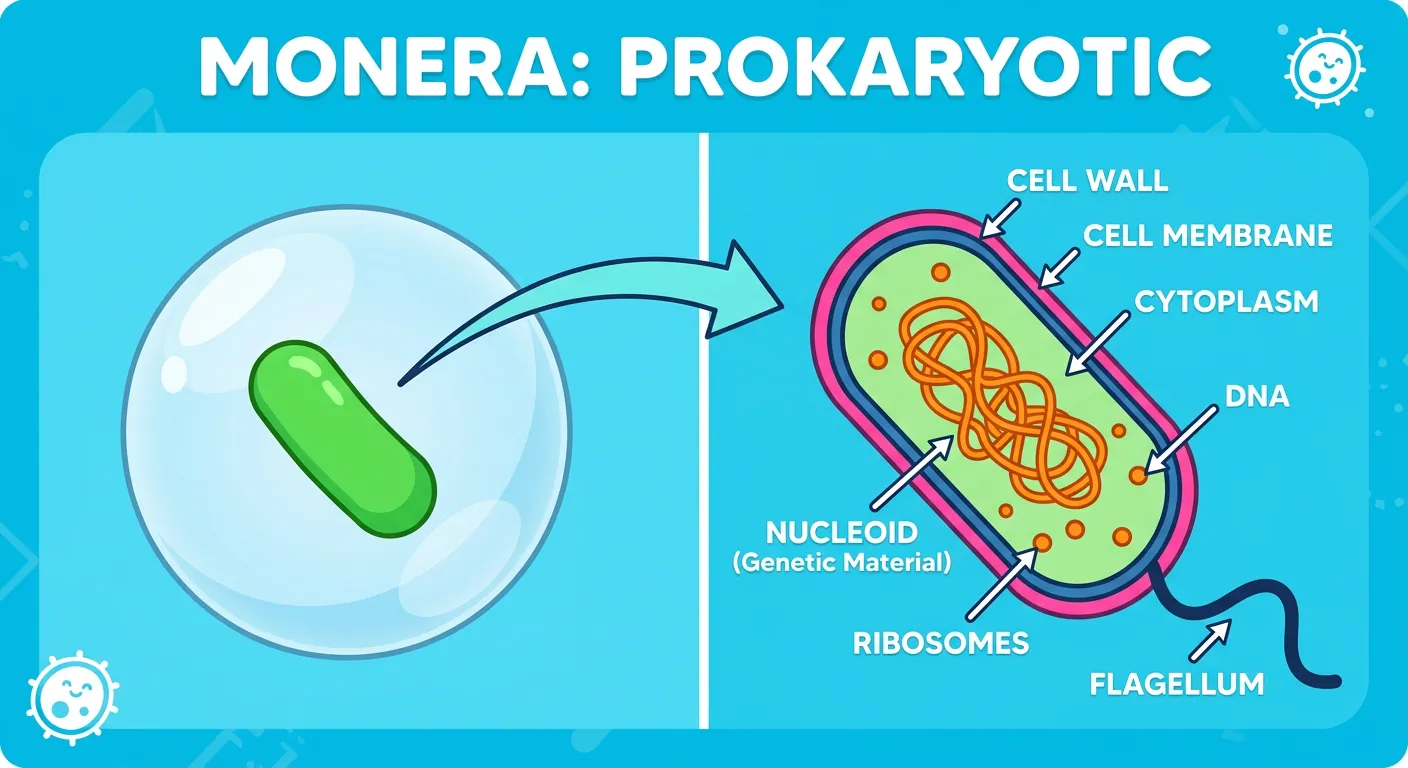
“First up, Kingdom Monera. Think of these as the 'primitive settlers'. They are unicellular prokaryotes, meaning they lack a defined nucleus. Bacteria are the stars here! They are everywhere, from your kitchen curd to deep-sea vents, proving that being small doesn't mean being insignificant.”
Kingdom Monera represents the most ancient and primitive form of life on Earth. If you look at a drop of water or a handful of soil, you are looking at the vast empire of Monerans. The defining characteristic of this kingdom is its prokaryotic nature. This means these organisms lack a nuclear membrane and membrane-bound organelles like mitochondria or chloroplasts. In the world of Monera, bacteria are the sole members, showcasing an incredible range of metabolic adaptations that allow them to thrive in environments where no other life can survive.
Within Monera, we categorize organisms into two major groups: Archaebacteria and Eubacteria. Archaebacteria are the 'extremophiles,' surviving in salty marshes (halophiles), hot springs (thermoacidophiles), and even the gut of ruminants (methanogens). Eubacteria, or 'true bacteria,' are more common and include both autotrophs like Cyanobacteria (Blue-green algae) and heterotrophic decomposers. It is a common misconception that all bacteria are harmful pathogens; in reality, the majority are essential for nutrient cycling, nitrogen fixation, and even the production of antibiotics.
The metabolic diversity in Monera is unmatched. Some are photoautotrophs, using sunlight; others are chemoautotrophs, oxidizing inorganic substances like nitrates and ammonia to produce energy. This metabolic flexibility is a frequent focus in NEET exams, especially the role of specialized cells like heterocysts in nitrogen-fixing cyanobacteria.
Quick Revision Points
- Cell Type: Unicellular prokaryotes (no defined nucleus).
- Cell Wall: Non-cellulosic (composed of polysaccharides and amino acids/peptidoglycan).
- Nutrition: Autotrophic (chemosynthetic/photosynthetic) or Heterotrophic (saprophytic/parasitic).
- Major Groups: Archaebacteria (ancient) and Eubacteria (true bacteria).
- Special Structures: Heterocysts in Nostoc and Anabaena for Nitrogen fixation.
NEET Exam Angle
- PYQ Trend: Questions often ask about the cell wall composition of Monerans compared to Fungi.
- Key Term: 'Methanogens' are frequently linked to biogas production and the rumen of cattle in match-the-column questions.
- Must Know: Bacteria are the most abundant microorganisms and the sole members of this kingdom.
| Moneran Type | Environment | Metabolic Highlight |
|---|---|---|
| Halophiles | Extreme Salty areas | Specialized cell membranes |
| Methanogens | Marshy areas/Gut of cattle | Produce Methane (CH4) |
| Cyanobacteria | Aquatic/Terrestrial | Oxygenic Photosynthesis |
03Kingdom Protista: The Evolutionary Bridge and Unicellular Eukaryotes
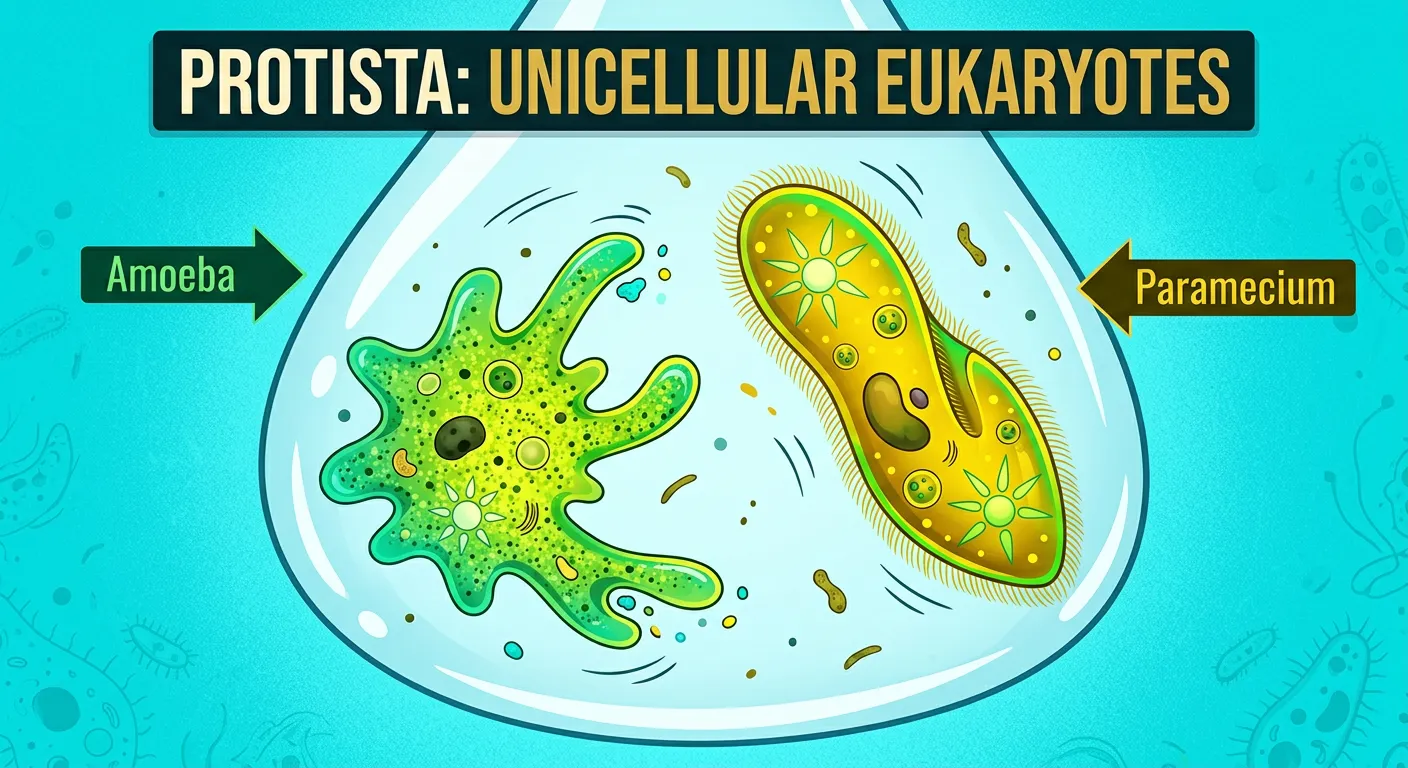
“Next is Kingdom Protista. If Monera are the settlers, Protista are the 'complex loners'. These are unicellular eukaryotes—they have a proper nucleus! Examples like Amoeba and Paramecium live in water. They are the confusing bridge between simple bacteria and the complex organisms we see today.”
Kingdom Protista is often described as the 'taxonomic biological drawer'—if a unicellular organism has a nucleus but doesn't fit perfectly as a plant, animal, or fungus, it likely belongs here. This kingdom acts as a vital evolutionary bridge, connecting the simple prokaryotic Monerans to the complex multicellular eukaryotes. Because the boundaries of this kingdom are not well-defined, what one biologist considers a 'protistan alga,' another might classify as a plant. This ambiguity is exactly why Protista is so fascinating and frequently tested.
Protists are primarily aquatic. Being eukaryotes, they possess a well-defined nucleus and membrane-bound organelles. Some have flagella or cilia for movement, like Euglena or Paramecium. The diversity within this kingdom is staggering, ranging from the photosynthetic Chrysophytes (diatoms) and Dinoflagellates to the predatory Protozoans and the saprophytic Slime Moulds. Diatoms, for instance, are the 'chief producers' in the ocean and leave behind vast deposits of silica known as diatomaceous earth.
One of the most high-yield topics in Protista is the study of Euglenoids. They are mixotrophic, meaning they behave like autotrophs in sunlight but turn into heterotrophs when light is absent. This dual nature perfectly illustrates the 'bridge' concept of the kingdom, linking plant-like and animal-like characteristics in a single cell.
Quick Revision Points
- Cell Type: Unicellular Eukaryotes (has a nucleus).
- Habitat: Primarily aquatic (freshwater and marine).
- Reproduction: Both asexual and sexual (cell fusion and zygote formation).
- Flagella/Cilia: Present in many for locomotion (e.g., Trypanosoma, Paramoecium).
- Key Groups: Chrysophytes, Dinoflagellates, Euglenoids, Slime Moulds, and Protozoans.
NEET Exam Angle
- Diatomaceous Earth: Remember this is formed by the cell walls of Chrysophytes (Diatoms) and is used in polishing and filtration.
- Red Tides: Caused by the rapid multiplication of Dinoflagellates like Gonyaulax.
- Pathogens: Protozoans like Plasmodium (Malaria) and Amoeba (Dysentery) are critical for the Human Health and Disease chapter connection.
| Protista Group | Movement | Nutrition Style |
|---|---|---|
| Chrysophytes | Passive (Float) | Photosynthetic |
| Dinoflagellates | Flagella (2) | Photosynthetic |
| Protozoans | Pseudopodia/Cilia | Heterotrophic (Holozoic/Parasitic) |
04Kingdom Fungi: Heterotrophic Decomposers and Saprophytic Specialists
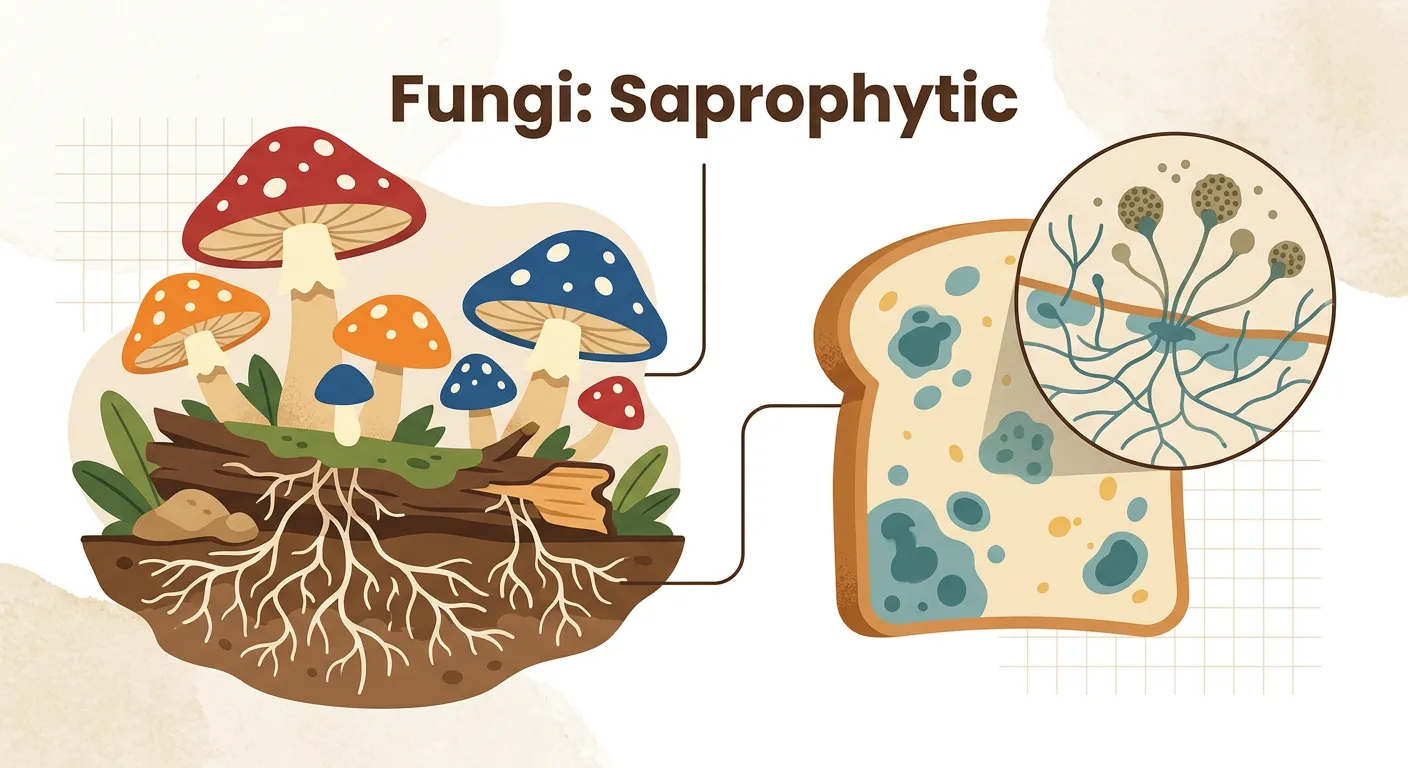
“Now, meet the 'nature's recyclers'—Kingdom Fungi. These aren't plants; they don't perform photosynthesis. Instead, they are heterotrophic, absorbing nutrients from decaying organic matter like a sponge. From mushrooms on your pizza to the yeast in your bread, they are essential to our ecosystem's cleanup crew.”
For a long time, fungi were lumped together with plants because they are stationary and often grow out of the soil. However, Whittaker recognized that they are fundamentally different. Unlike plants, fungi lack chlorophyll and cannot perform photosynthesis. Instead, they are heterotrophic, specifically saprophytic, meaning they secrete digestive enzymes onto dead organic matter and then absorb the dissolved nutrients. They are the biosphere’s ultimate recyclers, breaking down complex organic molecules back into simpler forms.
The structural makeup of fungi is also unique. Except for unicellular yeast, fungi consist of long, slender, thread-like structures called hyphae. A network of these hyphae is known as a mycelium. Some hyphae are continuous tubes filled with multinucleated cytoplasm (coenocytic hyphae), while others have septae or cross-walls. Their cell walls are not made of cellulose like plants but are composed of chitin—a tough, nitrogen-containing polysaccharide. This 'chitin vs. cellulose' distinction is a classic NEET question favorite.
Fungi also form fascinating symbiotic relationships. They live in association with algae as lichens and with the roots of higher plants as mycorrhiza. In these partnerships, the fungus provides mineral absorption and protection, while the partner provides food or carbohydrates. From the antibiotic-producing Penicillium to the delicious edible mushroom and the destructive wheat rust (Puccinia), Kingdom Fungi impacts human life in myriad ways.
Quick Revision Points
- Nutrition: Strictly heterotrophic (Saprophytes, Parasites, or Symbionts).
- Cell Wall: Composed of Chitin and polysaccharides.
- Body: Mycelium (mass of hyphae). Yeast is the unicellular exception.
- Storage: Food is stored as Glycogen and Oil, similar to animals.
- Ecology: Major decomposers in the ecosystem.
NEET Exam Angle
- Cell Wall: Always remember Chitin. Do not confuse it with the cellulose of plants or peptidoglycan of bacteria.
- Symbiosis: Lichens and Mycorrhiza (especially Glomus) are high-priority terms for both Classification and Ecology units.
- Reproduction: Familiarize yourself with asexual spores (Conidia, Sporangiospores) vs. sexual spores (Oospores, Ascospores, Basidiospores).
| Fungus Class | Common Example | Special Feature |
|---|---|---|
| Phycomycetes | Albugo | Obligate parasites on plants |
| Ascomycetes | Penicillium | Known as 'Sac fungi' |
| Basidiomycetes | Agaricus | Mushroom; Basidium produces spores |
05Kingdom Plantae: Autotrophic Energy Producers of the Biosphere
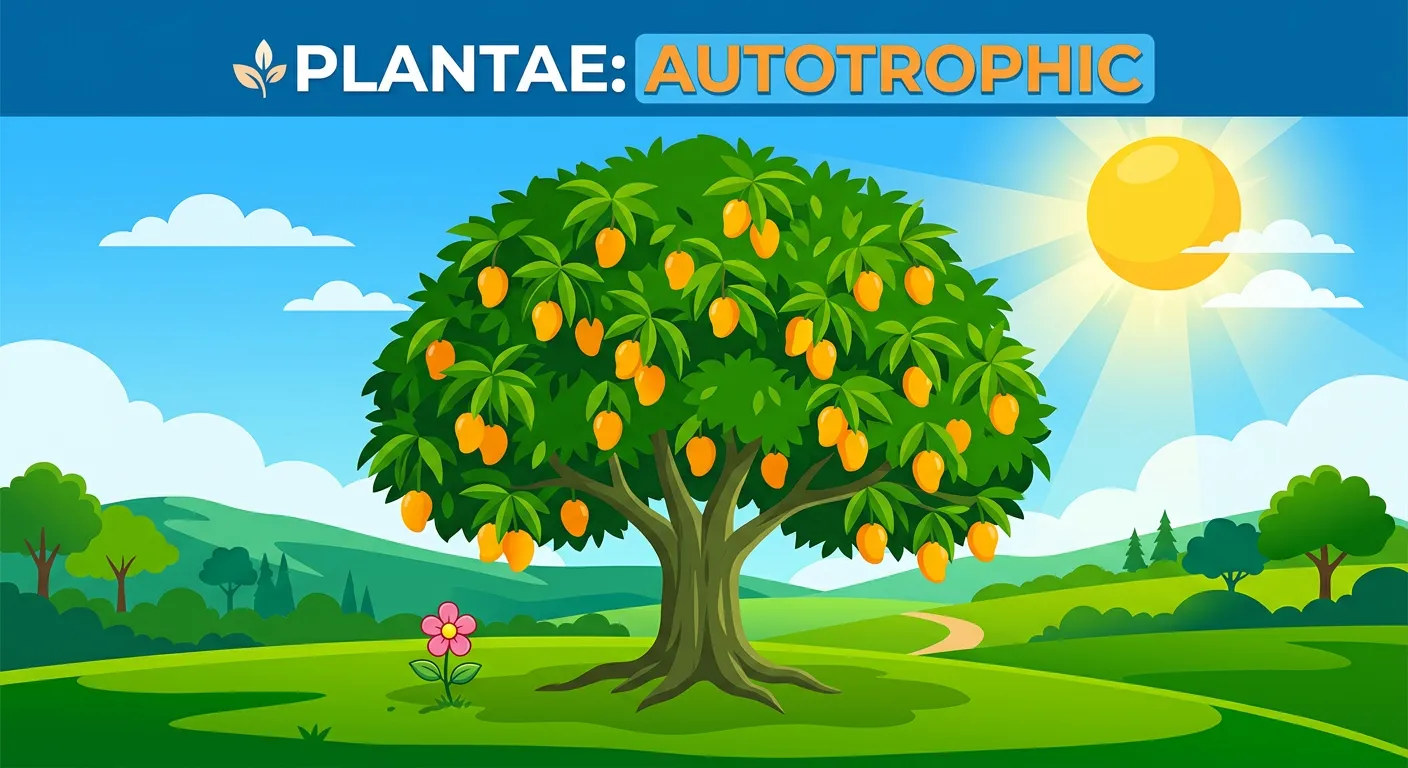
“Kingdom Plantae consists of our autotrophic producers. Using the magic of sunlight, chlorophyll, and water, they manufacture their own food. They are the foundation of all life on Earth. Without these green heroes turning solar energy into glucose, the rest of the food chain simply collapses!”
Kingdom Plantae encompasses all eukaryotic, chlorophyll-containing organisms. These are the primary producers of our planet, converting solar energy into chemical energy through the process of photosynthesis. While we usually think of plants as green, stationary organisms, the kingdom is incredibly diverse, spanning from the simple, thalloid algae to the highly complex, flowering angiosperms. All plants share a common cellular trait: a rigid cell wall made primarily of cellulose.
A unique and vital characteristic of Kingdom Plantae is the 'alternation of generations.' This means that during their life cycle, plants alternate between two distinct phases: a haploid gametophyte (which produces gametes) and a diploid sporophyte (which produces spores). The length and dominance of these phases vary across different plant groups. For example, in mosses, the gametophyte is the dominant phase, while in large trees, the sporophyte is the visible, dominant structure. Understanding this cycle is essential for mastering the more detailed 'Plant Kingdom' chapter.
It’s also important to note that while most plants are autotrophic, there are exceptions. A few members are partially heterotrophic, such as insectivorous plants (Venus flytrap, Bladderwort) which trap insects for nitrogen, and parasites like Cuscuta (Amarbel) which lack chlorophyll entirely. This nuance is a frequent trap in NEET multiple-choice questions regarding the 'strictly autotrophic' nature of plants.
Quick Revision Points
- Cell Type: Multicellular Eukaryotes with cellulosic cell walls.
- Nutrition: Mostly autotrophic; a few are insectivorous or parasitic.
- Pigments: Contain Chlorophyll a and b for photosynthesis.
- Life Cycle: Alternation of generations (Haploid Gametophyte and Diploid Sporophyte).
- Classification: Includes Algae, Bryophytes, Pteridophytes, Gymnosperms, and Angiosperms.
NEET Exam Angle
- Insectivorous Plants: Be ready to identify Utricularia (Bladderwort) and Dionaea (Venus flytrap) as members of Plantae.
- Cell Wall: Cellulosic cell wall is the hallmark of this kingdom.
- Linkage: This topic connects directly to the 'Photosynthesis in Higher Plants' chapter—focus on the role of chloroplasts.
- Pattern: Recent exams have focused on the 'partially heterotrophic' exceptions in the plant kingdom.
06Kingdom Animalia: Multicellular Consumers and Complex Adaptations
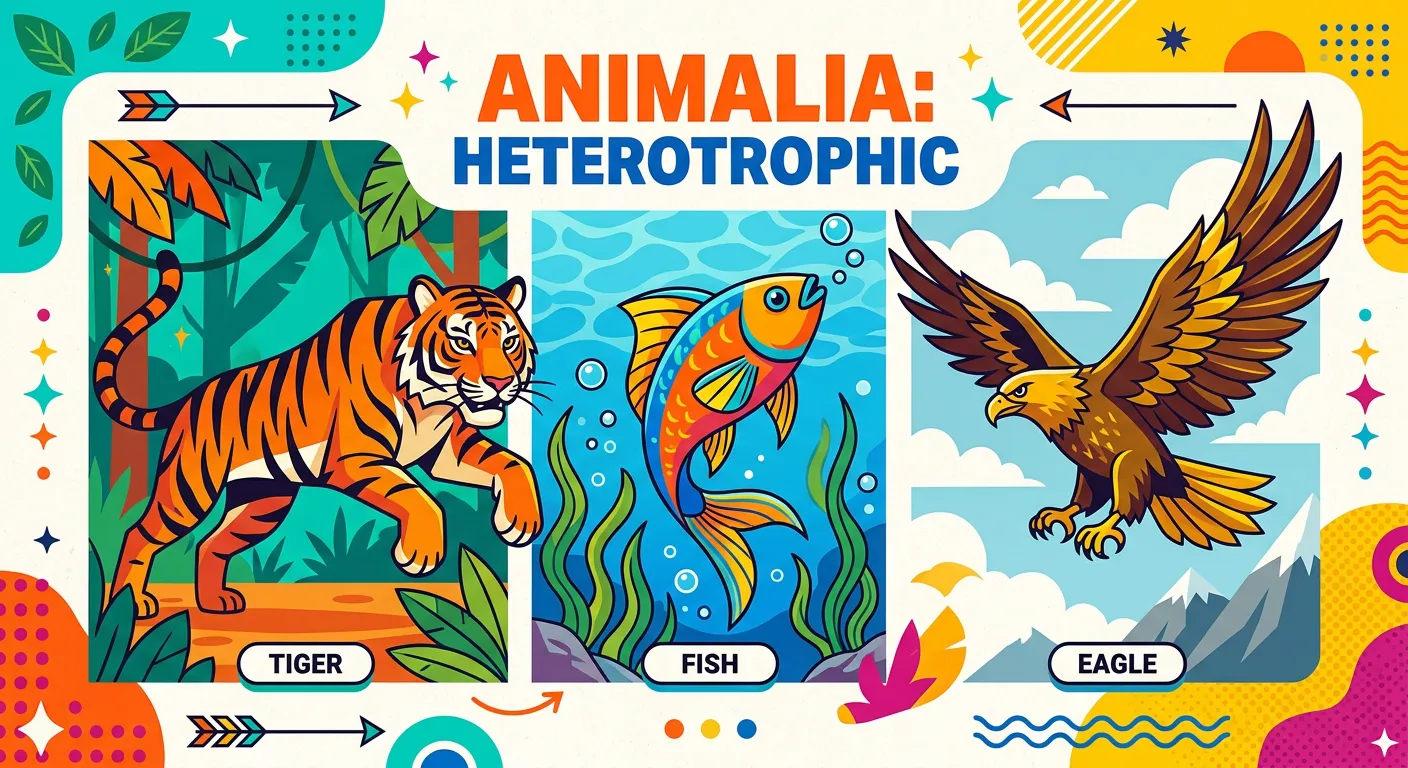
“Finally, Kingdom Animalia: the 'consumers'. We belong here too! Animals are multicellular, eukaryotic, and heterotrophic, relying on others for food. Unlike plants, we are mobile and possess complex sensory organs. It is the most diverse kingdom, showcasing incredible adaptations for survival across the entire planet.”
Kingdom Animalia represents the pinnacle of structural complexity and sensory adaptation. This kingdom is entirely heterotrophic, specifically following a holozoic mode of nutrition, which involves the ingestion of food, followed by internal digestion and absorption. Unlike plants or fungi, animal cells lack cell walls and instead rely on complex skeletal systems (internal or external) for support. This lack of a rigid cell wall, combined with specialized muscular and nervous tissues, allows for active locomotion—the ability to move from one place to another.
Animals exhibit a wide range of body organizations, from the cellular level seen in sponges to the highly integrated organ-system level found in vertebrates. Most animals follow a definite growth pattern, developing into adults with fixed shapes and sizes. They also possess advanced sensory-neuromotor mechanisms, enabling them to respond rapidly to environmental stimuli. This responsiveness is what differentiates a grazing deer or a hunting lion from the static life forms of other kingdoms.
Reproduction in animals is primarily sexual, involving the fusion of male and female gametes, followed by embryological development. The diversity here is vast, covering everything from microscopic rotifers to the massive blue whale. For NEET, it is crucial to understand that while movement is a key trait, some animals (like adult sponges or corals) are sessile (fixed in one place), proving that biological rules often have fascinating exceptions.
Quick Revision Points
- Cell Type: Multicellular Eukaryotes without cell walls.
- Nutrition: Holozoic (ingestion of food) and Saprophytic (in some cases/parasitic).
- Storage: Food reserves are stored as Glycogen or Fat.
- Movement: Most members are capable of active locomotion.
- Nervous System: High level of sensory and neuromotor coordination.
NEET Exam Angle
- Cellular Feature: Absence of cell wall and presence of centrioles (important for cell division).
- Nutrition Pattern: Focus on 'Holozoic' as the primary mode; this is frequently contrasted with the 'Absorptive' nutrition of Fungi.
- Evolution: Understanding that animals have evolved complex internal digestive cavities is a recurring conceptual theme.
| Kingdom | Cell Wall | Nutrition | Mobility |
|---|---|---|---|
| Fungi | Chitin | Absorptive Heterotroph | Sessile |
| Plantae | Cellulose | Autotrophic | Sessile |
| Animalia | Absent | Holozoic Heterotroph | Motile |
07NEET Comparative Analysis: Master Table of the Five Kingdoms
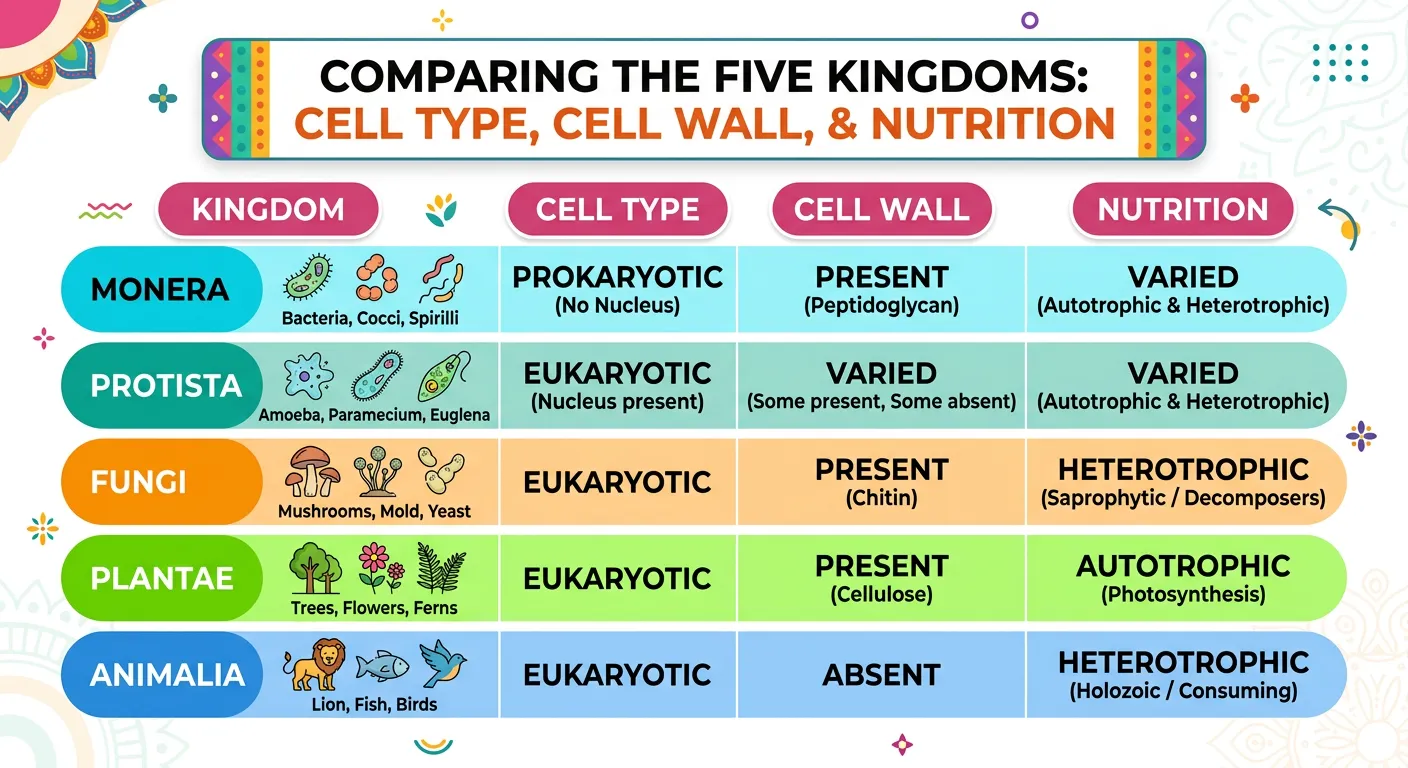
“To ace your NEET exam, memorize this table! Remember: Monera is prokaryotic, while the others are eukaryotic. Plantae are autotrophs, Fungi are saprophytes, and Animals are heterotrophs. Master these traits, and you have conquered the foundation of taxonomy. Keep studying, and let's aim for that MBBS seat!”
To succeed in the NEET Biology section, you must be able to compare these five kingdoms at a glance. The exam often tests your ability to spot differences in cell wall composition, nuclear membrane presence, and body organization. While Whittaker’s system was a massive improvement over the two-kingdom model, it isn't perfect. For instance, Kingdom Protista remains a somewhat heterogeneous group, and the system famously excludes acellular entities like viruses, viroids, and prions, as well as symbiotic organisms like lichens.
One of the most important comparisons to remember is the transition from prokaryotic (Monera) to eukaryotic (the other four kingdoms). This single jump in complexity changed everything from how DNA is stored to how cells divide. Furthermore, look at the evolution of the cell wall: from the peptidoglycan-based wall of bacteria to the chitinous wall of fungi and the cellulosic wall of plants, ending with the complete absence of a wall in animals. This progression is a high-probability area for 'Assertion and Reason' style questions.
Finally, modern science has moved even further with the 'Three Domain System' proposed by Carl Woese, which splits Monera into Archaea and Bacteria domains, creating a Six-Kingdom system. However, for the current NEET syllabus, Whittaker’s Five-Kingdom system remains the primary focus. Master the table below, and you will have a solid foundation for all of biological classification.
Quick Revision Points
- Monera: Only prokaryotic kingdom; no nuclear membrane.
- Protista: Unicellular eukaryotes; nuclear membrane present.
- Fungi: Multicellular (mostly), heterotrophic, chitinous cell wall.
- Plantae: Multicellular, autotrophic, cellulosic cell wall.
- Animalia: Multicellular, heterotrophic, no cell wall.
NEET Exam Angle
- Acellular Entities: Always remember that Viruses and Viroids are NOT part of the Five Kingdom system. They are classified separately.
- Mnemonic: Use 'MP FPA' (Monera, Protista, Fungi, Plantae, Animalia) to remember the sequence of increasing complexity.
- Comparison Trap: Don't confuse 'Unicellular Eukaryotes' (Protista) with 'Unicellular Prokaryotes' (Monera).
| Feature | Monera | Protista | Fungi | Plantae | Animalia |
|---|---|---|---|---|---|
| Cell Type | Prokaryotic | Eukaryotic | Eukaryotic | Eukaryotic | Eukaryotic |
| Cell Wall | Non-cellulosic | Present (some) | Chitin | Cellulose | Absent |
| Nuclear Membrane | Absent | Present | Present | Present | Present |
| Organization | Cellular | Cellular | Multicellular | Tissue/Organ | Tissue/Organ/System |
Recommended Reading
Explore related Biology topics to build deeper chapter connections for NEET.
- What is Living · Topic 1.1
- Kingdom Fungi · Topic 1.10
- Lichens · Topic 1.11
- Viruses and Viroids · Topic 1.12
- Algae · Topic 1.13
- Bryophytes · Topic 1.14
- Jump to Key Terms (Quick Revision)
- Review Common NEET Mistakes
- Solve NEET Practice MCQs
- Read Topic FAQs
- Practice NEET MCQs
- Solve NEET PYQs
📚 Key Terms
⚠️ Common NEET Mistakes
- 1Thinking that all bacteria are harmful pathogens; most are decomposers or beneficial symbionts.
- 2Confusing the cell wall of Fungi (Chitin) with that of Plants (Cellulose).
- 3Assuming all plants are autotrophic; forgetting insectivorous plants like Venus Flytrap.
- 4Classifying viruses within Kingdom Monera just because they are small; viruses are excluded from the system.
- 5Believing Protista have no nucleus; they are eukaryotes and have a defined nucleus.
📝 NEET PYQ & Practice Questions
Test your understanding of Five Kingdom Classification with NCERT-aligned sample questions.
Which of the following statements is correct regarding "Prokaryotic" in the context of NEET Biology?
In NEET question papers, questions related to "Five Kingdom Classification" predominantly test:
Consider Saprophytic associated with Five Kingdom Classification. What is the primary characteristic expected in NEET MCQs?
Master Five Kingdom Classification with NeetQ AI Tutor
Practice 50+ topic-wise MCQs, previous 15 years NEET questions, and get step-by-step doubt resolution instantly.
❓ Frequently Asked Questions
What were the main criteria used by R.H. Whittaker for the Five Kingdom classification?
Whittaker used five main criteria: cell structure (prokaryotic vs. eukaryotic), thallus organization (body complexity), mode of nutrition (autotrophic vs. heterotrophic), reproduction, and phylogenetic (evolutionary) relationships.
Why are fungi placed in a separate kingdom from plants in Whittaker's system?
Fungi are placed separately because they have a chitinous cell wall (unlike the cellulosic wall of plants) and follow a heterotrophic (saprophytic) mode of nutrition, whereas plants are autotrophic.
Which kingdom serves as a link between prokaryotes and complex multicellular eukaryotes?
Kingdom Protista serves as this link, as it contains all unicellular eukaryotic organisms that share ancestors with both prokaryotes and higher multicellular kingdoms.
Are all organisms in Kingdom Monera unicellular?
Yes, Kingdom Monera consists exclusively of unicellular prokaryotes, with bacteria being the primary members.
How does the mode of nutrition differ between Kingdom Fungi and Kingdom Animalia?
Kingdom Fungi exhibits absorptive heterotrophic (saprophytic) nutrition, where enzymes are secreted externally. Kingdom Animalia exhibits holozoic heterotrophic nutrition, where food is ingested and digested internally.
Why are viruses not included in the Five Kingdom classification system?
Viruses are not included because they are acellular (not made of cells) and are considered to be on the borderline between living and non-living, whereas Whittaker's system is based on cellular life forms.
Written By
NEET Content Strategist & Biology Expert
Sangita Kumari is a NEET educator and content strategist with over 6 years of experience teaching Biology, Chemistry, and Physics to Class 11 and 12 aspirants. She helps bridge the gap between traditional NCERT preparation and modern AI-powered learning. Her content is trusted by thousands of NEET aspirants across India.