🎬 Video Lesson Available
Watch the full 7-slide video lesson for Gymnosperms with AI teacher narration and visual explanations.
Gymnosperms — Master Gymnosperms for NEET Biology. Explore naked seeds, needle leaves, taproots, and key examples like Pinus and Cycas in this comprehensive Class 11 guide.
01Introduction to Gymnosperms: Understanding the 'Naked Seed' Concept
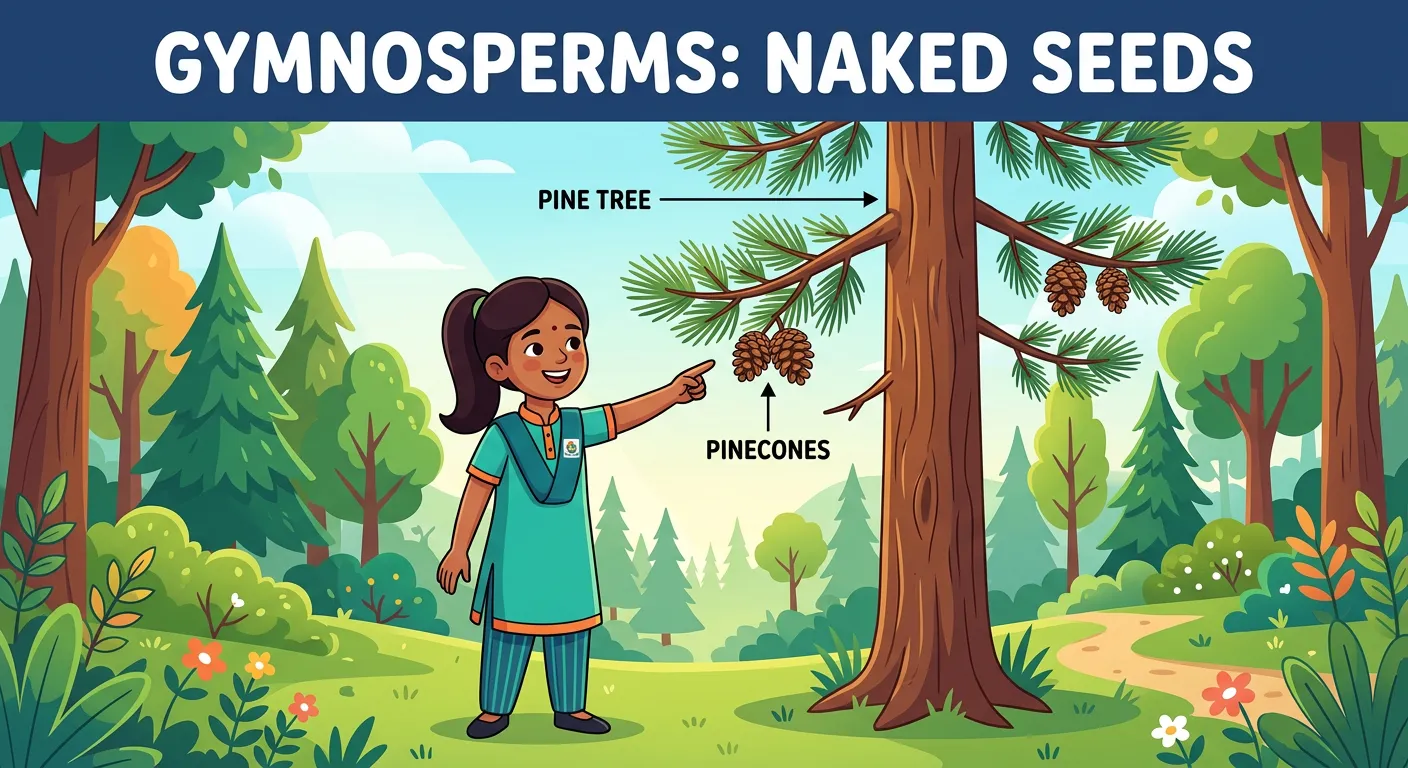
“Welcome, future doctors! Today, we explore Gymnosperms. Think of them as the 'cool, minimalist' plants of the botanical world. The name literally means 'naked seeds'. Unlike flowering plants that hide seeds in fruits, these guys keep them exposed on scales. Let's dive in!”
Welcome, aspirants! When we talk about plant classification, Gymnosperms represent a fascinating evolutionary milestone. The term itself is derived from the Greek words Gymnos, meaning naked, and Sperma, meaning seed. Essentially, these are the plants that 'forgot' to wrap their seeds in a fruit. In the vast timeline of plant evolution, Gymnosperms appeared long before the colorful Angiosperms we see today. They were the dominant vegetation during the Mesozoic era, thriving in environments where other plants struggled.
What makes them unique is that their ovules are not enclosed by any ovary wall and remain exposed, both before and after fertilization. Because there is no ovary, there is no fruit. The seeds that develop post-fertilization are 'naked,' meaning they are attached directly to the scales of cones. This is a fundamental distinction from Angiosperms, where the seed is safely tucked away inside a fruit. For NEET, you must remember that Gymnosperms belong to the group 'Phanerogams without ovary,' bridging the gap between seedless Pteridophytes and the more advanced flowering plants.
Historically, Gymnosperms include some of the tallest and most ancient tree species on Earth. From the giant Sequoia (the redwood) to the prehistoric-looking Cycas, these plants have adapted to survive through dramatic geological shifts. Their structural simplicity is actually a high-tech evolutionary survival strategy that allows them to colonize temperate and high-altitude regions where water might be scarce or frozen for half the year.
Quick Revision Points
- Etymology: Derived from Greek Gymnos (naked) and Sperma (seed).
- Seed Status: Seeds are never enclosed in a fruit; they develop on the surface of megasporophylls.
- Evolutionary Placement: They are the first group of plants to successfully produce seeds, following the Pteridophytes.
- Ovule Exposure: Ovules remain exposed both before and after fertilization due to the absence of an ovary wall.
- Growth Habit: Primarily consists of medium-sized trees, tall trees, and shrubs; no herbs are found in this group.
NEET Exam Angle
- Naked Seeds: Questions often ask why Gymnosperms lack fruits. The answer is always the absence of an ovary.
- Phylogeny: Understand that Gymnosperms are the ancestors of Angiosperms in the seed-bearing lineage (Spermatophyta).
- Size Extremes: The giant redwood Sequoia is a frequently cited example of a gymnosperm in 'True/False' questions.
| Feature | Gymnosperms | Angiosperms |
|---|---|---|
| Ovule | Exposed (Naked) | Enclosed within Ovary |
| Fruit Formation | Absent | Present |
| Vessels in Xylem | Generally Absent (except Gnetales) | Present |
| Companion Cells | Absent (Albuminous cells present) | Present |
02Cones and Strobili: The Non-Flowering Reproductive Strategy
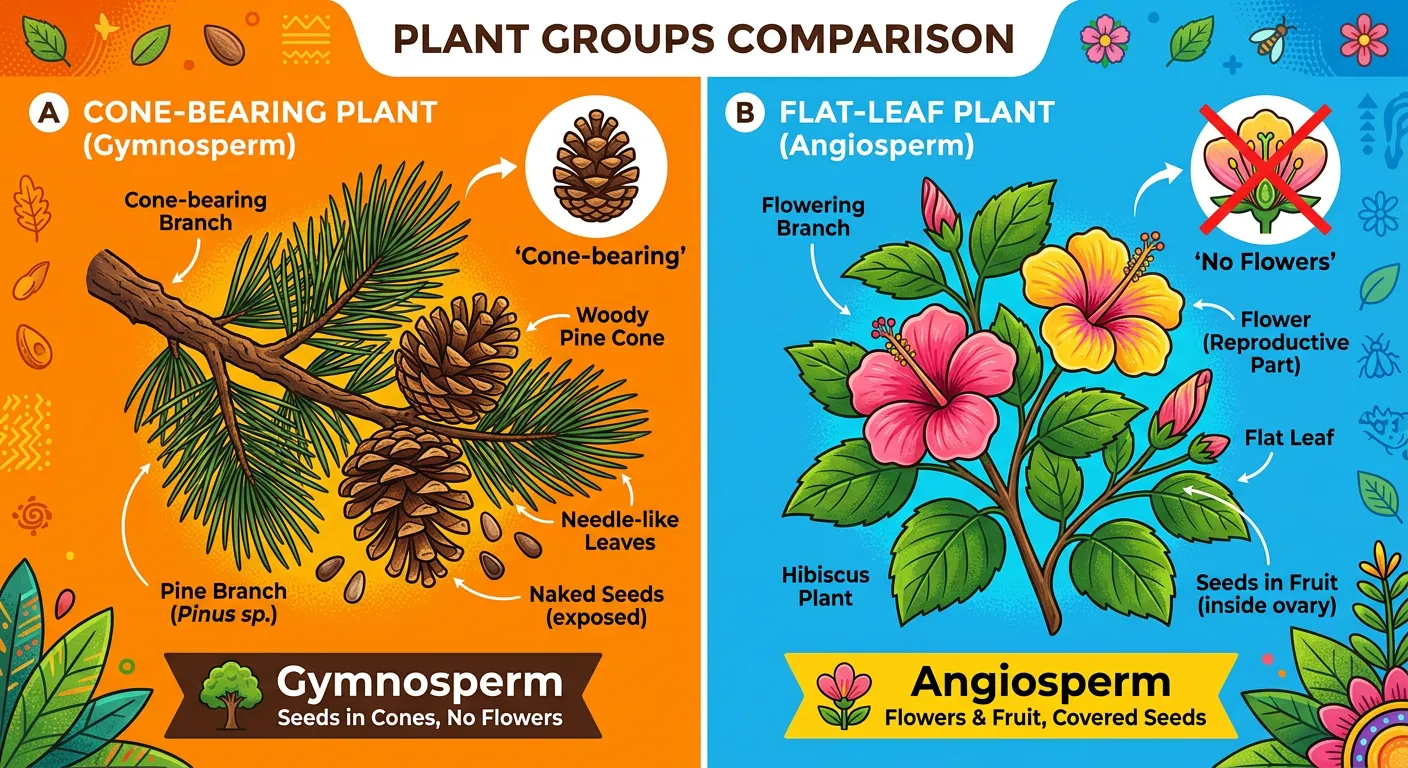
“Feature one: No flowers! Gymnosperms are old-school. They don't waste energy on colorful petals. Instead, they produce specialized structures called cones or strobili. Imagine them as the hardy survivors of the plant kingdom, thriving where others might struggle to grow.”
One of the most striking things about Gymnosperms is what they don't have: flowers. While Angiosperms spend immense metabolic energy creating vibrant petals and sweet nectar to attract pollinators, Gymnosperms take a more rugged, minimalist approach. Instead of flowers, they produce specialized structures called strobili, or more commonly, cones. These are essentially modified shoots where leaves (sporophylls) are spirally arranged along an axis to protect the reproductive organs.
There is a clear division of labor in the gymnosperm world. You will find male strobili (microsporangiate) and female strobili (megasporangiate). The male cones are usually smaller and produce pollen grains, which are the highly reduced male gametophytes. The female cones are often larger and more woody, housing the ovules. This reproductive strategy is incredibly hardy. By relying on wind rather than specific animal pollinators, Gymnosperms can reproduce in vast, desolate forests where insects might be rare.
The development of these strobili is a key focus for NEET. You must distinguish between the 'lax' or compact nature of these cones depending on the species. In some plants, like Pinus, both male and female cones are found on the same tree (monoecious), while in others like Cycas, they appear on separate individuals (dioecious). This variety in reproductive architecture allows them to maximize genetic diversity even in harsh climates.
Quick Revision Points
- Reproductive Units: Cones or strobili replace flowers as the primary reproductive structures.
- Sporophylls: Cones are formed by the spiral arrangement of microsporophylls (male) or megasporophylls (female).
- Male Cones: Produce microspores that develop into pollen grains (reduced gametophytes).
- Female Cones: Bear megasporophylls with ovules; they are typically larger and more durable.
- Pollination Vector: Almost exclusively wind-pollinated, which is why they don't need colorful petals or nectar.
NEET Exam Angle
- Micro vs Megasporangiate: Be ready to identify which structure produces pollen and which bears the seed.
- Energy Efficiency: Understand that the lack of flowers is an adaptation to save energy in nutrient-poor soils.
- Terminology: Remember that 'Strobili' and 'Cones' are often used interchangeably in the NCERT context.
| Structure | Male Strobilus | Female Strobilus |
|---|---|---|
| Common Name | Pollen Cone | Seed Cone |
| Component | Microsporophylls | Megasporophylls |
| Product | Microspores (Pollen) | Megaspores (Ovules) |
| Duration | Short-lived, sheds pollen | Long-lived, matures into seeds |
03The Deep Taproot System: Anchoring and Nutrient Acquisition
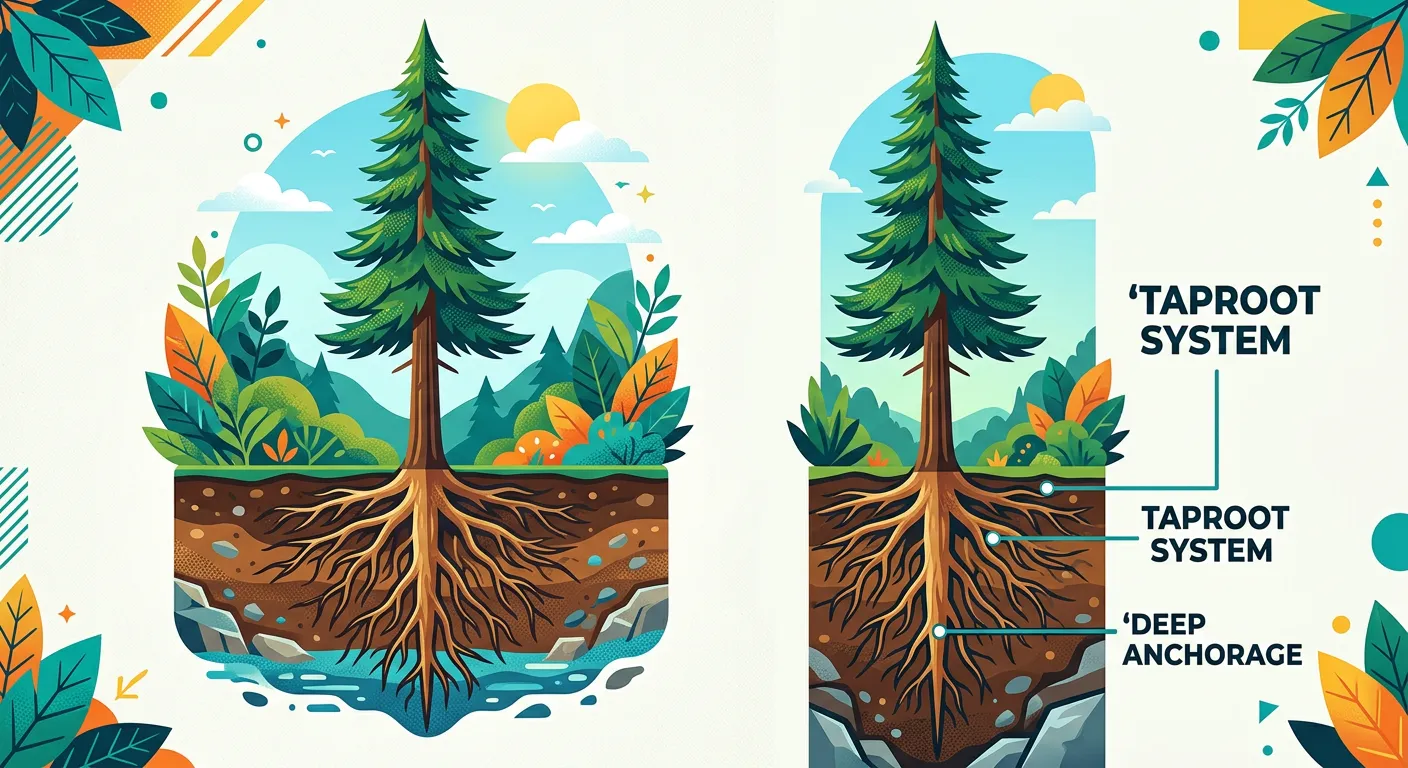
“Feature two: A deep taproot system. Just like a strong foundation for a house, these roots grow deep to anchor the plant and tap into water sources. This makes them perfect for harsh, mountainous environments where the soil is often thin and tricky.”
Survival for a gymnosperm often means standing tall in rocky, mountainous terrain where the soil is thin and water is deep underground. To handle this, they have evolved a robust taproot system. Unlike the fibrous roots of many grasses, a taproot consists of one main primary root that grows vertically downward, sprouting smaller lateral roots. This serves two purposes: rock-solid anchorage against high-altitude winds and the ability to reach deep-seated water tables.
But the story of gymnosperm roots gets even more interesting when we look at their 'roommates.' Many gymnosperms have formed incredible symbiotic relationships to survive in nutrient-poor soils. For instance, the roots of Pinus are associated with fungi, forming what we call Mycorrhiza. The fungus helps the plant absorb phosphorus and water, while the plant provides the fungus with sugar. In fact, Pinus seeds often cannot even germinate or grow successfully without this fungal partner!
On the flip side, we have Cycas, which produces specialized roots called coralloid roots. These are small, irregular roots that grow near the soil surface and are associated with nitrogen-fixing cyanobacteria like Anabaena and Nostoc. This allows the plant to thrive in nitrogen-deficient environments. Understanding these two distinct symbiotic associations is a high-yield area for your exams, as it demonstrates the ecological versatility of the gymnosperm group.
Quick Revision Points
- Root Type: Generally possess a deep taproot system for stability and water access.
- Mycorrhiza: Fungal association found in Pinus roots, essential for nutrient absorption.
- Coralloid Roots: Specialized roots in Cycas associated with N2-fixing cyanobacteria.
- Anchorage: The deep system allows these plants to survive in steep, windy, mountainous regions.
- Mineral Nutrition: Symbioses allow them to grow in 'difficult' soils where other plants might starve.
NEET Exam Angle
- Match the Column: Questions frequently pair Pinus with Mycorrhiza and Cycas with Coralloid roots.
- Obligate Association: Remember that Pinus has an obligate (mandatory) relationship with its fungal partner.
- Nitrogen Fixation: Know that Coralloid roots are specifically for nitrogen, not just general water absorption.
| Root Type | Plant Example | Symbiotic Partner | Function |
|---|---|---|---|
| Mycorrhiza | Pinus | Fungi | Phosphorus/Water absorption |
| Coralloid Roots | Cycas | Cyanobacteria | Nitrogen Fixation |
04Xerophytic Leaf Adaptations: The Mechanics of Needle-like Leaves
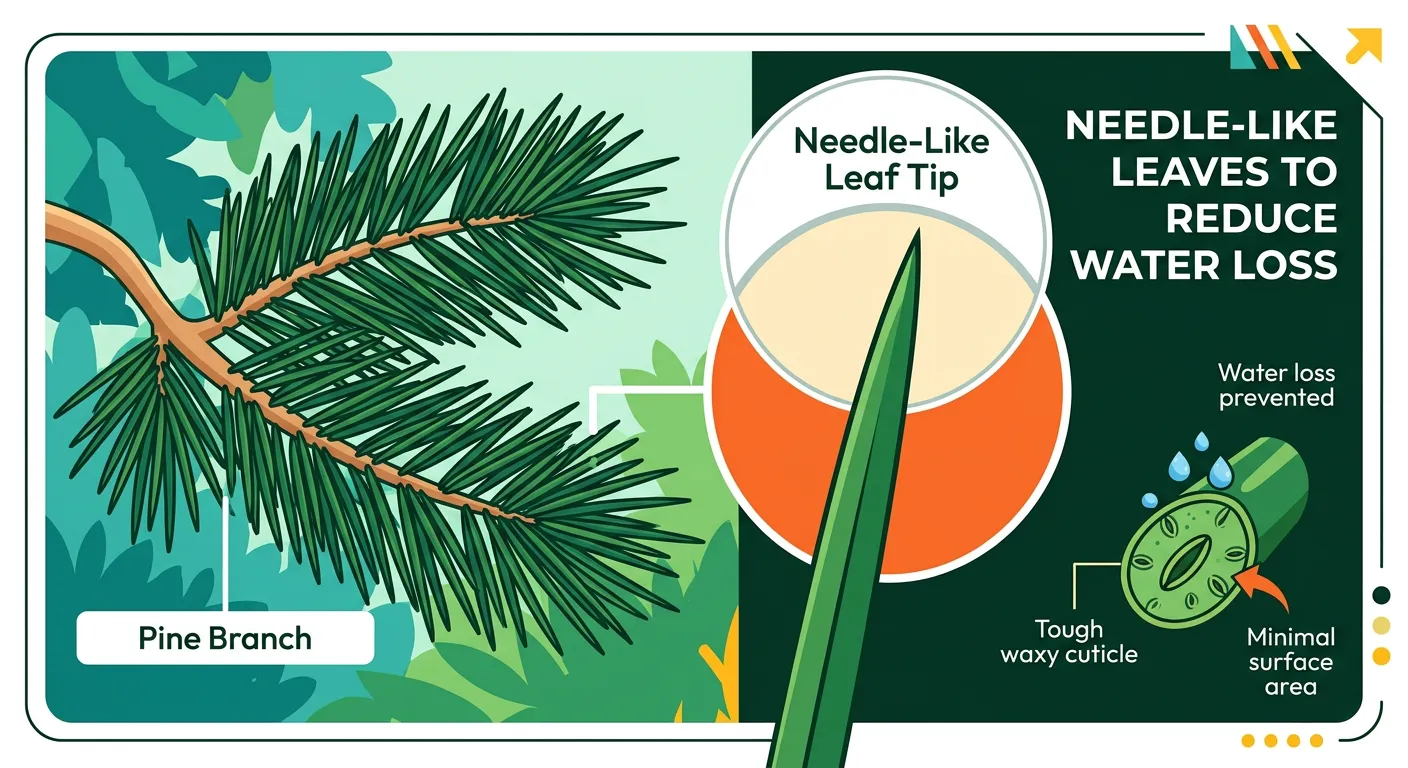
“Feature three: The needle-like leaves! You won't find broad, floppy leaves here. These needle shapes reduce the surface area, which helps the plant prevent water loss. It's their clever way of saying, 'I'm staying hydrated even when things get dry and windy!'”
If you look at a pine tree, you’ll notice it doesn't have the broad, flat leaves of a mango or banyan tree. Instead, it has sharp, needle-like leaves. This isn't just for aesthetics; it’s a brilliant piece of biological engineering. Most gymnosperms are xerophytes—plants adapted to survive in dry conditions. Even in snowy mountains, the water is 'locked' in ice, making it physiologically unavailable to the plant. These needle-like leaves dramatically reduce the surface area through which water can evaporate.
To further prevent water loss (transpiration), gymnosperm leaves come equipped with a very thick, waxy cuticle. This acts as a waterproof seal. Additionally, they have sunken stomata. Instead of being on the surface of the leaf, the stomata (breathing pores) are tucked into deep pits. This creates a small pocket of humid air over the pore, reducing the concentration gradient and slowing down the exit of water vapor.
These adaptations are crucial for survival in extreme temperatures and high wind speeds. Broad leaves would be ripped apart by mountain gales or weighed down to the point of breaking by heavy snowfall. The slender, flexible needle shape allows wind and snow to pass right through or slide off, preserving the plant's structural integrity. When you study these features, realize they are all about one thing: water conservation and physical resilience.
Quick Revision Points
- Surface Area: Needle-like leaves reduce the total area exposed to the environment, cutting water loss.
- Cuticle: A thick, waxy layer provides a physical barrier against desiccation.
- Sunken Stomata: Pores are located in pits to trap moisture and reduce the rate of transpiration.
- Resilience: Adapted to withstand extreme temperature, humidity, and wind pressure.
- Leaf Longevity: Many are evergreen, keeping their needles for several years to save the energy needed to grow new ones.
NEET Exam Angle
- Xerophytic Features: Identify the trio of adaptations (Needles, Thick Cuticle, Sunken Stomata) in MCQ options.
- Transpiration Control: Understand how sunken stomata actually reduce water loss (the humidity pocket concept).
- Environmental Stress: Gymnosperms are often the correct answer when a question asks which group is best adapted to high-altitude cold.
| Adaptation | Mechanism | Benefit |
|---|---|---|
| Needle shape | Reduced surface area | Lowered transpiration |
| Thick Cuticle | Waxy barrier | Prevents water leaching |
| Sunken Stomata | Pockets of still air | Reduced evaporation rate |
05Heterospory and Anemophily: The Gymnosperm Life Cycle
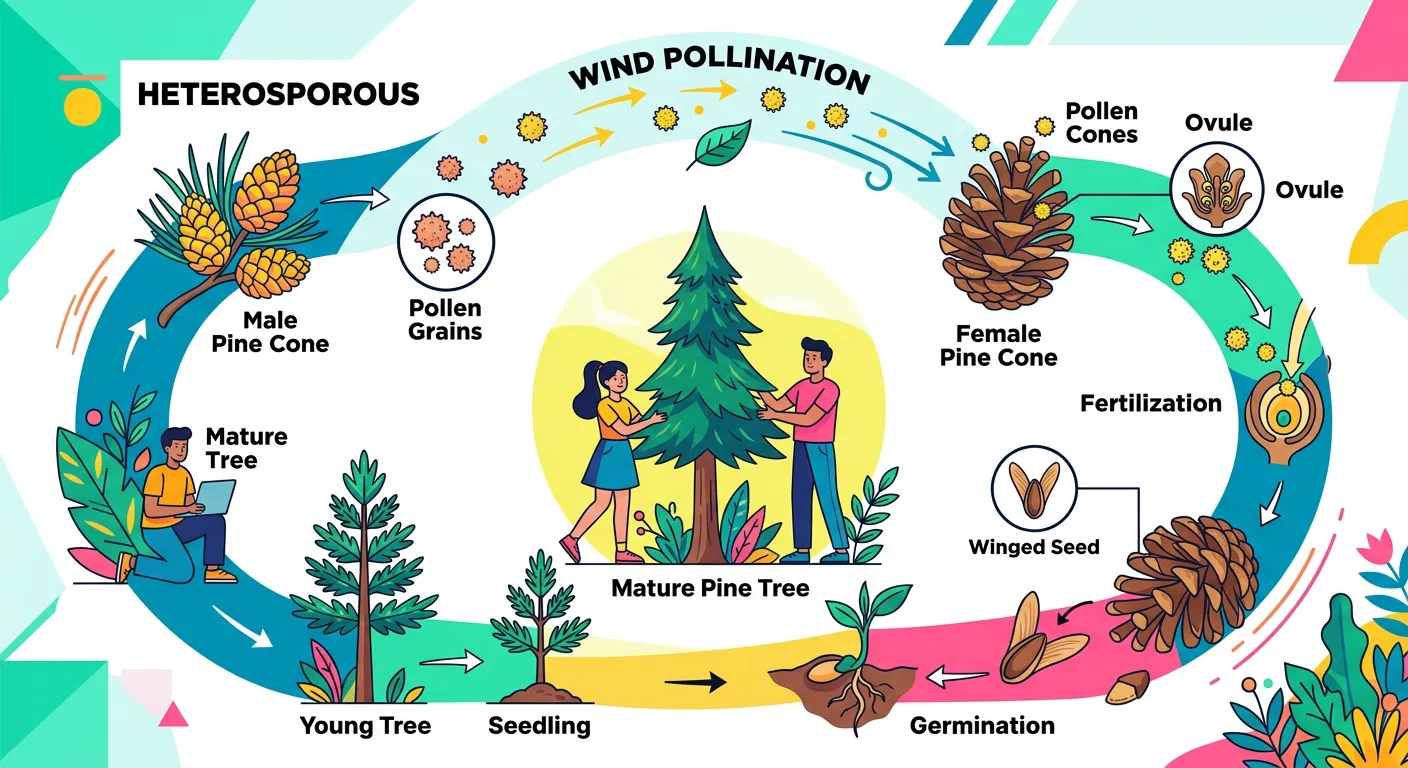
“Feature four: Heterospory and wind pollination. They produce two types of spores—microspores and megaspores. Since they don't have bees or butterflies to help, they rely on the wind to carry their pollen. It’s an efficient, breezy system for reproduction in the wild!”
In the world of gymnosperms, reproduction is a tale of two spores. Unlike some lower plants that produce only one type of spore (homospory), all gymnosperms are heterosporous. This means they produce two distinct types of spores: small microspores and large megaspores. The microspores are produced within microsporangia and develop into the highly reduced male gametophyte, which we call the pollen grain. The megaspores stay within the megasporangium (ovule) to develop into the female gametophyte.
Because Gymnosperms don't have flowers to attract bees or birds, they rely almost entirely on the wind for pollination—a process called anemophily. This is why you might see 'sulfur showers' in pine forests during the spring; it's actually massive clouds of yellow pollen taking flight. The pollen grains have to travel through the air and land directly on the opening of the ovule (the micropyle) to achieve fertilization.
One very important distinction for your NEET preparation is the status of the gametophyte. In bryophytes, the gametophyte is the main plant body. In gymnosperms, the gametophyte is reduced to just a few cells and is entirely dependent on the sporophyte (the tree itself) for nutrition. It never lives an independent life. Once the pollen tube carries the male gametes to the egg cell in the archegonia, fertilization occurs, a zygote forms, and eventually, the 'naked' seed is born.
Quick Revision Points
- Heterospory: Production of two different spores: Microspores (male) and Megaspores (female).
- Pollen Grain: The much-reduced male gametophyte, adapted for wind travel.
- Anemophily: Wind-driven pollination; produces vast quantities of pollen to ensure success.
- Gametophyte Status: Highly reduced and remains within the sporangia on the parent sporophyte.
- Fertilization: Occurs via a pollen tube (siphonogamy), meaning water is not required for sperm to swim.
NEET Exam Angle
- Endosperm Ploidy: Crucial point! In Gymnosperms, the endosperm is haploid (n) because it's formed before fertilization.
- Independent Existence: Remember that neither the male nor female gametophytes have an independent free-living existence.
- Sulphur Shower: This term is specifically associated with the wind-borne pollen of Pinus.
| Spore Type | Develops Into | Location |
|---|---|---|
| Microspore | Male Gametophyte (Pollen) | Microsporangium |
| Megaspore | Female Gametophyte (Endosperm/Archegonia) | Megasporangium (Ovule) |
06Core Genera: Analyzing Pinus and Cycas for NEET
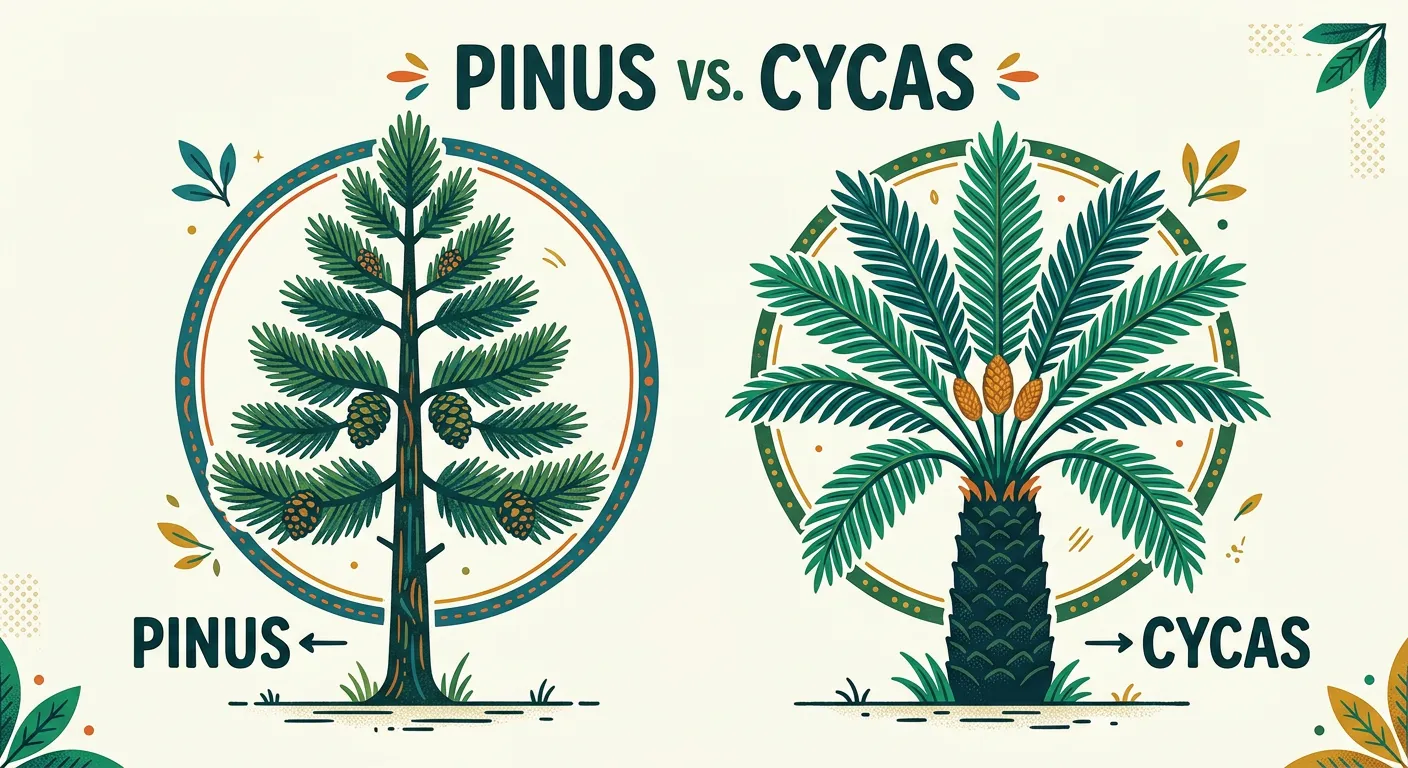
“Time for our examples! First, meet 'Pinus', the classic conifer with those iconic cones. Second, meet 'Cycas', which looks like a small palm tree but is actually a gymnosperm. Memorizing these two will definitely fetch you marks in your NEET exam!”
To master Gymnosperms for NEET, you must be able to contrast the two 'poster children' of the group: Pinus and Cycas. While they are both gymnosperms, they look and behave quite differently. Pinus is your classic evergreen conifer. It has a branched stem and needle-like leaves. Most importantly, it is monoecious, meaning a single tree bears both male and female cones. This allows for easier self-pollination, though cross-pollination is still common.
Cycas, on the other hand, looks more like a palm tree (though it isn't one!). It has an unbranched, thick stem and large, pinnate (feather-like) leaves that form a crown at the top. Cycas is dioecious, meaning there are distinct male and female plants. A 'male' Cycas will produce a large, central male cone, while the 'female' Cycas produces loosely arranged megasporophylls instead of a compact cone. This distinction is a very common target for examiners.
There is also a difference in their evolutionary 'vibe.' Cycas is often called a 'living fossil' because it has changed very little over millions of years and still retains some primitive characteristics, like motile (swimming) sperm—a leftover trait from their water-dependent ancestors. Pinus is more modern and widespread, successfully colonizing vast stretches of the Northern Hemisphere. Learning to distinguish these two at a glance will save you precious seconds during the exam.
Quick Revision Points
- Stem Branching: Pinus has a branched stem; Cycas has an unbranched stem.
- Sexual Status: Pinus is monoecious (bisexual plant); Cycas is dioecious (unisexual plant).
- Leaf Type: Pinus has needles; Cycas has large, pinnate (palm-like) leaves.
- Cone Structure: Pinus has compact male and female cones; Cycas has a male cone but loose female megasporophylls.
- Sperm Motility: Cycas possesses remarkably large, motile male gametes (sperm).
NEET Exam Angle
- Unbranched vs Branched: This is the most common 'Match the Column' trap for these two genera.
- Dioecious Nature: Remember that in Cycas, you will never find male and female reproductive parts on the same plant.
- Pinnate Leaves: Associated specifically with Cycas in the NCERT description.
| Feature | Pinus | Cycas |
|---|---|---|
| Stem | Branched | Unbranched |
| Sexual Distribution | Monoecious | Dioecious |
| Leaves | Needle-like | Pinnately Compound |
| Sperm | Non-motile | Motile (Ciliated) |
07High-Yield Summary: Fast-Track Revision of Gymnosperms
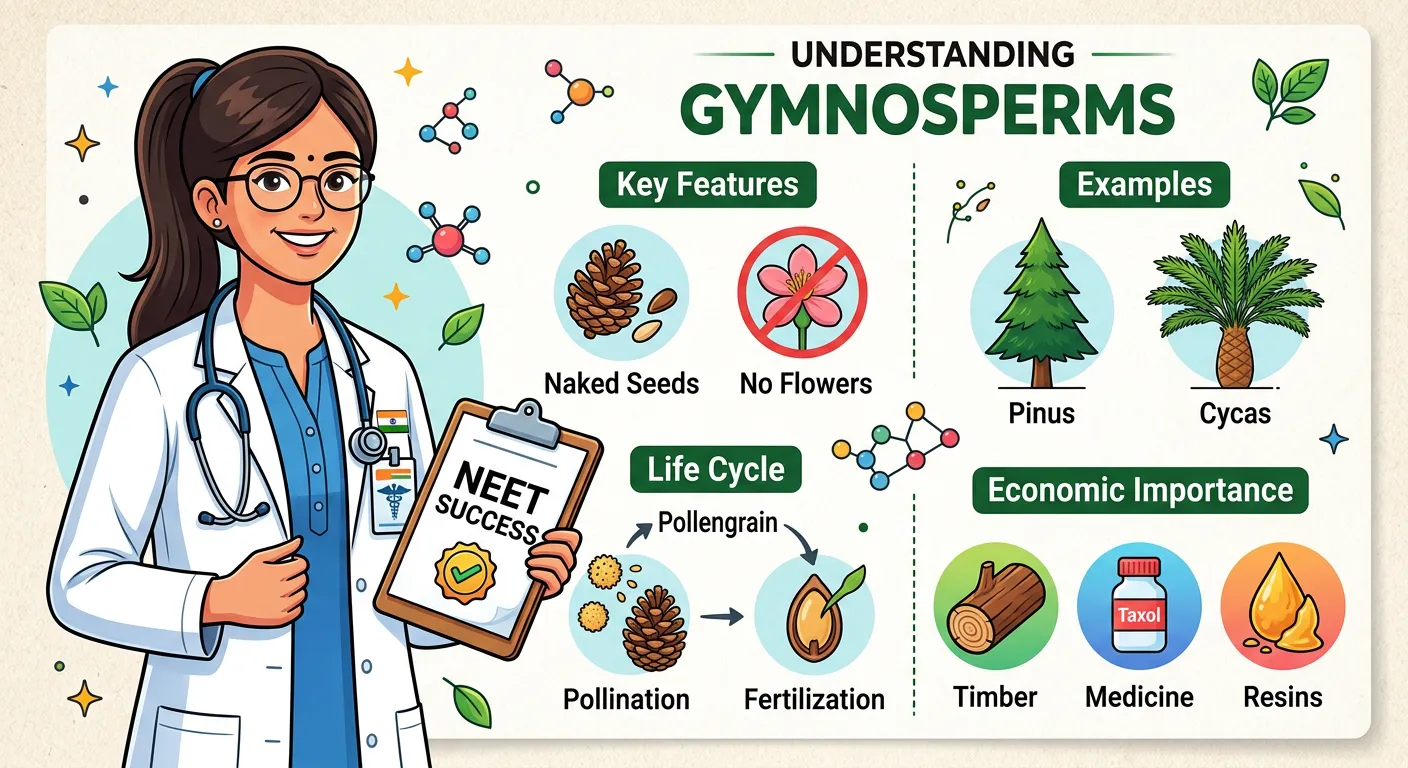
“And that's a wrap! Gymnosperms: naked seeds, no flowers, taproots, needle leaves, and wind pollination. Remember, Pinus and Cycas are your go-to examples. Keep revising, stay curious, and you'll crush that NEET paper. See you in the next lesson!”
As we wrap up our deep dive into Gymnosperms, let's consolidate the 'must-know' facts that appear year after year in NEET. Gymnosperms are defined by their naked seeds and their place as the first true seed plants. They lack the vessels in their xylem and companion cells in their phloem (with rare exceptions like Gnetum), a detail that frequently appears in anatomy-based questions. Their life cycle is dominated by the sporophyte, with the gametophyte being reduced and protected within the parental tissues.
Remember the environmental adaptations: the deep taproot, the needle-like leaves, the thick cuticle, and the sunken stomata. These features make them the kings of the mountains. In terms of reproduction, don't forget that the endosperm in gymnosperms is a pre-fertilization tissue, making it haploid (n). This is a stark contrast to the triploid (3n) endosperm of Angiosperms formed through double fertilization.
Finally, keep the two examples, Pinus and Cycas, clear in your mind. Focus on their stem branching and their monoecious/dioecious nature. If you can distinguish between their root symbioses (Mycorrhiza vs. Coralloid), you are well on your way to scoring full marks in this section. Gymnosperms might seem simple because they lack flowers and fruits, but their complex adaptations and evolutionary success make them a critical topic for any future medical student.
Quick Revision Points
- Naked Seeds: Seeds develop on scales (megasporophylls) without an ovary/fruit.
- Root Symbiosis: Mycorrhiza (Pinus) and Coralloid roots (Cycas).
- Vascular Anatomy: Lack xylem vessels and phloem companion cells (mostly).
- Ploidy Level: Endosperm is haploid (n); the main plant body is a diploid sporophyte (2n).
- Pollination: Anemophilous (wind-pollinated) with siphonogamous fertilization.
NEET Exam Angle
- Comparison Table: Always keep the differences between Gymnosperms and Pteridophytes/Angiosperms handy.
- Haploid Endosperm: This is a 10/10 frequency question. Mark it as 'very important.'
- Sequoia: Know that it is one of the tallest gymnosperms (Redwood tree).
| Category | Pteridophytes | Gymnosperms | Angiosperms |
|---|---|---|---|
| Seeds | Absent | Present (Naked) | Present (Enclosed) |
| Endosperm | N/A | Haploid (n) | Triploid (3n) |
| Water for Fert. | Required | Not required | Not required |
| Dominant Phase | Sporophyte | Sporophyte | Sporophyte |
Recommended Reading
Explore related Biology topics to build deeper chapter connections for NEET.
- What is Living · Topic 1.1
- Kingdom Fungi · Topic 1.10
- Lichens · Topic 1.11
- Viruses and Viroids · Topic 1.12
- Algae · Topic 1.13
- Bryophytes · Topic 1.14
- Jump to Key Terms (Quick Revision)
- Review Common NEET Mistakes
- Solve NEET Practice MCQs
- Read Topic FAQs
- Practice NEET MCQs
- Solve NEET PYQs
📚 Key Terms
⚠️ Common NEET Mistakes
- 1Thinking Gymnosperms have triploid endosperm like Angiosperms (it is actually haploid).
- 2Confusing the branched stem of Pinus with the unbranched stem of Cycas.
- 3Assuming Gymnosperms have vessels in their xylem (most lack them, except for Gnetales).
- 4Believing that Cycas produces a compact female 'cone' (it actually produces loose megasporophylls).
- 5Thinking that Gymnosperms require water for fertilization (they use pollen tubes, unlike Pteridophytes).
📝 NEET PYQ & Practice Questions
Test your understanding of Gymnosperms with NCERT-aligned sample questions.
Which of the following statements is correct regarding "Gymnosperm" in the context of NEET Biology?
In NEET question papers, questions related to "Gymnosperms" predominantly test:
Consider Heterospory associated with Gymnosperms. What is the primary characteristic expected in NEET MCQs?
Master Gymnosperms with NeetQ AI Tutor
Practice 50+ topic-wise MCQs, previous 15 years NEET questions, and get step-by-step doubt resolution instantly.
❓ Frequently Asked Questions
Why are Gymnosperm seeds described as 'naked'?
Gymnosperm seeds are called 'naked' because they develop from ovules that are not enclosed within an ovary wall. Consequently, no fruit is formed to cover the seeds; they remain exposed on the surface of reproductive scales called megasporophylls.
What are the specific xerophytic adaptations seen in Gymnosperm leaves?
Gymnosperms show three main xerophytic adaptations to conserve water: 1) Needle-like leaves to reduce surface area, 2) A thick, waxy cuticle to prevent evaporation, and 3) Sunken stomata to trap humidity and reduce the rate of transpiration.
How does the root system of Pinus differ from Cycas regarding symbiotic associations?
Pinus roots form a symbiotic association with fungi called Mycorrhiza, which helps in mineral and water absorption. In contrast, Cycas develops specialized 'coralloid roots' that host nitrogen-fixing cyanobacteria like Anabaena and Nostoc.
What is the difference between microspores and megaspores in Gymnosperms?
Microspores are small spores produced in male cones that develop into pollen grains (male gametophytes). Megaspores are larger spores produced in female ovules that develop into the multicellular female gametophyte containing archegonia.
Why is Cycas often mistaken for a palm tree even though it is a Gymnosperm?
Cycas is mistaken for a palm due to its unbranched stem and a crown of large, pinnately compound leaves. However, it is a Gymnosperm because it produces naked seeds in cones/sporophylls and lacks flowers and fruits, unlike true palm trees which are Angiosperms.
Which pollination method is dominant in Gymnosperms and why?
Anemophily (wind pollination) is the dominant method. Since Gymnosperms lack flowers, nectar, and scent to attract animal pollinators, they rely on producing massive amounts of lightweight pollen grains to be carried by air currents to the ovules.
Written By
NEET Content Strategist & Biology Expert
Sangita Kumari is a NEET educator and content strategist with over 6 years of experience teaching Biology, Chemistry, and Physics to Class 11 and 12 aspirants. She helps bridge the gap between traditional NCERT preparation and modern AI-powered learning. Her content is trusted by thousands of NEET aspirants across India.