🎬 Video Lesson Available
Watch the full 7-slide video lesson for Cell Membrane with AI teacher narration and visual explanations.
Cell Membrane — Master the Cell Membrane for NEET! Explore the Fluid Mosaic Model, passive/active transport, and osmosis with senior educator insights for Class 11 Biology.
01The Biological Gated Community: Defining the Role of the Plasma Membrane
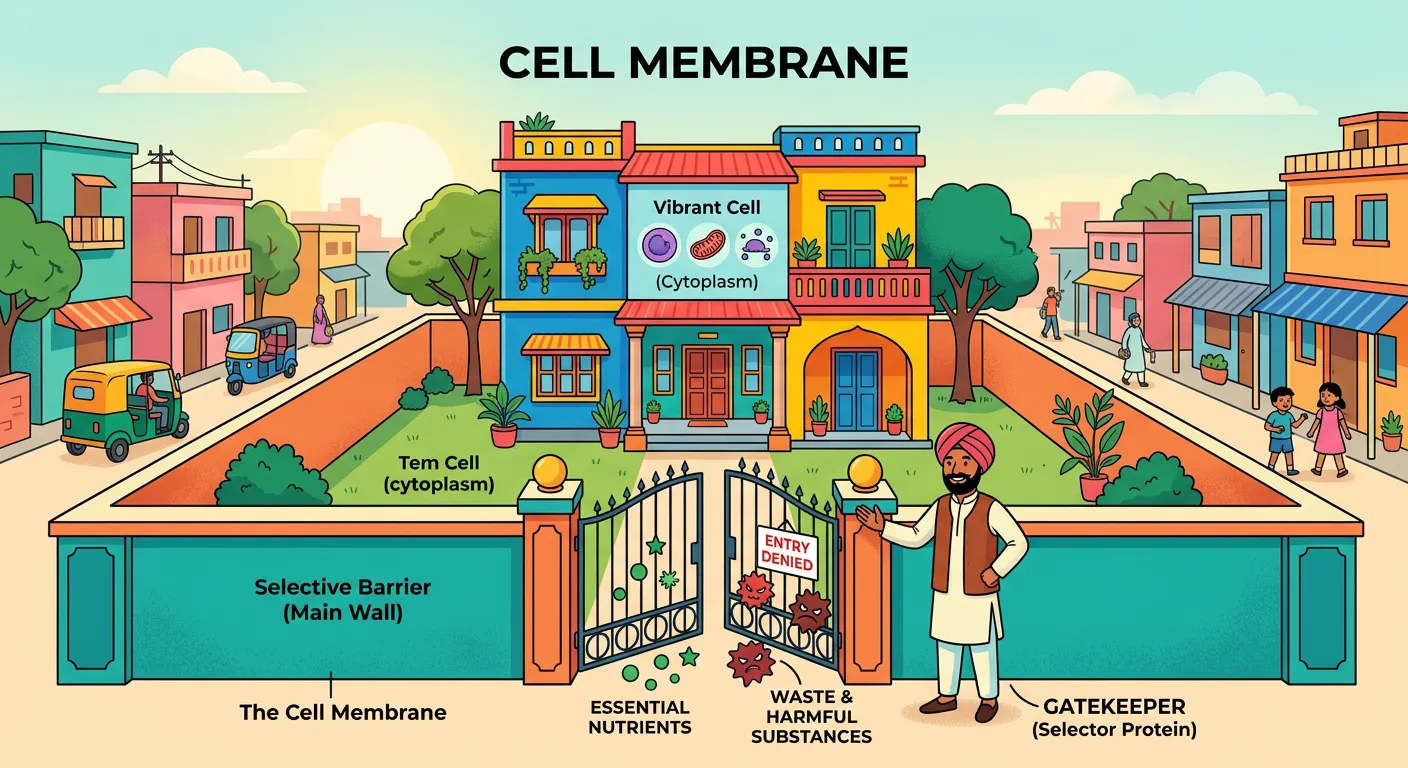
“Imagine your cell as a high-security gated community. The cell membrane is that boundary wall with an expert gatekeeper. It decides who gets in and who stays out, keeping the cell’s internal environment perfectly balanced. It is the vital gatekeeper of life!”
Every living cell, whether it is a humble bacterium or a complex neuron in your brain, requires a distinct boundary. This isn't just a static wall; it is a dynamic, living interface called the cell membrane or plasma membrane. Think of it as a high-tech security system for a gated community. It doesn't just block entry; it meticulously monitors everything that enters or exits, ensuring that the internal environment—the cytoplasm—remains stable regardless of the chaos outside. This stability is the foundation of homeostasis, allowing metabolic reactions to occur without interference from external fluctuations. The chemical studies on the cell membrane, especially on the human red blood cells (RBCs), enabled the scientists to deduce the possible structure of plasma membrane. These studies revealed that the cell membrane is composed of lipids that are arranged in a bilayer.
The membrane’s primary role is compartmentalization-vs-eukaryotic-cell-structure-neet-biology)-vs-eukaryotic-cell-structure-neet-biology)-vs-eukaryotic-cell-structure-neet-biology)-vs-eukaryotic-cell-structure-neet-biology)-vs-eukaryotic-cell-structure-neet-biology)-vs-eukaryotic-cell-structure-neet-biology)-vs-eukaryotic-cell-structure-neet-biology)-vs-eukaryotic-cell-structure-neet-biology)-vs-eukaryotic-cell-structure-neet-biology)-vs-eukaryotic-cell-structure-neet-biology)-vs-eukaryotic-cell-structure-neet-biology)-vs-eukaryotic-cell-structure-neet-biology)-vs-eukaryotic-cell-structure-neet-biology)-vs-eukaryotic-cell-structure-neet-biology)-vs-eukaryotic-cell-structure-neet-biology)-vs-eukaryotic-cell-structure-neet-biology)-vs-eukaryotic-cell-structure-neet-biology). By separating the internal machinery from the extracellular fluid, it allows the cell to concentrate specific enzymes and nutrients where they are needed most. This separation is crucial for survival. Without a functional cell membrane, the cell would lose its identity and its ability to regulate its own chemistry. Furthermore, this boundary serves as the primary site for cellular communication. It houses receptors that 'listen' to chemical signals like hormones, allowing the cell to respond to the needs of the whole organism. In NEET preparation, understanding this 'gatekeeper' concept is the first step toward mastering cell biology. The advent of the electron microscope in the 1950s was the turning point, as it allowed scientists to see the detailed bilayer structure that was previously only hypothesized through biochemical analysis.
Quick Revision Points
- The cell membrane is a thin, delicate, and elastic living boundary of the cell, measuring about 75Å in thickness.
- It provides a fixed environment inside the cell and offers structural support and protection.
- Selective permeability ensures only specific molecules pass through, protecting the cell from toxins and waste.
- It facilitates cell-to-cell recognition and signaling through surface markers like glycoproteins.
- The membrane is composed mainly of lipids (phosphoglycerides) and proteins, with minor carbohydrates.
- Lipids are arranged within the membrane with the polar head towards the outer sides and the hydrophobic tails towards the inner part.
NEET Exam Angle
- Focus on the term 'Selective Permeability' vs 'Semi-permeability'; the cell membrane is selectively permeable because it chooses solutes.
- Remember that the membrane is common to both prokaryotic and eukaryotic cells, though its composition varies significantly between species.
- NCERT highlights that the detailed structure was only studied after the advent of the electron microscope in the 1950s.
- Biochemical investigation clearly showed that the cell membranes also possess protein and carbohydrate, besides lipids.
02The Fluid Mosaic Model: Deciphering the Phospholipid Bilayer
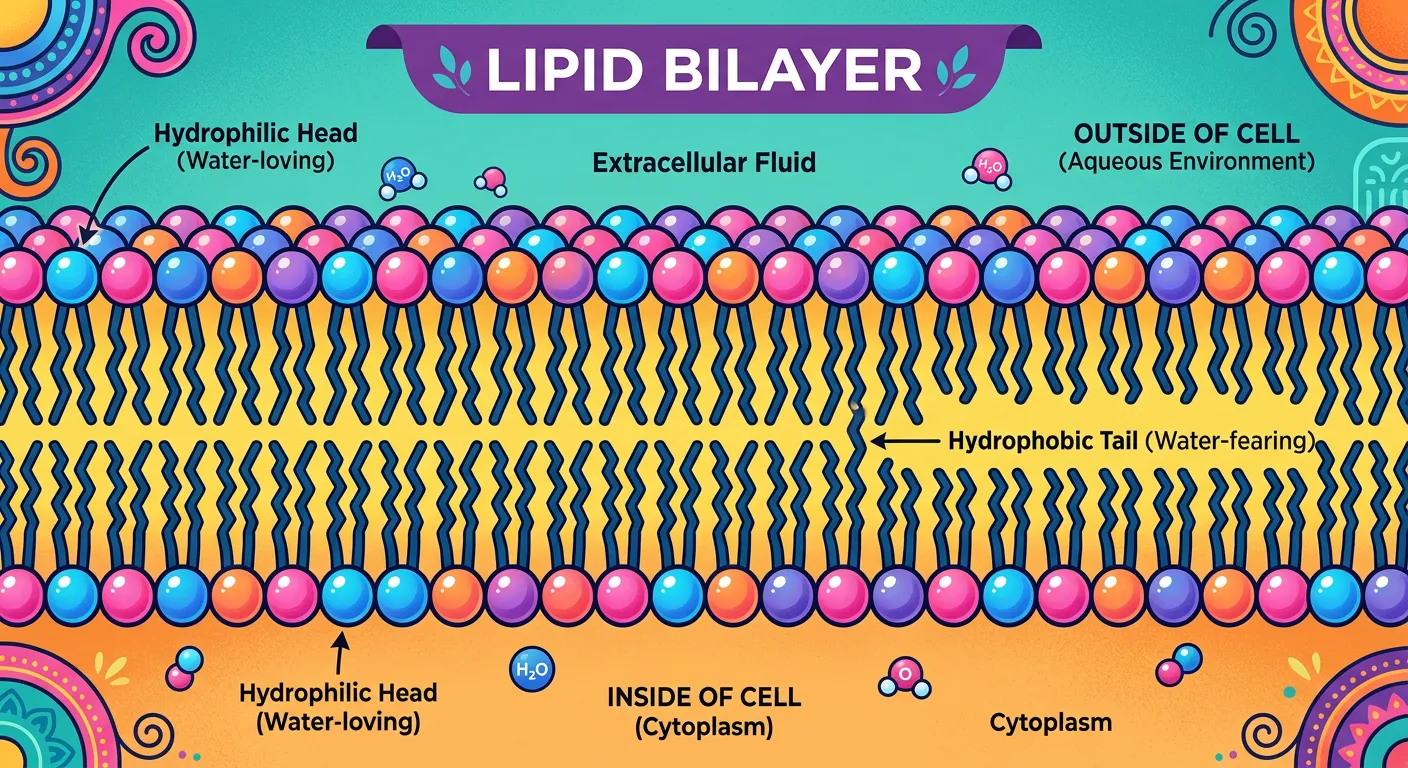
“Meet the Fluid Mosaic model! Think of the membrane as a sea of phospholipids. The heads love water—they face out—while the tails hide from it inside. This creates a flexible, sturdy barrier, just like the double-layered fabric of a high-quality raincoat keeping you dry.”
The most widely accepted description of the membrane structure is the Fluid Mosaic Model, proposed by Singer and Nicolson in 1972. To visualize this, imagine an ocean of oil with icebergs floating in it. The 'ocean' consists of a phospholipid bilayer. Phospholipids are unique 'amphipathic' molecules, meaning they have a dual personality. They possess a hydrophilic (water-loving) head made of phosphate and a hydrophobic (water-fearing) tail consisting of saturated or unsaturated fatty acids. In an aqueous environment, these molecules spontaneously arrange themselves into two layers: the heads face the water on both sides, while the tails hide in the middle, shielded from moisture. This arrangement ensures that the non-polar tails of saturated hydrocarbons are protected from the aqueous environment.
This arrangement is not rigid; it is fluid. The 'fluidity' refers to the ability of lipids and proteins to move laterally within the membrane. This lateral movement is essential for functions like cell growth, formation of intercellular junctions, secretion, endocytosis, and cell division. If the membrane were a solid wall, the cell could not divide or move. The 'mosaic' part of the name comes from the proteins that are scattered throughout the lipid sea, creating a complex and functional pattern. This fluidity is also influenced by cholesterol in animal cells, which acts as a temperature buffer, preventing the membrane from becoming too liquid when hot or too brittle when cold. The quasi-fluid nature of lipid enables lateral movement of proteins within the overall bilayer.
| Feature | Hydrophilic Head | Hydrophobic Tail |
|---|---|---|
| Composition | Phosphate group | Fatty acid chains |
| Position | Outer and Inner surfaces | Interior of the bilayer |
| Affinity | Attracted to water | Repels water |
| Significance | Interfaces with cytoplasm/ECM | Protects tails from aqueous environment |
Quick Revision Points
- The Fluid Mosaic Model was proposed in 1972 by S.J. Singer and Garth L. Nicolson.
- The 'fluid' nature is due to the quasi-fluid state of the lipid bilayer.
- Phospholipids are arranged with tails towards the inner part to protect them from water.
- Fluidity is a critical property for endocytosis, cell growth, and cell division.
- Cholesterol is often present to maintain structural integrity and regulate fluidity in animal cell membranes.
- The lipid component of the membrane mainly consists of phosphoglycerides.
NEET Exam Angle
- Questions often ask about the year and authors of the model (1972, Singer & Nicolson).
- Note the specific arrangement: Polar heads are 'outer' (hydrophilic) and non-polar tails are 'inner' (hydrophobic).
- Understand that the 'fluid' nature is what allows the membrane to be dynamic rather than static.
- The ratio of lipid and protein varies greatly in different cell types.
03Membrane Proteins: The Icebergs and Channels of the Mosaic
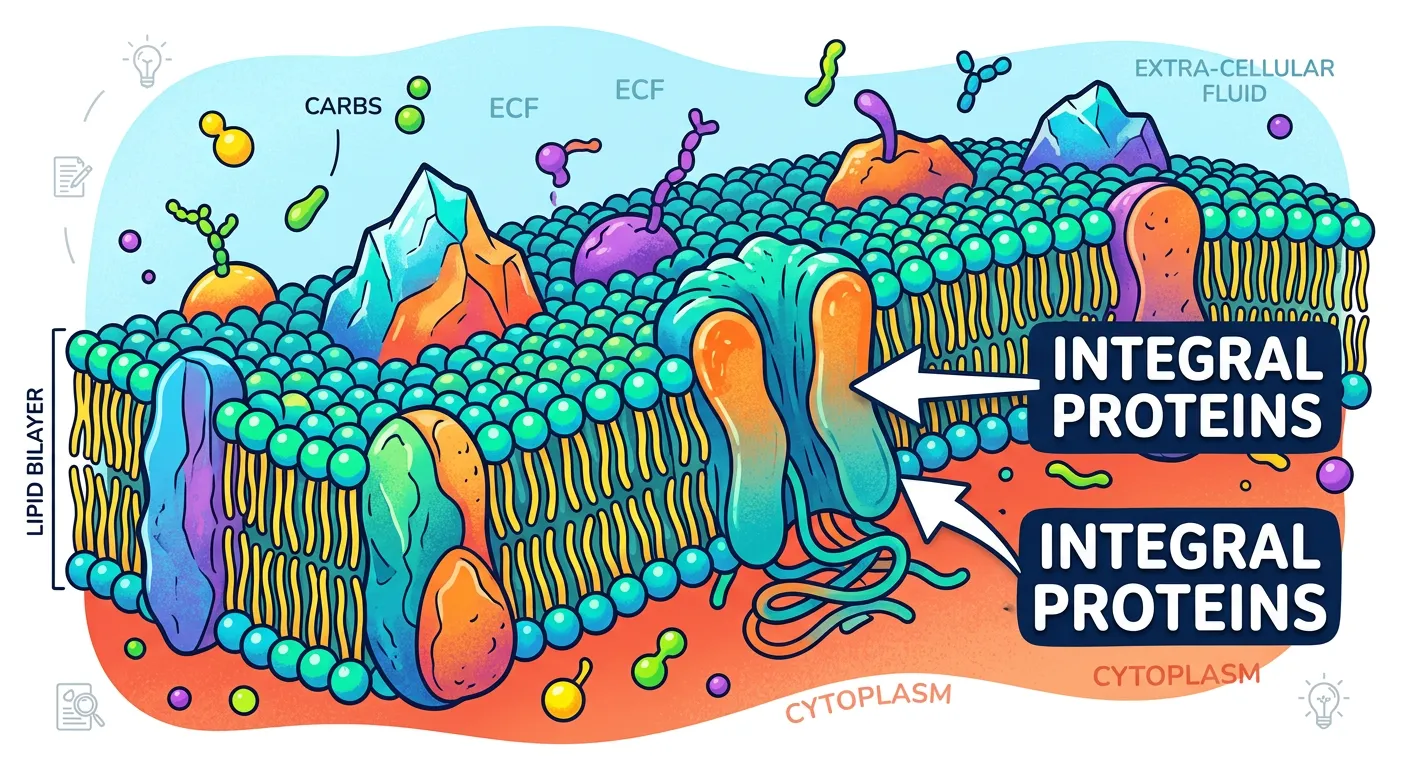
“Our membrane isn't just a wall; it's a bustling market! Proteins are embedded like icebergs in a lipid sea. These 'Integral Proteins' act as tunnels or doorways, allowing essential nutrients to cross the barrier, making sure the cell stays fed and functional.”
While lipids provide the basic structure, proteins provide the functionality. In the Fluid Mosaic Model, proteins are categorized based on how easily they can be removed from the membrane. Peripheral proteins are loosely attached to the surface, like ornaments on a tree. In contrast, integral proteins are partially or totally buried in the phospholipid bilayer. Some integral proteins span the entire width of the membrane and are called transmembrane proteins. These serve as the 'tunnels' or 'channels' that allow specific molecules—especially polar ones that cannot pass through the fatty tails—to cross into the cell. Depending on the ease of extraction, membrane proteins can be classified as peripheral and integral.
The ratio of protein to lipid varies significantly depending on the cell type. For example, in a human erythrocyte (Red Blood Cell), the membrane is roughly 52 percent protein and 40 percent lipids. This high protein content reflects the RBC's intense involvement in transport and signaling. These proteins aren't just for transport; they also act as enzymes, receptors for hormones, and 'ID tags' for the immune system. When we talk about 'icebergs in a sea of lipids,' we are referring to these integral proteins floating and moving laterally within the fluid bilayer, performing the heavy lifting of cellular physiology. Peripheral proteins lie on the surface of membrane while the integral proteins are partially or totally buried in the membrane.
| Protein Type | Location | Ease of Extraction | Primary Function |
|---|---|---|---|
| Peripheral | Membrane surface | Easy to remove | Signaling and recognition |
| Integral | Embedded in bilayer | Difficult to remove | Channels and transporters |
| Transmembrane | Spans both layers | Very difficult | Major transport routes |
Quick Revision Points
- Membrane proteins are classified as Integral or Peripheral based on extraction ease.
- Integral proteins can act as pumps or channels for molecular passage across the hydrophobic core.
- Peripheral proteins are often involved in enzymatic activity or maintaining cell shape via the cytoskeleton.
- The protein-to-lipid ratio is specific to the cell's physiological role (e.g., RBC: 52% Protein, 40% Lipid).
- Transmembrane proteins allow the cell to 'talk' to its neighbors and the environment.
NEET Exam Angle
- Memorize the RBC composition: 52% protein, 40% lipids (a very common PYQ).
- Understand that 'Ease of Extraction' is the technical criteria for protein classification in the Singer-Nicolson model.
- Remember that the lipid bilayer is mainly phosphoglycerides.
- The fluidity of the membrane is also important for the formation of intercellular junctions.
04Passive Transport: Mastering Simple Diffusion and Concentration Gradients
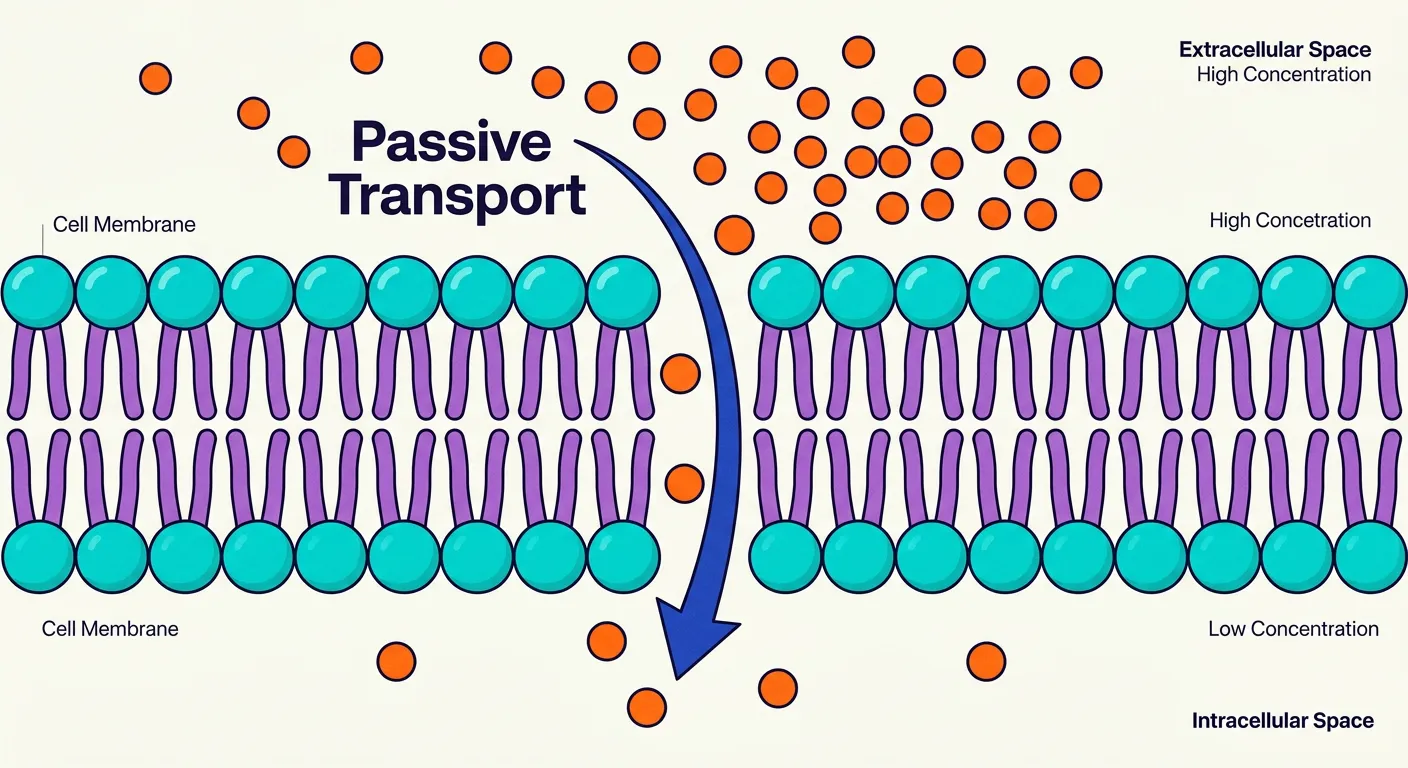
“Need a quick entry? Small molecules like oxygen just diffuse through the membrane for free! This is 'Passive Transport'—no energy required. It's like walking downhill; you just go with the flow, naturally moving from a crowded area to a less crowded one.”
Transport across the cell membrane happens in two main ways: without energy (passive) or with energy (active). Passive transport is the simplest form of movement. It follows the concentration gradient, which is just a fancy way of saying molecules move from where there are many of them to where there are few. This is often called 'downhill movement.' Think of a scent of perfume spreading across a room; it happens naturally without anyone pushing the air molecules. In the cell, small, neutral molecules like Oxygen (O2) and Carbon Dioxide (CO2) move this way through simple diffusion. The membrane is selectively permeable to some molecules present on either side of it.
Because the interior of the membrane is hydrophobic (fatty), neutral solutes pass through easily. However, polar molecules (like water or glucose) struggle to pass through the non-polar lipid tails. They need help. This 'assisted' passive transport is called facilitated diffusion. Even though a protein channel is helping them, it is still considered passive because no ATP (energy) is used; the molecules are still moving from high to low concentration. A carrier protein of the membrane facilitates this transport. Several factors affect the rate of this diffusion, including the steepness of the concentration gradient, the temperature, and the size of the molecules involved. In your lungs, this process is what allows oxygen to enter your blood and CO2 to leave it, happening thousands of times every minute. Movement by diffusion is passive and may be from one part of the cell to the other, or from cell to cell, or over short distances.
Quick Revision Points
- Passive transport requires no metabolic energy (ATP) from the cell.
- Movement occurs from high concentration to low concentration (along the gradient).
- Simple diffusion is used by neutral solutes and gases like O2 and CO2.
- Facilitated diffusion uses carrier proteins or channels for polar or larger molecules.
- The process continues until an equilibrium is reached on both sides of the membrane.
- Water may also move across this membrane from higher to lower concentration.
NEET Exam Angle
- Be careful with the phrase 'along the concentration gradient'—this always implies passive movement.
- Remember that neutral solutes move by simple diffusion, while polar molecules require facilitated diffusion via membrane proteins.
- Diffusion rate is directly proportional to the concentration gradient and temperature.
- Facilitated diffusion is very specific; it allows cell to select substances for uptake.
- Important: Facilitated diffusion does not cause net transport of molecules from a low to a high concentration.
05Active Transport: Energy-Driven Movement and Protein Pumps
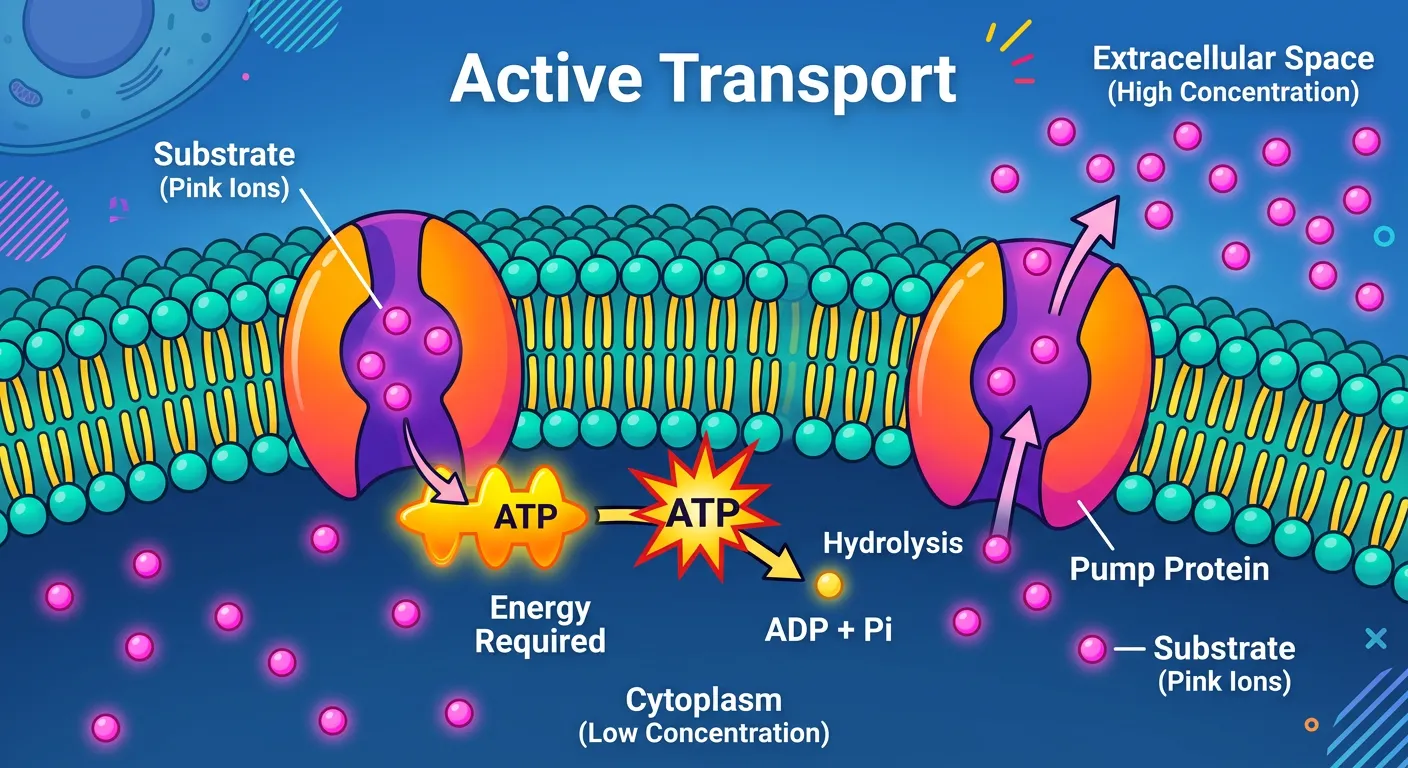
“Sometimes, the cell needs to pull in materials against the crowd. That’s 'Active Transport'. It’s like cycling uphill—you need fuel! We use ATP energy to push molecules through special protein pumps. It’s hard work, but essential for maintaining the cell's internal chemistry.”
What happens when a cell needs to bring in a nutrient that is already in high concentration inside? Or when it needs to pump out toxic waste against a gradient? It can’t rely on passive diffusion. Instead, it must use Active Transport. This process is 'uphill movement'—it forces molecules to move from an area of lower concentration to an area of higher concentration. To do this, the cell must spend currency in the form of ATP (Adenosine Triphosphate). Special integral proteins called 'pumps' use this energy to change shape and physically move ions across the membrane. A few ions or molecules are transported across the membrane against their concentration gradient.
The most famous example, and a favorite for NEET examiners, is the Sodium-Potassium (Na+/K+) Pump. This pump is essential for the functioning of nerve cells and muscle cells. It works tirelessly to pump three Sodium ions out of the cell for every two Potassium ions it brings in. This creates an electrochemical gradient, which is like charging a biological battery. This gradient is what allows your nerves to fire signals and your muscles to contract. Without active transport and the constant expenditure of ATP, your nervous system would shut down instantly. It is the cellular equivalent of pedaling a bike uphill; it’s hard work, but it’s the only way to reach the top. Such a transport is an energy dependent process, in which ATP is utilized.
| Transport Type | Direction of Movement | Energy Required? | Protein Involved? |
|---|---|---|---|
| Passive | Along Gradient (High to Low) | No (No ATP) | Only in Facilitated |
| Active | Against Gradient (Low to High) | Yes (ATP used) | Yes (Specific Pumps) |
Quick Revision Points
- Active transport moves molecules against the concentration gradient (uphill movement).
- It is an energy-dependent process requiring ATP (Adenosine Triphosphate).
- Carrier proteins acting as 'pumps' are mandatory for this process to occur.
- The Na+/K+ pump is a classic example of active transport in animal cells, maintaining resting potential.
- It helps in maintaining the ionic and osmotic balance of the cell internally.
- Pumps are proteins that use energy to carry substances across the cell membrane.
NEET Exam Angle
- The Na+/K+ pump moves 3 Na+ OUT and 2 K+ IN. Don't flip these numbers in the exam!
- Active transport is often inhibited by metabolic poisons that stop ATP production (like Cyanide).
- Statement-Reason questions often link the presence of mitochondria to the rate of active transport.
- Transport rate reaches a maximum when all the protein transporters are being used (saturation).
06Osmosis: The Physics of Water Balance and Turgor Pressure
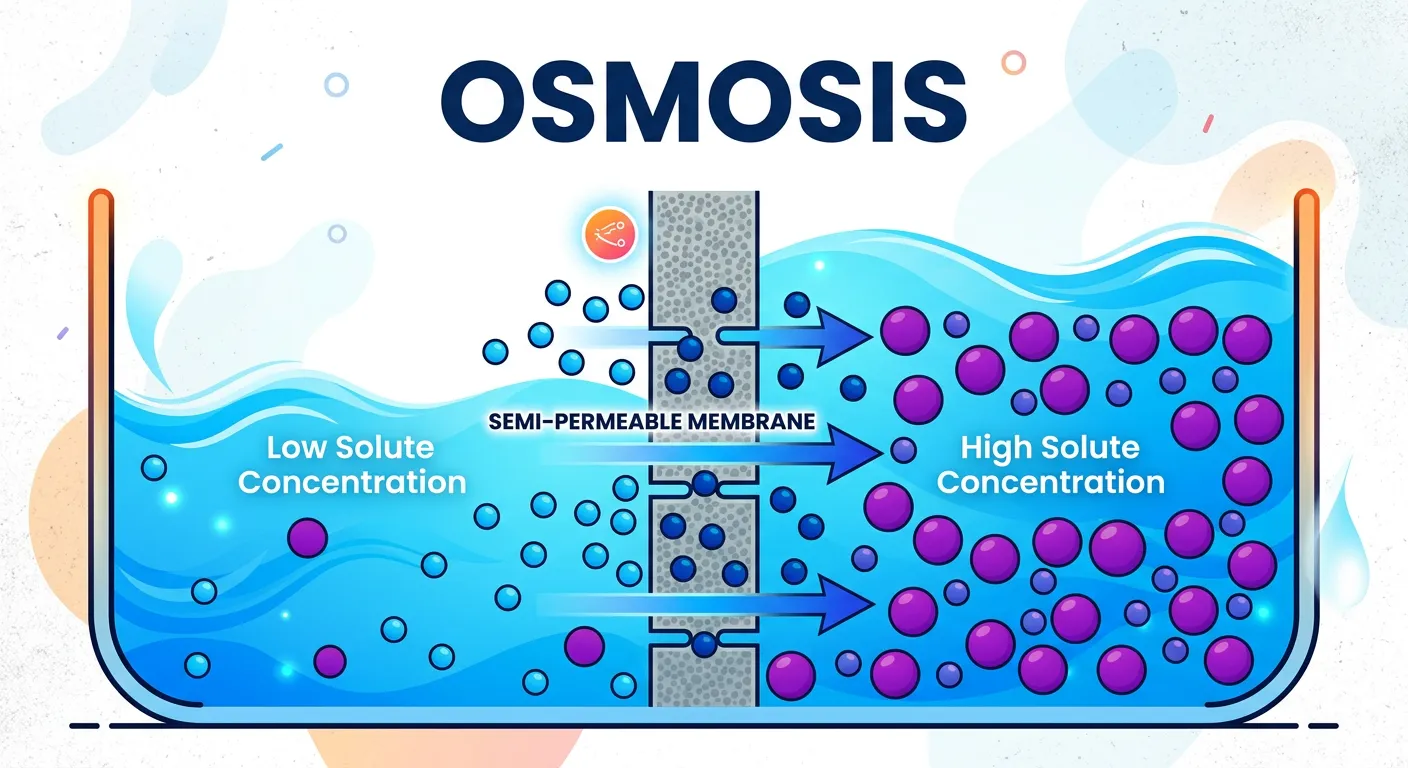
“Water is special. It moves via 'Osmosis' to balance out concentrations. Imagine a sugary drink; water moves toward the area with more sugar to dilute it. This movement across the semi-permeable membrane is the secret behind why your raisins puff up in water!”
Water is the solvent of life, and its movement is so important that it has its own name: Osmosis. Osmosis is a specific type of diffusion where water moves across a semi-permeable membrane from an area of high water concentration (dilute solution) to an area of low water concentration (concentrated solution). In simpler terms, water moves to where there is more 'stuff' (solute) to balance things out. This is a passive process, but its effects are dramatic. If you put a plant cell in pure water, water will rush in via osmosis, making the cell firm or 'turgid.' This turgor pressure is what helps non-woody plants stand upright. Water movement by osmosis is a vital factor in plant life.
Understanding tonicity is vital for both biology and medicine. If a cell is in an isotonic solution, the water movement is equal in both directions, and the cell stays the same size. In a hypertonic solution (like very salty water), water leaves the cell, causing it to shrink—a process called plasmolysis in plants. In a hypotonic solution (like distilled water), water enters the cell. While plant cells have a strong wall to prevent bursting, animal cells (like your Red Blood Cells) will swell and potentially explode (hemolysis) if the osmotic pressure isn't carefully regulated. This is why IV fluids in hospitals must be exactly isotonic to your blood. Osmosis is the movement of water by diffusion across a membrane.
| Solution Type | Solute Concentration | Effect on Animal Cell | Effect on Plant Cell |
|---|---|---|---|
| Isotonic | Same as cell | Normal / Stable | Flaccid |
| Hypotonic | Lower than cell | Swells / Bursts | Turgid (Normal) |
| Hypertonic | Higher than cell | Shrinks (Crenation) | Plasmolysed |
Quick Revision Points
- Osmosis is the diffusion of water across a selectively permeable membrane.
- Water moves from high water potential (dilute) to low water potential (concentrated).
- It does not require ATP; it is a passive process driven by the gradient.
- Osmotic pressure is the pressure required to stop the flow of water across the membrane.
- Turgidity is essential for plant structure and mechanical support of the plant body.
- Net direction and rate of osmosis depend on both the pressure gradient and concentration gradient.
NEET Exam Angle
- Know the difference between 'plasmolysis' (shrinking in hypertonic) and 'hemolysis' (bursting in hypotonic).
- Remember: Water always moves toward the 'Hypertonic' side (where solute concentration is higher).
- A common question asks what happens to a cell placed in a 0.9% NaCl solution (which is isotonic for humans).
- Plant cells do not burst in hypotonic solutions due to the presence of a rigid cell wall.
07Synthesizing Membrane Dynamics: Essential NEET Review and Summary
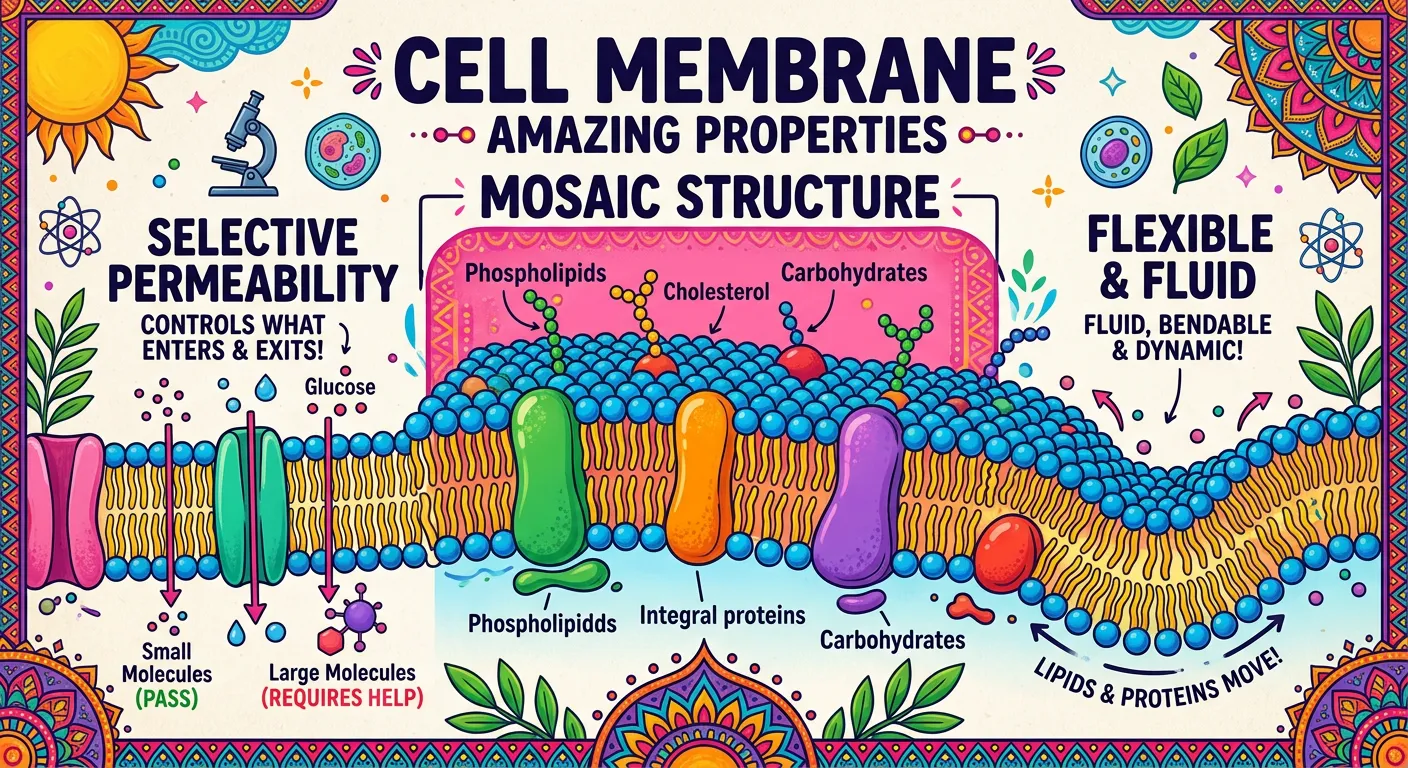
“In summary, the cell membrane is selectively permeable, fluid, and dynamic. It protects, communicates, and controls every entry and exit. Mastering this concept is your first step toward cracking the NEET! Stay curious, keep studying, and remember: your cells are working hard for you right now!”
As we conclude our study of the cell membrane, it is important to synthesize these details into a cohesive picture. The membrane is not just a barrier; it is a multifunctional organelle in its own right. It is selectively permeable, meaning it manages a delicate balance of what enters and exits. This selectivity is the reason cells can maintain a high concentration of potassium inside while keeping sodium levels low. The fluidity of the membrane is another masterstroke of nature. Without it, processes like endocytosis (engulfing food particles) and exocytosis (secreting hormones or waste) would be impossible. The fluid nature of the membrane is also important from the point of view of functions like cell growth.
For the NEET exam, always remember that the 'fluidity' is essentially the lateral movement of lipids and proteins. This property is vital for cell growth, the formation of intercellular junctions, secretion, endocytosis, and cell division. Make sure you can distinguish between 'Semi-permeable' (which lets only solvent through) and 'Selectively Permeable' (which lets solvent and specific solutes through). Mastery of this topic provides the groundwork for understanding how nerves conduct impulses, how kidneys filter blood, and how plants transport water. Revisit the NCERT diagrams frequently, as they are often used directly in the exam to test your identification skills of proteins and lipids.
| Process | Energy (ATP)? | Driver | Mechanism |
|---|---|---|---|
| Simple Diffusion | No | Concentration Gradient | Direct through lipid bilayer |
| Facilitated Diff. | No | Concentration Gradient | Through Protein Channels |
| Active Transport | Yes | ATP Hydrolysis | Against Gradient via Pumps |
| Osmosis | No | Water Potential Gradient | Semi-permeable membrane |
Quick Revision Points
- Fluidity is measured as the ability of components to move laterally within the bilayer.
- The membrane's dynamic nature allows for growth, secretion, and cell division processes.
- Selective permeability is an active biological property, whereas semi-permeability is physical.
- Key components: Phospholipids (structural framework), Proteins (functional machines), Carbohydrates (recognition).
- The Sodium-Potassium pump is a vital active transport mechanism for cellular homeostasis.
- The quasi-fluid nature of lipid enables lateral movement of proteins within the overall bilayer.
NEET Exam Angle
- Focus on the 'Fluidity' functions mentioned in NCERT: Cell growth, secretion, endocytosis, and cell division.
- Remember the Iceberg analogy: Proteins (icebergs) in a Sea (lipids).
- Review the 2019-2024 PYQs on the ratio of proteins and lipids and the Singer-Nicolson model details.
- Understand that the polar head is hydrophilic and faces the outside, while the non-polar tail is hydrophobic and faces the inside.
Recommended Reading
Explore related Biology topics to build deeper chapter connections for NEET.
- Cell Theory · Topic 3.1
- Golgi Bodies · Topic 3.10
- Lysosomes · Topic 3.11
- Vacuoles · Topic 3.12
- Plastids · Topic 3.15
- Prokaryotic and Eukaryotic Cell · Topic 3.2
- Jump to Key Terms (Quick Revision)
- Review Common NEET Mistakes
- Solve NEET Practice MCQs
- Read Topic FAQs
- Practice NEET MCQs
- Solve NEET PYQs
📚 Key Terms
⚠️ Common NEET Mistakes
- 1Confusing 'Semi-permeable' with 'Selectively Permeable'. Semi-permeable is mostly a physical property; Selectively Permeable is biological and actively regulated.
- 2Swapping the numbers for the Na+/K+ pump: Always remember it is 3 Sodium (Na+) OUT and 2 Potassium (K+) IN for every ATP molecule used.
- 3Assuming all proteins in the membrane are the same. You must distinguish between peripheral (surface) and integral (embedded) proteins based on extraction ease.
- 4Thinking that 'facilitated diffusion' is active transport just because it uses a protein. It is passive because it follows the gradient and uses no ATP.
- 5Forgetting the specific RBC protein-lipid ratio (52% protein, 40% lipid), which is a high-yield NCERT fact for NEET.
📝 NEET PYQ & Practice Questions
Test your understanding of Cell Membrane with NCERT-aligned sample questions.
Which of the following statements is correct regarding "Fluid Mosaic Model" in the context of NEET Biology?
In NEET question papers, questions related to "Cell Membrane" predominantly test:
Consider Integral Proteins associated with Cell Membrane. What is the primary characteristic expected in NEET MCQs?
Master Cell Membrane with NeetQ AI Tutor
Practice 50+ topic-wise MCQs, previous 15 years NEET questions, and get step-by-step doubt resolution instantly.
❓ Frequently Asked Questions
Who proposed the Fluid Mosaic Model and in which year?
The Fluid Mosaic Model was proposed by S.J. Singer and Garth L. Nicolson in the year 1972. It is currently the most widely accepted model for the structure of the cell membrane.
What is the difference between active and passive transport with respect to ATP usage?
Active transport requires metabolic energy in the form of ATP to move molecules against their concentration gradient (uphill), whereas passive transport requires no energy as molecules move along their concentration gradient (downhill).
Why are the tails of phospholipids hydrophobic and tucked away from the aqueous environment?
The tails consist of non-polar saturated or unsaturated hydrocarbons which are water-repelling (hydrophobic). Tucking them inside the bilayer protects them from the aqueous environments of the cytoplasm and extracellular fluid.
How does the cell membrane maintain its fluidity at different temperatures?
The membrane maintains fluidity through the presence of cholesterol (in animal cells) and the proportion of unsaturated fatty acid tails, which introduce 'kinks' that prevent tight packing of phospholipids.
What kind of molecules require carrier proteins for facilitated diffusion?
Polar molecules and hydrophilic substances (like glucose and certain ions) require carrier or channel proteins because they cannot pass through the hydrophobic, non-polar lipid bilayer on their own.
What would happen to a human RBC if placed in a hypotonic solution?
In a hypotonic solution, water will enter the Red Blood Cell (RBC) via osmosis, causing it to swell and eventually burst (hemolysis) because animal cells lack a rigid cell wall to withstand the osmotic pressure.
Written By
NEET Content Strategist & Biology Expert
Sangita Kumari is a NEET educator and content strategist with over 6 years of experience teaching Biology, Chemistry, and Physics to Class 11 and 12 aspirants. She helps bridge the gap between traditional NCERT preparation and modern AI-powered learning. Her content is trusted by thousands of NEET aspirants across India.