🎬 Video Lesson Available
Watch the full 7-slide video lesson for Endomembrane System with AI teacher narration and visual explanations.
Endomembrane System — Master the Endomembrane System for NEET. Detailed notes on ER, Golgi, Lysosomes, and Vacuoles with expert insights and high-yield exam patterns.
01Understanding the Cellular Logistics Network: The Endomembrane Concept
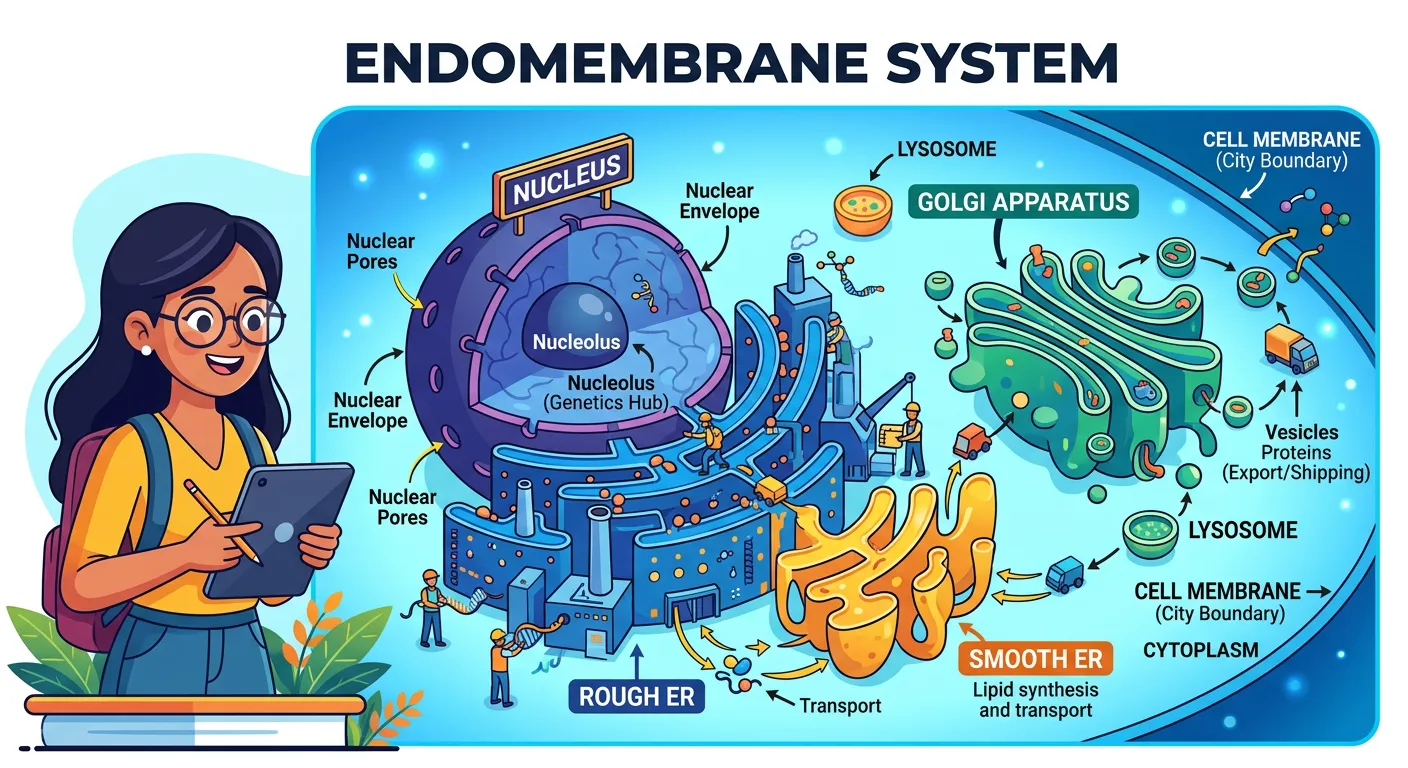
“Welcome, future doctors! Think of the Endomembrane System as the 'logistics department' of our cellular city. Just like an e-commerce warehouse, these interconnected organelles coordinate, pack, and ship cellular products to keep the life processes running smoothly. Let's dive into how this efficient factory works!”
To understand the cell not just as a bag of chemicals but as a thriving microscopic city, we must look at the endomembrane system. While many organelles float within the cytoplasm, a specific group works in such tight coordination that they are classified together as a single functional unit. This system includes the endoplasmic reticulum (ER), Golgi complex, lysosomes, and vacuoles. The 'endo' in the name signifies that these membranes are internal, creating a network that partitions the cell into specialized compartments where different biochemical reactions can occur without interfering with one another.
Why aren't mitochondria or chloroplasts part of this system? This is a frequent NEET question. The answer lies in coordination. While mitochondria and chloroplasts are essential for energy, their functions are not physically or chemically synchronized with the flow of materials from the ER to the Golgi. The endomembrane system, by contrast, operates like a relay race. A protein is born in the ER, modified in the Golgi, and eventually either digested by a lysosome or stored in a vacuole. This directional flow of membranes and materials is what defines the system's 'logistics' nature.
| Feature | Endomembrane System Organelles | Non-Endomembrane Organelles |
|---|---|---|
| Members | ER, Golgi, Lysosomes, Vacuoles | Mitochondria, Chloroplasts, Peroxisomes |
| Coordination | Functions are highly interdependent | Functions are largely independent |
| Origin | Derived from the ER/Golgi pathway | Often semi-autonomous (Endosymbiotic) |
| Vesicle Flow | Constant exchange of vesicles | Do not exchange vesicles with the ER |
Quick Revision Points
- The endomembrane system consists of organelles whose functions are coordinated.
- Includes: Endoplasmic Reticulum (ER), Golgi complex, Lysosomes, and Vacuoles.
- Excludes: Mitochondria, Chloroplasts, and Peroxisomes because their functions are not coordinated with the above group.
- Acts as the cell’s primary system for synthesizing, modifying, and transporting proteins and lipids.
- The system allows for compartmentalization-vs-eukaryotic-cell-structure-neet-biology)-vs-eukaryotic-cell-structure-neet-biology)-vs-eukaryotic-cell-structure-neet-biology)-vs-eukaryotic-cell-structure-neet-biology)-vs-eukaryotic-cell-structure-neet-biology)-vs-eukaryotic-cell-structure-neet-biology)-vs-eukaryotic-cell-structure-neet-biology)-vs-eukaryotic-cell-structure-neet-biology)-vs-eukaryotic-cell-structure-neet-biology)-vs-eukaryotic-cell-structure-neet-biology)-vs-eukaryotic-cell-structure-neet-biology)-vs-eukaryotic-cell-structure-neet-biology)-vs-eukaryotic-cell-structure-neet-biology)-vs-eukaryotic-cell-structure-neet-biology)-vs-eukaryotic-cell-structure-neet-biology)-vs-eukaryotic-cell-structure-neet-biology)-vs-eukaryotic-cell-structure-neet-biology)-vs-eukaryotic-cell-structure-neet-biology)-vs-eukaryotic-cell-structure-neet-biology)-vs-eukaryotic-cell-structure-neet-biology)-vs-eukaryotic-cell-structure-neet-biology), ensuring acidic reactions (like in lysosomes) don't damage the rest of the cell.
NEET Exam Angle
- Focus Area: Identifying which organelles belong to the system. Remember the mnemonic 'EGLV' (ER, Golgi, Lysosomes, Vacuoles).
- Logic Check: If a question asks why Peroxisomes are excluded, specify that their oxidative functions are not coordinated with the secretory pathway of the ER.
- Diagram Trap: In many cell diagrams, the ER is shown continuous with the nuclear envelope; the outer nuclear membrane is technically part of this system.
02The Rough Endoplasmic Reticulum (RER): The Cell's Protein Synthesis Workbench
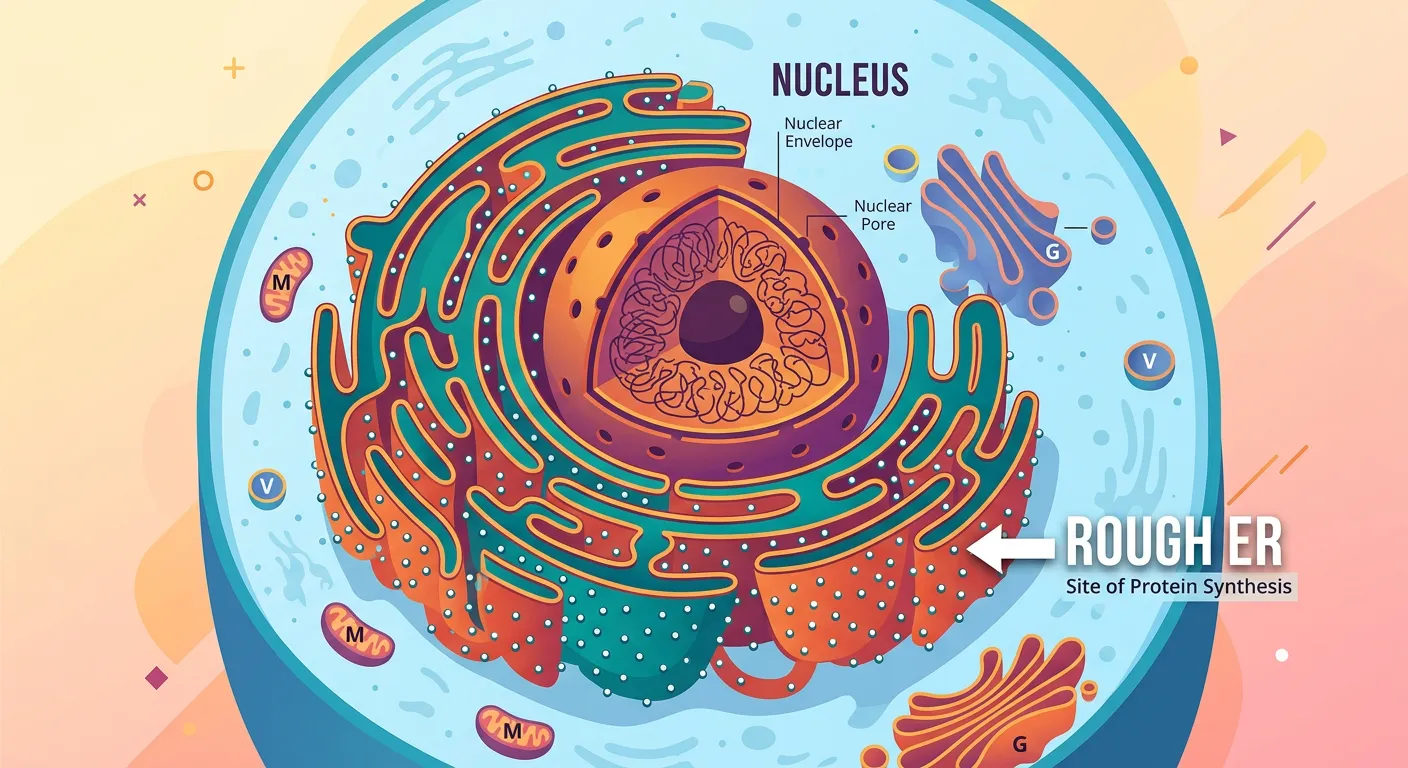
“First stop, the Rough ER! Think of it like a kitchen with chefs—the ribosomes are the chefs, and the ER is the workbench. Because ribosomes attach to its surface, it looks bumpy or 'rough.' Its main job? Protein synthesis and folding for your body's vital functions.”
The Endoplasmic Reticulum (ER) is a massive network of tiny tubular structures scattered throughout the cytoplasm. When we look closely at the Rough Endoplasmic Reticulum (RER), it appears studded with ribosomes—specifically the 80S variety in eukaryotes—on its outer surface. This 'rough' appearance isn't just for show; it marks the site where the cell’s heavy lifting of protein synthesis occurs. The RER is particularly extensive and continuous with the outer membrane of the nucleus, providing a direct pipeline for mRNA to reach the ribosomes.
In the RER, proteins intended for secretion are synthesized. As the ribosome builds the polypeptide chain, it is threaded into the RER lumen (the internal space). Inside this protected environment, the protein undergoes folding and initial modifications. This is a critical quality-control step; misfolded proteins are often detected here and sent for degradation rather than being shipped to the Golgi. Cells that are highly active in secreting enzymes or hormones, such as the acinar cells of the pancreas, will have a massive amount of RER to meet the demand.
Quick Revision Points
- RER is characterized by the presence of ribosomes on its surface.
- It is primarily involved in the synthesis of secretory proteins and membrane proteins.
- It is continuous with the outer nuclear membrane.
- Proteins synthesized here enter the lumen for folding and post-translational modification.
- Abundant in cells active in protein secretion (e.g., pancreatic cells, plasma cells).
NEET Exam Angle
- Ribosome Type: Always remember that RER hosts 80S ribosomes in eukaryotic cells. Don't confuse this with the 70S found in mitochondria.
- Functional Link: NEET often links RER to the 'Molecular Basis of Inheritance.' Transcription happens in the nucleus, but translation for secretory proteins happens on the RER.
- Cell Type Questions: If a question asks which organelle is prominent in a cell producing digestive enzymes, the answer is always RER/Golgi.
- Lumen Concept: The ER divides the intracellular space into two distinct compartments: luminal (inside ER) and extra-luminal (cytoplasm).
03The Smooth Endoplasmic Reticulum (SER): Lipid Metabolism and Detoxification
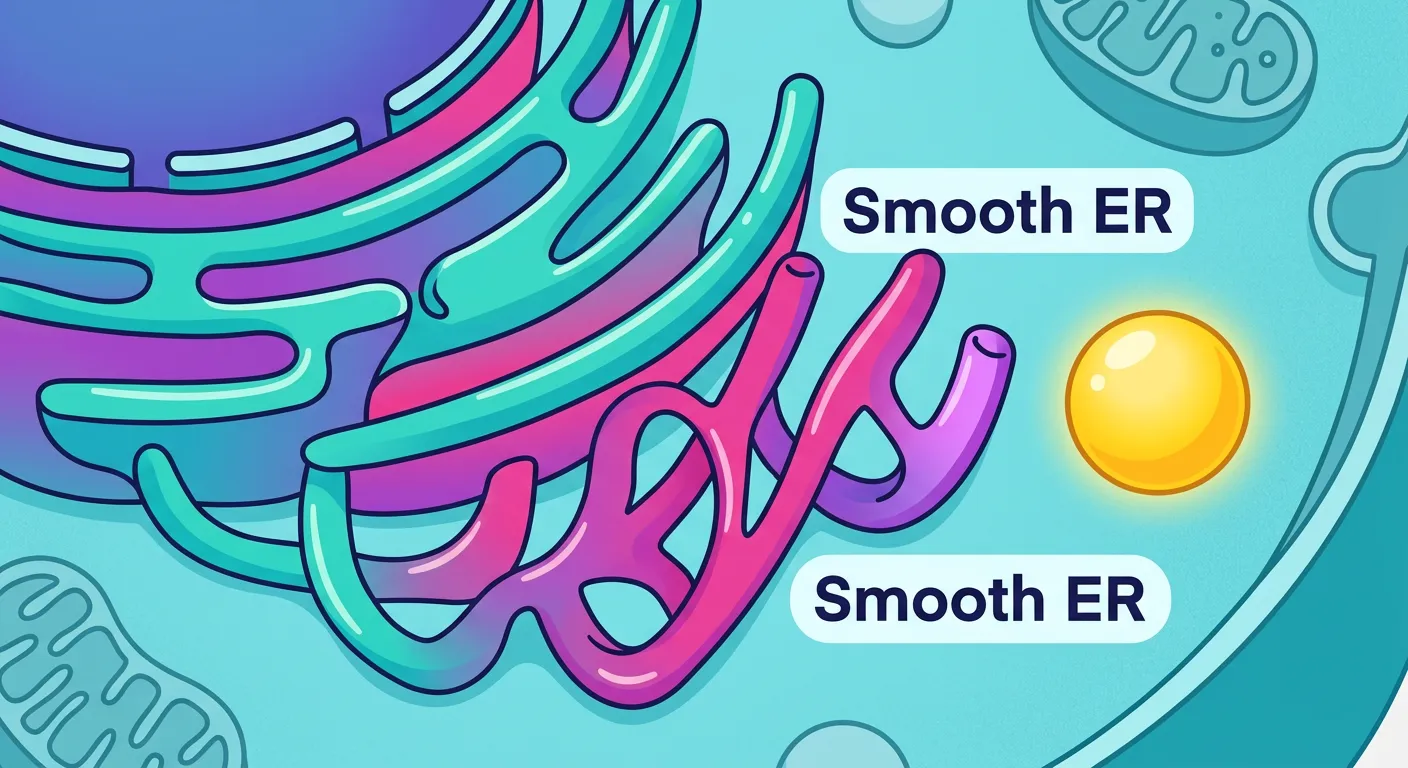
“Next, the Smooth ER—the fitness center of the cell! Without ribosomes, it looks smooth. It’s the expert at synthesizing lipids and steroid hormones. In liver cells, it acts like a detox center, clearing out drugs and harmful chemicals. It’s essential for your metabolic health!”
While the RER is the protein factory, the Smooth Endoplasmic Reticulum (SER) is the cell's chemical refinery. Lacking ribosomes, its surface is smooth and its structure is more tubular than the flattened sacs (cisternae) of the RER. The SER is the major site for the synthesis of lipids, including phospholipids and cholesterol. In animal cells, the SER has a specialized role in producing lipid-like steroidal hormones, such as testosterone and estrogen. Without a healthy SER, our endocrine system would fail to function. By providing a vast network for lipid processing, the SER supports the structural integrity of all cellular membranes, including the plasma membrane and the Golgi stack.
Another critical role of the SER is detoxification. In the liver (hepatocytes), the SER contains a suite of enzymes, including the cytochrome P450 family, which modify drugs and toxins to make them water-soluble so they can be excreted from the body. This detoxification process is vital for cellular survival in an environment constantly exposed to metabolic byproducts and external pollutants. Furthermore, the SER acts as a calcium ion reservoir. In muscle cells, a specialized form of SER called the Sarcoplasmic Reticulum stores calcium and releases it to trigger muscle contraction. This multi-tasking ability makes the SER indispensable for both metabolic health and physiological movement. From maintaining homeostatic calcium levels to ensuring hormonal balance, the SER is a powerhouse of non-protein biosynthesis and metabolic regulation that operates seamlessly alongside the RER to maintain the cell’s internal stability and overall functional capacity.
Quick Revision Points
- SER lacks ribosomes, giving it a smooth appearance under the electron microscope.
- Major site for lipid synthesis (phospholipids, steroids, fats).
- Responsible for the synthesis of steroid hormones in animal cells.
- Plays a crucial role in the detoxification of drugs and poisons in the liver.
- Functions as a calcium storage site (Sarcoplasmic Reticulum) in muscle cells.
NEET Exam Angle
- Lipid Synthesis: NEET frequently tests the specific site of lipid synthesis; the answer is consistently SER.
- Hormone Connection: Remember the link between SER and the endocrine system (steroid hormones like progesterone, testosterone).
- Liver Function: Detoxification is a high-yield point. If a question mentions 'hepatocytes' and 'drug metabolism,' look for SER in the options.
- Muscle Physiology: The 'Sarcoplasmic Reticulum' is a specialized SER—keep this in mind for Human Physiology questions.
04The Golgi Apparatus: The Cellular Post Office and Packaging Hub
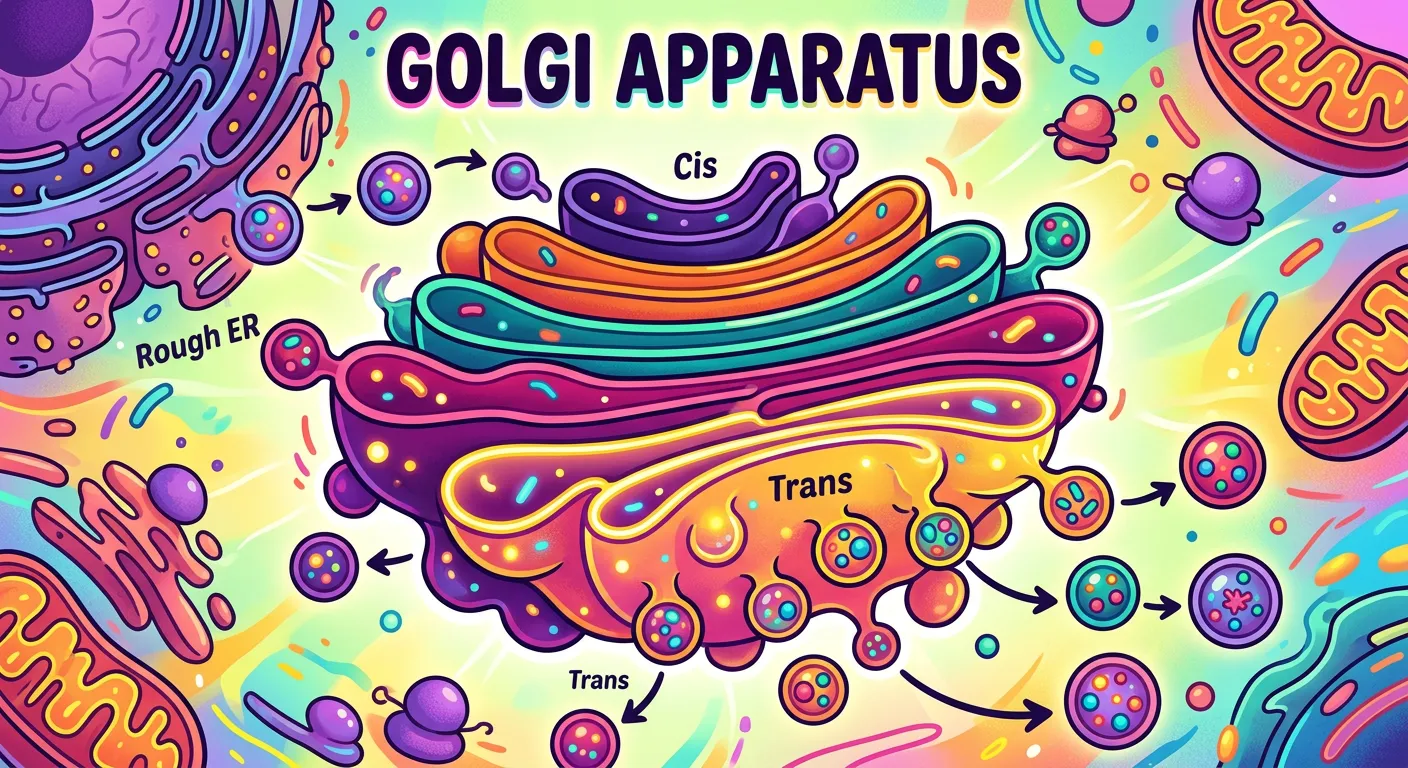
“Meet the Golgi Apparatus, the Post Office of the cell! It receives proteins from the ER, modifies them, packages them into vesicles, and addresses them to their final destination—either inside or outside the cell. Everything is labeled and sorted perfectly before it gets shipped out.”
Discovered by Camillo Golgi in 1898, the Golgi apparatus is a series of flattened, stack-like structures called cisternae. If the ER is the factory, the Golgi is the shipping and receiving department. It has a distinct polarity: the 'cis' face (forming face) is oriented toward the nucleus to receive vesicles from the ER, while the 'trans' face (maturing face) points toward the plasma membrane to dispatch finished products. This unidirectional flow ensures that cellular products are processed in the correct order.
The most important biochemical event in the Golgi is glycosylation. This is the process of adding sugar moieties to proteins and lipids to create glycoproteins and glycolipids. These 'sugar tags' act as molecular addresses, telling the cell exactly where the molecule needs to go—whether it’s the lysosome, the cell membrane, or secretion out of the cell. Without this packaging and addressing system, the cell would be in a state of chaotic internal traffic.
| Feature | Cis Face (Forming) | Trans Face (Maturing) |
|---|---|---|
| Orientation | Towards the Nucleus/ER | Towards the Plasma Membrane |
| Function | Receives transport vesicles from ER | Ships secretory vesicles to targets |
| Convexity | Convex shape | Concave shape |
| Process | Entry point for raw materials | Exit point for modified products |
Quick Revision Points
- Consists of many flat, disc-shaped sacs or cisternae (0.5µm to 1.0µm in diameter).
- The cisternae are stacked parallel to each other.
- Primary function is the packaging of materials for delivery to intracellular targets or secretion.
- It is the important site for the formation of glycoproteins and glycolipids.
- Materials from the ER fuse with the cis face and leave from the trans face.
NEET Exam Angle
- Glycosylation: This is the #1 most asked fact about the Golgi. Know that it makes glycoproteins and glycolipids.
- Polarity: Distinguish clearly between the cis (forming) and trans (maturing) faces. They are interconnected but functionally different.
- Discovery: Camillo Golgi’s name is often associated with the first observation of 'densely stained reticular structures near the nucleus.'
- Packaging Logic: Why does the Golgi stay close to the ER? Because it must constantly receive vesicles containing synthesized proteins.
05Lysosomes: Intracellular Digestion and the Suicide Bag Mechanism
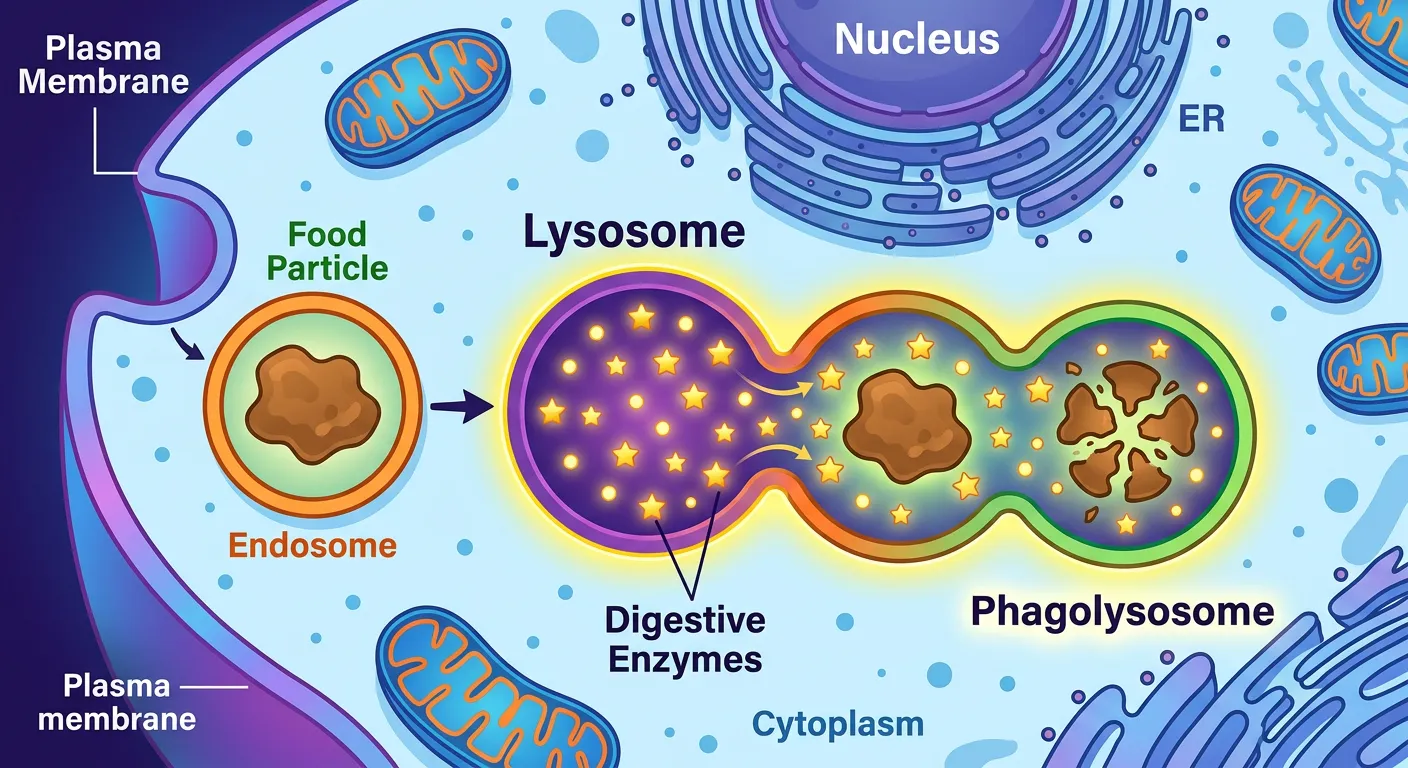
“Lysosomes are the 'waste disposal' units! Filled with powerful digestive enzymes, they break down worn-out organelles and foreign invaders. In NEET terms, remember they are the suicide bags—if the cell is damaged beyond repair, they burst to digest the cell itself. Keep them in check!”
Lysosomes are spherical, membrane-bound vesicles formed by the process of budding from the Golgi apparatus. They are essentially the cell's 'stomach.' Inside a lysosome is a cocktail of nearly 50 different types of hydrolytic enzymes (hydrolases), such as lipases, proteases, carbohydrates, and nucleases. These enzymes are unique because they are optimally active at an acidic pH (around 5.0). The lysosomal membrane contains proton pumps that actively transport H+ ions into the lumen to maintain this acidity, creating a harsh environment that effectively denatures and breaks down biological macromolecules that would otherwise be harmful to the cell. By sequestering these enzymes, the cell ensures that destructive degradation is limited to the organelle itself, preventing accidental breakdown of vital cytoplasm.
Lysosomes serve two primary functions: heterophagy (digesting foreign material like bacteria) and autophagy (recycling the cell’s own damaged organelles). This ensures the cell stays clean and efficient. The autophagic process is particularly important in times of nutrient stress or during the aging of cellular components, where the lysosome effectively acts as a recycling center. However, if a cell is severely damaged, stressed by pathogens, or reaches the end of its life cycle, the lysosomal membrane can rupture, releasing the enzymes into the cytoplasm. This leads to the digestion of the entire cell, a process known as autolysis. This 'programmed cell death' is why lysosomes are famously called the 'suicide bags' of the cell. They are not merely trash cans; they are highly regulated, dynamic structures that maintain cellular quality control by pruning dysfunctional parts and neutralizing invaders, thereby serving as a critical checkpoint in cellular life and death. The ability to compartmentalize these powerful hydrolases allows the eukaryotic cell to operate with a level of complexity and safety that would otherwise be impossible.
Quick Revision Points
- Membrane-bound vesicular structures formed by the Golgi apparatus.
- Rich in all types of hydrolytic enzymes (hydrolases).
- Enzymes are active specifically at an acidic pH.
- Function in intracellular digestion of macromolecules and old organelles.
- Known as 'suicide bags' due to their role in autolysis (self-digestion).
NEET Exam Angle
- pH Requirement: A common question asks about the optimal pH for lysosomal enzymes. Remember it is 'Acidic' or 'pH 5'.
- Formation: Note that lysosomes are formed by the Golgi apparatus. This links them directly to the endomembrane system.
- Polymorphism: Lysosomes can exist in different forms (primary, secondary, residual bodies)—a concept called polymorphism.
- Enzyme Names: Be ready to identify 'Hydrolases' as the general category for lysosomal enzymes.
06Vacuoles: The Central Storage Tank and Turgidity Regulator
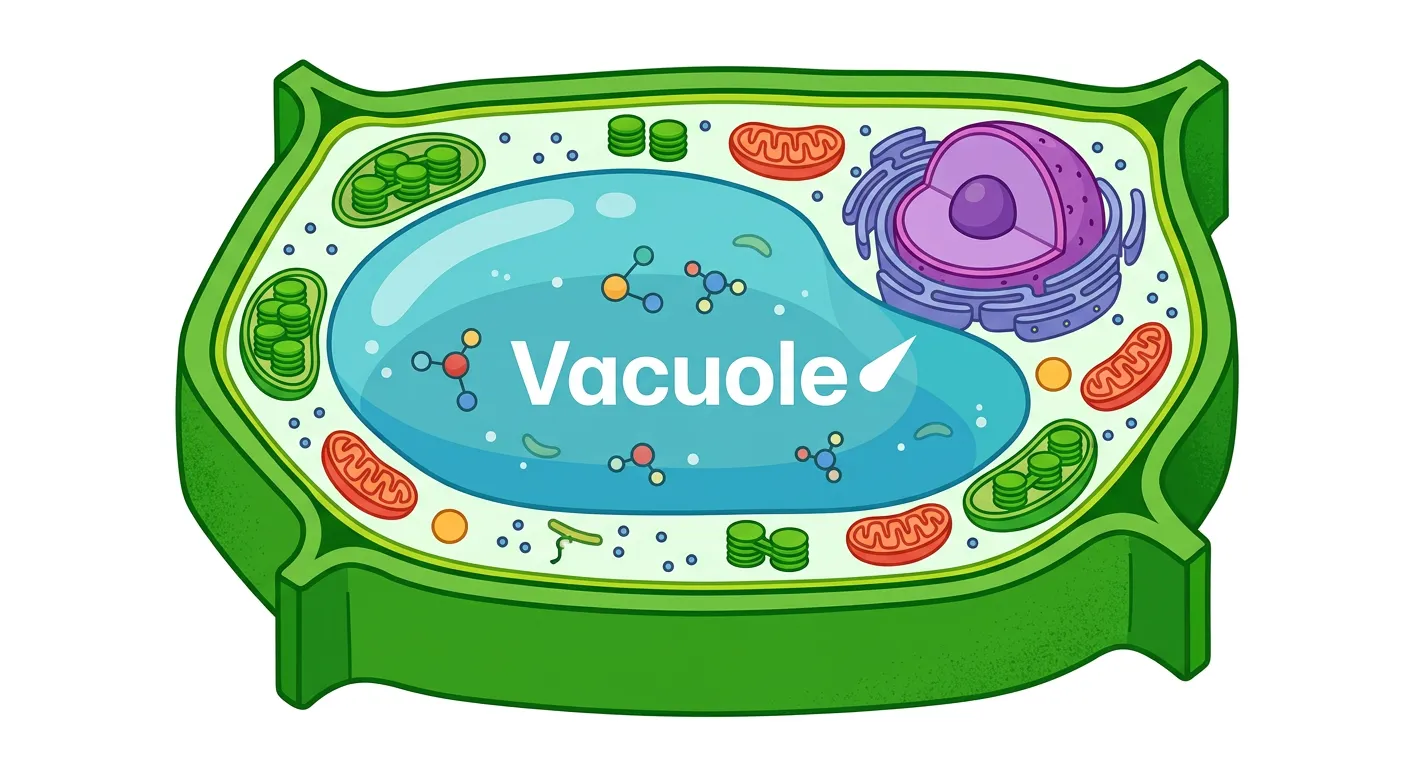
“In plant cells, the Vacuole is the big storage tank! It stores water, nutrients, and waste, providing turgidity to the plant, helping it stand tall. In animals, vacuoles are small or absent. Think of it as the cell's survival kit, keeping everything pressurized and ready.”
The vacuole is the final component of the endomembrane system, and its importance varies significantly between plants and animals. In a mature plant cell, the central vacuole can occupy up to 90% of the cell's volume. It is bound by a single membrane called the tonoplast. The space inside is filled with 'cell sap,' a mixture of water, sugars, ions, and even waste products that the cell wants to keep isolated from the cytoplasm. The tonoplast is highly selective, facilitating the transport of ions against concentration gradients into the vacuole.
Beyond storage, vacuoles are essential for structural support in plants. By exerting pressure against the cell wall—known as turgor pressure—the vacuole keeps the plant upright and prevents wilting. In other organisms, vacuoles take on specialized roles. For example, Amoeba uses contractile vacuoles for osmoregulation (pumping out excess water) and food vacuoles for digesting nutrients. While animal cells may have vacuoles, they are typically small, temporary, and far less prominent than their massive plant counterparts.
| Organism Type | Vacuole Characteristic | Primary Function |
|---|---|---|
| Plant Cell | Large, Central, Tonoplast-bound | Turgidity and storage |
| Amoeba | Contractile Vacuole | Osmoregulation (Excretion) |
| Protists | Food Vacuole | Engulfing and digesting food |
| Animal Cell | Small, multiple, temporary | Temporary storage/transport |
Quick Revision Points
- The vacuole is the membrane-bound space found in the cytoplasm.
- It contains water, sap, excretory products, and other non-useful materials.
- Bound by a single membrane called the tonoplast.
- In plants, the tonoplast facilitates transport of ions against concentration gradients.
- Contractile vacuoles in Amoeba are essential for excretion and osmoregulation.
NEET Exam Angle
- Tonoplast: This term is high-yield. Know that it is the membrane of the vacuole and that it performs active transport.
- Volume: Remember the '90% volume' statistic for plant cells; it highlights the vacuole's dominance.
- Osmoregulation: Link 'contractile vacuole' with 'Amoeba' and 'osmoregulation'—this often appears in the 'Kingdom Protista' section as well.
- Concentration Gradient: Note that the concentration of ions is significantly higher inside the vacuole than in the cytoplasm due to the tonoplast's activity.
07Interconnected Homeostasis: Mastering the Endomembrane System for NEET
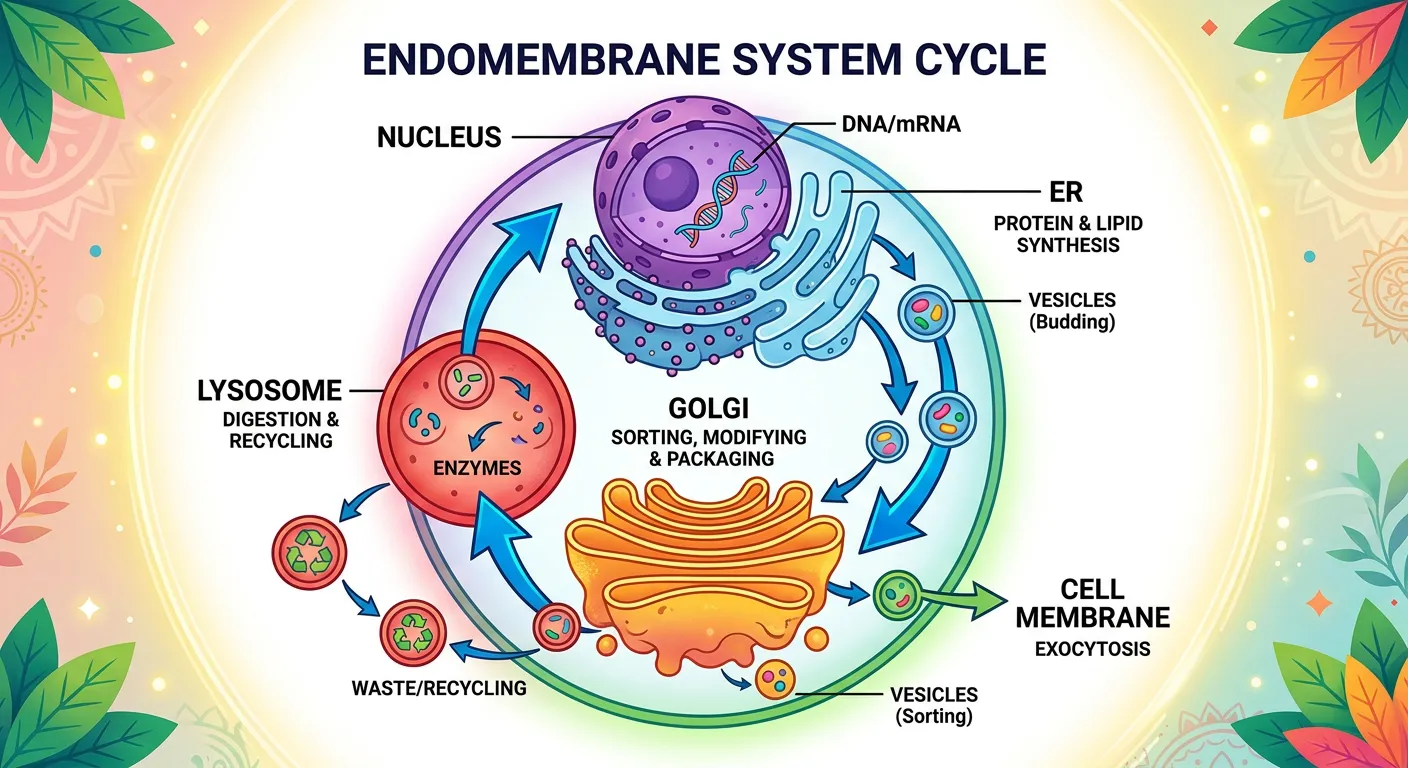
“To wrap up: the ER synthesizes, the Golgi modifies and packs, and lysosomes clean up. They function as a coordinated unit—the endomembrane system. Master these interactions, and you've conquered a high-yield NEET topic! Stay curious, keep studying, and let's ace that biology paper together!”
Mastering the endomembrane system requires seeing the 'big picture.' No organelle in this group works in isolation. The flow begins at the nuclear envelope and ER, where genetic instructions are turned into raw proteins and lipids. These raw materials are 'shipped' via transition vesicles to the Golgi apparatus. In the Golgi, they receive their 'postal codes' via glycosylation. From there, they are sorted: some become lysosomes to protect the cell, some go to vacuoles for storage, and others are secreted out of the cell to perform functions elsewhere in the body. This intricate, highly choreographed movement is the foundation of cellular physiology, ensuring that every molecule reaches its correct intracellular or extracellular destination.
For the NEET exam, the most common source of confusion is distinguishing between what is part of this system and what is not. Always remember the functional coordination rule. Mitochondria and Chloroplasts produce energy (ATP and Glucose), but they don't participate in this secretory pathway. They have their own DNA and ribosomes, making them 'semi-autonomous' entities that trace their lineage to endosymbiosis rather than the endomembrane flow. By contrast, the members of the endomembrane system are physically and functionally linked, forming a singular unit that acts as the cell's logistical backbone. Understanding this vital distinction is the absolute key to solving complex multiple-choice questions about cell structure and function. Whether you are analyzing a diagram or reading an assertion-reason prompt, always ask: 'Is this organelle part of the secretory pathway?' If the answer is no, then it is likely an energy transducer like the mitochondria. By internalizing this distinction, you can confidently navigate questions that trap students who memorize without understanding the underlying organizational logic of the eukaryotic cell. The endomembrane system is the engine of homeostasis, and mastering its connections is essential for your success in the upcoming NEET examinations. Focus on the interplay between the organelle functions rather than just the definitions, and you will find that even the most convoluted questions become easily solvable through a clear grasp of the logistics and coordination that define the endomembrane network.
Quick Revision Points
- Coordination is the defining feature of the endomembrane system.
- Path: ER → Golgi → Lysosomes/Vacuoles/Plasma Membrane.
- Glycosylation (Golgi) is the critical 'sorting' step for the whole system.
- Autolysis (Lysosomes) and Turgidity (Vacuoles) are specific functional outcomes.
- Mitochondria, chloroplasts, and peroxisomes are NOT part of this system.
NEET Exam Angle
- Matching Questions: Be prepared for 'Match the Column' questions linking organelle to function (e.g., Golgi - Glycosylation, SER - Detoxification).
- Assertion-Reason: Practice statements about why mitochondria are excluded. (Reason: Their functions are not coordinated with the ER-Golgi complex).
- Diagram Identification: Look for the characteristic stacking of Golgi cisternae and the interconnected tubules of the ER in diagrams.
- High-Yield Terms: Tonoplast, Cisternae, Hydrolases, Glycoprotein, and Steroid hormones.
Recommended Reading
Explore related Biology topics to build deeper chapter connections for NEET.
- Cell Theory · Topic 3.1
- Golgi Bodies · Topic 3.10
- Lysosomes · Topic 3.11
- Vacuoles · Topic 3.12
- Plastids · Topic 3.15
- Prokaryotic and Eukaryotic Cell · Topic 3.2
- Jump to Key Terms (Quick Revision)
- Review Common NEET Mistakes
- Solve NEET Practice MCQs
- Read Topic FAQs
- Practice NEET MCQs
- Solve NEET PYQs
📚 Key Terms
⚠️ Common NEET Mistakes
- 1Thinking that ribosomes are part of the endomembrane system; they are organelles but not part of the 'membrane system' themselves.
- 2Confusing the function of RER (protein synthesis) with SER (lipid synthesis).
- 3Believing that all organelles with membranes (like mitochondria) are part of the endomembrane system.
- 4Assuming the 'cis' and 'trans' faces of the Golgi have the same chemical composition and function.
- 5Forgetting that lysosomal enzymes require an acidic pH and won't work effectively at the cytoplasmic pH.
📝 NEET PYQ & Practice Questions
Test your understanding of Endomembrane System with NCERT-aligned sample questions.
Which of the following statements is correct regarding "Endomembrane System" in the context of NEET Biology?
In NEET question papers, questions related to "Endomembrane System" predominantly test:
Consider Glycosylation associated with Endomembrane System. What is the primary characteristic expected in NEET MCQs?
Master Endomembrane System with NeetQ AI Tutor
Practice 50+ topic-wise MCQs, previous 15 years NEET questions, and get step-by-step doubt resolution instantly.
❓ Frequently Asked Questions
Why are mitochondria and chloroplasts not considered part of the endomembrane system?
Mitochondria and chloroplasts are excluded because their functions (energy production via ATP synthesis and photosynthesis) are not coordinated with the secretory and transport functions of the ER, Golgi, and Lysosomes. Additionally, they are semi-autonomous with their own DNA and ribosomes.
What is the specific role of the 'cis' and 'trans' faces of the Golgi apparatus?
The 'cis' (forming) face receives transport vesicles containing raw proteins and lipids from the ER. The 'trans' (maturing) face serves as the exit point where modified and packaged products are dispatched in vesicles to their final destinations.
How does the Smooth ER contribute to detoxification in the human liver?
The SER in liver cells (hepatocytes) contains specialized enzymes, such as cytochrome P450, which chemically modify toxins, drugs, and metabolic wastes to make them more water-soluble, allowing the body to excrete them safely.
Why do lysosomal enzymes only function at an acidic pH?
This is a protective mechanism for the cell. If a lysosome accidentally leaks, its enzymes will be less active in the neutral pH of the cytoplasm (pH 7.2), preventing the accidental digestion of healthy cellular components.
What is the difference between the tonoplast and the plasma membrane?
The tonoplast is the single membrane specifically bounding the vacuole in plant cells and is involved in transporting ions against concentration gradients into the vacuole. The plasma membrane bounds the entire cell and regulates the entry/exit of all substances for the whole cell.
Which organelle is responsible for the synthesis of glycoproteins and glycolipids?
The Golgi apparatus is the primary site for the synthesis of glycoproteins and glycolipids through a process called glycosylation, where sugar chains are added to proteins and lipids received from the ER.
Written By
NEET Content Strategist & Biology Expert
Sangita Kumari is a NEET educator and content strategist with over 6 years of experience teaching Biology, Chemistry, and Physics to Class 11 and 12 aspirants. She helps bridge the gap between traditional NCERT preparation and modern AI-powered learning. Her content is trusted by thousands of NEET aspirants across India.