🎬 Video Lesson Available
Watch the full 7-slide video lesson for Cell Theory with AI teacher narration and visual explanations.
Cell Theory — Master Cell Theory for NEET Class 11. Learn Schleiden, Schwann, and Virchow’s contributions, ‘Omnis cellula-e cellula’, and why the cell is life's basic unit.
01The Biological Blueprint: Why Cells are Life’s Fundamental Bricks
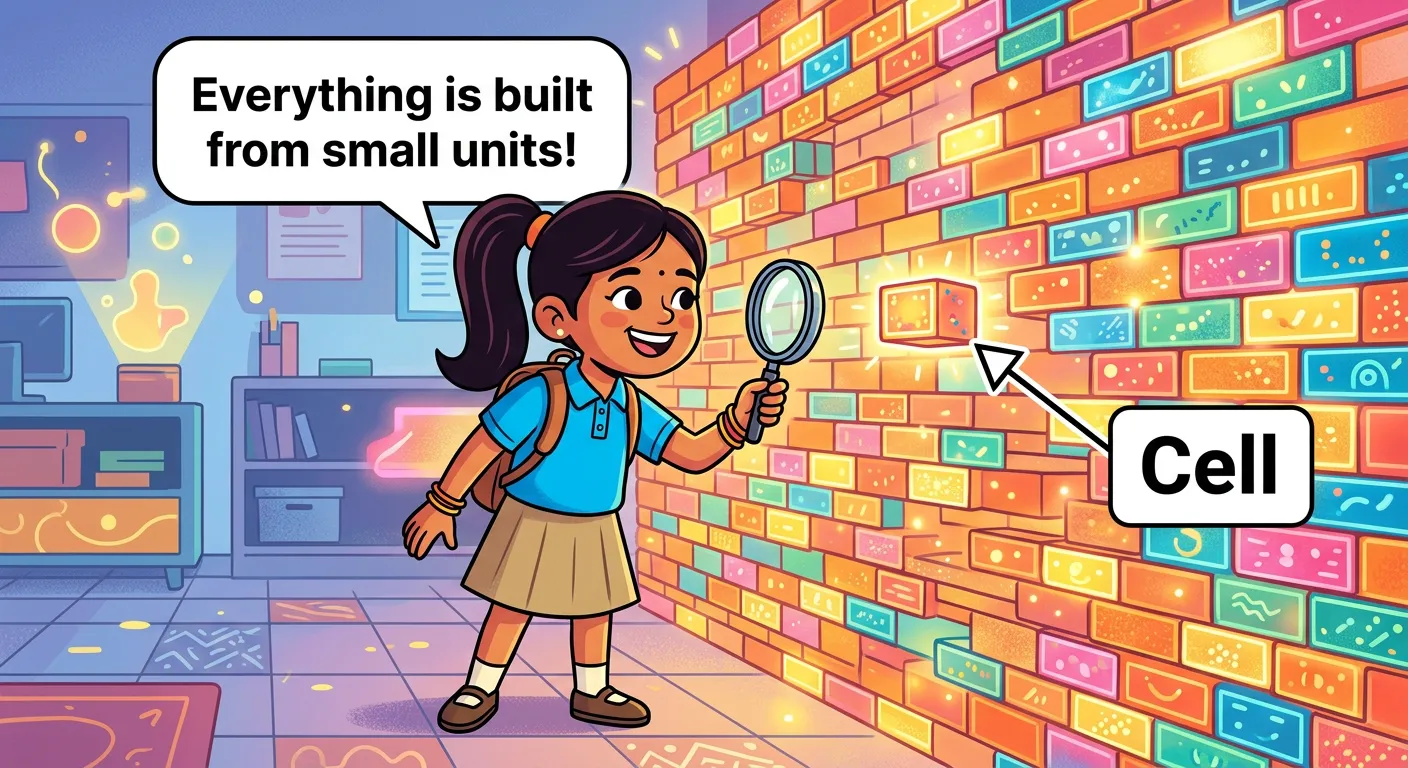
“Welcome, NEET warriors! Think of your own body like a massive, magnificent apartment complex in Mumbai. Every single building, no matter how grand, is made of individual bricks. In biology, those tiny, fundamental 'bricks' are called cells. Today, we explore how they define your very existence!”
Imagine standing in front of a sprawling architectural marvel like the Taj Mahal or a modern skyscraper in Mumbai. While the exterior looks like a single, seamless masterpiece, the reality is that it is built from millions of individual bricks. In the world of biology, your body is that grand architectural complex, and the 'bricks' are your cells. For any NEET aspirant, understanding the cell isn't just about memorizing a definition; it is about recognizing the simplest level of organization that can truly be called 'alive.' A single cell is a self-contained universe, capable of performing all the essential functions of life, from respiration to waste management. This is why we call it the fundamental unit of life.
In the biological hierarchy-and-systematics), we move from atoms to molecules, and then to organelles, but life only truly 'sparkles' when these components are organized into a cell. This concept of cellular organization marks the transition from organismal biology—where we look at the whole plant or animal—to cellular biology (Cytology), which is the foundation of modern medical education. When you study Anatomy of Flowering Plants or the Structural Organisation in Animals later in your syllabus, you will realize that every complex tissue system is simply a collection of specialized cells working in harmony. Without the cell, there is no tissue; without tissues, there are no organs; and without organs, there is no organism. A unicellular organism like Amoeba or Chlamydomonas is a testament to this fact—it possesses no organs, yet it lives a complete life within the boundaries of a single plasma membrane.
| Level of Organization | Description | Example |
|---|---|---|
| Atomic/Molecular | Non-living chemical foundations | Carbon, Hydrogen, DNA, ATP |
| Sub-cellular | Organelles that cannot survive alone | Mitochondria, Ribosomes |
| Cellular (The Unit) | Smallest unit capable of independent life | Neuron, RBC, Amoeba |
| Tissue | Group of specialized cells | Xylem, Epithelium |
| Organ | Groups of tissues working together | Heart, Leaf |
Quick Revision Points
- Cell as a Building Block: Just like bricks in a building, cells are the structural units of all living organisms.
- Independent Existence: Anything less than a complete cell cannot ensure independent living; the cell is the smallest unit that can survive on its own.
- Biological Hierarchy: The cell represents the first level of organization where the properties of life emerge.
- Functional Dictation: The overall functioning of a multicellular organism is the sum of the activities and interactions of its constituent cells.
- Medical Foundation: Modern medicine relies on understanding cellular pathology to treat diseases at their root cause.
NEET Exam Angle
- Focus Point: NCERT emphasizes that a single cell is capable of 'independent existence' and 'performing essential functions of life.'
- Conceptual Link: Be prepared for questions linking cell structure to Unit 2 (Structural Organisation) where tissue complexity is discussed.
- Key Distinction: Remember that sub-cellular components (like mitochondria or ribosomes) cannot survive independently outside the cellular environment. Even a virus, which is highly complex, is not considered 'alive' by this definition because it is acellular.
02Matthias Schleiden (1838) and the Discovery of Plant Cellularity
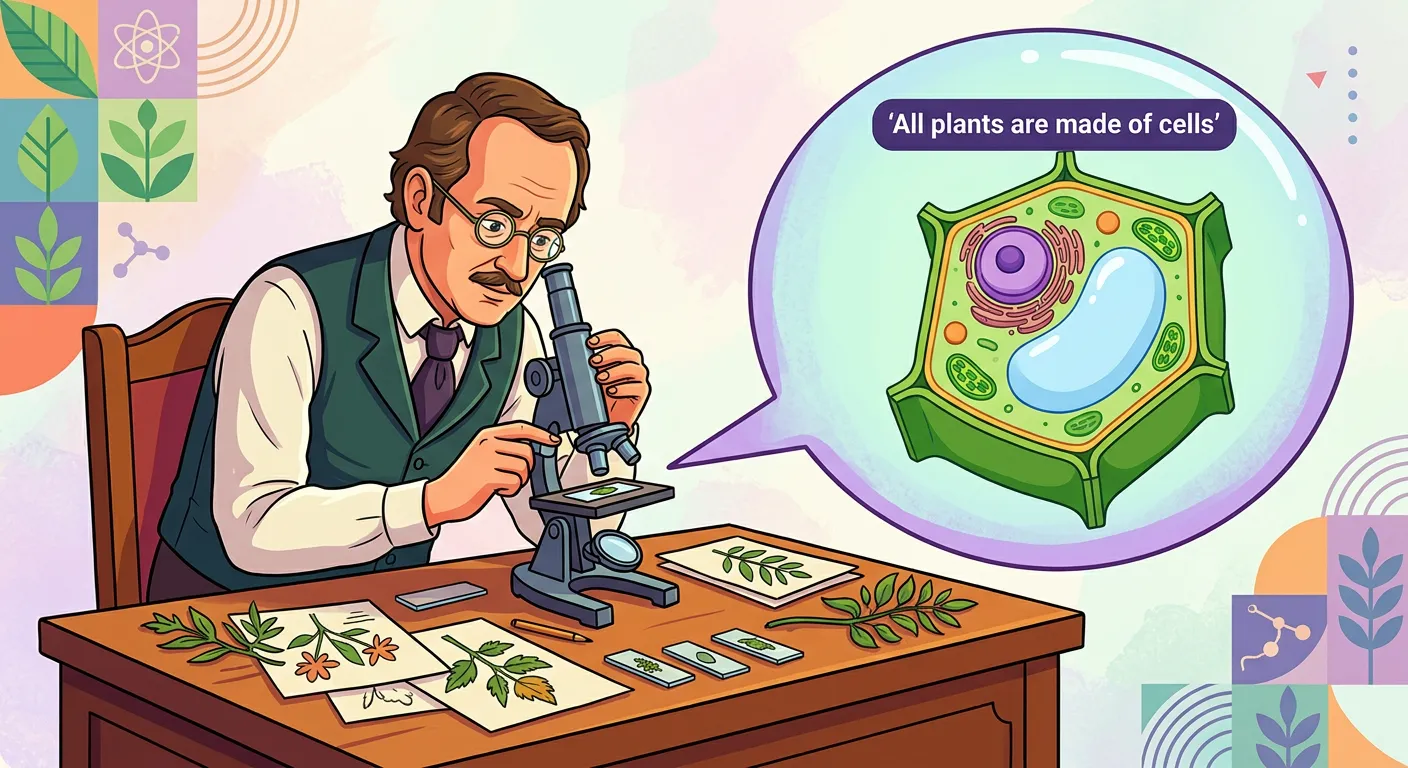
“Back in 1838, botanist Matthias Schleiden peered through his lens and declared: 'Every single plant is composed of cells!' Imagine discovering that a giant Banyan tree and a tiny blade of grass are essentially built from the exact same microscopic building blocks. Revolutionary, right?”
The journey of the Cell Theory officially began in the year 1838 with a German botanist named Matthias Schleiden. Schleiden was obsessed with the microscopic world of flora. During this period, the resolution of microscopes was improving, allowing scientists to see deeper into the secrets of life. After examining a vast variety of plant specimens—from tiny mosses and delicate ferns to giant forest trees—he reached a groundbreaking conclusion: every single plant is composed of different kinds of cells. He didn't just stop at identifying cells; he observed that these cells organize themselves into specialized groups to form the various tissues of the plant.
Schleiden observed that whether it was the root, the stem, or the leaf, the fundamental unit remained the cell. He categorized these into different types, essentially laying the groundwork for what we now study as plant anatomy—meristematic tissues and permanent tissues like xylem and phloem. His work was revolutionary because it shifted the focus from the 'whole plant' to the 'cellular components' of the plant. Before this, many believed that plants grew through some mystical expansion of matter or 'vital forces.' Schleiden proved that growth was a cellular process, driven by the multiplication and specialization of these tiny units. His research proved that despite the massive diversity in the plant world (from algae to angiosperms), the basic 'building block' remains consistent.
| Year | Scientist | Nationality | Major Contribution |
|---|---|---|---|
| 1838 | Matthias Schleiden | German | Proposed all plants are composed of cells and tissues |
Quick Revision Points
- The Year 1838: This is a high-yield date for NEET; associate it strictly with Matthias Schleiden.
- Botanical Focus: Schleiden was a botanist, meaning his work was exclusively on plant tissues.
- Tissue Observation: He concluded that plant tissues are made of specialized cells.
- Diversity in Unity: Regardless of the plant species, the cellular basis was found to be universal.
- Microscopic Lens: His work highlights how improvements in microscopy led to major biological breakthroughs.
NEET Exam Angle
- Match the Following: Schleiden is frequently paired with 1838 and the term 'Botanist' in Match-the-Column type questions.
- NCERT Catch: Note that Schleiden observed 'different kinds of cells' that form 'tissues'—this specific phrasing is often tested to ensure you aren't confusing his work with general cell discovery.
- Comparison: Don't confuse him with Schwann (1839), who came a year later. A simple mnemonic: 'Schleiden' rhymes with 'hidden' (plants are often hidden in the forest).
03Theodore Schwann: Unifying Plant and Animal Biology
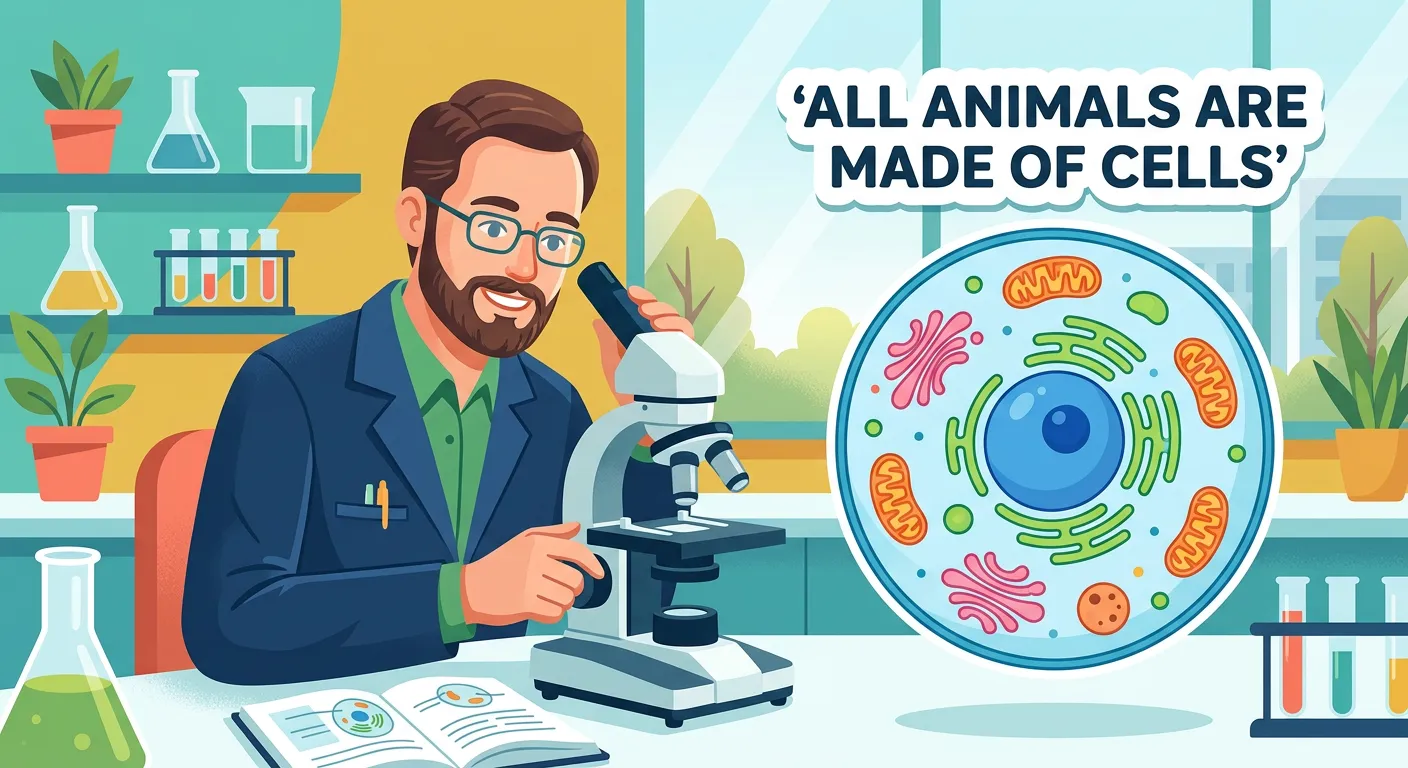
“A year later, zoologist Theodor Schwann looked at animal tissues and realized the pattern continued! He famously proposed that animals, just like plants, are composed of cells and their products. This unified the entire biological world under one simple, beautiful rule: life is cellular.”
Just one year after Schleiden's discovery, a British zoologist named Theodore Schwann published his findings in 1839. While Schleiden focused on plants, Schwann shifted the lens to animal tissues. This was a critical step because animal tissues are much softer and lack the rigid structures obvious in plants, making them harder to study under early microscopes. Schwann observed that animal cells were surrounded by a very thin outer layer, which we now recognize as the plasma membrane (or cell membrane). This discovery alone was monumental, as it defined the physical boundary of the animal cell.
However, the most fascinating part of Schwann's work was his comparison between animal and plant cells. Despite being a zoologist, Schwann was deeply interested in the similarities between the two kingdoms. He studied plant tissues too and noticed a striking difference: plant cells possessed a rigid cell wall, a feature completely absent in animal cells. Schwann’s genius lay in his ability to synthesize information. He took Schleiden’s botanical data and his own zoological observations to propose a grand hypothesis: the bodies of both animals and plants are composed of cells and products of cells. This was the birth of the original 'Cell Theory.' It unified the entire living world under a single umbrella. Schwann's discovery of the plasma membrane and his conclusion about the cell wall being a unique character of plants are two of the most frequently asked points in the NEET exam.
| Feature | Animal Cell (Schwann's View) | Plant Cell (Schwann's View) |
|---|---|---|
| Outer Boundary | Thin 'Plasma Membrane' | Rigid 'Cell Wall' |
| Cell Wall | Absent | Present (Unique Character) |
| Core Structure | Composed of cells | Composed of cells |
| Consistency | Flexible | Rigid |
Quick Revision Points
- The Year 1839: Associate this with Theodore Schwann, the British Zoologist.
- Plasma Membrane: Schwann was the first to describe the thin outer layer of animal cells.
- The Cell Wall Rule: He concluded that the cell wall is a 'unique character' of plant cells.
- Unification: Schwann bridged the gap between zoology and botany with the first formal Cell Theory.
- Hypothesis: He proposed that all living organisms are made of cells and their products.
NEET Exam Angle
- Examiner's Trap: Students often think the Botanist (Schleiden) discovered the cell wall. In reality, it was the Zoologist (Schwann) who highlighted the cell wall as a unique plant feature by comparing it to animal cells!
- Nationality Check: Remember Schwann was British, while Schleiden was German. Small details matter in NEET.
- Cell Products: Schwann emphasized that organisms are made of cells and products of cells (like extracellular matrix or bone mineral).
04Rudolf Virchow and the Principle of 'Omnis cellula-e cellula'
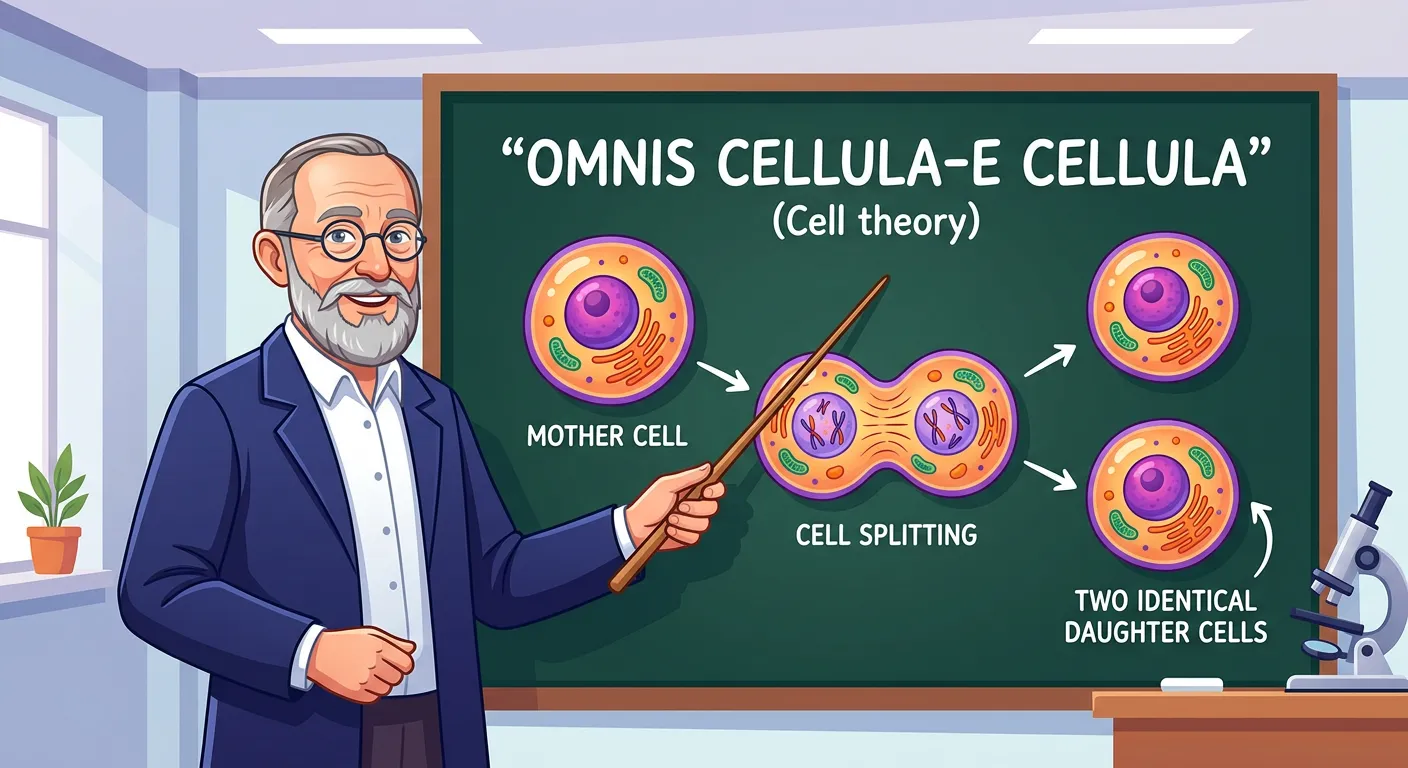
“But where do these cells come from? Rudolf Virchow provided the final puzzle piece in 1855. He stated 'Omnis cellula-e cellula'—meaning all cells arise from pre-existing cells. No magic, just the incredible process of cell division. This is how you grow from a single zygote!”
While Schleiden and Schwann established that all life is cellular, they hit a scientific dead end: they couldn't explain how new cells were formed. They knew cells existed and made up organisms, but the 'origin' of these cells remained a mystery. In the mid-19th century, some scientists still believed in 'spontaneous generation'—the idea that life could emerge spontaneously from non-living matter or 'primordial soup.' It wasn't until 1855 that Rudolf Virchow, a German physician and pathologist, provided the missing link. He famously stated, 'Omnis cellula-e cellula,' which is Latin for 'all cells arise from pre-existing cells.'
Virchow’s observation was based on his extensive studies of cell division and pathology. He realized that cells don't just appear out of thin air; they are the result of an existing cell dividing into two daughter cells. This principle effectively gave the Cell Theory its 'final shape.' It explains the continuity of life—from the very first cell on Earth to the trillions of cells in your body right now. This concept is the bedrock of Unit 10 (Cell Cycle and Cell Division). Think about it: you started your life as a single-celled zygote. Through thousands of rounds of cell division, as explained by Virchow’s postulate, you became the complex multicellular human you are today. Virchow’s addition didn't just explain growth; it explained inheritance. If a cell contains genetic material, and it divides into two, it passes that material along. His work helped pave the way for understanding how diseases like cancer (unregulated cell division) occur.
| Principle | Latin Phrase | Translation |
|---|---|---|
| Origin of Cells | Omnis cellula-e cellula | All cells arise from pre-existing cells |
| Biogenesis | Life from life | New cells come only from existing cells |
Quick Revision Points
- The Year 1855: This marks the completion of the modern cell theory by Rudolf Virchow.
- Latin Phrase: 'Omnis cellula-e cellula' is a high-yield term for NEET aspirants.
- Cell Division: Virchow first explained that cells divide and new cells are formed from pre-existing ones.
- Modified Theory: Virchow didn't replace the old theory; he modified it to include the origin of cells.
- Rejection of Spontaneous Generation: His work helped prove that life only comes from life (Biogenesis).
NEET Exam Angle
- High-Yield Fact: Virchow is the scientist credited with giving the 'final shape' to the Cell Theory. This phrasing is straight from NCERT.
- Contextual Link: This section connects directly to genetics and cell division. Expect questions that test the timeline: Schleiden/Schwann (Structure) -> Virchow (Origin/Division).
- Phrasing: Be careful with the phrase 'pre-existing cells'—this is the definitive key to identifying Virchow's contribution.
05The Three Postulates of Modern Cell Theory: A NEET Guide
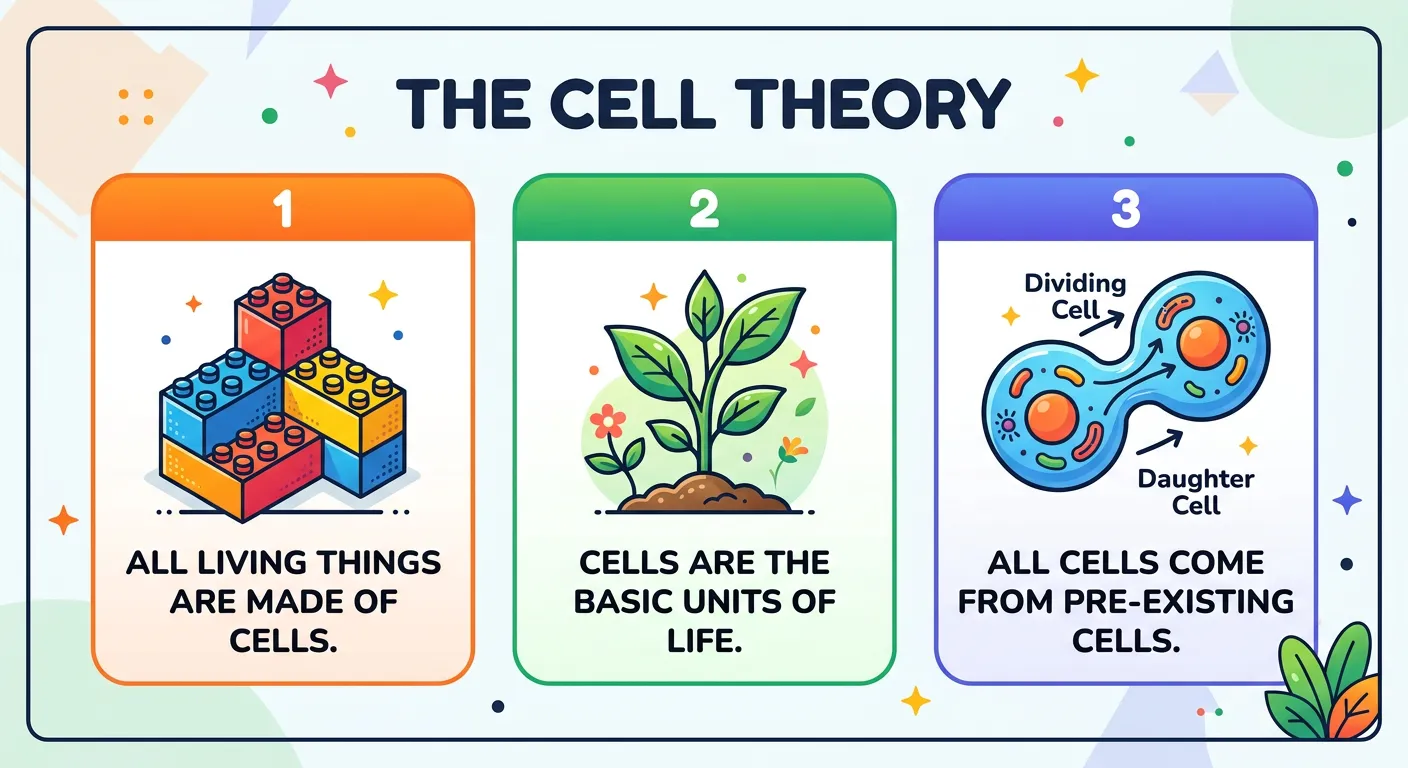
“So, here is the holy trinity of Cell Theory: First, all living organisms are made of cells. Second, the cell is the basic unit of life. And third, all cells arise from pre-existing ones. Memorize this—it is the foundation of every single question in your NEET exam!”
To master Cell Theory for the NEET exam, you must internalize what we call the 'Three Postulates.' These represent the combined wisdom of Schleiden, Schwann, and Virchow.
- All living organisms are composed of cells and products of cells: This recognizes that life isn't just the cell itself, but also the substances cells produce (like collagen in your skin or the calcium matrix in your bones).
- The cell is the basic structural and functional unit of all living things: This means that every task your body performs, from muscle contraction to thinking, is actually a cellular event.
- All cells arise from pre-existing cells: This emphasizes the continuity of life across time.
However, science always has exceptions. While most life follows these rules, viruses are a notable outlier. Since viruses lack a cellular structure (they are basically DNA/RNA in a protein coat) and cannot reproduce or perform metabolism outside a host cell, they are considered 'acellular' and do not obey the Cell Theory. Similarly, certain organisms like the fungus Rhizopus or the alga Vaucheria exhibit a coenocytic condition—a single mass of cytoplasm with many nuclei. This 'multi-nucleated mass' challenges the traditional idea of a discrete cell as a single unit. Despite these exceptions, the Cell Theory remains the most universally accepted principle in biology.
| Scientist | Year | Core Contribution |
|---|---|---|
| Matthias Schleiden | 1838 | All plants are made of cells/tissues |
| Theodore Schwann | 1839 | All animals are made of cells; cell wall is plant-unique |
| Rudolf Virchow | 1855 | New cells arise from pre-existing cells |
| The Result | 1855+ | Modern Cell Theory with 'Final Shape' |
Quick Revision Points
- Postulate 1: Organisms = Cells + Products of cells.
- Postulate 2: Cell = Basic structural and functional unit.
- Postulate 3: Origin = From pre-existing cells via division.
- Exception - Viruses: They are acellular and do not fit the standard cell theory definition.
- Exception - Coenocytes: Multi-nucleated masses (like in Rhizopus) that don't fit the 'one nucleus per cell' mold perfectly.
NEET Exam Angle
- Exam Favorite: The 'final shape' of the cell theory is the combination of all three scientists' work, but Virchow is the one who 'completed' it.
- Exception Questions: Be ready for questions asking 'Which of the following does not obey Cell Theory?' (Answer: Viruses/Viroids/Prions).
- Assertion-Reasoning: These postulates are frequently used in A-R type questions to test your depth of understanding regarding biological organization. For example, 'Assertion: Viruses are exceptions to cell theory. Reason: They lack a complete cellular organization.'
06Functional Autonomy: Why the Cell is the Basic Unit of Life
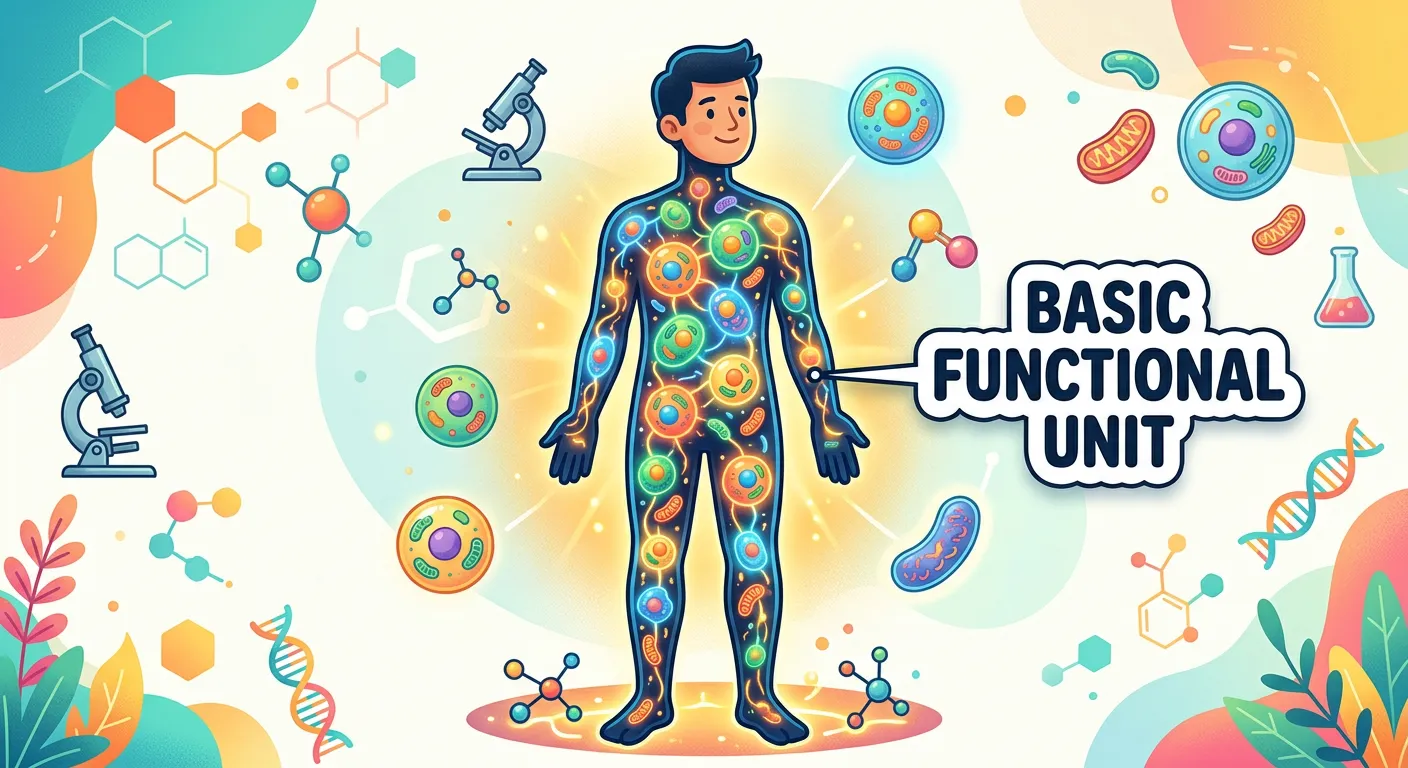
“Why is it the basic unit? Because everything you do—breathing, thinking, or even sprinting for a bus—is just the sum total of your cells working together. Your metabolism, your genetics, your energy; it all happens inside that tiny, bustling cellular factory. You are a cellular universe!”
We call the cell the 'basic unit of life' not just because of its structure, but because of its functional autonomy. Inside a single cell, thousands of chemical reactions occur simultaneously in a crowded but perfectly organized environment. This sum total of all chemical reactions is known as metabolism. Whether it is breaking down glucose for energy (catabolism) or building proteins for growth (anabolism), the cell is the primary site for these activities. Even in a multicellular human, every breath you take is ultimately about getting oxygen to the mitochondria inside your cells so they can produce ATP (energy).
Furthermore, the cell acts as a genetic storehouse. It contains the blueprint of life—DNA. This hereditary information is passed from one generation to the next, ensuring that a mango seed grows into a mango tree and not a rose bush. This 'cellular universe' is so efficient that even a single-celled organism like an Amoeba can perform all the functions of life: digestion, respiration, excretion, and reproduction. In contrast, no isolated organelle (like a mitochondria or a chloroplast) can perform all these functions together in isolation for an extended period. This functional independence—the ability to perform all life processes within a single boundary—is what defines life at its most basic level.
| Function | Cellular Level Activity |
|---|---|
| Energy Production | Respiration and ATP synthesis in the mitochondria |
| Protein Synthesis | Decoding mRNA on ribosomes |
| Heredity | Replication and storage of DNA in the nucleus |
| Regulation | Selective movement of ions across the plasma membrane |
| Waste Management | Lysosomal digestion of cellular debris |
Quick Revision Points
- Metabolic Center: All biochemical reactions required for life occur within the cell.
- Genetic Repository: Cells contain the hereditary material (DNA/RNA) of the organism.
- ATP Production: The cell is the site of energy conversion (mitochondria).
- Homeostasis: The cell membrane regulates the internal environment to maintain balance.
- Sum of Parts: The life of an organism is the result of the coordinated activities of its cells.
NEET Exam Angle
- Biomolecules Link: Understand that metabolism (Unit 3, Chapter 9) is primarily a cellular event. Questions often link 'cellular respiration' to the 'cell as a functional unit.'
- Conceptual Clarity: NEET often asks why a cell is the basic unit. The answer usually involves its dual ability for 'independent existence' and 'performing essential life functions.'
- Unicellular organisms: Remember that unicellular organisms are capable of independent existence because they are a complete 'cell'—not just because they are small.
07Conclusion: Developing a Cellular Intuition for Medical Excellence
“You have just mastered the bedrock of Biology! Remember, every complex medical miracle starts with a simple cell. Keep this intuition clear, and you will ace your NEET questions with ease. Stay curious, stay focused, and keep learning. See you in the next lecture!”
As you move forward in your NEET journey, let the Cell Theory be your guiding light. Understanding that life is cellular is not just a chapter in a textbook; it is the foundation of clinical pathology and modern medicine. When a doctor diagnoses a patient with cancer, they are essentially looking at a failure of Cell Theory—where cells have forgotten how to divide correctly, violating the regulated 'Omnis cellula-e cellula' principle. When a scientist develops a vaccine, they are working with the cellular machinery of our immune system, specifically B-cells and T-cells.
Developing a 'cellular intuition' means looking at every biological problem from the perspective of the cell. Whether you are studying Class 12 Biotechnology, where you manipulate the DNA inside a cell, or Human Health and Disease, where you study how pathogens attack cells, the principles of Schleiden, Schwann, and Virchow will always be relevant. Mastery of this topic requires not just knowing the names and dates, but understanding the logic behind why a cell is the way it is. As a future medical professional, your ability to treat the 'whole patient' will always begin with your ability to understand their 'individual cells.' Keep revising the NCERT highlights, stay focused on the timeline of discoveries, and remember that every complex medical miracle begins with a simple, humble cell.
| NCERT Checkpoint | Status for NEET |
|---|---|
| Schleiden (1838) | Must Memorize (Botanist) |
| Schwann (1839) | Must Memorize (Zoologist) |
| Virchow (1855) | Must Memorize (Pathologist) |
| Cell Theory Postulates | Must Understand (The 'Holy Trinity') |
| Exceptions (Viruses) | High-Yield Fact (Acellular) |
| Omnis cellula-e cellula | Essential Latin Term |
Quick Revision Points
- Historical Timeline: 1838 (Schleiden), 1839 (Schwann), 1855 (Virchow).
- Pathology Connection: Diseases like cancer represent abnormal cellular behavior.
- Biotech Link: Manipulating life at the cellular level is the basis of modern biotechnology.
- Exam Readiness: Focus on Match-the-Column and Statement-based questions for this section.
- Final Mantra: All life is cellular; all cells come from cells.
NEET Exam Angle
- PYQ Trend: Questions often test the nuance that Schwann was a zoologist who discovered the plant cell wall. Don't flip them in your mind!
- Consistency: Always refer back to NCERT terminology—words like 'products of cells' are non-negotiable and show up in correct-statement identification.
- Assertion-Reason: This chapter is a prime candidate for questions testing the 'Reason' why viruses are excluded from cell theory (lack of protoplasm/independent metabolism).
Recommended Reading
Explore related Biology topics to build deeper chapter connections for NEET.
- Golgi Bodies · Topic 3.10
- Lysosomes · Topic 3.11
- Vacuoles · Topic 3.12
- Plastids · Topic 3.15
- Prokaryotic and Eukaryotic Cell · Topic 3.2
- Plant and Animal Cell · Topic 3.3
- Jump to Key Terms (Quick Revision)
- Review Common NEET Mistakes
- Solve NEET Practice MCQs
- Read Topic FAQs
- Practice NEET MCQs
- Solve NEET PYQs
📚 Key Terms
⚠️ Common NEET Mistakes
- 1Confusing the dates of Schleiden (1838) and Schwann (1839). Remember, Botanists (Schleiden) usually come first in the NCERT sequence.
- 2Thinking that Schleiden discovered the cell wall because he was a botanist. It was actually Schwann (the zoologist) who identified the cell wall as a unique character of plants.
- 3Claiming that Schleiden and Schwann explained where cells come from. They did not; that was Rudolf Virchow's specific contribution in 1855.
- 4Assuming all living things are cellular. Remember that viruses and viroids are non-cellular exceptions to the Cell Theory.
- 5Neglecting the word 'products of cells' in the definition. Cell theory states organisms are made of cells AND products of cells.
📝 NEET PYQ & Practice Questions
Test your understanding of Cell Theory with NCERT-aligned sample questions.
Which of the following statements is correct regarding "Cell Theory" in the context of NEET Biology?
In NEET question papers, questions related to "Cell Theory" predominantly test:
Consider Theodore Schwann associated with Cell Theory. What is the primary characteristic expected in NEET MCQs?
Master Cell Theory with NeetQ AI Tutor
Practice 50+ topic-wise MCQs, previous 15 years NEET questions, and get step-by-step doubt resolution instantly.
❓ Frequently Asked Questions
Who first proposed that all plants are made of cells for the NEET syllabus?
Matthias Schleiden, a German botanist, proposed in 1838 that all plants are composed of different kinds of cells which form the tissues of the plant.
What is the significance of the year 1839 in the timeline of cell theory?
In 1839, British zoologist Theodore Schwann reported that animal cells have a thin outer layer (plasma membrane) and concluded that the cell wall is a unique feature of plant cells, helping unify plant and animal biology.
What does the Latin phrase 'Omnis cellula-e cellula' mean in modern biology?
It means 'all cells arise from pre-existing cells.' This principle was stated by Rudolf Virchow in 1855 and explains the origin of new cells through division.
Why are viruses considered an exception to the traditional Cell Theory?
Viruses are considered exceptions because they are acellular (lacking a cellular structure) and cannot perform metabolic functions or reproduce independently without a host cell.
What was Theodore Schwann’s unique observation regarding the cell wall?
Despite being a zoologist, Schwann observed plant cells and concluded that the presence of a cell wall is a unique character of plant cells, distinguishing them from animal cells.
Which scientist is credited with modifying the original cell theory to include cell origin?
Rudolf Virchow is credited with modifying the hypothesis of Schleiden and Schwann to give the cell theory its final shape by explaining that cells arise from pre-existing cells.
Written By
NEET Content Strategist & Biology Expert
Sangita Kumari is a NEET educator and content strategist with over 6 years of experience teaching Biology, Chemistry, and Physics to Class 11 and 12 aspirants. She helps bridge the gap between traditional NCERT preparation and modern AI-powered learning. Her content is trusted by thousands of NEET aspirants across India.