🎬 Video Lesson Available
Watch the full 7-slide video lesson for Algae with AI teacher narration and visual explanations.
Algae — Master Algae for NEET Biology. Detailed guide on Chlorophyceae, Phaeophyceae, and Rhodophyceae classification, reproduction, and economic importance.
01Defining Algae: Thalloid Structure and the Role of Primary Producers
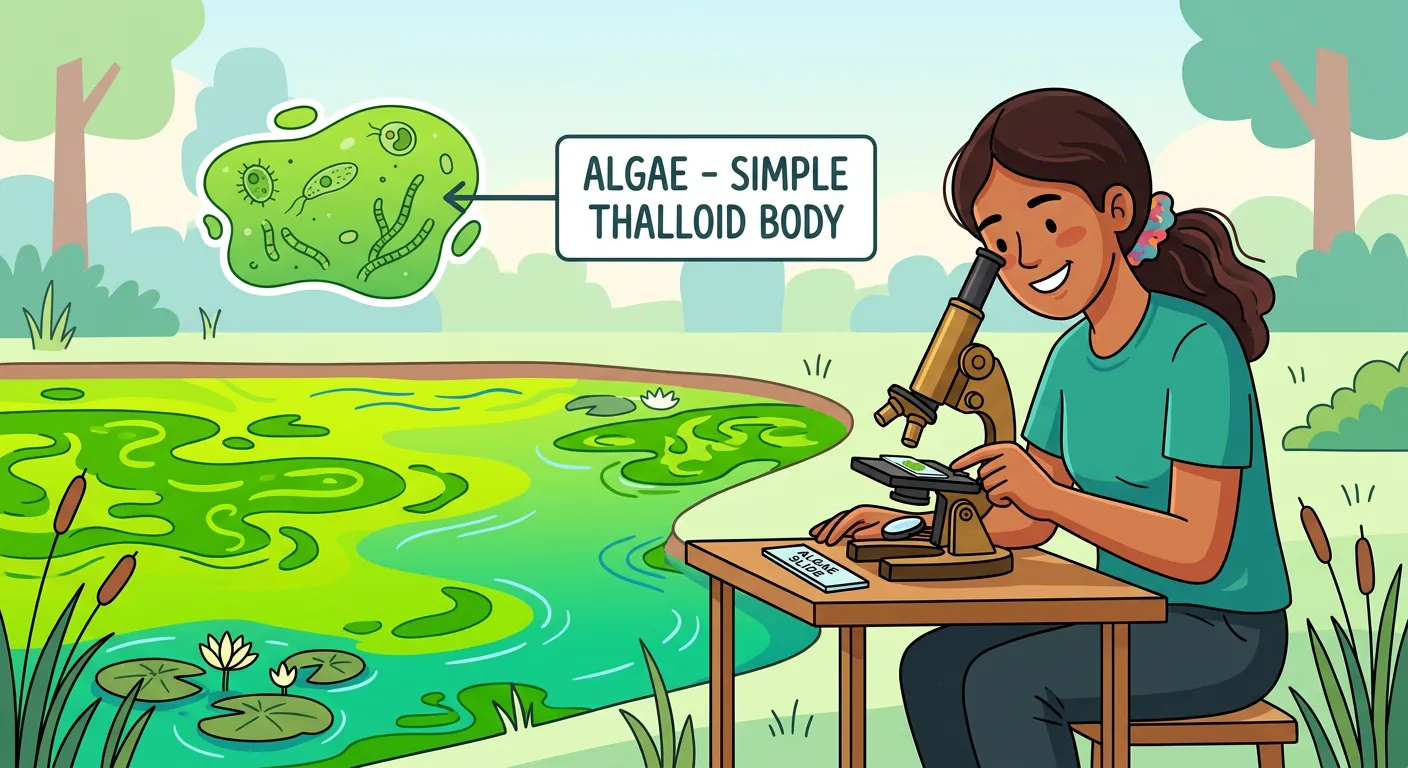
“Welcome, future doctors! Imagine looking at a green pond. That slime? That is Algae! These are simple, thalloid organisms—meaning no true roots, stems, or leaves. They are autotrophic, containing chlorophyll, and are the primary producers in aquatic ecosystems. Think of them as the lungs of our water bodies.”
When you look at a stagnant pond or a moist rock, you often see a green, slippery layer. This is our first introduction to Algae—the simplest members of the Plant Kingdom. Unlike the complex mango trees or roses you see around you, algae possess a 'thalloid' body. In botanical terms, a thallus is a body that isn't differentiated into true roots, stems, or leaves. While they may look like underwater plants, they lack the sophisticated vascular tissues (xylem and phloem) that higher plants use to transport water and nutrients. This simplicity is their strength, allowing them to colonize diverse environments ranging from freshwater streams to the deepest parts of the ocean. They represent a primitive but highly successful evolutionary lineage that has survived for billions of years.
Algae are essentially the powerhouse of aquatic ecosystems. They are autotrophic organisms, meaning they synthesize their own food using chlorophyll-mediated photosynthesis. Because they release oxygen as a byproduct of this process, they are often called the 'lungs of the water.' For a NEET aspirant, it is crucial to understand that algae are responsible for fixing nearly half of the total carbon dioxide on Earth through photosynthesis. This massive scale of primary production forms the foundation of the aquatic food cycle, supporting everything from tiny zooplankton to giant blue whales. Their habitats are incredibly varied; while most are aquatic, some have evolved to live on moist stones, soils, and even in symbiotic associations. They are found in partnership with fungi (as lichens) or on animals like the sloth bear, where the algae provide camouflage while gaining a stable habitat. This adaptability ensures they remain dominant in almost every environment containing moisture and light.
Quick Revision Points
- Algae are chlorophyll-bearing, simple, thalloid, and largely aquatic organisms.
- They lack vascular tissues, relying on diffusion for nutrient exchange.
- Nutrition is autotrophic; they perform oxygenic photosynthesis.
- Habitats include freshwater, marine environments, moist soils, and symbiotic associations.
- They contribute significantly to global CO2 fixation and oxygen production.
NEET Exam Angle
- Questions often focus on the term 'thalloid' and the absence of vascular tissues compared to Bryophytes.
- Understand the ecological role: Algae are the primary producers of energy-rich compounds in aquatic food cycles.
- Remember the symbiotic association example: Lichens (Algae + Fungi).
| Feature | Description for NEET |
|---|---|
| Body Type | Thalloid (No true root/stem/leaf) |
| Photosynthesis | Oxygenic (Primary Producers) |
| Habitat | Predominantly aquatic (Fresh/Marine) |
| Symbiosis | Lichens and Sloth Bear association |
02Morphological Diversity: From Microscopic Cells to Giant Seaweeds
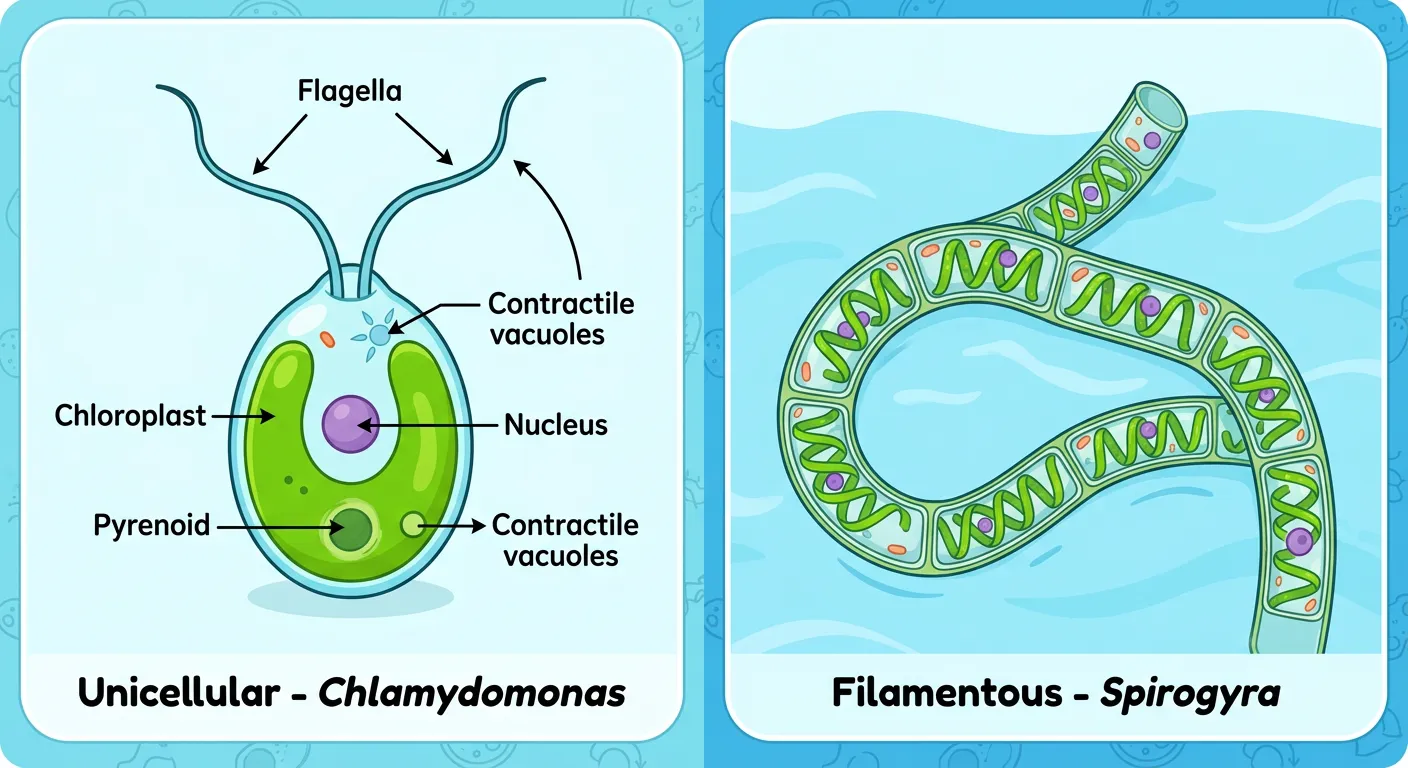
“Algae show amazing diversity. Some are microscopic and unicellular, like Chlamydomonas, zipping around with flagella. Others are filamentous, like the beautiful, thread-like Spirogyra you might find tangling in your fingers. Whether solitary or in colonies, they are nature’s simplest yet most successful plant-like life forms.”
The size and form of algae are highly variable, making them a fascinating subject of study in biological diversity. At one end of the spectrum, we have microscopic unicellular forms like Chlamydomonas. These tiny organisms are often motile, using flagella to navigate through water towards light sources. For NEET, remember that Chlamydomonas represents the simplest level of organization in this group. Moving up in complexity, some algae choose to live in highly organized groups. Volvox is the classic example of a colonial alga. These colonies, known as coenobia, are often spherical and show a high degree of coordination between individual cells, which some biologists view as an early evolutionary step toward true multicellularity. The daughter colonies are often visible within the parent colony before they are released.
Beyond colonies, we find filamentous forms that resemble long, green threads stretching through the water. Spirogyra and Ulothrix are the most common examples of these. If you've ever felt 'pond silk,' you were likely touching the slippery, unbranched filaments of Spirogyra, which feels smooth due to a mucilage coating. At the extreme end of the size scale are the marine kelps, which belong to the brown algae group. These are massive, multicellular structures that can reach incredible heights of up to 100 meters, forming underwater 'forests' that provide complex habitats for thousands of marine species. These kelps possess specialized structures like air bladders to keep their photosynthetic fronds near the surface. This immense range—from a single cell of a few micrometers to a 100-meter kelp—highlights the incredible evolutionary success and architectural versatility of the algae across different marine and freshwater niches.
Quick Revision Points
- Unicellular form: Chlamydomonas (often flagellated).
- Colonial form: Volvox (forms spherical, coordinated colonies).
- Filamentous forms: Spirogyra (unbranched) and Ulothrix.
- Massive plant bodies: Kelps (can grow up to 100 meters in length).
- The diversity in form correlates with their varied ecological niches.
NEET Exam Angle
- Identify examples based on morphology: Volvox (Colonial) vs Spirogyra (Filamentous) is a frequent MCQ.
- Note the flagellar structure in unicellular forms, which connects to the 'Cell' unit in your syllabus.
- Kelps are specifically associated with the Phaeophyceae (Brown Algae) class.
| Morphological Type | Representative Example | Key Characteristic |
|---|---|---|
| Unicellular | Chlamydomonas | Microscopic and motile |
| Colonial | Volvox | Daughter colonies within parent |
| Filamentous | Spirogyra | Ribbon-shaped chloroplasts |
| Massive | Kelps | Extensive marine branching |
03Reproductive Strategies: Vegetative, Asexual, and Sexual Cycles
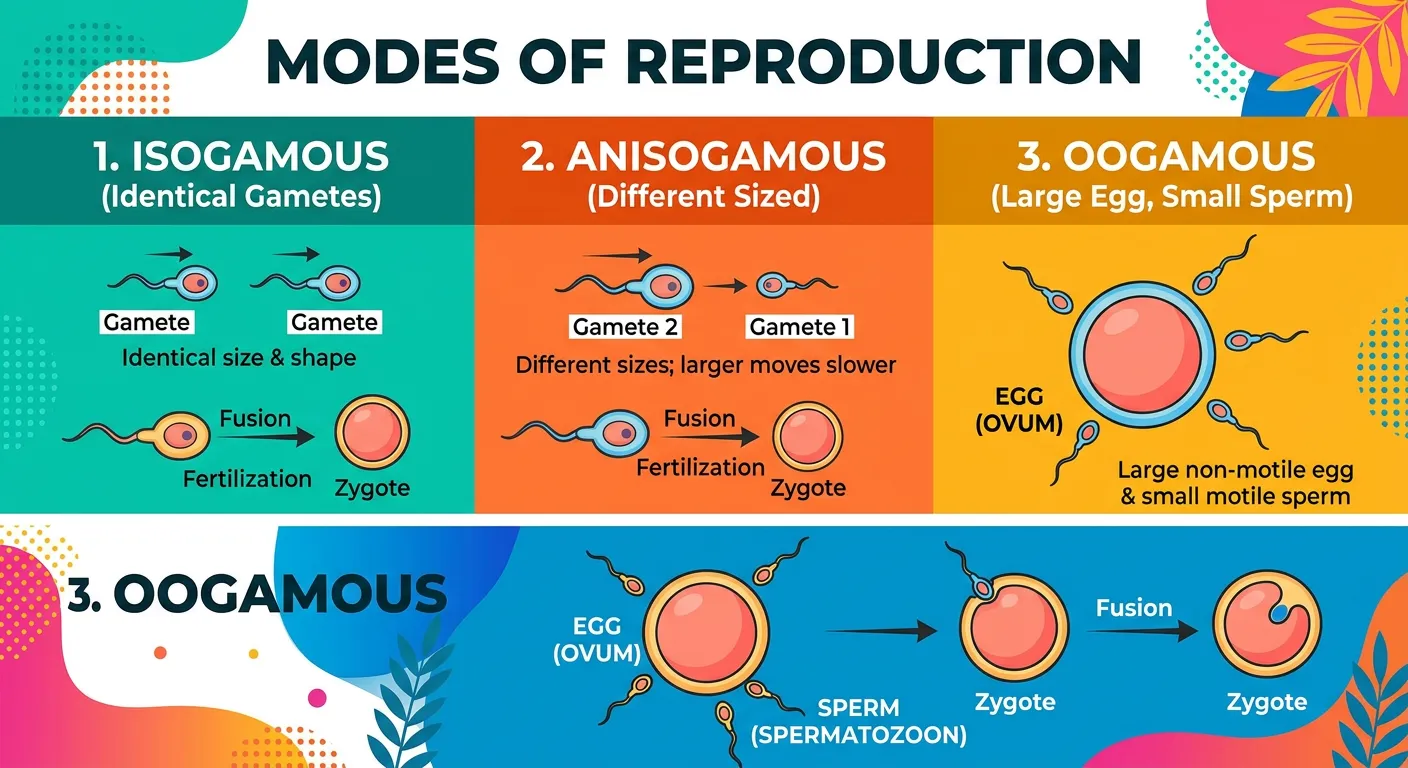
“How do algae reproduce? They keep it versatile! We see vegetative fragmentation, asexual spore formation, and sexual reproduction. In sexual reproduction, watch for these three terms: Isogamous, where gametes look identical; Anisogamous, where they differ in size; and Oogamous, where a large static egg meets a tiny, motile sperm.”
Algae are masters of survival, largely due to their versatile reproductive strategies that allow them to exploit favorable conditions and survive harsh ones. They can reproduce via three main methods: vegetative, asexual, and sexual. Vegetative reproduction is most commonly achieved through fragmentation. In this process, the thallus breaks into several pieces, often due to physical disturbance, and each fragment grows into a new individual through mitotic division. This is a very efficient way for filamentous algae like Spirogyra to spread rapidly across a water body during the growing season. Asexual reproduction involves the production of specialized spores. The most common are zoospores, which are motile (flagellated) and germinate to give rise to new plants upon finding a suitable substrate. These spores are produced in favorable conditions to ensure rapid population expansion.
Sexual reproduction in algae is where things get really interesting for competitive exams, as it demonstrates the evolution of gamete complexity. It involves the fusion of two gametes, and based on the nature of these gametes, it is classified into three types. Isogamous reproduction involves the fusion of gametes that are similar in size. These can be flagellated (as in Ulothrix) or non-flagellated/non-motile (as in Spirogyra). Anisogamous reproduction involves the fusion of two gametes that differ distinctly in size, as seen in some species of Eudorina. Finally, Oogamous reproduction is the most advanced form, involving the fusion of a large, non-motile (static) female gamete (egg) and a smaller, motile male gamete. Volvox and Fucus are prime examples of this advanced reproductive strategy, which mirrors the reproductive patterns seen in higher plants.
Quick Revision Points
- Vegetative: Fragmentation (each fragment becomes a thallus).
- Asexual: Zoospores (motile, flagellated spores).
- Isogamous: Fusion of similar gametes (e.g., Spirogyra - non-motile; Ulothrix - motile).
- Anisogamous: Fusion of dissimilar sized gametes (e.g., Eudorina).
- Oogamous: Large static egg + small motile sperm (e.g., Volvox, Fucus).
NEET Exam Angle
- Pay close attention to the examples of Isogamy: Ulothrix (flagellated) vs Spirogyra (non-flagellated).
- NEET often asks for the definition of Oogamy and its specific examples like Fucus.
- Distinguish between spores (asexual) and gametes (sexual) clearly.
| Type of Sexual Reproduction | Gamete Characteristics | Example |
|---|---|---|
| Isogamous (Motile) | Similar size, both flagellated | Ulothrix |
| Isogamous (Non-motile) | Similar size, both non-flagellated | Spirogyra |
| Anisogamous | Dissimilar in size | Eudorina |
| Oogamous | Large static egg + small motile male | Volvox, Fucus |
04Chlorophyceae: Characteristics of Green Algae and Evolutionary Links
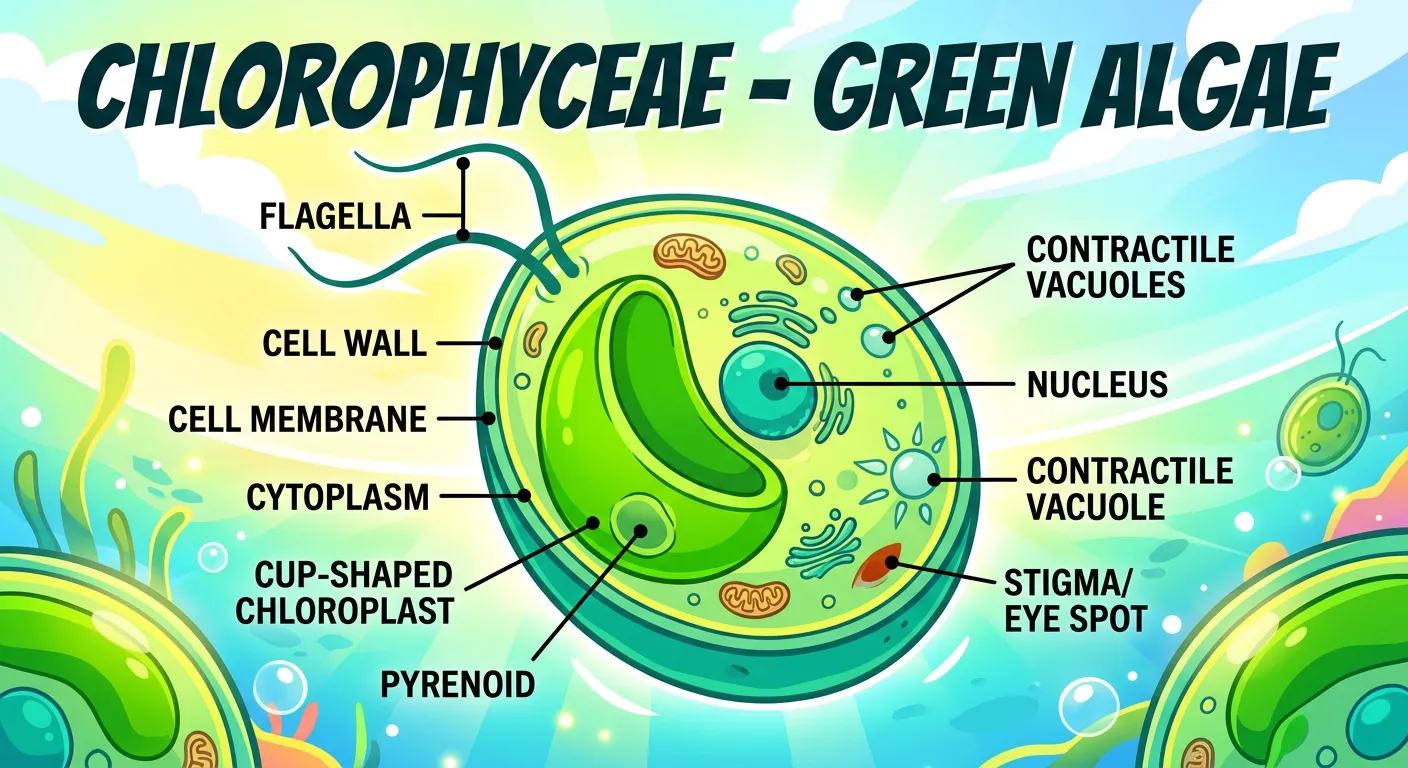
“Let’s start classifying! First, the Chlorophyceae, or Green Algae. These contain chlorophyll 'a' and 'b', giving them that familiar grass-green look. They store food as starch in structures called pyrenoids. Remember, they are the evolutionary ancestors of all higher land plants you study in botany!”
Chlorophyceae, commonly known as Green Algae, are the most familiar to us and are considered the direct ancestors of land plants. Their grass-green color is due to the dominance of pigments chlorophyll 'a' and 'b', which are localized in definite chloroplasts. These chloroplasts are highly diverse in their morphology, which helps in identifying different species—they can be discoid, plate-like, reticulate, cup-shaped, spiral, or ribbon-shaped. For instance, Chlamydomonas typically has a cup-shaped chloroplast, while Spirogyra is famous for its spiral or ribbon-shaped chloroplasts. One unique feature of green algae is the presence of pyrenoids located within the chloroplasts. Pyrenoids are specialized storage bodies that contain a protein core surrounded by a starch sheath. While most green algae store food primarily as starch, some may also store it in the form of oil droplets during specific environmental conditions.
Structurally, green algae have a rigid cell wall with a very specific two-layered composition: an inner layer of cellulose and an outer layer of pectose. This chemical composition is very similar to that of higher plants, providing strong evidence for their evolutionary relationship. Their reproduction follows the standard patterns discussed earlier: vegetative fragmentation, asexual zoospores produced in zoosporangia, and sexual methods ranging from isogamous to oogamous. For students, mastering Chlorophyceae is vital because many of its members like Chlamydomonas, Volvox, Ulothrix, Spirogyra, and Chara are 'favorite' topics for NCERT-based examiners. Chara, in particular, is unique for its complex multicellular sex organs—the globule (male) and nucule (female)—which are macroscopic and highly specialized. Understanding these details is essential for cracking MCQs that focus on the cellular and chemical similarities between green algae and the broader Viridiplantae group.
Quick Revision Points
- Pigments: Dominant Chlorophyll 'a' and 'b'.
- Chloroplasts: Shape varies (Cup-shaped in Chlamydomonas, Spiral in Spirogyra).
- Storage: Pyrenoids (Protein + Starch) and some oil droplets.
- Cell Wall: Inner cellulose, outer pectose.
- Examples: Chlamydomonas, Volvox, Ulothrix, Spirogyra, and Chara.
NEET Exam Angle
- Focus on the composition of Pyrenoids: Protein surrounded by starch (frequently tested).
- The inner-outer cell wall layers (cellulose/pectose) are a common point of confusion in MCQs.
- Note the similarity in pigments with higher plants as an evolutionary link.
| Feature | Chlorophyceae Detail |
|---|---|
| Major Pigments | Chlorophyll a, b |
| Stored Food | Starch |
| Cell Wall | Cellulose and Pectose |
| Flagellar Number | 2-8, equal, apical |
05Phaeophyceae: The Structural Complexity of Brown Algae
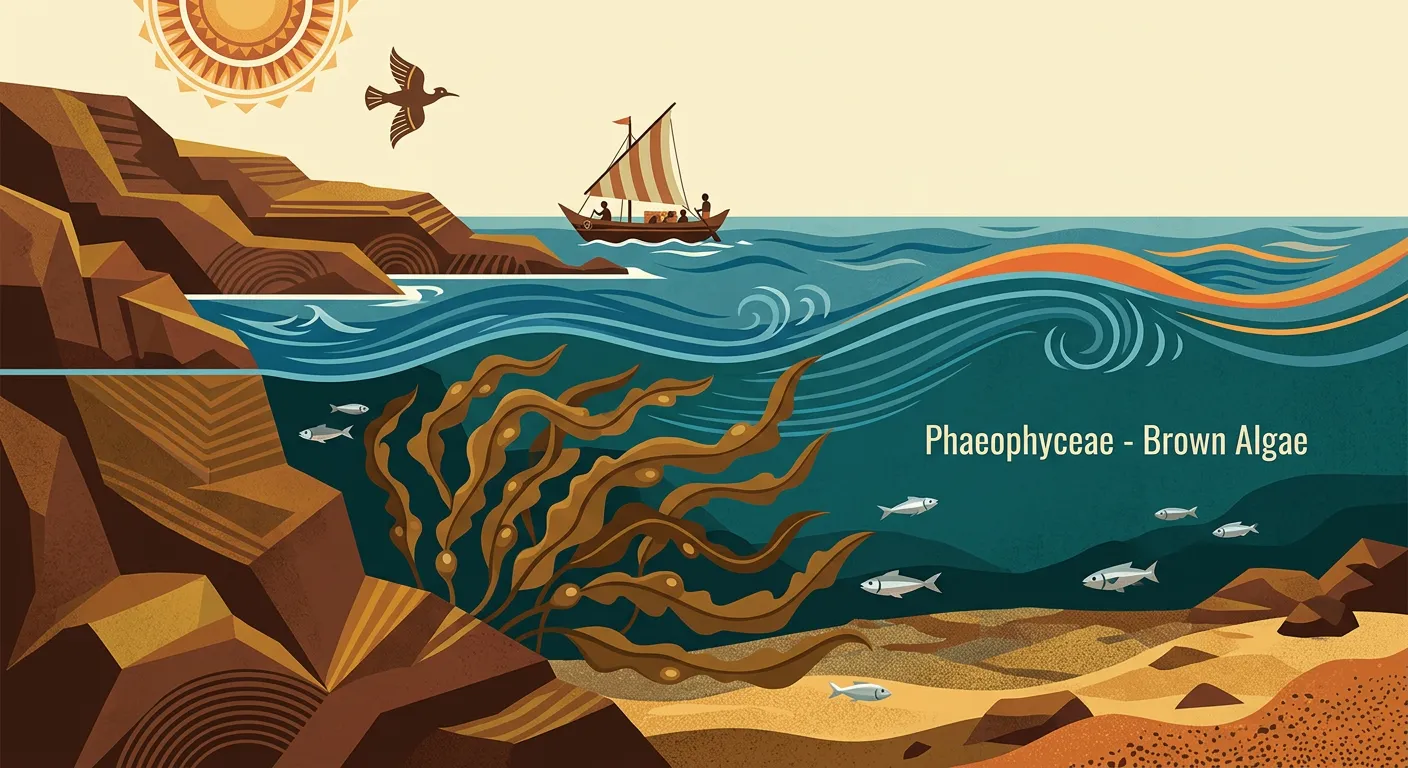
“Next, the Phaeophyceae, or Brown Algae. Think of giant Kelps that can grow hundreds of meters long! They contain chlorophyll 'a', 'c', and a golden pigment called fucoxanthin. They store food as complex carbohydrates like mannitol or laminarin. They are the giants of the ocean forests.”
Phaeophyceae, or Brown Algae, are predominantly marine organisms that exhibit great variation in size and structural complexity. They range from simple branched, filamentous forms like Ectocarpus to the massive, complex kelps that dominate underwater landscapes and reach 100 meters. The color of brown algae varies from olive green to various shades of brown. This color is determined by the concentration of the xanthophyll pigment, fucoxanthin, alongside chlorophyll 'a', 'c', and carotenoids. This biochemical profile allows them to capture light effectively in marine environments, particularly in cooler waters where they often form the dominant coastal vegetation.
The structural organization of brown algae is significantly more complex than that of green algae. Their plant body is usually differentiated into three main parts: it is attached to the substratum by a 'holdfast' (a root-like anchor), has a stalk-like 'stipe,' and a leaf-like photosynthetic organ called the 'frond' or lamina. This differentiation allows them to withstand the mechanical stress of wave action. Food is stored as complex carbohydrates, specifically laminarin or mannitol—both of which are unique to this group and act as efficient energy reserves. Their vegetative cells have a cellulosic wall usually covered on the outside by a gelatinous coating of algin. Algin is a hydrocolloid that prevents the algae from desiccation during low tide and has significant commercial value as a thickening agent. Sexual reproduction often involves biflagellate gametes that are pear-shaped (pyriform) and possess two laterally attached, unequal flagella, which is a key diagnostic feature for this class in NEET exams.
Quick Revision Points
- Pigments: Chlorophyll 'a', 'c', carotenoids, and Fucoxanthin.
- Storage Food: Mannitol and Laminarin.
- Body Structure: Holdfast, stipe, and frond.
- Cell Wall: Cellulose + Algin (gelatinous coating).
- Reproduction: Biflagellate zoospores/gametes with lateral flagella.
- Examples: Ectocarpus, Dictyota, Laminaria, Sargassum, and Fucus.
NEET Exam Angle
- The location of flagella is critical: Brown algae have 2 lateral, unequal flagella.
- Storage food names (Mannitol/Laminarin) are highly 'high-yield' for NEET matching questions.
- Distinguish the body parts: Holdfast (anchor), Stipe (stalk), Frond (leaf-like).
| Feature | Phaeophyceae Detail |
|---|---|
| Major Pigments | Chlorophyll a, c, Fucoxanthin |
| Stored Food | Mannitol, Laminarin |
| Flagellar Position | 2, lateral, unequal |
| Cell Wall | Cellulose and Algin |
06Rhodophyceae: Deep-Sea Adaptations and Red Algae Pigmentation
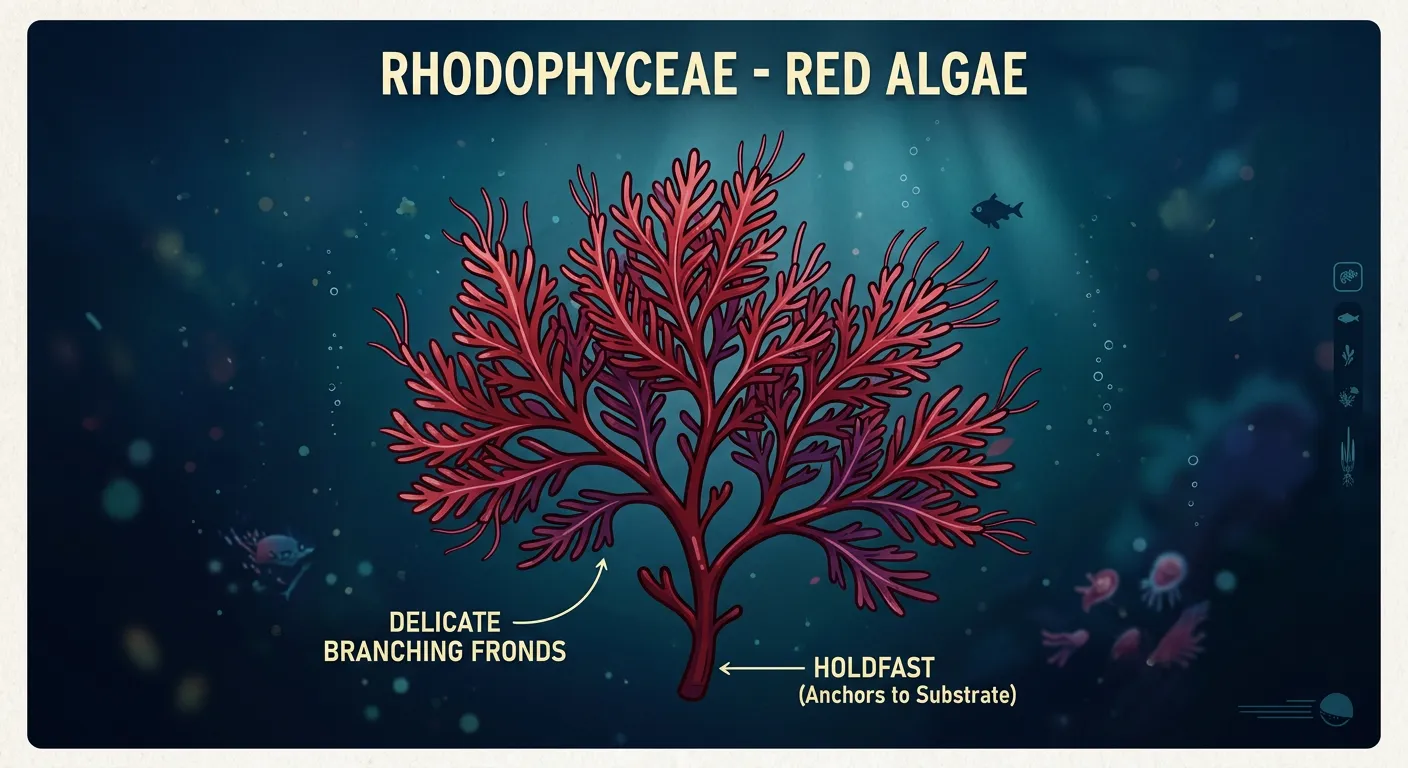
“Finally, the Rhodophyceae, or Red Algae. These thrive in the deepest parts of the ocean where light is scarce, thanks to the red pigment phycoerythrin. They store food as Floridean starch. If you enjoy agar or carrageenan in your ice cream, thank these red beauties!”
Rhodophyceae, commonly known as Red Algae, get their distinctive name from the predominance of the red accessory pigment, r-phycoerythrin. While they also contain chlorophyll 'a' and 'd', it is the phycoerythrin that allows them to thrive in deep marine waters. This pigment is highly efficient at absorbing the blue-green light that penetrates deepest into the ocean, where other types of light struggle to reach. Consequently, red algae are found at both the surface of the water, where light is plenty, and at great depths where relatively little light penetrates. Most red algae are marine and are particularly abundant in warmer coastal areas, though they show an impressive range of physiological adaptation across various depths.
The thallus of most red algae is multicellular, and some have surprisingly complex body organizations and branching patterns. They store food in the form of Floridean starch. This is a vital fact for NEET: Floridean starch is structurally very similar to amylopectin and glycogen in terms of its highly branched glucose chains. A defining characteristic of Rhodophyceae, which distinguishes them from both green and brown algae, is the total absence of motile (flagellated) stages at any point in their life cycle. Both their asexual spores and their sexual gametes are non-motile, relying on water currents for dispersal. Sexual reproduction is exclusively oogamous and is followed by complex post-fertilization developments, a trait that makes their life cycle unique within the algae. Examples like Polysiphonia and Porphyra are frequently used in exams to illustrate these unique non-motile reproductive strategies and specialized storage chemistry.
Quick Revision Points
- Pigments: Chlorophyll 'a', 'd', and r-phycoerythrin.
- Storage Food: Floridean starch (similar to amylopectin and glycogen).
- Motility: No motile stages (no flagella at any point in the life cycle).
- Reproduction: Oogamous with complex post-fertilization changes.
- Examples: Polysiphonia, Porphyra, Gracilaria, and Gelidium.
NEET Exam Angle
- The structural similarity of Floridean starch to glycogen/amylopectin is a high-frequency question.
- Lack of flagella: If a question describes an alga with non-motile gametes and phycoerythrin, it's definitely Red Algae.
- Economic importance: Gelidium and Gracilaria are sources of agar.
| Feature | Rhodophyceae Detail |
|---|---|
| Major Pigments | Chlorophyll a, d, r-phycoerythrin |
| Stored Food | Floridean starch |
| Motility | Absent (non-motile gametes/spores) |
| Primary Habitat | Marine (warm waters/deep sea) |
07Ecological Importance and Economic Utility of Algae
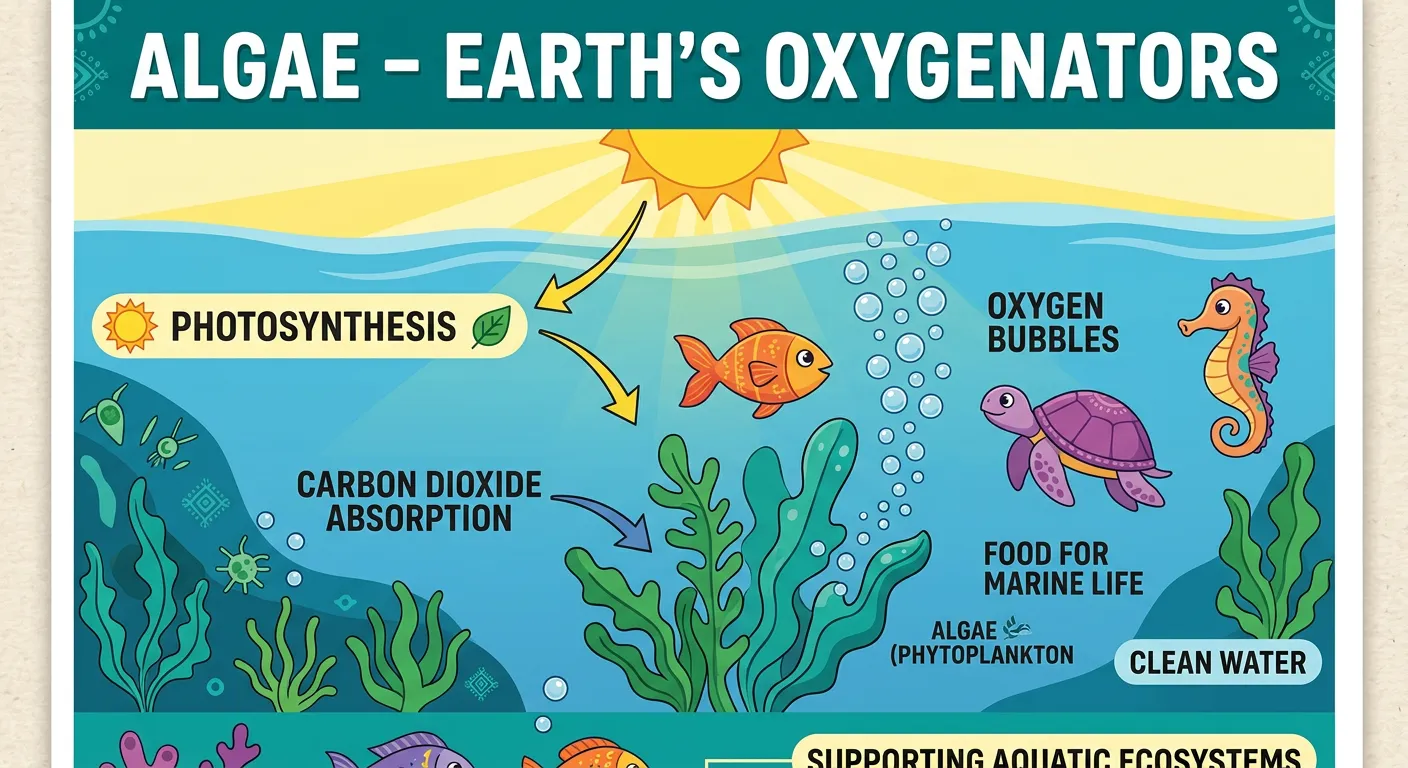
“To wrap up, remember that algae produce half the world's oxygen! From providing food for fish to being used as dietary supplements like Chlorella, they are crucial. Master these classifications, and you are one step closer to cracking NEET. Keep studying, stay curious, and see you next time!”
Algae are far more than just 'pond scum'; they are an indispensable resource for both the planet and human industry. Ecologically, their role as primary producers cannot be overstated. By providing the energy foundation for almost all aquatic life and fixing massive amounts of CO2, they help stabilize our global climate and support commercial fisheries. Many species are even directly consumed as food in various cultures. For instance, Porphyra, Laminaria, and Sargassum are among the 70 species of marine algae used as food globally. They are packed with minerals, vitamins, and iodine, making them a sustainable and highly nutritional source for the growing human population.
From an industrial perspective, algae produce hydrocolloids—water-holding substances with unique physical properties. Algin (extracted from brown algae) and carrageen (from red algae) are used extensively in the food, textile, and cosmetic industries as thickening and stabilizing agents. One of the most famous algal products is Agar, obtained from the red algae Gelidium and Gracilaria. Agar is indispensable in microbiology to grow microbes in laboratories and is a staple in the food industry for making jellies, puddings, and ice creams. Furthermore, unicellular algae like Chlorella and Spirulina are exceptionally rich in proteins and essential amino acids. They are so nutrient-dense that they are used as food supplements by space travelers to maintain health in extreme environments. Understanding these utilities helps students bridge the gap between theoretical botany and the practical application of plant sciences in human welfare and global sustainability.
Quick Revision Points
- CO2 Fixation: Algae perform roughly 50% of Earth's total carbon fixation.
- Food Sources: Porphyra, Laminaria, Sargassum are edible.
- Hydrocolloids: Algin (Brown) and Carrageen (Red) hold water.
- Agar: Derived from Gelidium and Gracilaria; used for microbe culture.
- Space Food: Chlorella (protein-rich unicellular alga).
NEET Exam Angle
- Match the hydrocolloid to the group: Algin = Brown; Carrageen = Red.
- Remember the source of Agar: Gelidium and Gracilaria.
- Chlorella is frequently cited in questions about protein-rich supplements for space travel.
- Be aware of the ecological percentage: 50% of global CO2 fixation.
| Product | Source Algae | Application |
|---|---|---|
| Agar | Gelidium, Gracilaria | Microbial culture, Jellies |
| Algin | Phaeophyceae (Brown) | Hydrocolloid / Thickener |
| Carrageen | Rhodophyceae (Red) | Commercial food stabilizer |
| Protein Supplement | Chlorella | Space travel food |
Recommended Reading
Explore related Biology topics to build deeper chapter connections for NEET.
- What is Living · Topic 1.1
- Kingdom Fungi · Topic 1.10
- Lichens · Topic 1.11
- Viruses and Viroids · Topic 1.12
- Bryophytes · Topic 1.14
- Gymnosperms · Topic 1.16
- Jump to Key Terms (Quick Revision)
- Review Common NEET Mistakes
- Solve NEET Practice MCQs
- Read Topic FAQs
- Practice NEET MCQs
- Solve NEET PYQs
📚 Key Terms
⚠️ Common NEET Mistakes
- 1Confusing the flagellar position: Remember Green Algae (apical), Brown Algae (lateral), and Red Algae (none).
- 2Mixing up storage foods: Keep a table for Starch (Green), Mannitol/Laminarin (Brown), and Floridean Starch (Red).
- 3Assuming all algae are aquatic: While most are, remember some live on moist rocks, soil, or even as symbionts.
- 4Misidentifying the source of Algin and Carrageen: Algin is from Brown Algae; Carrageen is from Red Algae.
- 5Thinking pyrenoids are only starch: They are actually a protein core surrounded by starch.
📝 NEET PYQ & Practice Questions
Test your understanding of Algae with NCERT-aligned sample questions.
Which of the following statements is correct regarding "Thalloid" in the context of NEET Biology?
In NEET question papers, questions related to "Algae" predominantly test:
Consider Pyrenoids associated with Algae. What is the primary characteristic expected in NEET MCQs?
Master Algae with NeetQ AI Tutor
Practice 50+ topic-wise MCQs, previous 15 years NEET questions, and get step-by-step doubt resolution instantly.
❓ Frequently Asked Questions
How does the storage food in Rhodophyceae differ structurally from that in Chlorophyceae?
Rhodophyceae stores food as Floridean starch, which is structurally similar to amylopectin and glycogen (highly branched). Chlorophyceae stores food as standard starch, usually located in pyrenoids within the chloroplasts.
What are pyrenoids and in which class of algae are they found?
Pyrenoids are specialized storage bodies found in the chloroplasts of Chlorophyceae (Green Algae). They consist of a protein core surrounded by a starch sheath.
Which pigments are responsible for the characteristic color of Brown Algae?
The olive green to brown color of Phaeophyceae is due to the presence of chlorophyll a, c, and a significant amount of the xanthophyll pigment called fucoxanthin.
Why can Red Algae survive at greater depths in the ocean compared to Green Algae?
Red algae possess the pigment r-phycoerythrin, which can absorb short-wavelength blue-green light that penetrates deeper into the ocean than the longer-wavelength light used by green algae.
What is the difference between Isogamy, Anisogamy, and Oogamy with examples?
Isogamy involves similar-sized gametes (Ulothrix). Anisogamy involves gametes of different sizes (Eudorina). Oogamy involves a large non-motile egg and a small motile sperm (Volvox, Fucus).
Written By
NEET Content Strategist & Biology Expert
Sangita Kumari is a NEET educator and content strategist with over 6 years of experience teaching Biology, Chemistry, and Physics to Class 11 and 12 aspirants. She helps bridge the gap between traditional NCERT preparation and modern AI-powered learning. Her content is trusted by thousands of NEET aspirants across India.