🎬 Video Lesson Available
Watch the full 7-slide video lesson for Lichens with AI teacher narration and visual explanations.
Lichens — Master Lichens for NEET Biology. Learn about Phycobionts, Mycobionts, ecological succession, and their role as pollution indicators in this expert guide.
01The Biology of Symbiosis: Defining Lichens as Composite Organisms
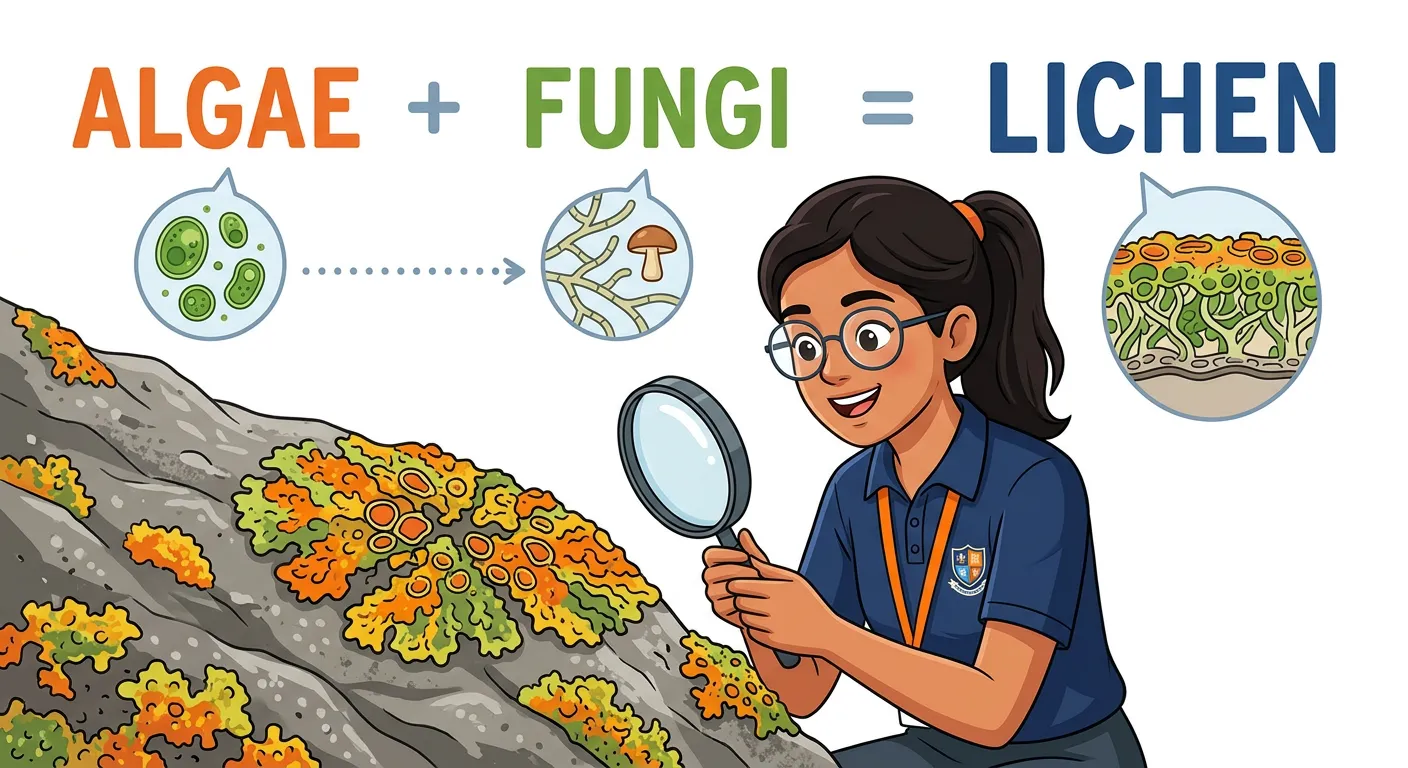
“Imagine a best-friend duo that never breaks up. That’s a Lichen! It is not a single plant but a perfect partnership between an Alga and a Fungus. They live together, work together, and survive in places where nothing else dares to grow. Let's dive in!”
When you first look at a lichen, you might think you are seeing a simple patch of moss or a splash of paint on a rock. However, under the microscope, a fascinating biological secret is revealed. Lichens are not individual organisms in the traditional sense; they are complex 'dual organisms' formed by a permanent symbiotic association between a fungus and an alga (or a cyanobacterium). This partnership is so tight that they function as a single unit, evolving unique structures and survival strategies that neither partner could achieve alone. In the world of NEET biology, understanding this mutualistic relationship is fundamental because it challenges our standard definitions of an 'individual.'
One of the most remarkable things about lichens is their extreme adaptability. You will find them in environments where life seems impossible—clinging to sun-scorched desert rocks, thriving in the freezing arctic tundra, and even surviving on the bark of high-altitude trees. They are the ultimate survivors of the plant world, even though they aren't technically plants! In the 5-kingdom classification system by R.H. Whittaker, lichens don't even have a specific spot because of their composite nature. This makes them a unique case study in biological classification and ecological resilience.
The relationship within a lichen is usually described as mutualism, where both partners benefit. The fungus provides the structural framework and protection, while the alga provides the nutrients. There is no harm involved to either party, which distinguishes this from parasitism. Some scientists even refer to this relationship as 'Helotism,' a term that suggests a master-slave relationship where the fungus 'enslaves' the alga to produce food, though 'mutualism' remains the standard term for your exams.
Quick Revision Points
- Lichens are composite organisms consisting of a Mycobiont (fungal partner) and a Phycobiont (algal/cyanobacterial partner).
- They are not included in Whittaker’s Five Kingdom Classification system due to their dual nature.
- The association is obligate and symbiotic, meaning they usually cannot survive in nature without each other.
- Lichens are exceptionally hardy and can colonize extreme habitats like bare rocks (lithophytes).
- The study of lichens is known as Lichenology.
NEET Exam Angle
- Focus on the 'Dual Organism' concept: Questions often ask why lichens are excluded from the 5-Kingdom system.
- Remember that the relationship is mutualistic; look for options that describe a 'win-win' scenario.
- Identifying the partners is crucial: Fungi provide shelter, Algae provide food.
02Phycobiont vs. Mycobiont: The Functional Roles of Algae and Fungi
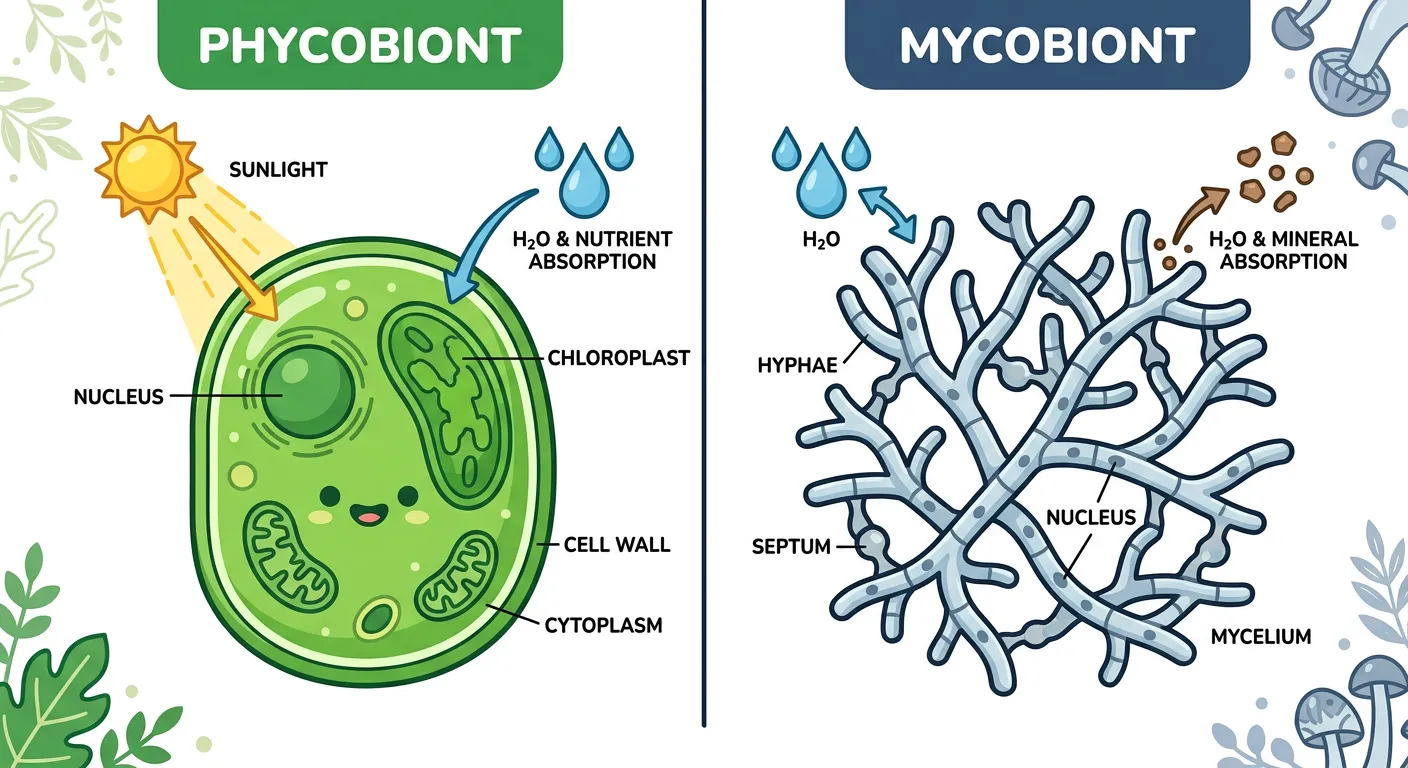
“Meet the partners! The Algal component, or Phycobiont, is the master chef—it performs photosynthesis to make food. The Fungal component, or Mycobiont, is the sturdy bodyguard. It provides shelter, absorbs water, and protects the alga from harsh conditions. It’s a classic win-win situation!”
To understand how a lichen works, we need to look at the division of labor between its two components. The algal component is called the Phycobiont. In most lichens, this partner belongs to the Chlorophyceae (green algae) or Cyanobacteria (blue-green algae). Because the phycobiont is autotrophic, it acts as the 'master chef' of the household. Using the power of sunlight, it performs photosynthesis to synthesize carbohydrates, which serve as food for both itself and its fungal partner. If the phycobiont is a cyanobacterium, it might also have the added bonus of fixing atmospheric nitrogen, providing essential proteins for the duo.
On the other side of the partnership is the Mycobiont, the fungal component. The mycobiont usually belongs to the Ascomycetes or, more rarely, the Basidiomycetes. If the alga is the chef, the fungus is the 'bodyguard' and the 'real estate agent.' It forms the bulk of the lichen's body (thallus), providing a sturdy structure that protects the delicate algal cells from intense UV radiation and physical damage. Furthermore, the fungal hyphae are excellent at absorbing water and minerals from the substrate or the atmosphere. This prevents the alga from drying out (desiccation), allowing it to stay moist and keep photosynthesizing even in dry weather.
This synergy is so efficient that lichens can grow on surfaces like glass or plastic where almost no other life can persist. The fungus provides the 'home' and raw materials, while the alga provides the 'energy.' It is a classic example of physiological division of labor. For NEET, you must distinguish between the autotrophic and heterotrophic roles clearly, as many multiple-choice questions hinge on this specific distinction.
Quick Revision Points
- Phycobiont: Autotrophic partner; usually Green Algae (Trebouxia) or Cyanobacteria (Nostoc).
- Mycobiont: Heterotrophic partner; constitutes about 90-95% of the lichen thallus.
- The fungus absorbs moisture and minerals and provides mechanical protection.
- The alga prepares food through photosynthesis and provides organic carbon.
- The relationship is a specialized form of mutualism with a clear division of labor.
NEET Exam Angle
- Questions frequently ask which partner is autotrophic and which is heterotrophic.
- Be prepared for 'Assertion-Reason' questions regarding how fungi prevent algal desiccation.
- Know the groups: Most lichen fungi are Ascomycetes (Sac fungi).
| Feature | Phycobiont (Algal Partner) | Mycobiont (Fungal Partner) |
|---|---|---|
| Nature | Autotrophic | Heterotrophic |
| Function | Food production (Photosynthesis) | Shelter, Absorption of water & minerals |
| Volume | Minor portion of thallus | Major portion of thallus |
| Taxonomy | Chlorophyceae or Cyanobacteria | Ascomycetes or Basidiomycetes |
03Ecological Succession: Lichens as Nature’s Pioneer Species
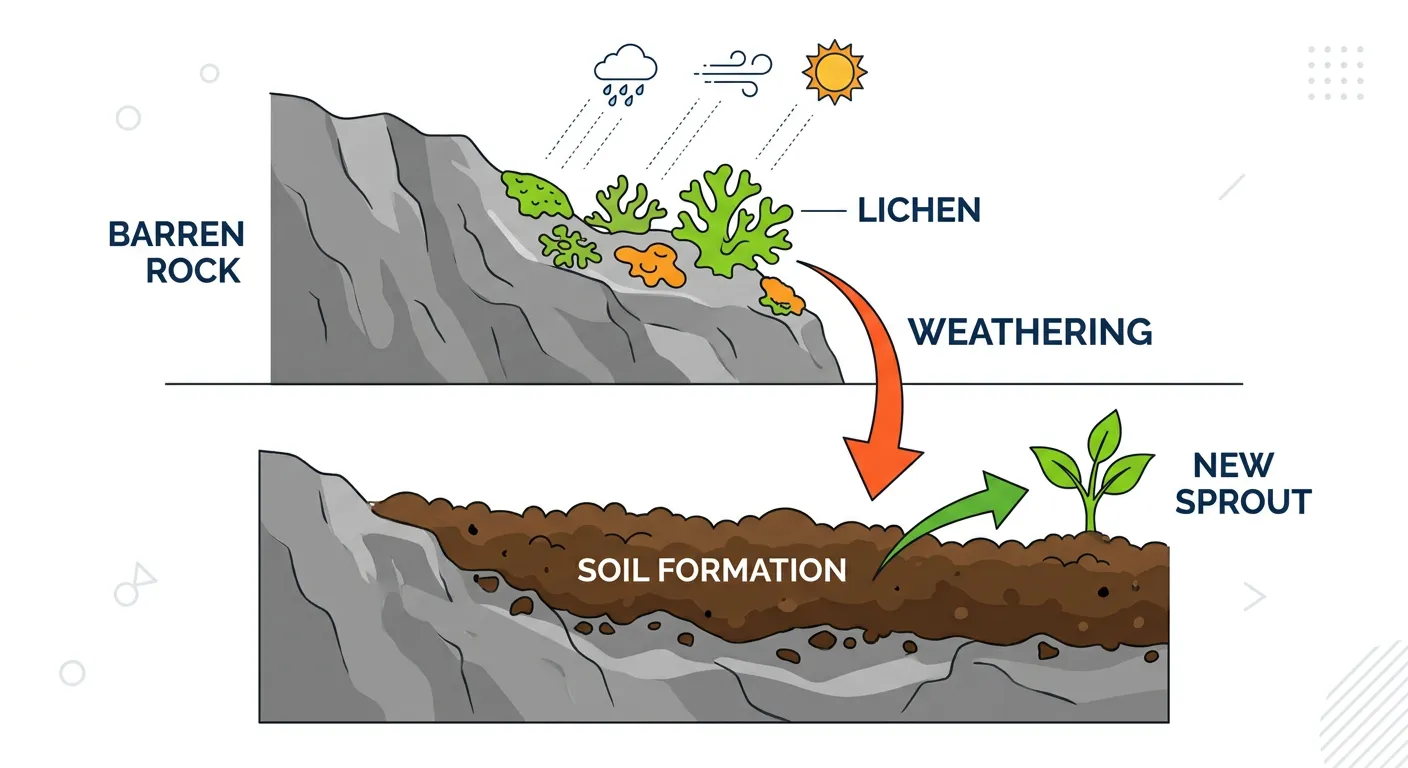
“Lichens are nature’s pioneer species! They are the first to colonize bare rocks. By secreting special acids, they slowly break down rock into soil. They act like the initial builders of an ecosystem, paving the way for mosses and plants to settle in later.”
Lichens are the ultimate trailblazers of the natural world. In ecology, we call them 'Pioneer Species' because they are often the very first living organisms to colonize a barren, lifeless habitat—a process known as primary succession or Xerosere (succession on dry rocks). While a tree or a blade of grass needs soil to grow, a lichen can land on a bare rock as a tiny spore or fragment and begin the monumental task of building an ecosystem from scratch.
How do they manage this? The secret lies in chemistry. As lichens grow, they secrete various organic acids, often referred to as 'lichen acids' (such as carbonic acid). These acids react with the rock surface, slowly dissolving the minerals and creating tiny crevices. This process is called pedogenesis, or soil formation. Over many years, the combination of chemical weathering and the accumulation of dead lichen matter creates a thin layer of organic soil. This 'new' soil is just enough to allow simpler plants like mosses (Bryophytes) to take root. Eventually, the mosses are followed by grasses, then shrubs, and finally trees.
Without lichens, the transformation of a volcanic rock or a mountain peak into a lush forest would take significantly longer. They are the primary agents of biological weathering. This ecological role is a high-yield topic for NEET, as it connects the study of Diversity (Unit 1) with Ecology (Unit 5). Students often miss the connection between the 'acids' they produce and the 'pioneer' status they hold, so make sure to link these two concepts in your notes.
Quick Revision Points
- Lichens are pioneers in Xerarch succession (succession starting on dry rock/sand).
- They initiate soil formation through a process called biological weathering.
- Secretion of lichen acids (e.g., carbonic acid) breaks down hard rock surfaces.
- They pave the way for mosses by creating a thin layer of humus and soil.
- Lichens help in moisture retention on rock surfaces, aiding later colonizers.
NEET Exam Angle
- Remember the term 'Xerosere' or 'Xerarch': Lichens are the pioneers here.
- Focus on the mechanism: It is both physical (growth) and chemical (acid secretion).
- Expect questions asking which organism initiates primary succession on bare rocks.
04Biological Indicators: Using Lichens to Monitor Air Quality
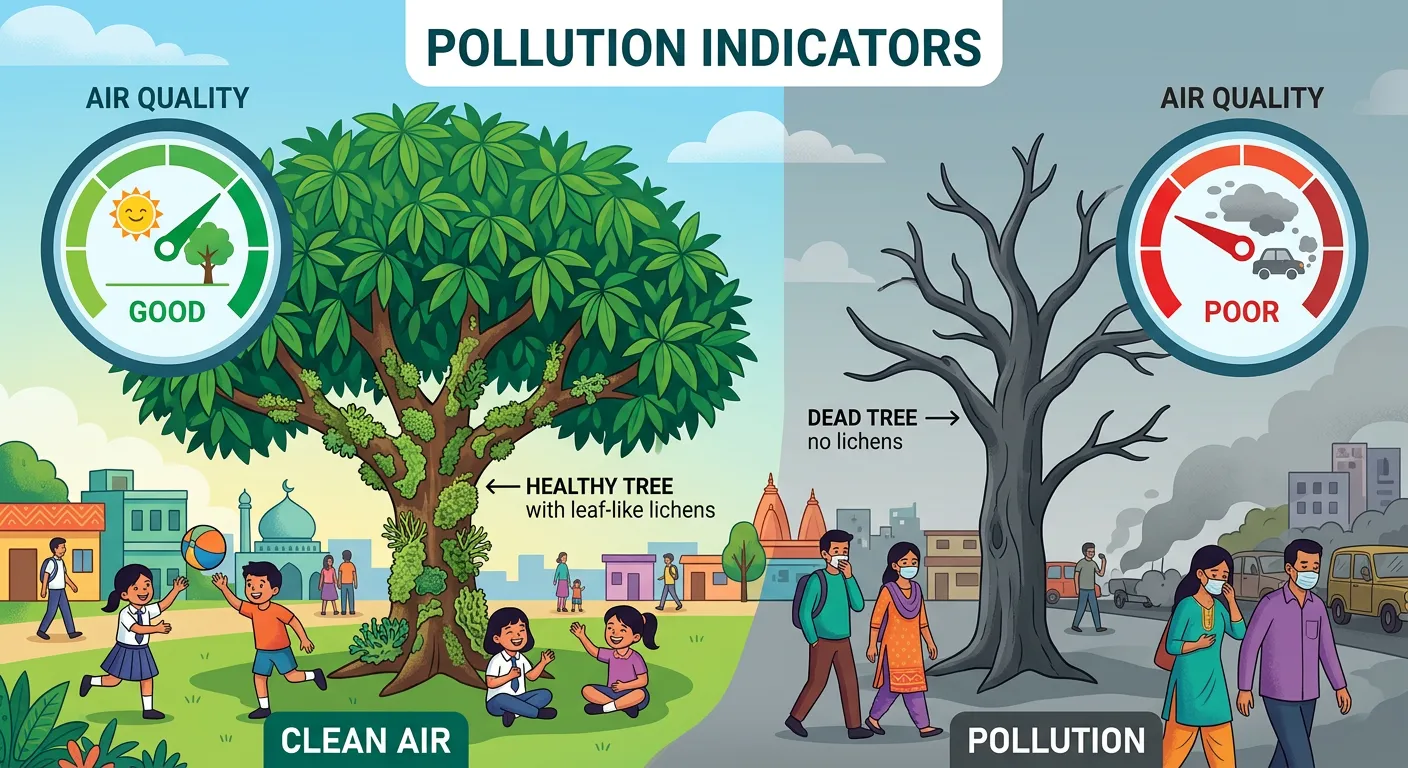
“Ever wondered if the air you breathe is clean? Just check the lichens! They are super sensitive to Sulfur Dioxide. If a forest is full of healthy lichens, the air is clean. If they are missing, you know the air is polluted. They are nature’s air quality monitors!”
One of the most fascinating aspects of lichen biology is their extreme sensitivity to the environment. Unlike most plants, lichens do not have a protective waxy cuticle or roots to filter what they take in. They absorb everything directly from the atmosphere—water, nutrients, and unfortunately, pollutants. This makes them exceptional 'bio-indicators' or natural pollution sensors. They are particularly vulnerable to Sulfur Dioxide ($SO_2$), a gas commonly released by industrial plants, coal-burning power stations, and vehicle exhaust.
When $SO_2$ concentrations rise, it interferes with the lichen's physiology, specifically damaging the chlorophyll in the algal partner and inhibiting photosynthesis. As a result, lichens begin to die off. If you walk through a heavily industrialized city, you might notice that the tree trunks and rocks are completely bare of lichens. These areas are known as 'Lichen Deserts.' The absence of lichens is a clear biological signal that the air quality is poor, even if the air looks clear to the naked eye. Conversely, a forest rich in bushy, hanging lichens is a reliable indicator of pristine, clean air.
For environmental scientists, monitoring lichen populations is a cost-effective and highly accurate way to map air pollution over large areas without needing expensive electronic sensors. For NEET aspirants, this is perhaps the most frequently tested property of lichens. You must remember that they are indicators of air pollution, specifically $SO_2$, and that their presence is inversely proportional to the level of pollution.
Quick Revision Points
- Lichens are highly sensitive to air pollution, especially Sulfur Dioxide ($SO_2$).
- They do not grow in industrial areas or large polluted cities (Lichen Deserts).
- Pollution damages the chlorophyll, halting the food production process.
- They act as 'natural barometers' for environmental health.
- Crustose lichens are generally more tolerant of pollution than fruticose forms.
NEET Exam Angle
- A very common MCQ: 'Lichens are indicators of...' (Answer: $SO_2$ or Air Pollution).
- Remember: If lichens are missing, it indicates high levels of pollution.
- Look for questions connecting industrialization with the disappearance of lichens.
| Lichen Presence | Air Quality Status | Typical Pollutant Level ($SO_2$) |
|---|---|---|
| Abundant/Shrubby | Excellent/Pristine | Very Low |
| Only Crusty types | Fair/Moderate | Moderate |
| Completely Absent | Poor/Polluted | High (Lichen Desert) |
05Morphological Classification: Crustose, Foliose, and Fruticose Forms
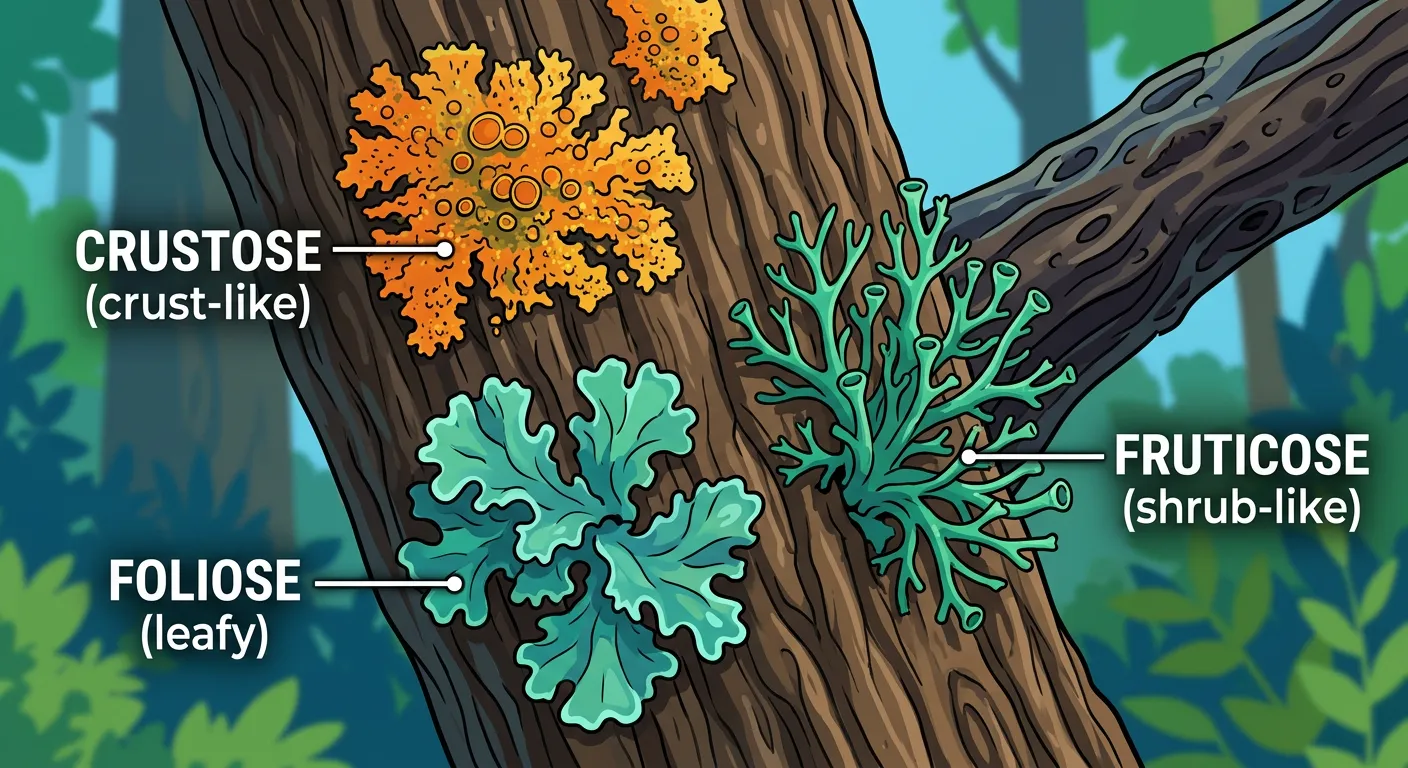
“Lichens come in three trendy shapes! Crustose are flat and crusty, stuck tight to rocks. Foliose are leafy and easy to peel off. Fruticose look like tiny, branched shrubs hanging from trees. Each shape helps them survive in its specific environment. Can you spot them on your next trek?”
Not all lichens look the same. Botanists classify them into three main morphological groups based on their growth form and how they attach to their substrate. Understanding these shapes is not just for identification; it also tells us about their habitat and resilience. The first type is Crustose. As the name suggests, these look like a thin 'crust' on rocks or bark. They are so tightly adhered to the surface that you cannot remove them without breaking the substrate. Examples include Graphis (the script lichen).
The second type is Foliose, which means 'leaf-like.' These have a distinct upper and lower surface and often look like crumpled leaves or lobes spread across a tree branch. They are attached to the surface by small, hair-like structures called 'rhizines.' Unlike crustose lichens, you can often peel a foliose lichen away from its substrate relatively easily. Parmelia is a classic example of this group. The third and most complex group is Fruticose. These are shrub-like, branched, or pendulous (hanging). They have a very small attachment point and can grow quite large, like the long, grey 'Old Man's Beard' (Usnea) seen hanging from mountain trees.
From a NEET perspective, being able to match the name of the form with its description and a representative example is essential. These growth forms also correlate with their sensitivity to pollution; generally, the more upright and 'bushy' a lichen is (Fruticose), the more sensitive it is to air quality because it has a larger surface area exposed to the atmosphere.
Quick Revision Points
- Crustose: Flat, thin, and very tightly attached (e.g., Graphis, Lecanora).
- Foliose: Leafy, lobed, with upper/lower surfaces; attached by rhizines (e.g., Parmelia).
- Fruticose: Bushy, branched, or hanging; cylindrical or ribbon-like (e.g., Usnea, Cladonia).
- Rhizines are multicellular fungal filaments used for attachment in foliose forms.
- Growth form is a primary method for lichen identification in the field.
NEET Exam Angle
- Match-the-Following questions: Pair the growth form with the correct genus (e.g., Fruticose - Usnea).
- Be clear on the attachment: Crustose is the hardest to remove; Foliose uses rhizines.
| Growth Form | Description | Attachment Style | Key Example |
|---|---|---|---|
| Crustose | Thin crust, no lobes | Entire lower surface | Graphis |
| Foliose | Leaf-like, lobed | Rhizines | Parmelia |
| Fruticose | Shrubby/Hanging | Single basal disk | Usnea |
06Economic and Culinary Importance: From Spices to Medicine
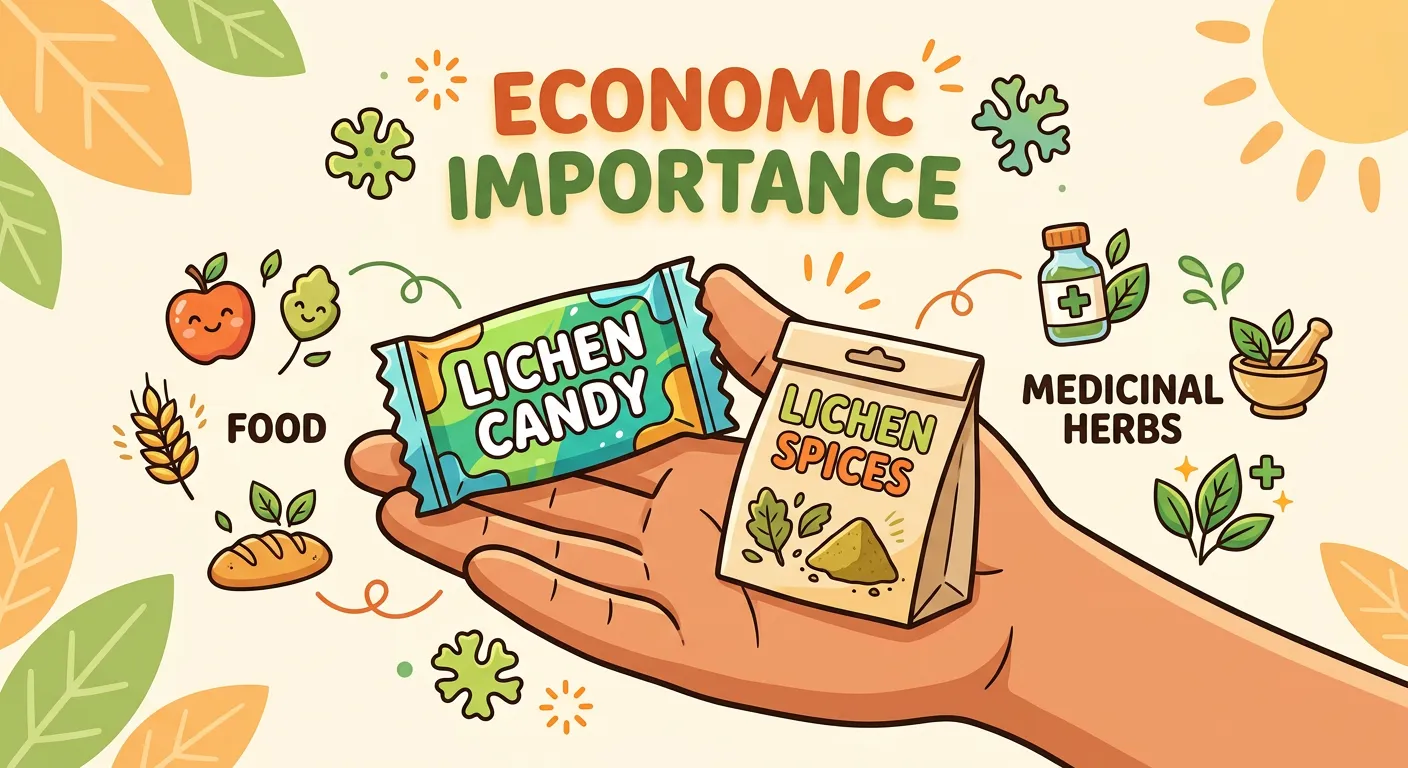
“Lichens aren't just for rocks! In India, certain species like 'Kalpasi' or 'Patthar Phool' are used as a fragrant spice in our biryanis and curries. They also hold medicinal value and are used in dyes. They are truly the unsung heroes of our kitchen and medicine cabinets!”
While they might look like mere biological curiosities, lichens have significant economic value across various industries. In India, lichens have a special place in the kitchen. If you’ve ever enjoyed a fragrant Hyderabadi Biryani or a traditional Marathi curry, you might have tasted Parmelia perlata, known locally as 'Patthar Phool' (Stone Flower) or 'Kalpasi.' It is a prized spice used for its unique earthy aroma. This is a great example of 'Biology in Human Welfare' that often appears in competitive exams.
Beyond the kitchen, lichens are pharmaceutical powerhouses. Many species produce secondary metabolites that have potent antibiotic properties. The most famous is 'Usnic acid,' derived from the lichen Usnea. It is used in creams and ointments to treat skin infections and wounds. Additionally, lichens are the source of 'Litmus,' the pH indicator every chemistry student uses. Litmus is extracted from lichens like Roccella tinctoria. They are also used in the perfume industry as 'fixatives' to make scents last longer, and in cold regions, lichens like 'Reindeer Moss' (Cladonia) are a vital source of fodder for animals like caribou and reindeer during the harsh winters.
This section bridges the gap between pure biology and practical application. When studying for NEET, don't just memorize the names; associate them with their specific use. For example, connect Roccella with chemistry labs and Usnea with medicine. This contextual learning makes it much easier to recall the information during the high-pressure environment of the exam.
Quick Revision Points
- Food: Parmelia (Stone flower) is used as a spice in Indian cuisine.
- Medicine: Usnic acid from Usnea is a broad-spectrum antibiotic.
- Dyes: Litmus (pH indicator) is obtained from Roccella and Lasallia.
- Fodder: Cladonia rangiferina (Reindeer moss) is a primary food for arctic herbivores.
- Perfumery: Evernia (Oakmoss) is used as a fragrance fixative.
NEET Exam Angle
- Identify the source of Litmus: Roccella.
- Be aware of the culinary use of Parmelia in India.
- Remember 'Reindeer Moss' is actually a lichen, not a true moss (Bryophyte).
| Application | Lichen Species | Common Name / Usage |
|---|---|---|
| Culinary | Parmelia perlata | Patthar Phool (Spice) |
| Chemistry | Roccella tinctoria | Litmus Paper |
| Medical | Usnea species | Usnic Acid (Antibiotic) |
| Ecological | Cladonia rangiferina | Reindeer Moss (Fodder) |
07NEET Exam Synthesis: Key Takeaways on Lichen Biology
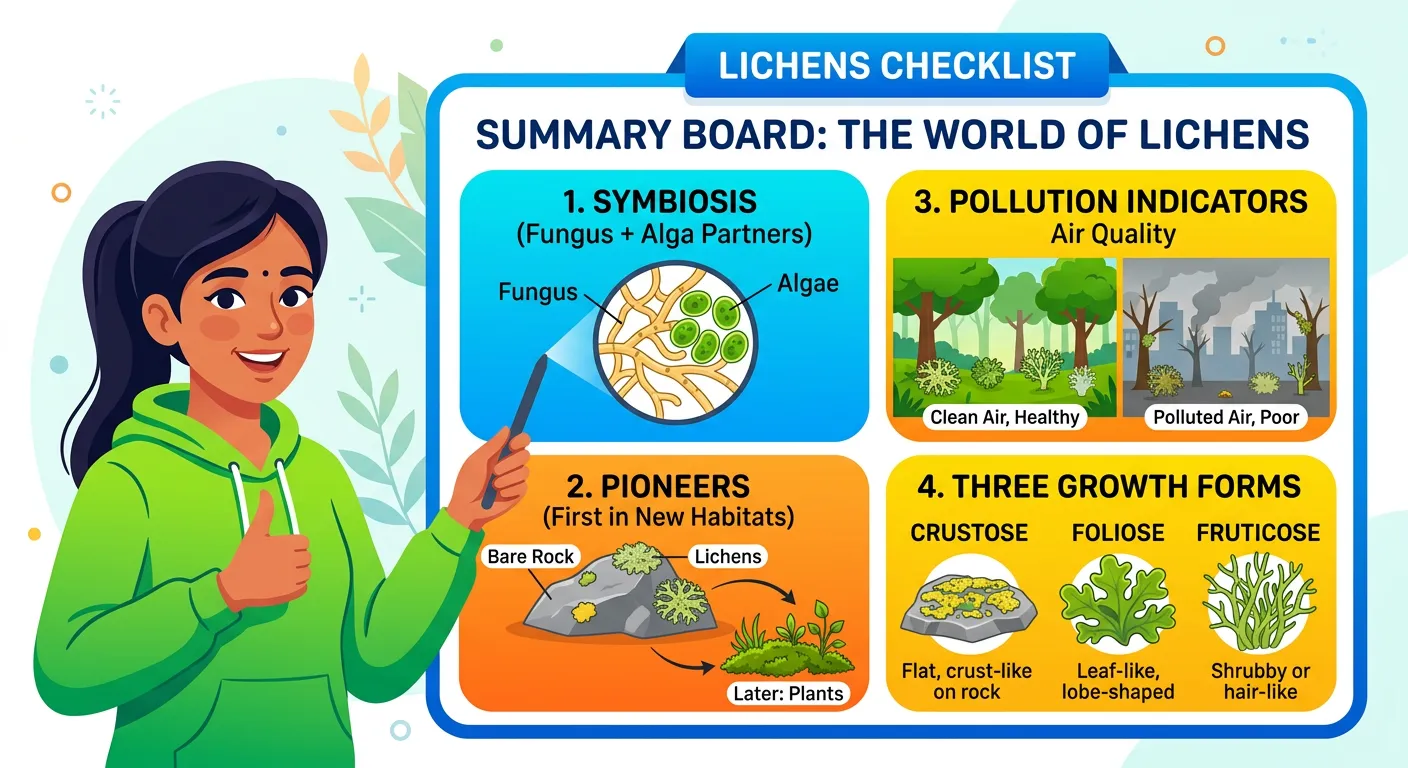
“To wrap up: Lichens are the ultimate team players in biology! They show us that by helping each other, we can conquer even the toughest mountains. Remember these points for your NEET exam: Symbiosis, pioneers, pollution indicators, and the three growth forms. You've got this!”
As we wrap up our study of lichens, it is important to focus on the high-yield facts that frequently appear in the NEET exam. One area often overlooked is reproduction. Lichens reproduce primarily through vegetative means. Fragmentation is common, where a piece of the thallus breaks off and grows into a new individual. More specialized structures include 'Soredia' (tiny algal cells wrapped in fungal hyphae that blow away like dust) and 'Isidia' (small, stalk-like outgrowths that increase surface area and can break off for dispersal). Since the lichen is a dual organism, these structures ensure that both the alga and the fungus travel together to a new location.
Another critical concept is the theory of 'Helotism.' While we call it mutualism, some biologists describe the fungus as a master that 'farms' the alga. The fungus provides the protection and minerals but also controls the alga's growth and reproduction to ensure its own food supply. Understanding both perspectives (Mutualism vs. Helotism) adds depth to your conceptual knowledge. In the exam, however, if asked for the type of association, 'Symbiotic Mutualism' is the safest and most accurate answer according to NCERT textbooks.
To master this topic, remember the three pillars: Structure (Phycobiont vs. Mycobiont), Ecology (Pioneers and Bio-indicators), and Types (Crustose, Foliose, Fruticose). If you can recall these clearly, you will be able to tackle any lichen-related question with confidence. Lichens serve as a beautiful reminder that in biology, cooperation is often the most successful survival strategy of all. Keep these points sharp, and you’re one step closer to your medical seat!
Quick Revision Points
- Vegetative reproduction occurs via Fragmentation, Soredia, and Isidia.
- Soredia are the most common specialized asexual reproductive units.
- Helotism is a specialized term for the lichen's symbiotic relationship.
- Lichens are slow-growing but long-lived organisms.
- They have no specialized organs for excretion; hence they accumulate toxins.
NEET Exam Angle
- Be ready for Match-the-following questions on reproductive structures (e.g., Soredia).
- Always remember: Lichens are the 'canaries' for $SO_2$ pollution.
- Conceptual clarity: Fungi are the major partners (Mycobiont).
Recommended Reading
Explore related Biology topics to build deeper chapter connections for NEET.
- What is Living · Topic 1.1
- Kingdom Fungi · Topic 1.10
- Viruses and Viroids · Topic 1.12
- Algae · Topic 1.13
- Bryophytes · Topic 1.14
- Gymnosperms · Topic 1.16
- Jump to Key Terms (Quick Revision)
- Review Common NEET Mistakes
- Solve NEET Practice MCQs
- Read Topic FAQs
- Practice NEET MCQs
- Solve NEET PYQs
📚 Key Terms
⚠️ Common NEET Mistakes
- 1Thinking lichens are a single organism belonging to Kingdom Plantae.
- 2Confusing the roles: remembering the fungus makes food instead of the alga.
- 3Assuming lichens only indicate water pollution; they are primarily air pollution indicators.
- 4Believing 'Reindeer Moss' is a true moss (it's a Fruticose lichen).
- 5Missing the fact that lichens are excluded from Whittaker's 5-kingdom classification.
📝 NEET PYQ & Practice Questions
Test your understanding of Lichens with NCERT-aligned sample questions.
Which of the following statements is correct regarding "Symbiosis" in the context of NEET Biology?
In NEET question papers, questions related to "Lichens" predominantly test:
Consider Mycobiont associated with Lichens. What is the primary characteristic expected in NEET MCQs?
Master Lichens with NeetQ AI Tutor
Practice 50+ topic-wise MCQs, previous 15 years NEET questions, and get step-by-step doubt resolution instantly.
❓ Frequently Asked Questions
What is the primary difference between a phycobiont and a mycobiont?
The phycobiont is the algal component which is autotrophic and produces food via photosynthesis. The mycobiont is the fungal component which is heterotrophic, providing structural support, protection, and absorbing water and minerals.
Why are lichens absent in large cities and industrial areas?
Lichens are highly sensitive to air pollution, particularly Sulfur Dioxide (SO2). They lack a protective cuticle and absorb toxins directly from the air, which kills the algal partner and destroys the lichen. This creates 'lichen deserts' in polluted areas.
How do lichens contribute to the formation of soil from bare rocks?
Lichens secrete organic acids like carbonic acid that chemically weather the rock. Their growth also physically breaks down the rock surface. Over time, dead lichen matter mixes with rock particles to form a thin layer of soil (pedogenesis).
Which species of lichen is commonly used as a spice in Indian cooking?
Parmelia perlata, commonly known as 'Patthar Phool', 'Kalpasi', or 'Stone Flower', is widely used as a spice in Indian cuisine for its earthy aroma.
Are lichens considered plants, fungi, or a separate group in the 5-kingdom classification?
Lichens are not included in Whittaker’s 5-kingdom classification because they are dual organisms (symbiotic associations of algae and fungi) rather than single taxonomic entities.
What are the three main morphological types of lichens based on their thallus shape?
The three types are: 1. Crustose (flat and crust-like), 2. Foliose (leaf-like with lobes), and 3. Fruticose (shrub-like or hanging).
Written By
NEET Content Strategist & Biology Expert
Sangita Kumari is a NEET educator and content strategist with over 6 years of experience teaching Biology, Chemistry, and Physics to Class 11 and 12 aspirants. She helps bridge the gap between traditional NCERT preparation and modern AI-powered learning. Her content is trusted by thousands of NEET aspirants across India.