🎬 Video Lesson Available
Watch the full 7-slide video lesson for Viruses and Viroids with AI teacher narration and visual explanations.
Viruses and Viroids — Master Viruses and Viroids for NEET Biology Class 11. Learn about capsids, bacteriophages, and naked RNA with expert insights and PYQ patterns.
01The Nature of Viruses: Obligate Parasites and Biological Hackers
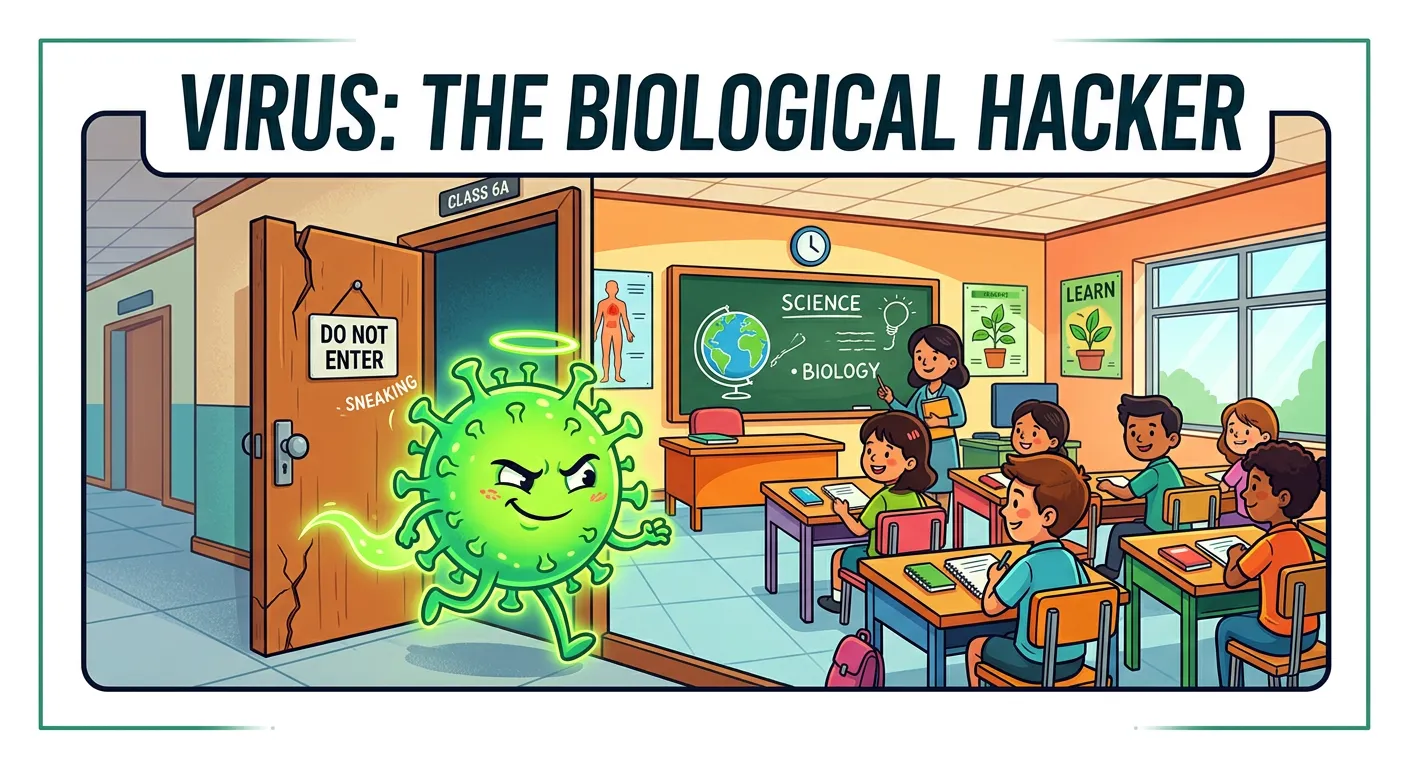
“Welcome, future doctors! Imagine a virus as a notorious biological hacker. It’s not quite alive, not quite dead—it’s an obligate parasite. Think of it like a USB drive that only works when plugged into your computer; viruses only function by hijacking the machinery of living host cells.”
When we study the Diversity in the Living World, we often hit a roadblock with viruses. These entities are the enigmas of biology because they don’t fit neatly into the Five Kingdom [Classification](/neet/biology/five-kingdom-classification-rh-whittaker-neet-biology) proposed by R.H. Whittaker. Why? Because Whittaker’s system was built on the foundation of cellular organization, and viruses are non-cellular. Outside a living host, a virus is nothing more than an inert crystalline structure—essentially a biological 'dust' particle. It is only when they enter a specific host cell that they spring into action, which is why we call them the bridge between the living and the non-living.
Think of a virus as a biological hacker. On its own, a hacker’s code (the viral genome) does nothing. But once it is 'uploaded' into a computer (the host cell), it hijacks the system’s processor and memory to run its own malicious programs. This makes viruses obligate parasites; they have no choice but to rely on a host for replication. Without a host, they cannot generate ATP or synthesize proteins. This unique nature is the primary reason they weren't given a place in the traditional classification systems we use for plants and animals.
In the NEET perspective, understanding this 'threshold of life' status is vital. You must recognize that viruses are not organisms in the traditional sense but are infectious nucleoprotein particles. Their ability to take over the host’s machinery is so efficient that they can turn a healthy cell into a virus-producing factory in a matter of hours.
Quick Revision Points
- Non-cellular Status: Viruses lack a cellular structure and are not considered truly 'living'.
- Obligate Parasites: They are 100% dependent on living host cells for reproduction.
- Inert Crystalline Form: Outside the host cell, they exist in a stable, inactive state.
- Exclusion from Classification: Not included in the Five Kingdom System because they are not cellular organisms.
NEET Exam Angle
- Living vs. Non-living: Questions often ask why viruses are considered a 'bridge'. The answer lies in their inert nature outside and reproductive nature inside the host.
- Discovery Context: Be aware that the term 'virus' means venom or poisonous fluid, a name associated with early research into tobacco mosaic disease.
| Feature | Virus | Living Cell |
|---|---|---|
| Structure | Non-cellular / Crystalline | Cellular (Prokaryotic/Eukaryotic) |
| Metabolism | Absent | Present (Respiration, Synthesis) |
| Growth | No increase in size | Growth and division present |
| Reproduction | Only inside host | Independent or parasitic |
02Viral Architecture: Capsid Structure and Genetic Material Composition
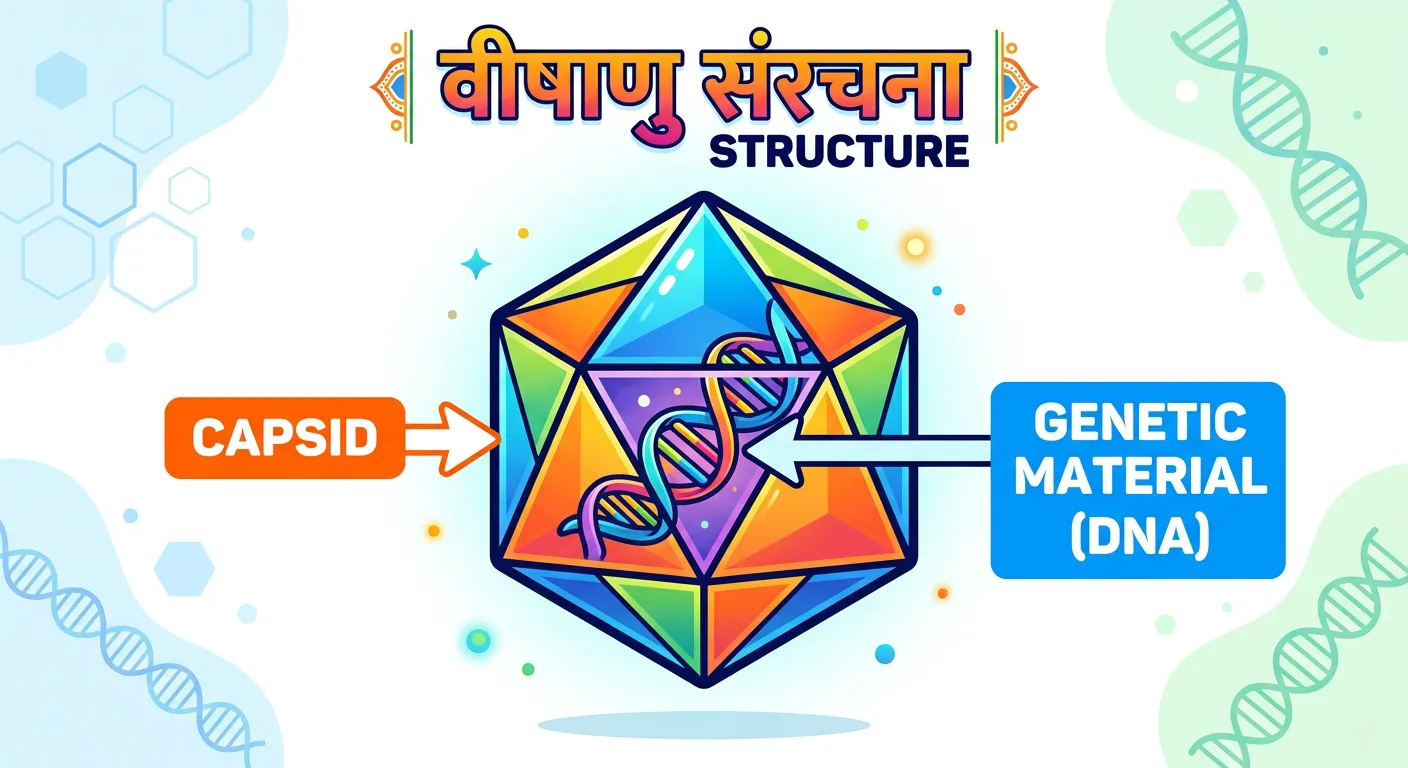
“What is a virus made of? Keep it simple: it’s just a protein coat called a capsid, protecting a tiny strand of genetic material—either DNA or RNA. Remember, viruses never carry both! It's like a secret message wrapped in a protective envelope, waiting for the right host.”
To understand how a virus functions, you must first look at its chemical composition. Every virus is a nucleoprotein, which is a fancy way of saying it consists of a nucleic acid (the genetic blueprint) and a protein coat. The protein coat is known as the capsid. This capsid isn't just a random shell; it’s a highly organized structure made up of small subunits called capsomeres. Depending on the virus, these capsomeres can be arranged in various geometric patterns, most commonly helical or polyhedral shapes.
Now, here is the 'Golden Rule' of virology that you must memorize for the NEET exam: A virus contains either DNA or RNA as its genetic material, but never both. You will never find a virus that carries both types of nucleic acids simultaneously. This is a common trap in MCQ sections. This genetic material is the infectious part of the virus. While the capsid serves to protect the genome and help the virus attach to host cells, it is the DNA or RNA that actually enters the host to direct the synthesis of new viral particles.
Structurally, the capsid protects the nucleic acid from environmental damage, such as UV radiation or enzymes. Think of it like a high-security envelope containing a set of instructions. The envelope (capsid) ensures the letter (DNA/RNA) reaches the right address (the host cell) without being destroyed along the way. In some complex viruses, there may even be an outer envelope made of lipids, but for the basic Class 11 curriculum, the focus remains on the nucleoprotein core.
Quick Revision Points
- Nucleoprotein Nature: Viruses are composed of a protein shell and a nucleic acid core.
- The Capsid: The outer protein coat made of repeating subunits called capsomeres.
- Geometric Symmetry: Capsomeres are usually arranged in helical (like TMV) or polyhedral forms.
- The 'Never Both' Rule: A single viral species contains either DNA or RNA, never both nucleic acids.
NEET Exam Angle
- Infectious Component: Always remember that the nucleic acid is the infectious part, not the protein coat.
- Subunit Identification: Questions frequently ask for the name of the capsid subunits—these are capsomeres.
- Biomolecule Link: This topic connects to Chapter 9 (Biomolecules) regarding the structure of proteins and nucleic acids.
03Host Specificity and the Bacteriophage: The Microbial Lunar Lander
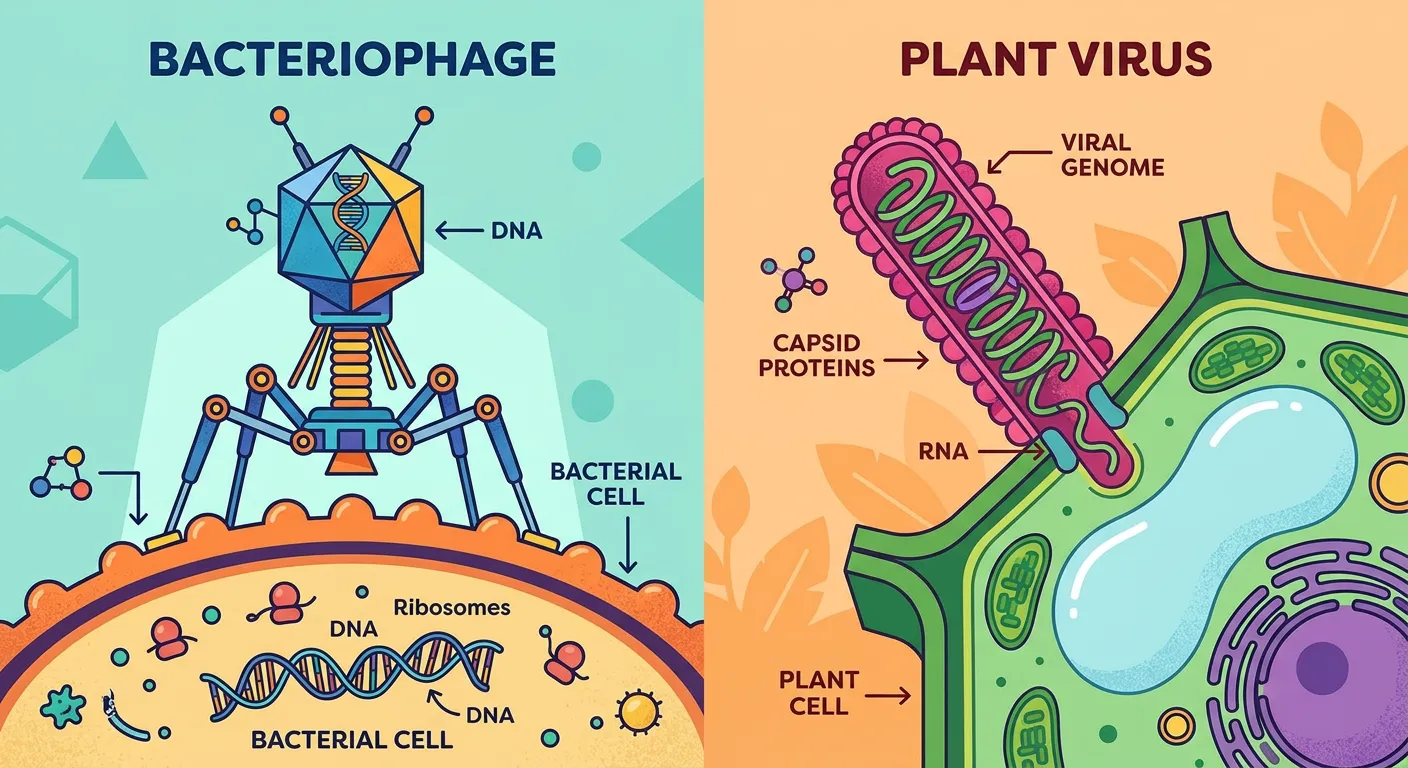
“Viruses have favorite targets. Some attack plants, others attack animals, and some even hunt bacteria! We call these bacteria-eaters 'bacteriophages'. They look like little lunar landers. NEET tip: Remember, phages are almost always double-stranded DNA viruses. They are the ultimate predators of the microbial world!”
Viruses are highly specific about who they infect. This is known as host specificity. In the world of NEET Biology, we categorize them based on their preferred targets. Plant viruses generally have single-stranded RNA (ssRNA). Animal viruses show more variety; they can have ssRNA, double-stranded RNA (dsRNA), or even double-stranded DNA (dsDNA). However, the most famous group studied in this context is the bacteriophage—viruses that specifically infect and kill bacteria.
Bacteriophages have a very distinct, almost mechanical appearance that resembles a 'lunar lander'. They consist of a head, a neck/collar, a sheath, and tail fibers. The head contains the genetic material, which in the case of bacteriophages is almost always double-stranded DNA (dsDNA). This is a high-yield fact for your exams! The tail fibers are used for attachment to the bacterial cell wall, after which the sheath contracts to inject the viral DNA into the host, much like a syringe.
Understanding the bacteriophage structure isn't just about morphology; it’s about understanding the mechanism of infection. These 'bacteria eaters' are crucial in biotechnology and molecular biology because they are used as vectors to move DNA from one place to another. Their ability to precisely target specific bacterial strains makes them a subject of intense study in the fight against antibiotic-resistant bacteria.
Quick Revision Points
- Plant Viruses: Typically contain single-stranded RNA (ssRNA).
- Animal Viruses: Can contain ssRNA, dsRNA, or dsDNA (e.g., Herpes, Smallpox).
- Bacteriophages: Viruses that infect bacteria; characterized by having dsDNA.
- Morphology: Includes a head (capsid), collar, sheath, and tail fibers for attachment.
NEET Exam Angle
- Genetic Material Identification: A recurring question asks: 'What is the genetic material in a bacteriophage?' The answer is dsDNA.
- Host Range: Know the difference between viruses infecting plants (ssRNA) and those infecting bacteria (dsDNA).
- Tail Fiber Function: Identify that tail fibers are specifically for attachment, not for housing DNA.
| Virus Type | Typical Genetic Material | Example |
|---|---|---|
| Plant Virus | ssRNA | Tobacco Mosaic Virus (TMV) |
| Animal Virus | ssRNA, dsRNA, or dsDNA | Influenza, HIV, Herpes |
| Bacteriophage | dsDNA | T4 Phage |
| Viroid | ssRNA (low molecular weight) | Potato Spindle Tuber Viroid |
04Viral Pathogenesis: Symptoms in Plant and Human Hosts
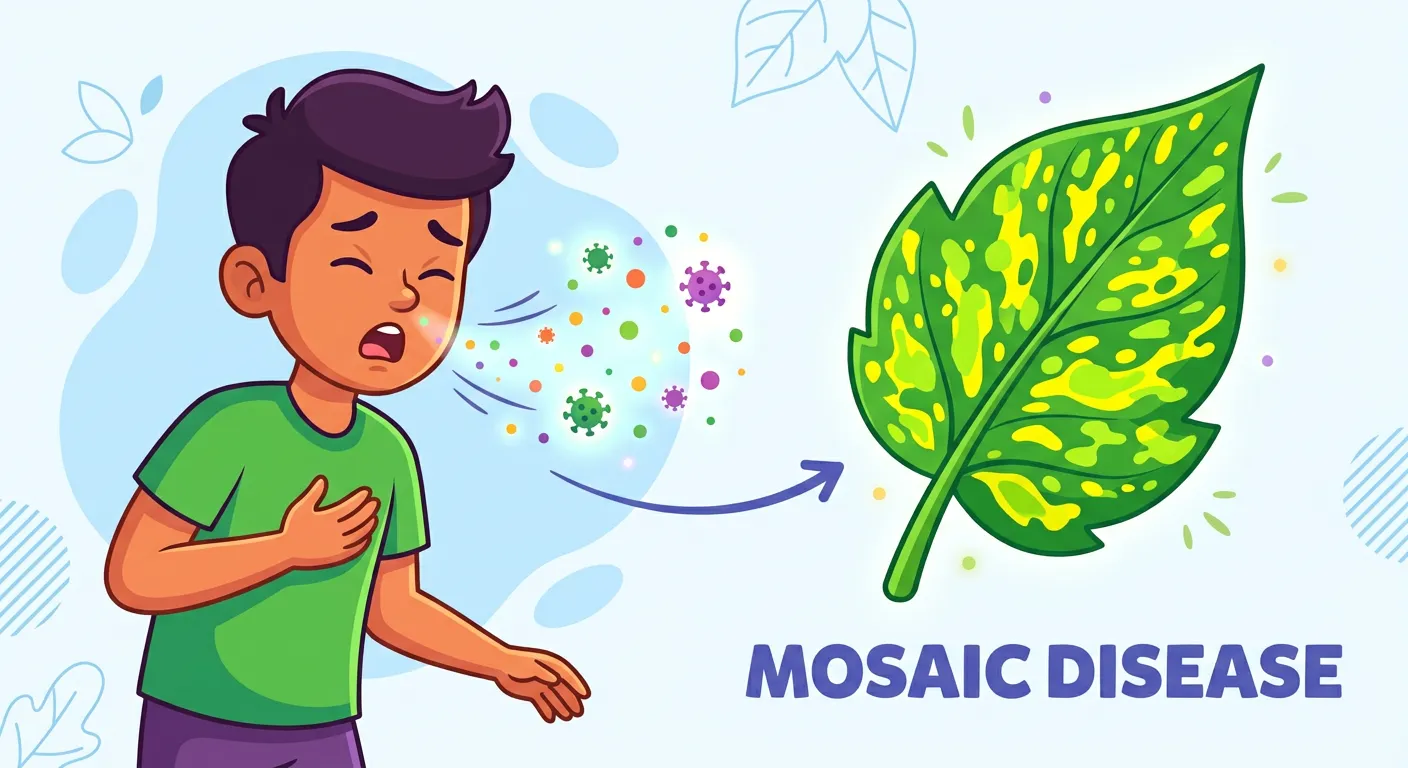
“Viruses cause havoc in our bodies and in crops! Symptoms like mosaic patterns, leaf rolling, or yellowing are classic signs of viral infection in plants. In humans, they trigger everything from common colds to complex diseases. It’s their way of hijacking resources to make copies of themselves.”
Viruses don't just sit quietly inside a host; they cause disease by disrupting normal cellular functions. In plants, viral infections lead to visible, often devastating symptoms that are frequently tested in the NEET exam. One of the most common is mosaic formation, where leaves develop patches of light and dark green. Other classic plant symptoms include leaf rolling and curling, yellowing of leaves, vein clearing (where veins become translucent), dwarfing, and stunted growth. These symptoms occur because the virus consumes the host’s resources and disrupts photosynthesis and hormonal balance.
In humans, viral diseases range from the mild to the life-threatening. The common cold is a viral infection that we all encounter, but viruses are also responsible for more severe conditions like mumps, smallpox, herpes, and influenza. Even AIDS (Acquired Immuno Deficiency Syndrome) is caused by a virus (HIV). The replication cycle of these viruses involves hijacking the host's cell machinery to make more viral proteins and genomes, which eventually leads to cell death or dysfunction, manifesting as disease symptoms.
For a medical aspirant, recognizing these symptoms is the first step in diagnostics. While you will study these in detail in Class 12 (Human Health and Disease), the Class 11 foundation requires you to identify the specific list of plant symptoms. If you see 'vein clearing' or 'mosaic formation' in a question, your mind should immediately go to viral pathogenesis. This link between structural biology and pathology is a favorite area for examiners to bridge different chapters.
Quick Revision Points
- Plant Symptoms: Mosaic formation, leaf rolling/curling, yellowing, vein clearing, dwarfing, and stunted growth.
- Common Human Diseases: Cold, Influenza, Mumps, Smallpox, Herpes, and AIDS.
- Mechanism: Symptoms arise from the hijacking of cellular resources and eventual cell damage.
- Economic Impact: Viral diseases in crops like tobacco or potato can cause massive agricultural losses.
NEET Exam Angle
- Symptom Checklists: You may be given a list of symptoms and asked which one is NOT a viral symptom in plants. Memorize the 'NCERT list' precisely.
- Disease Matching: Be prepared to match specific viruses to the diseases they cause (e.g., HIV to AIDS).
- Pathology Basics: Understand that viruses cause disease primarily through replication-induced cell lysis or metabolic interference.
05Viroids: The Sub-Viral 'Naked RNA' Pathogens
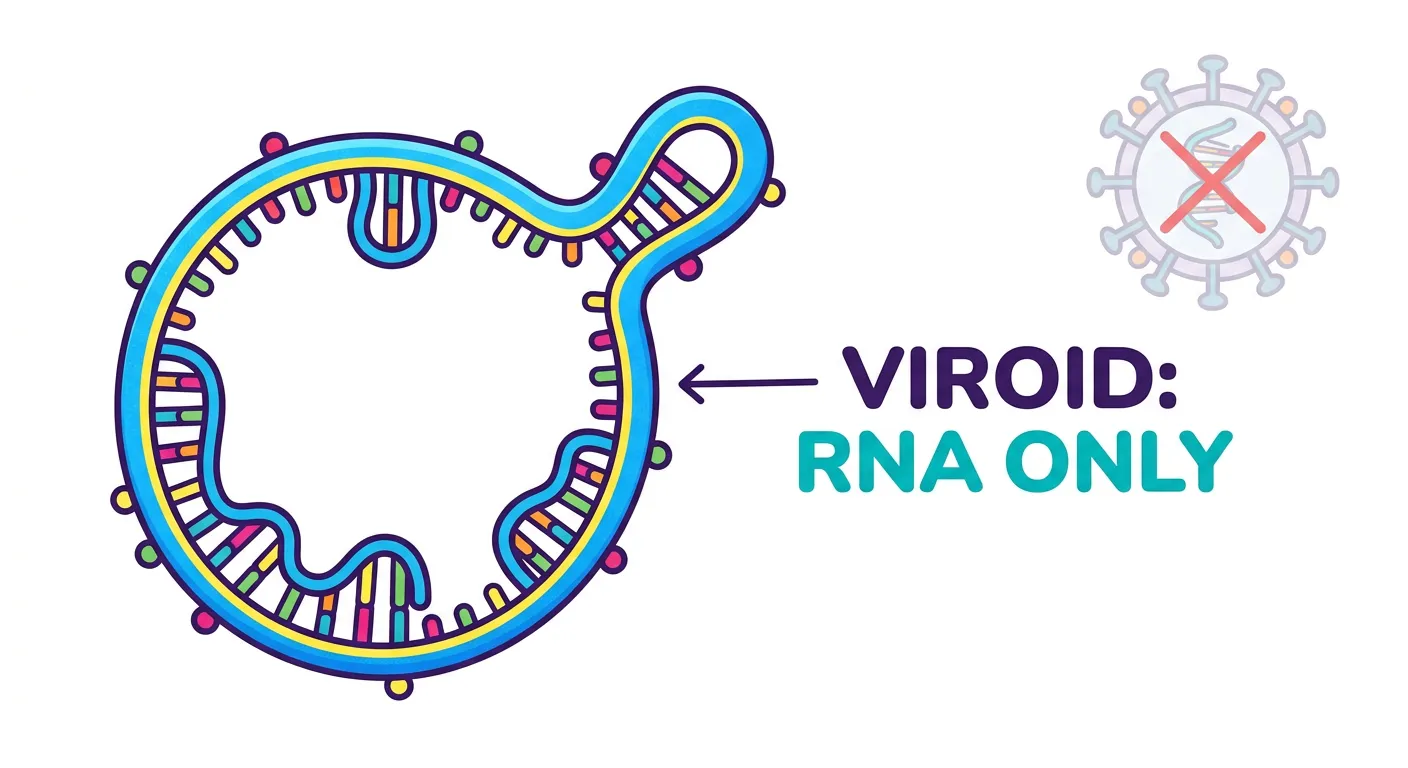
“Now, let’s talk about the even smaller troublemaker: the Viroid! Unlike viruses, viroids have no protein coat. They are just short, free-floating strands of infectious RNA. Think of them as 'naked' viruses. They are much smaller than viruses and cause devastating diseases in plants, like potato spindle tuber.”
In 1971, a scientist named T.O. Diener discovered an infectious agent that was even smaller than a virus. He called it a viroid. This was a groundbreaking discovery because it challenged the idea that an infectious agent must have a protein coat. A viroid is essentially 'naked' RNA. It consists only of a short, circular strand of single-stranded RNA and lacks the protective protein shell (capsid) that characterizes viruses. This lack of a capsid is the most significant structural difference between the two.
Viroids are known to cause several diseases in plants, the most famous example being Potato Spindle Tuber Disease. The RNA found in viroids has a very low molecular weight compared to the RNA found in viruses. Because they are so small and lack a protein coat, they are much harder to detect and study than viruses. They rely entirely on the host cell's enzymes (like RNA polymerase) to replicate themselves, as they do not even code for their own proteins.
For NEET, the name 'T.O. Diener' and the year '1971' are high-priority facts. You must also remember that viroids are exclusively plant pathogens (so far as we know for the Class 11 syllabus). When you think of viroids, think: No protein, low molecular weight RNA, and T.O. Diener. This 'minimalist' approach to infection is what makes viroids so fascinating from an evolutionary perspective.
Quick Revision Points
- Discovery: Identified by T.O. Diener in 1971.
- Structural Difference: No protein coat (capsid); consists only of 'naked' RNA.
- Size: Significantly smaller than viruses.
- RNA Characteristics: Single-stranded RNA with a characteristically low molecular weight.
- Key Disease: Potato Spindle Tuber Disease.
NEET Exam Angle
- Scientist Names: T.O. Diener is a frequent answer in 'Match the Following' or direct identification questions.
- Protein Coat Absence: This is the #1 most asked difference between viruses and viroids.
- RNA Weight: Pay attention to the phrase 'low molecular weight'—it is a hallmark of viroid RNA in MCQs.
| Discovery Year | Scientist | Key Finding |
|---|---|---|
| 1892 | Dmitri Ivanovsky | Recognized 'filterable' nature of viruses |
| 1898 | M.W. Beijerinck | Coined 'Contagium vivum fluidum' |
| 1935 | W.M. Stanley | Crystallized viruses (Proteins) |
| 1971 | T.O. Diener | Discovered Viroids (Naked RNA) |
06The Golden Rule: Definitive Differences Between Viruses and Viroids
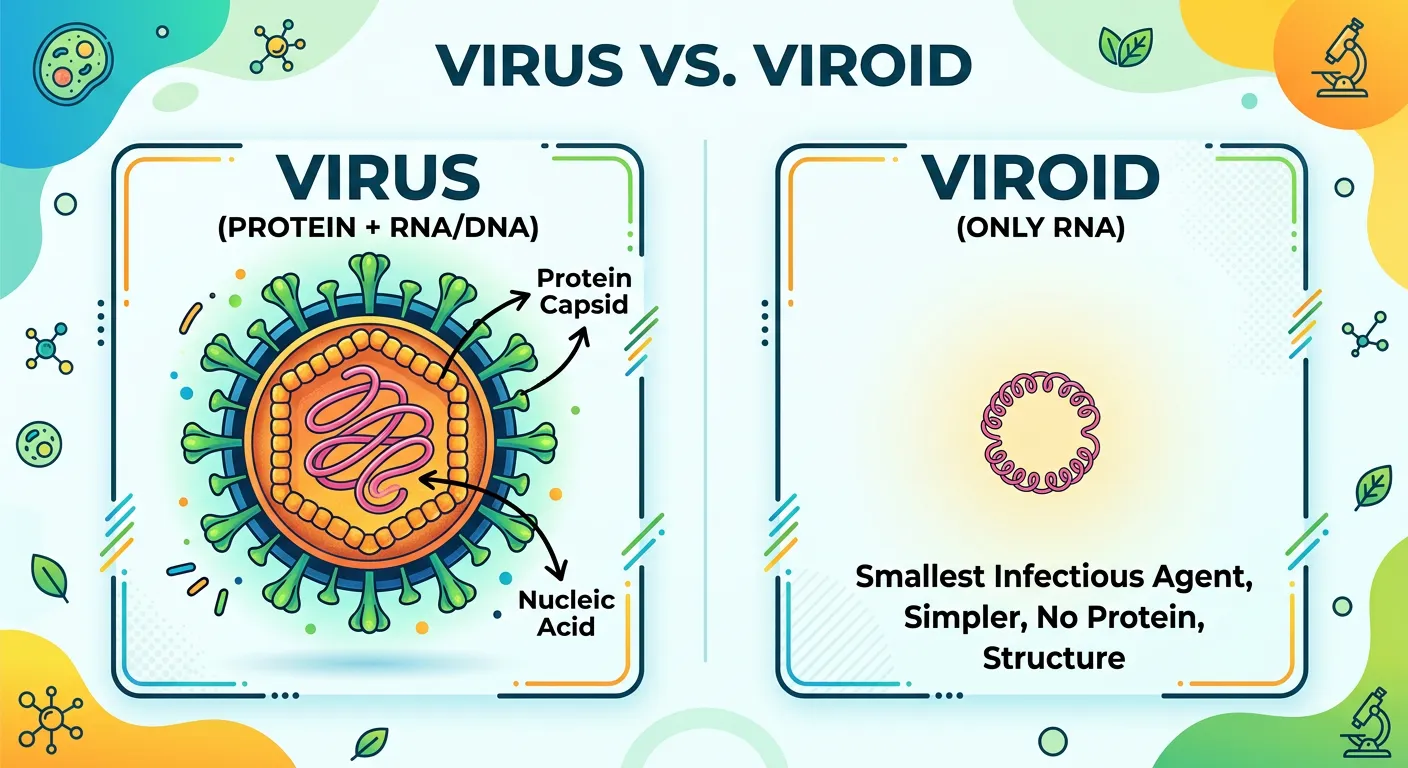
“Here is the golden rule for your NEET exam: Viruses have a protein shell, but Viroids are strictly protein-free! Because viroids are just naked RNA, they are much simpler and smaller. If you remember 'Viroid equals naked RNA', you will never miss this question in the exam.”
As you prepare for the NEET exam, the ability to quickly distinguish between viruses and viroids will save you precious seconds. The 'Golden Rule' focuses on two main factors: the protein coat and the type of genetic material. A virus is a complex of protein and nucleic acid. If you remove the protein shell from a virus, you are left with something that looks like a viroid, but chemically, viroid RNA is specifically low molecular weight and always RNA, whereas viral genomes are much more diverse.
Another key distinction is the host range and complexity. Viruses can infect every form of life—bacteria, plants, animals, and fungi. Viroids, however, are primarily known as plant pathogens. Because viroids are just naked RNA, they are the smallest known infectious agents in the biological world. They represent the absolute minimum amount of genetic information required to cause an infection and replicate within a host.
When solving MCQs, look for keywords like 'protein-free' or 'naked RNA'. These should immediately point you toward viroids. If the question mentions 'capsomeres', 'geometric symmetry', or 'dsDNA', it is definitely talking about a virus. Memorizing this contrast is the most efficient way to master this subtopic. By understanding these differences, you also gain insight into the threshold of life—moving from cellular life (Kingdoms) to sub-cellular life (Viruses) to sub-viral agents (Viroids).
Quick Revision Points
- Capsid Presence: Viruses have it; Viroids lack it.
- Genetic Material: Viruses (DNA or RNA); Viroids (Only low molecular weight RNA).
- Size Hierarchy: Viroids < Viruses < Bacteria < Eukaryotic cells.
- Infectious Unit: The whole nucleoprotein for viruses; just the RNA for viroids.
NEET Exam Angle
- Conceptual MCQs: Questions often ask: 'Which of the following lacks a protein coat?' Viroids is the answer.
- Comparison Tables: Study the structural differences carefully; they are high-yield.
- Size Comparisons: Be ready for questions that ask you to arrange infectious agents in increasing or decreasing order of size.
07Conclusion: Navigating the Diversity of Non-Cellular Life
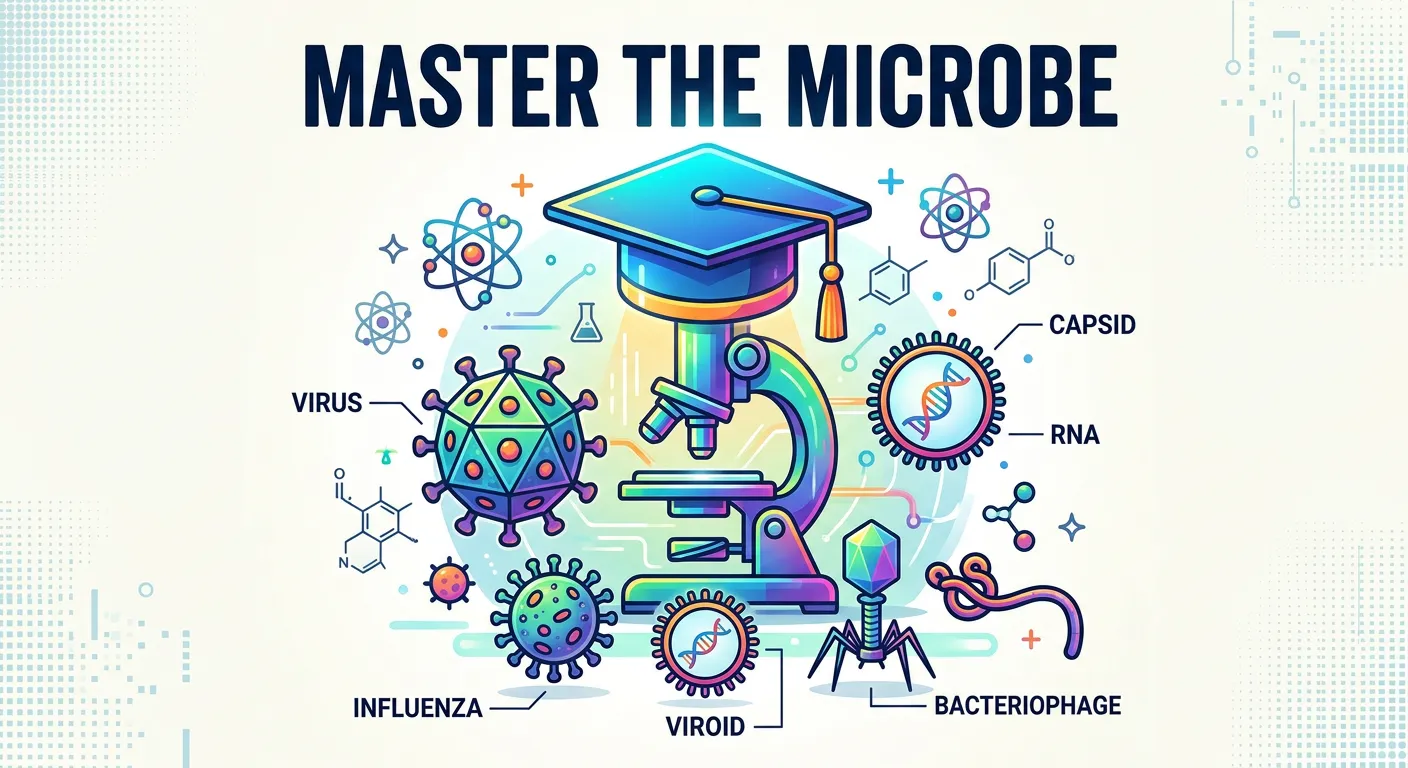
“So, we’ve covered the hackers of the biological world! Viruses and viroids are simple, yet they challenge our definition of life. Keep these differences in mind, and you'll ace the diversity of life section. Stay curious, study hard, and keep climbing toward that NEET rank!”
Studying viruses and viroids brings us to the edge of what we define as 'life'. These agents challenge the Cell Theory, which states that all living things are composed of cells. Since viruses and viroids are non-cellular, they exist in a grey area. However, their impact on the living world is undeniable. From the historical context of Ivanovsky and Beijerinck to the modern understanding of bacteriophages in genetic engineering, this topic connects several dots across the biology syllabus.
As a NEET aspirant, your focus should be on the specific terminology. Terms like 'capsid', 'capsomeres', 'nucleoprotein', and 'naked RNA' are not just vocabulary words; they are the keys to identifying correct options in the exam. This section of Chapter 2 is relatively short but has a high density of potential questions. It is a high-yield 'ROI' (Return on Investment) topic—spend a few hours mastering these details, and you are almost guaranteed to get the related questions right.
In conclusion, while Whittaker’s Five Kingdom Classification provides a great framework for cellular life, viruses and viroids remind us that nature is full of exceptions. Keep reviewing the bacteriophage structure and the discovery of viroids by T.O. Diener. Stay focused on these nuances, and you will find that the 'Diversity in the Living World' unit becomes one of your strongest scoring areas in Biology.
Quick Revision Points
- Cell Theory Challenge: Viruses and viroids are the primary exceptions to the classic cell theory.
- Terminology Recap: Capsid (shell), Capsomere (unit), Bacteriophage (bacteria hunter), Viroid (naked RNA).
- High Yield Focus: dsDNA in bacteriophages and the year 1971 for viroids.
- Systematic Study: Connect this topic to both Biological Classification and Human Health.
NEET Exam Angle
- Priority Ranking: Viroids have appeared more frequently in recent years (2019-2023) than general virus questions.
- NCERT Adherence: Always stick to the symptoms and scientists mentioned in the NCERT textbook; examiners rarely deviate from this list.
| Agent | Infectious Component | Discovery Credit (Major) | Typical Host |
|---|---|---|---|
| Virus | DNA or RNA | Ivanovsky / Beijerinck | Bacteria, Plants, Animals |
| Viroid | Naked RNA | T.O. Diener | Plants |
| Prion | Misfolded Protein | Stanley Prusiner | Animals (Nervous System) |
Recommended Reading
Explore related Biology topics to build deeper chapter connections for NEET.
- What is Living · Topic 1.1
- Kingdom Fungi · Topic 1.10
- Lichens · Topic 1.11
- Algae · Topic 1.13
- Bryophytes · Topic 1.14
- Gymnosperms · Topic 1.16
- Jump to Key Terms (Quick Revision)
- Review Common NEET Mistakes
- Solve NEET Practice MCQs
- Read Topic FAQs
- Practice NEET MCQs
- Solve NEET PYQs
📚 Key Terms
⚠️ Common NEET Mistakes
- 1Thinking viruses contain both DNA and RNA. Always remember the 'Never Both' rule.
- 2Confusing the year of viroid discovery; it is 1971 by T.O. Diener, not in the late 1800s like early virus discovery.
- 3Assuming viroids can infect humans; in the NCERT syllabus, they are strictly highlighted as plant pathogens.
- 4Misidentifying the genetic material of bacteriophages as RNA; it is almost always dsDNA.
- 5Believing that the protein coat is the infectious part; only the nucleic acid (genetic material) is infectious.
📝 NEET PYQ & Practice Questions
Test your understanding of Viruses and Viroids with NCERT-aligned sample questions.
Which of the following statements is correct regarding "Obligate Parasite" in the context of NEET Biology?
In NEET question papers, questions related to "Viruses and Viroids" predominantly test:
Consider Capsomeres associated with Viruses and Viroids. What is the primary characteristic expected in NEET MCQs?
Master Viruses and Viroids with NeetQ AI Tutor
Practice 50+ topic-wise MCQs, previous 15 years NEET questions, and get step-by-step doubt resolution instantly.
❓ Frequently Asked Questions
How do viruses differ from viroids in terms of their structure?
Viruses consist of a nucleic acid (DNA or RNA) enclosed in a protein coat called a capsid. In contrast, viroids lack a protein coat and consist only of free, 'naked' RNA.
Can a single virus contain both DNA and RNA as its genetic material?
No, a virus contains either DNA or RNA as its genetic material, but never both in the same particle.
Which scientist first discovered viroids and in what year?
Viroids were discovered by T.O. Diener in the year 1971.
What are the typical symptoms of a viral infection in plants?
Common symptoms include mosaic formation, leaf rolling and curling, yellowing and vein clearing, dwarfing, and stunted growth.
Why is the genetic material of a bacteriophage significant for NEET aspirants?
It is a high-yield fact because bacteriophages typically contain double-stranded DNA (dsDNA), which is a common point of testing in MCQs.
Why are viruses not placed in the Five Kingdom Classification system?
Viruses are non-cellular and are not considered truly living organisms in the sense of having a cellular structure, which was a requirement for Whittaker's classification system.
Written By
NEET Content Strategist & Biology Expert
Sangita Kumari is a NEET educator and content strategist with over 6 years of experience teaching Biology, Chemistry, and Physics to Class 11 and 12 aspirants. She helps bridge the gap between traditional NCERT preparation and modern AI-powered learning. Her content is trusted by thousands of NEET aspirants across India.