🎬 Video Lesson Available
Watch the full 7-slide video lesson for Kingdom Monera with AI teacher narration and visual explanations.
Kingdom Monera — Master Kingdom Monera for NEET Biology. Explore Archaebacteria, Eubacteria, bacterial shapes, and reproduction with expert Class 11 NCERT insights.
01The Unicellular Pioneers: Defining Kingdom Monera for NEET
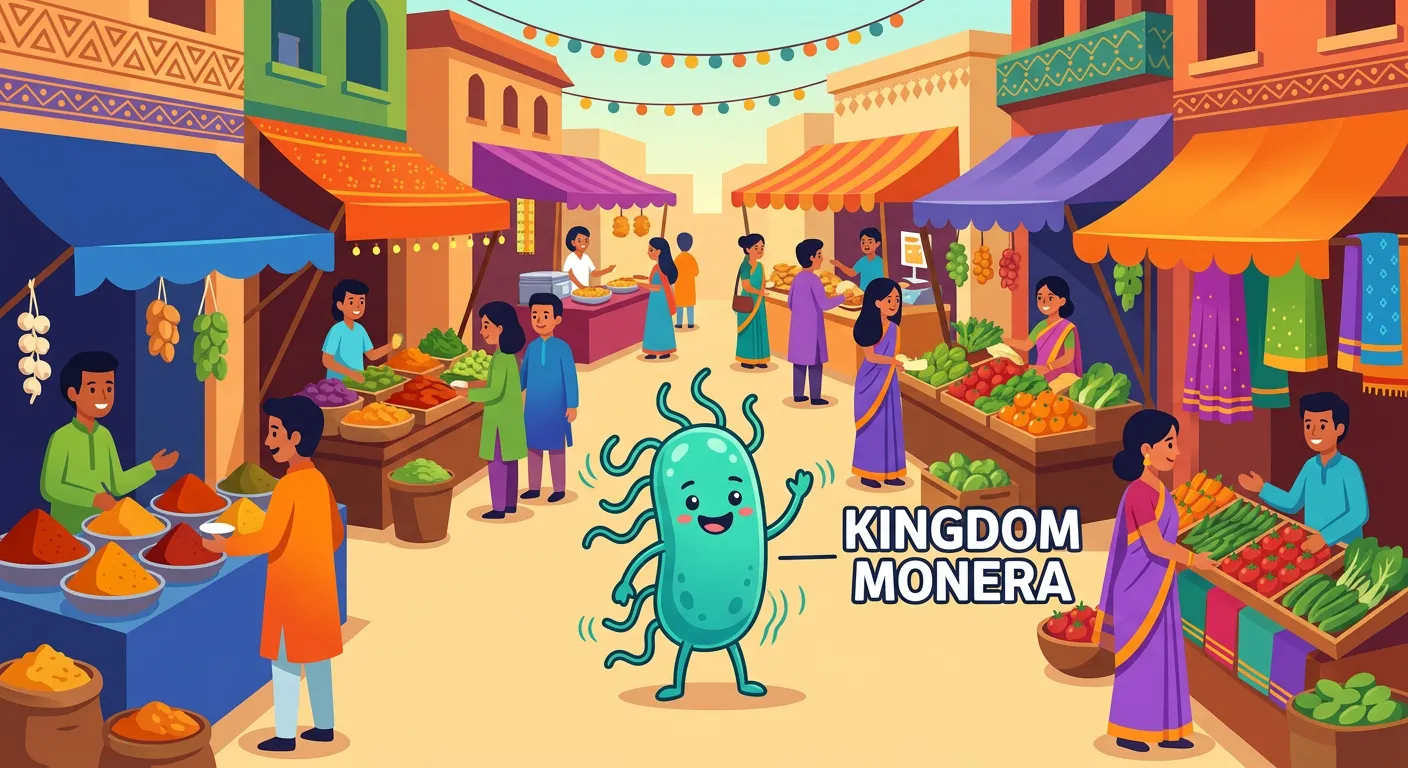
“Welcome, NEET warriors! Imagine Kingdom Monera as the tiny, unstoppable masters of our planet. They are the unicellular, prokaryotic legends that live everywhere—from your curd to boiling geysers. They are the microscopic architects of life, and today, we are going to demystify their secret world!”
Kingdom Monera serves as the foundation of biological classification, representing the most primitive and numerically dominant organisms on Earth. In the Whittaker five-kingdom system, Monera is unique because it is the only kingdom that houses prokaryotes—organisms lacking a well-defined nucleus and membrane-bound organelles. These microscopic entities are primarily unicellular, though some form complex colonies or long filamentous chains. They are the 'early birds' of evolution, having adapted to nearly every environment imaginable. Whether you are looking at the soil in your backyard, the deep-sea hydrothermal vents where temperatures soar, or the hyper-saline waters of the Dead Sea, Monerans are present, performing vital ecological roles that keep our planet's nutrient cycles moving.
For a NEET aspirant, understanding Monera is about more than just identifying bacteria; it is about recognizing the sheer ubiquity and metabolic diversity of these organisms. They are cosmopolitan, found in freezing glaciers, boiling hot springs, and even within the digestive tracts of animals as symbionts or pathogens. This extreme adaptability stems from their simple yet efficient cellular design. While they are structurally simple, they are behaviorally complex, exhibiting a wide range of nutritional strategies including autotrophy (both photo-autotrophy and chemo-autotrophy) and heterotrophy. This kingdom is essentially the 'microscopic engine' of the biosphere, and mastering its features is your first step toward a high score in the Diversity of Living World unit. The classification of Monera has evolved over time, shifting from a simple grouping of all bacteria to a more nuanced understanding that separates Archaebacteria from Eubacteria based on molecular evidence, such as 16S rRNA sequences, which highlights their deep evolutionary divergence.
Quick Revision Points
- Monera includes all prokaryotic organisms like bacteria, cyanobacteria, and archaebacteria.
- They are characterized by a lack of nuclear membrane and membrane-bound organelles like mitochondria or Golgi bodies.
- Monerans are found in extreme habitats (halophiles, thermophiles) where most other life forms cannot survive.
- Their cell wall is generally composed of peptidoglycan (murein), except in archaebacteria and mycoplasma.
- They exhibit the most extensive metabolic diversity among all five kingdoms.
NEET Exam Angle
- Focus on the distinction between the structure and behavior of Monerans; they are structurally simple but behaviorally complex.
- Recall that Monera is the only kingdom containing prokaryotic organisms in the five-kingdom classification.
- Be prepared for questions regarding their distribution, specifically their presence in extreme environments like deep oceans and hot springs.
| Feature | Monera (Prokaryotes) | Protista (Eukaryotes) |
|---|---|---|
| Nuclear Membrane | Absent | Present |
| Membrane-bound Organelles | Absent | Present |
| Genetic Material | Naked DNA (Nucleoid) | DNA associated with Histones |
| Ribosome Type | 70S | 80S (Cytoplasmic) |
02Prokaryotic Blueprint: Nucleoid and Cellular Organization
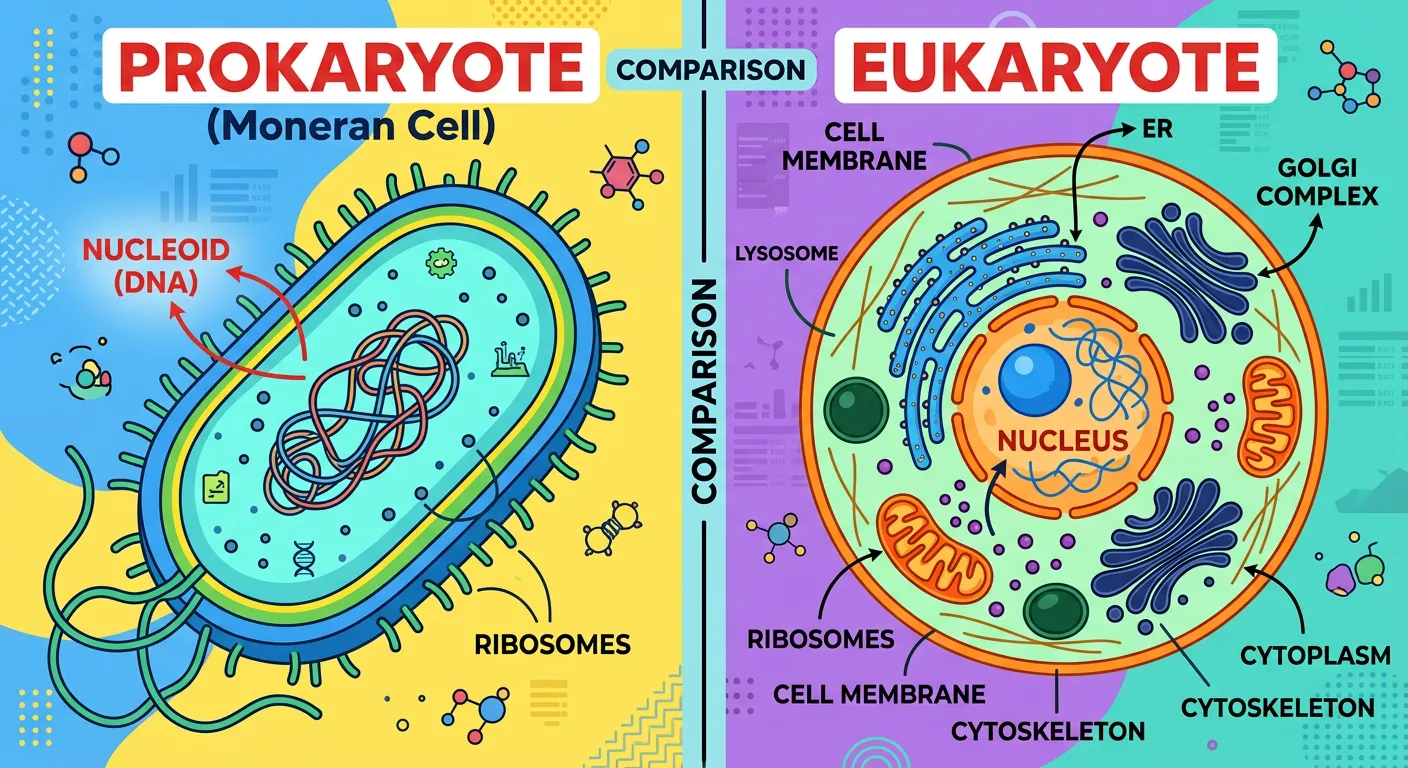
“What makes them special? They lack a defined nucleus and membrane-bound organelles. Think of them like a clean, open-plan studio apartment—everything is just floating in the cytoplasm! Their genetic material, the nucleoid, is just one single circular DNA hanging out, ready for action.”
The cellular architecture of a Moneran is often described as an 'open-plan' layout. Unlike eukaryotic cells, which are heavily compartmentalized by internal membranes, a bacterial cell functions as a single integrated unit where all biochemical reactions occur in the cytoplasm. The most critical feature is the absence of a nuclear envelope. Instead of a nucleus, we find the 'nucleoid'—an irregularly shaped, non-membrane-bound region containing the genetic material. This genetic material consists of a single, circular, double-stranded DNA molecule that is 'naked,' meaning it is not wrapped around histone proteins, although some polyamines may assist in folding. This streamlined genetic setup allows for rapid transcription and translation to occur simultaneously, facilitating quick adaptation to environmental changes.
In addition to the genomic DNA, many bacteria possess small, circular, self-replicating extrachromosomal DNA molecules known as plasmids. These plasmids are not essential for basic survival but provide significant phenotypic advantages, such as resistance to various antibiotics (R-plasmids) or the ability to facilitate conjugation (F-plasmids). The cytoplasm also contains 70S ribosomes, which are smaller than the 80S ribosomes found in eukaryotic cytoplasm. These ribosomes often occur in chains called polysomes or polyribosomes when translating a single mRNA. You won't find mitochondria for energy or chloroplasts for food; instead, these functions are associated with specialized folds in the plasma membrane called mesosomes, which increase surface area for respiration, or chromatophores in photosynthetic species. Furthermore, inclusion bodies like gas vacuoles provide buoyancy, while granules of glycogen or phosphate serve as storage. Understanding these internal structures is vital for answering questions about prokaryotic cell biology and its evolutionary significance compared to eukaryotes.
Quick Revision Points
- The nucleoid is the genomic DNA region lacking a nuclear membrane and histones.
- Plasmids provide extra traits like antibiotic resistance and are used extensively in biotechnology.
- Ribosomes in Monera are of the 70S type, unlike the 80S found in eukaryotic cytoplasm.
- Inclusion bodies serve as storage for reserve materials like glycogen, phosphate, and cyanophycean starch.
- Mesosomes are infoldings of the plasma membrane that aid in respiration and cell wall formation.
NEET Exam Angle
- Pay close attention to the term 'naked DNA'; it is a frequent descriptor in MCQ options for Monera.
- Remember that plasmids are 'extrachromosomal' and circular. They are a hot topic for both Classification and Biotechnology units.
- Distinguish between the 70S ribosomes in the cytoplasm of Monerans and the 80S ribosomes in eukaryotes.
| Component | Structure/Function in Monera | NEET Keyword |
|---|---|---|
| Genetic Material | Single circular DNA | Nucleoid / Genophore |
| Extra DNA | Small circular loops | Plasmids |
| Protein Factory | 70S Ribosomes | Polysomes (Polyribosomes) |
| Reserve Food | Inclusion bodies | Cyanophycean granules |
03Bacterial Morphology: Classifying the Four Microscopic Icons
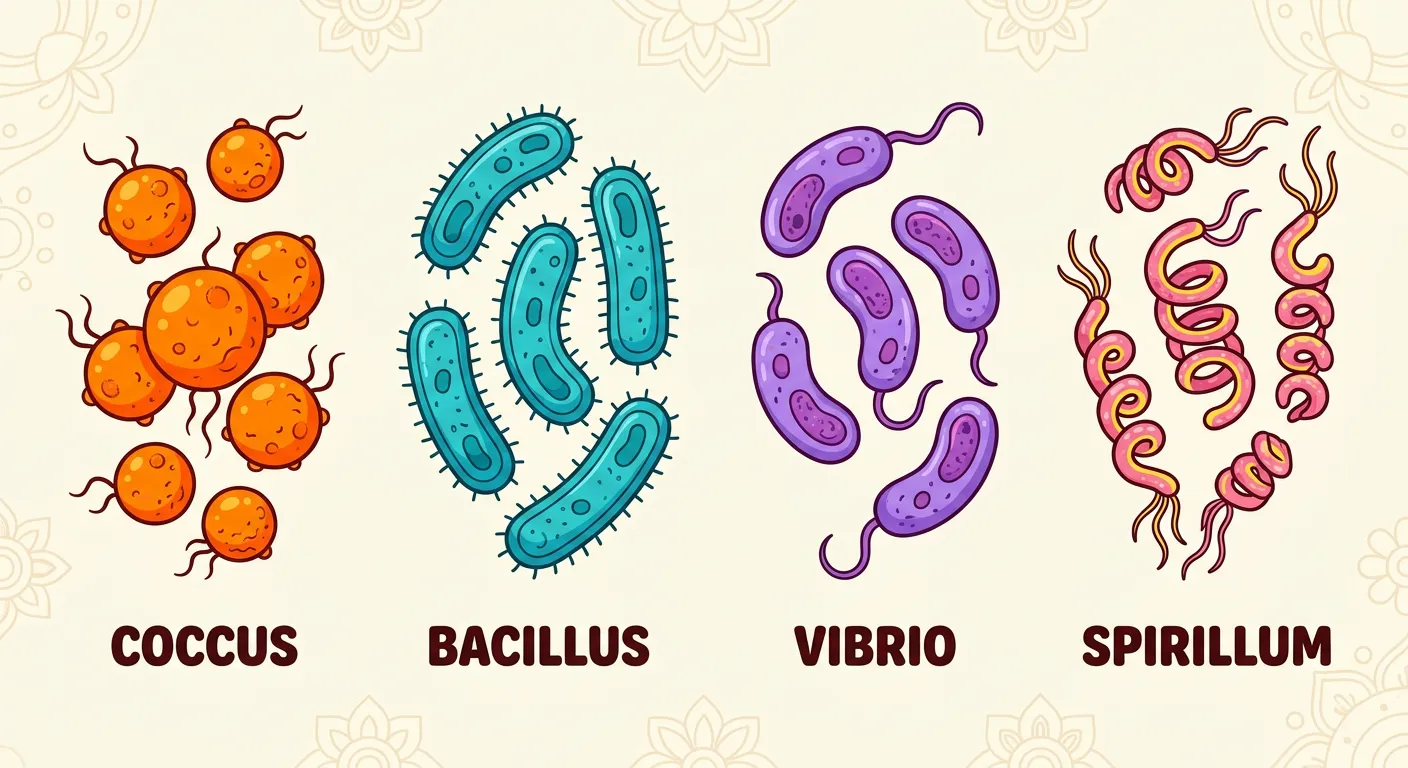
“Bacteria are the fashionistas of the microscopic world! They come in four classic styles. We have the spherical Coccus, the rod-shaped Bacillus, the comma-shaped Vibrio, and the twisty Spirillum. Remembering these shapes is a must for your NEET exam, so memorize these four icons!”
Bacteria may be microscopic, but they exhibit distinct and recognizable shapes that serve as a primary tool for their classification and identification. For the NEET exam, you must memorize the four basic categories: Coccus (spherical), Bacillus (rod-shaped), Vibrio (comma-shaped), and Spirillum (spiral). These shapes are not just for aesthetic variety; they often relate to how the bacteria move, how they resist environmental stress, and how they interact with their host. For instance, the spherical Cocci can exist as single cells (Monococcus), pairs (Diplococcus), chains (Streptococcus), or grape-like clusters (Staphylococcus). These arrangements are clinically significant; for example, Streptococcus pneumoniae is a common cause of respiratory infections, and its chain-like arrangement is a key diagnostic feature.
The rod-shaped Bacillus is perhaps the most diverse morphology, including well-known species like Escherichia coli and Bacillus anthracis. Some bacilli are capable of forming highly resistant endospores, allowing them to survive harsh environmental conditions for decades. Then we have the Vibrio, which looks like a tiny comma. This shape is optimized for movement in aquatic environments, as seen in Vibrio cholerae, the causative agent of cholera. Finally, the Spirillum represents elongated, twisty cells, often equipped with flagella at the ends for a unique corkscrew-like movement through viscous fluids.
It is also essential to note the concept of pleomorphism. While most bacteria maintain a constant shape dictated by their rigid cell wall, some, like Mycoplasma, lack a cell wall entirely and can change shape depending on their environment. This lack of a fixed shape makes them 'pleomorphic' and allows them to squeeze through tiny pores that would trap other bacteria. Furthermore, the arrangement of flagella—whether they are at one end (monotrichous), both ends (amphitrichous), or covering the entire surface (peritrichous)—is closely tied to these morphological categories. Morphology remains the bedrock of clinical microbiology, even as genetic sequencing becomes the gold standard for phylogenetic studies. In the NEET syllabus, matching these shapes to their names and examples is a high-yield area that requires consistent revision.
Quick Revision Points
- Coccus: Spherical shape; examples include Streptococcus and Staphylococcus.
- Bacillus: Rod-shaped; often form spores under unfavorable conditions.
- Vibrio: Comma-shaped; characterized by a distinct curve in the cell body.
- Spirillum: Spiral or coiled shape; usually possess flagella for motility.
- Bacterial morphology is a phenotypic trait used for rapid clinical identification.
NEET Exam Angle
- Match the following questions frequently use these four shapes and their corresponding names.
- Remember that shape is a 'primary' criterion but not the only one for classification.
- Be aware that some bacteria are 'pleomorphic,' meaning they can change shape depending on environmental conditions (e.g., Mycoplasma).
- Focus on the flagellar arrangement associated with spiral and comma shapes, as motility is a key survival factor.
04Archaebacteria: The Extremophiles and Evolutionary Survivors
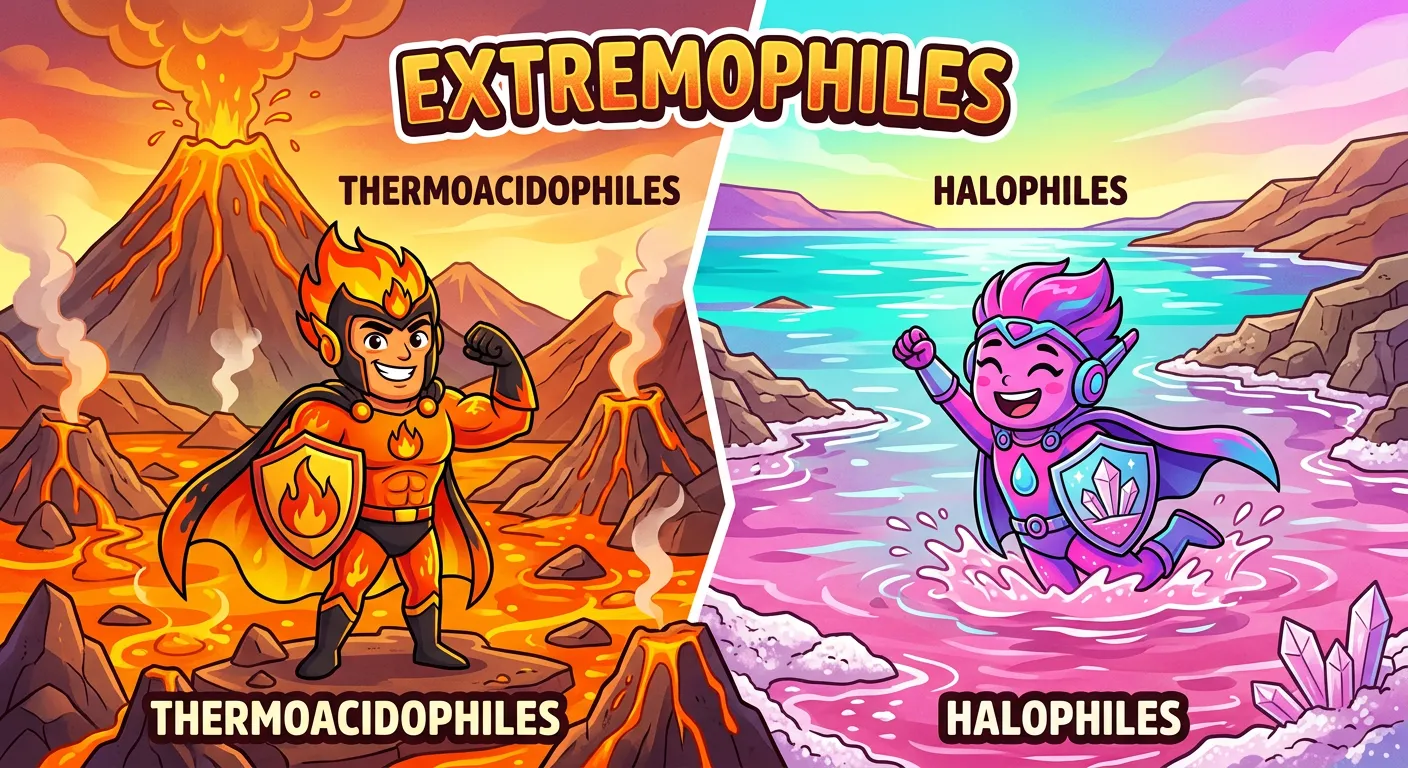
“Meet the Archabacteria—the tough guys of the kingdom. They thrive where life shouldn't exist! Whether it is hyper-salty water or boiling volcanic pits, these survivors stay strong. Their cell wall structure is unique, allowing them to withstand conditions that would fry any ordinary cell.”
Archaebacteria are often referred to as 'living fossils' because they represent some of the earliest life forms on Earth, surviving in conditions that mimic the harsh environment of the primordial planet. What sets them apart from the 'true' Eubacteria is their unique cell wall and cell membrane composition. Unlike Eubacteria, their cell walls do not contain peptidoglycan. Instead, they have a specialized structure composed of complex polysaccharides and proteins (sometimes called pseudomurein). Furthermore, their plasma membranes contain branched-chain lipids linked to glycerol by ether bonds, rather than the ester-linked straight-chain fatty acids found in Eubacteria and Eukaryotes. This biochemical 'armor' significantly decreases membrane fluidity and provides incredible stability against high temperatures, high salinity, and extreme pH levels.
Within this group, NEET candidates should focus on three main sub-categories. Halophiles thrive in extremely salty environments like the Great Salt Lake or the Dead Sea, often possessing special pigments to harness light energy. Thermoacidophiles are found in hot springs where temperatures can reach 80°C and the pH is as low as 2. Perhaps most ecologically relevant for the syllabus are the Methanogens. These are strictly anaerobic bacteria found in marshy areas and the rumens (stomachs) of ruminant animals like cows and buffaloes. They play a pivotal role in the production of methane (biogas) from animal waste. This evolutionary lineage is so distinct that in the Three-Domain system proposed by Carl Woese, Archaea are placed in a separate domain from Bacteria and Eukarya. This distinction is based on the 16S ribosomal RNA sequences, which show that Archaebacteria are, in some molecular aspects, more similar to eukaryotes than they are to common bacteria. This highlights their unique evolutionary journey and their status as the undisputed kings of extreme survival.
Quick Revision Points
- Archaebacteria lack peptidoglycan in their cell walls, distinguishing them from Eubacteria.
- Branched-chain lipids in the cell membrane allow them to survive extreme heat and acidity.
- Methanogens are obligate anaerobes that produce methane gas.
- They are found in extreme habitats: salty areas (Halophiles), hot springs (Thermoacidophiles), and marshy areas (Methanogens).
- They are considered the most ancient living organisms.
NEET Exam Angle
- The presence of methanogens in the rumen of cattle is a high-frequency question topic.
- Note the specific reason for their survival in extreme conditions: the unique structure of their cell wall and membrane.
- Understand the link between Methanogens and Biogas production, which connects this topic to 'Microbes in Human Welfare'.
| Type of Archae | Habitat | Key Biological Role |
|---|---|---|
| Halophiles | High Salinity | Survival in osmotic stress |
| Thermoacidophiles | Hot/Acidic Springs | High-temperature enzyme sources |
| Methanogens | Ruminant gut / Marshes | Biogas (Methane) production |
05Eubacteria and Cyanobacteria: The True Bacteria as Global Architects
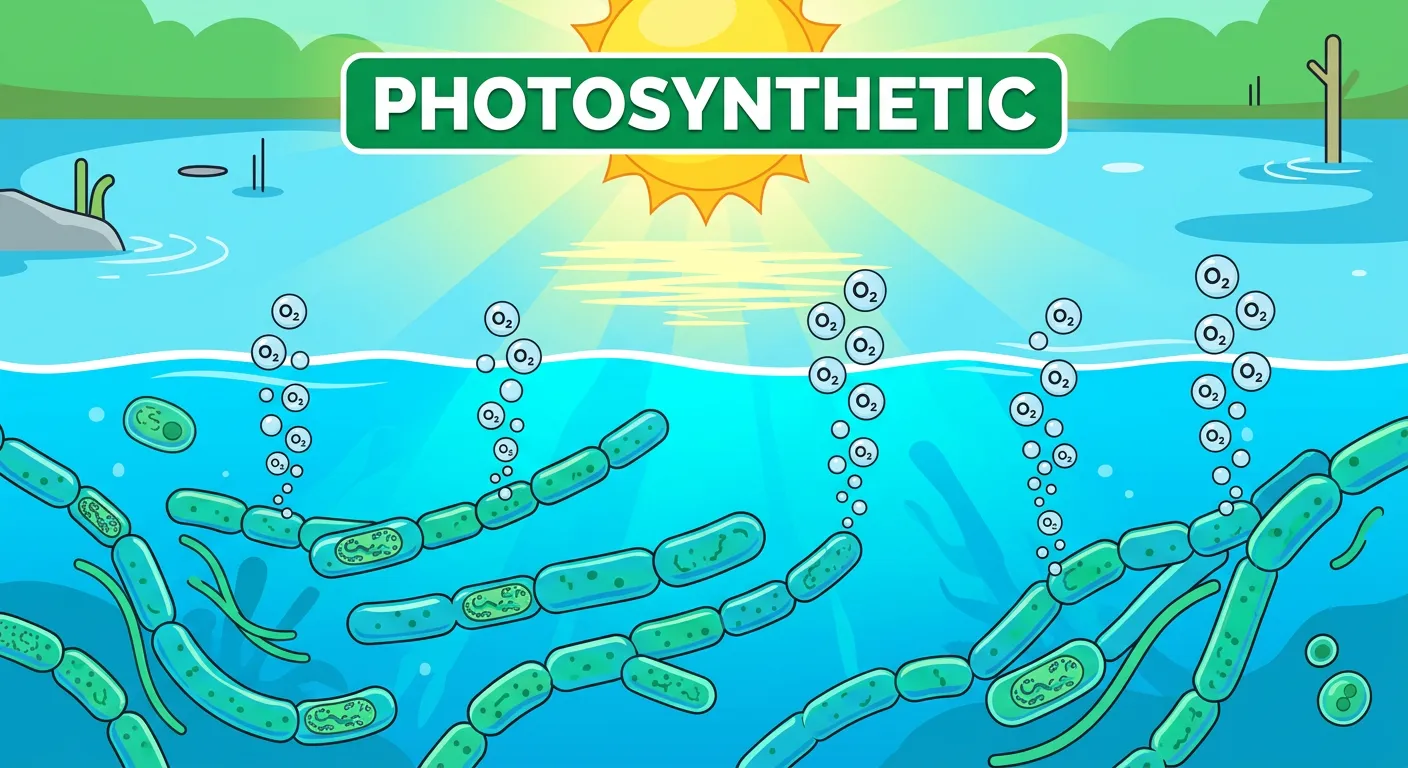
“Then we have Eubacteria, or 'true bacteria'. Some, like Cyanobacteria, are like tiny solar panels. They perform photosynthesis using chlorophyll, releasing oxygen just like plants. They are the reason we have an oxygen-rich atmosphere today. Truly, these tiny organisms are our planet's hidden heroes!”
Eubacteria, or 'true bacteria,' are characterized by the presence of a rigid cell wall made of peptidoglycan and, if motile, one or more flagella. This group is incredibly diverse, but for NEET, the Cyanobacteria (Blue-green algae) are the star players. Despite their name, they are prokaryotic Monerans, not plants. They were the first organisms in history to perform oxygenic photosynthesis, using Chlorophyll 'a'—the same primary pigment found in higher plants. This evolutionary breakthrough billions of years ago literally oxygenated the Earth's atmosphere, paving the way for aerobic life. Cyanobacteria can be unicellular, colonial, or filamentous, and are typically surrounded by a gelatinous or mucilaginous sheath that helps them retain moisture and float in aquatic environments.
A fascinating feature of certain filamentous Cyanobacteria like Nostoc and Anabaena is their ability to fix atmospheric nitrogen. They do this in specialized, thick-walled, non-photosynthetic cells called heterocysts. These cells create an anaerobic micro-environment necessary for the nitrogenase enzyme to function, even while the neighboring cells are producing oxygen through photosynthesis. Beyond the photosynthetic types, the Eubacteria group also includes chemosynthetic autotrophs. These remarkable organisms oxidize various inorganic substances like nitrates, nitrites, and ammonia to produce ATP. They play a monumental role in nutrient recycling—specifically the cycles of Nitrogen, Phosphorus, Iron, and Sulfur—by converting these elements into forms usable by other life forms. Finally, the vast majority of Eubacteria are heterotrophs. These act as essential decomposers that break down dead organic matter, maintaining the Earth's ecological balance. Some heterotrophs are useful to humans for making curd and antibiotics, while others are dangerous pathogens. The study of Eubacteria is thus a study of the world's most versatile biological tools.
Quick Revision Points
- Cyanobacteria possess Chlorophyll 'a' and perform oxygenic photosynthesis.
- Heterocysts are specialized cells in Nostoc and Anabaena for nitrogen fixation.
- Chemosynthetic bacteria play a great role in recycling nutrients like N, P, Fe, and S.
- Most Eubacteria are heterotrophic and act as important decomposers in nature.
- Cyanobacteria often form 'blooms' in polluted water bodies.
NEET Exam Angle
- Differentiate between oxygenic (Cyanobacteria) and anoxygenic photosynthesis (found in some other bacteria).
- Memorize the examples of nitrogen-fixing Cyanobacteria: Nostoc and Anabaena.
- Understand that Cyanobacteria are gram-negative prokaryotes, despite having chlorophyll like plants.
| Group | Mode of Nutrition | Key Feature |
|---|---|---|
| Cyanobacteria | Photoautotrophic | Oxygenic photosynthesis, Heterocysts |
| Chemosynthetic | Autotrophic | Use inorganic chemicals for energy |
| Heterotrophic | Decomposers/Parasitic | Most abundant, curd making, pathogens |
06Reproduction in Monera: Binary Fission and Genetic Recombination
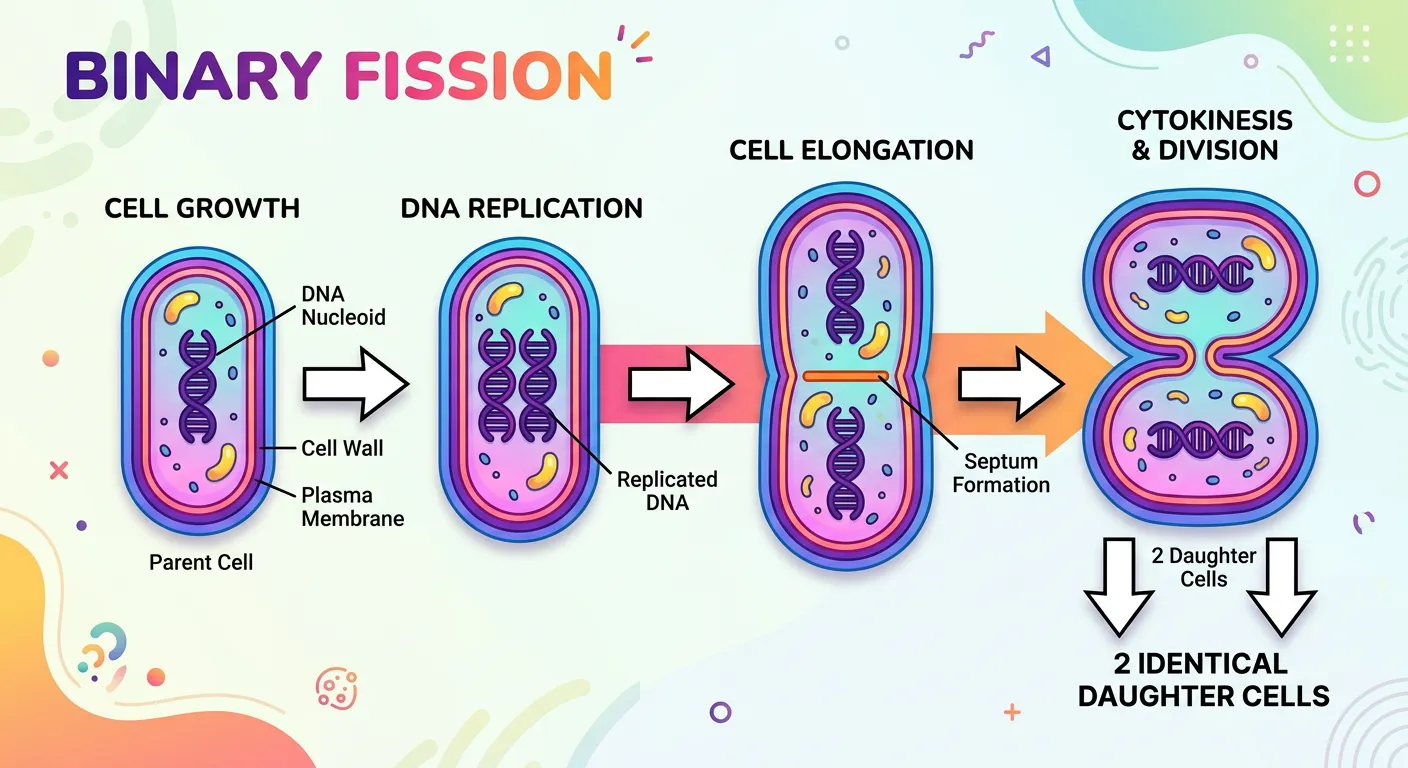
“How do they multiply? Through binary fission! It is like a super-fast cloning machine. One cell simply splits into two, then four, then eight in minutes. This explosive growth rate is why bacteria can colonize an entire petri dish before you finish your morning tea.”
Bacteria are biological machines designed for speed, and their primary method of reproduction reflects this efficiency. Under favorable conditions, bacteria reproduce asexually through binary fission. In this process, the single circular DNA molecule replicates starting at the 'ori' site, and the two copies move to opposite poles of the cell. The plasma membrane and cell wall then grow inward to form a septum, eventually dividing the parent cell into two genetically identical daughter cells. This process can happen with startling frequency; for instance, E. coli can divide every 20 minutes, leading to an exponential population explosion. However, when environmental conditions become unfavorable—such as during nutrient depletion or toxin accumulation—many bacteria produce thick-walled, highly resistant structures called endospores. Endospores are not a means of multiplication (one cell produces one spore), but a survival strategy. They contain dipicolinic acid and calcium, which stabilize the DNA and proteins, allowing the organism to endure boiling temperatures, radiation, and extreme desiccation for years.
While bacteria do not perform 'true' sexual reproduction involving meiosis and gamete fusion, they exhibit a primitive form of DNA transfer known as parasexuality or genetic recombination. This is crucial for their evolution and the rapid spread of antibiotic resistance. There are three main mechanisms: Transformation, Transduction, and Conjugation. Transformation involves the uptake of naked foreign DNA from the surrounding environment. Transduction is the transfer of bacterial DNA from one cell to another via a viral vector, specifically a bacteriophage. Conjugation is the direct transfer of DNA (often a plasmid) between two bacterial cells through a temporary bridge called a sex pilus. In conjugation, an F+ (donor) cell transfers genetic material to an F- (recipient) cell. This horizontal gene transfer is what allows 'superbugs' to evolve so quickly in clinical settings. For the NEET syllabus, understanding that these processes provide genetic variation without the complexity of eukaryotic sex is a fundamental concept that bridges classification with modern genetics and biotechnology.
Quick Revision Points
- Binary fission is the most common asexual reproduction method in favorable conditions.
- Endospores are 'survival pods' formed during unfavorable conditions, not for multiplication.
- Conjugation involves the transfer of DNA through a conjugation tube or sex pilus.
- Transformation was famously demonstrated by Griffith’s experiment with Streptococcus pneumoniae.
- Transduction requires a viral vector (bacteriophage) to move genetic material.
NEET Exam Angle
- Be careful with the statement 'bacteria reproduce sexually'; the correct term is 'genetic recombination' or 'parasexuality'.
- Remember that endospore formation is a 'survival' strategy, not a 'reproduction' strategy (number of cells doesn't increase).
- Understand the role of the F-plasmid (Fertility factor) in conjugation.
07Ecosystem Partners: Economic Significance and Pathogenic Impact
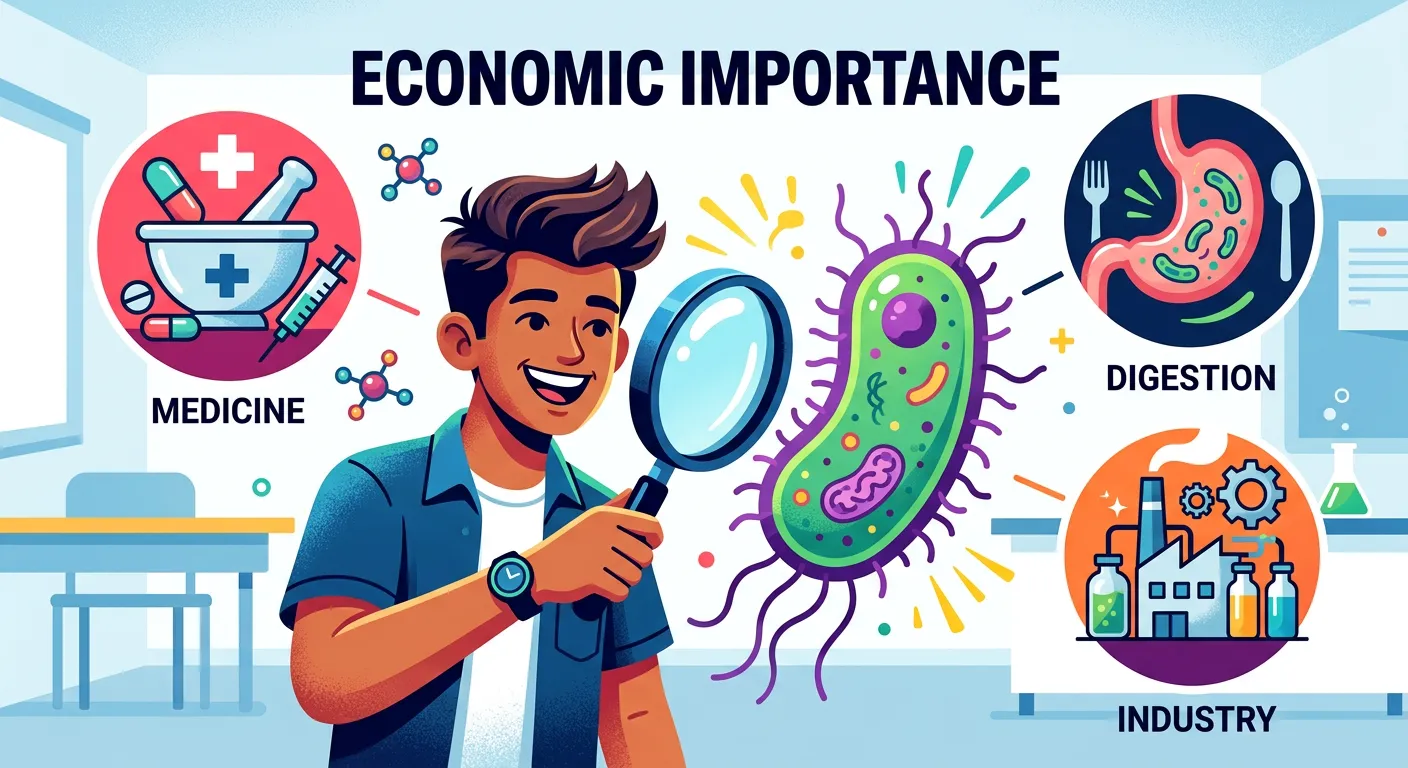
“To wrap up, Monerans aren't just pathogens. They help make our curd, fix nitrogen for crops, and recycle nutrients in nature. They are essential partners in our ecosystem. Keep these key features in mind for your NEET exam, and you'll be ready to ace any question!”
The impact of Monerans on human life and the global ecosystem is dual-natured, encompassing both life-sustaining benefits and devastating diseases. On the positive side, heterotrophic bacteria are the primary decomposers in nature. They break down complex organic matter into simpler minerals, ensuring the continuous recycling of nutrients like carbon and nitrogen. In the industrial world, we harness these microbes for various purposes: Lactobacillus converts milk into curd by producing lactic acid, Rhizobium forms a symbiotic relationship with legume roots to fix nitrogen, and various species of Streptomyces are the source of life-saving antibiotics like Streptomycin. Without these 'friendly' bacteria, our agriculture, medicine, and waste management systems would collapse. They are also being increasingly used in bioremediation to clean up oil spills and toxic waste, demonstrating their incredible metabolic versatility.
On the flip side, several Monerans are notorious pathogens that have shaped human history through epidemics. They cause significant diseases in humans, such as Cholera (Vibrio cholerae), Typhoid (Salmonella typhi), Tetanus (Clostridium tetani), and Tuberculosis (Mycobacterium tuberculosis). In the agricultural sector, they cause diseases like Citrus canker (Xanthomonas citri), which can wipe out entire harvests. A special mention must go to Mycoplasma—the smallest known living cells. They are unique because they completely lack a cell wall, making them naturally resistant to common antibiotics like penicillin that work by inhibiting cell wall synthesis. Mycoplasma can survive without oxygen and are pathogenic to both plants and animals, often causing atypical pneumonia in humans. Summing up Kingdom Monera for NEET requires a balanced view: they are both the essential architects of our environment and the formidable agents of disease. Mastery of this topic involves connecting their structural features (like the lack of a cell wall in Mycoplasma) to their clinical and ecological outcomes.
Quick Revision Points
- Helpful bacteria: Lactobacillus (curd), Rhizobium (N2 fixation), Streptomyces (antibiotics).
- Pathogenic bacteria cause diseases like Cholera, Typhoid, Tetanus, and Citrus canker.
- Mycoplasma: Smallest living cells, lack a cell wall, can survive without oxygen.
- Bacteria are the major decomposers, essential for mineral recycling in ecosystems.
- Antibiotic resistance is often spread via plasmid transfer in pathogenic populations.
NEET Exam Angle
- Mycoplasma is a 'favorite' for NEET examiners—focus on its lack of cell wall and its size.
- Match the disease to the causative bacterial agent (e.g., Citrus canker - Xanthomonas).
- Understand that most bacteria are heterotrophs and decomposers, which is their most common ecological role.
- Review the industrial applications of bacteria as they frequently appear in the 'Microbes in Human Welfare' chapter connection.
Recommended Reading
Explore related Biology topics to build deeper chapter connections for NEET.
- What is Living · Topic 1.1
- Kingdom Fungi · Topic 1.10
- Lichens · Topic 1.11
- Viruses and Viroids · Topic 1.12
- Algae · Topic 1.13
- Bryophytes · Topic 1.14
- Jump to Key Terms (Quick Revision)
- Review Common NEET Mistakes
- Solve NEET Practice MCQs
- Read Topic FAQs
- Practice NEET MCQs
- Solve NEET PYQs
📚 Key Terms
⚠️ Common NEET Mistakes
- 1Thinking Cyanobacteria are plants because they are called 'Blue-green algae'.
- 2Confusing endospore formation with a method of reproduction (it is for survival only).
- 3Assuming all bacteria have a cell wall (Mycoplasma is the notable exception).
- 4Believing that Monerans have 80S ribosomes like human cells.
- 5Mistaking the nucleoid for a membrane-bound nucleus.
📝 NEET PYQ & Practice Questions
Test your understanding of Kingdom Monera with NCERT-aligned sample questions.
Which of the following statements is correct regarding "Prokaryote" in the context of NEET Biology?
In NEET question papers, questions related to "Kingdom Monera" predominantly test:
Consider Peptidoglycan associated with Kingdom Monera. What is the primary characteristic expected in NEET MCQs?
Master Kingdom Monera with NeetQ AI Tutor
Practice 50+ topic-wise MCQs, previous 15 years NEET questions, and get step-by-step doubt resolution instantly.
❓ Frequently Asked Questions
What is the major difference between the cell walls of Archaebacteria and Eubacteria?
The cell walls of Eubacteria contain peptidoglycan (murein), whereas Archaebacteria lack peptidoglycan. Instead, Archaebacteria have a cell wall composed of complex polysaccharides and proteins, which, along with branched-chain lipids in their membrane, allows them to survive in extreme environments.
Why are Cyanobacteria classified under Monera and not Plantae?
Despite being photosynthetic and having Chlorophyll 'a', Cyanobacteria are prokaryotic. They lack a nuclear membrane, membrane-bound organelles (like chloroplasts), and have 70S ribosomes. These fundamental cellular characteristics place them in Kingdom Monera.
How do Methanogens survive in the gut of ruminants and what is their role there?
Methanogens are obligate anaerobes, meaning they thrive in oxygen-free environments like the rumen of cattle. Their role is to break down cellulose and produce methane gas (biogas) as a metabolic byproduct, which is later excreted or used as a fuel source.
What are heterocysts, and which specific Monerans possess them for nitrogen fixation?
Heterocysts are specialized, thick-walled, non-photosynthetic cells found in certain filamentous Cyanobacteria like Nostoc and Anabaena. They provide an anaerobic environment for the enzyme nitrogenase to convert atmospheric nitrogen into ammonia.
What is the function of the nucleoid in a bacterial cell compared to a eukaryotic nucleus?
The nucleoid is a region in the prokaryotic cytoplasm containing a single, circular, naked DNA molecule. It lacks a surrounding membrane and histone proteins. While it performs the same function as a nucleus (storing genetic info), it lacks the organizational complexity and compartmentalization of a eukaryotic nucleus.
Are all bacteria harmful to humans? Provide examples of beneficial Monerans.
No, the majority of bacteria are either harmless or beneficial. Examples include Lactobacillus (used to make curd), Rhizobium (fixes nitrogen for legumes), and various Streptomyces species (used to produce life-saving antibiotics).
Written By
NEET Content Strategist & Biology Expert
Sangita Kumari is a NEET educator and content strategist with over 6 years of experience teaching Biology, Chemistry, and Physics to Class 11 and 12 aspirants. She helps bridge the gap between traditional NCERT preparation and modern AI-powered learning. Her content is trusted by thousands of NEET aspirants across India.