🎬 Video Lesson Available
Watch the full 7-slide video lesson for Seed with AI teacher narration and visual explanations.
Seed — Master the anatomy of Monocot and Dicot seeds for NEET. Detailed breakdown of embryo, endosperm, and germination triggers for Class 11 Biology.
01The Evolutionary Marvel of Seeds: Nature's Survival Pods
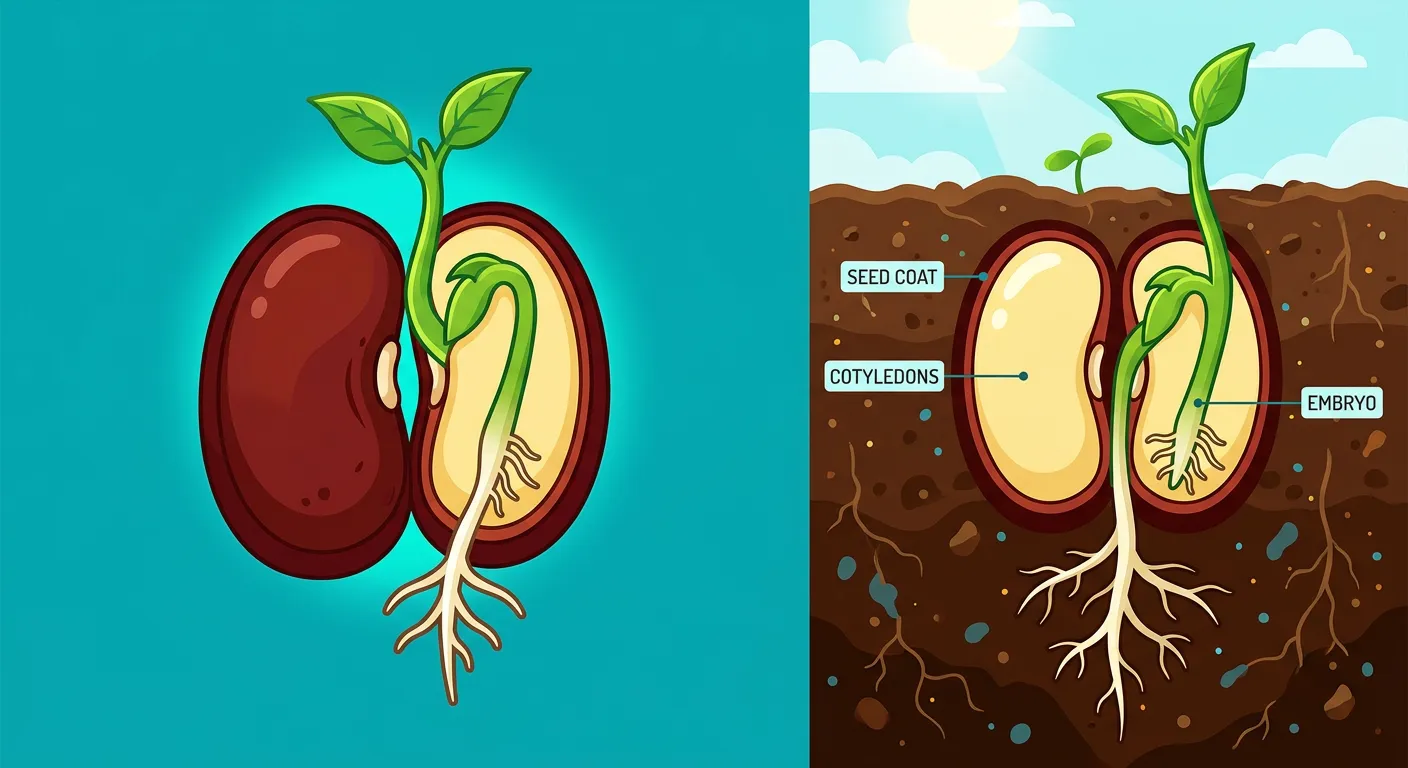
“Welcome to the magical world of seeds, the ultimate 'survival pods' of plants! Think of a seed as a tiny, packed suitcase containing a baby plant, a food supply, and a protective shell. It is nature’s way of saying, 'I am ready for the future!'”
In the grand timeline of plant evolution, the development of the seed represents a monumental leap forward. A seed is biologically defined as a fertilized, mature ovule that serves as the primary unit of reproduction in gymnosperms and angiosperms. For a NEET aspirant, it is crucial to view the seed not just as a plant part, but as a sophisticated biological package. Think of it as a miniaturized life-support system designed to protect the next generation of plants during their most vulnerable stage. This transition from a water-dependent reproductive cycle (seen in bryophytes) to the seed habit allowed plants to conquer diverse terrestrial habitats, from parched deserts to freezing tundras.
Every seed, regardless of its size or shape, is composed of three fundamental components: an embryo (the 'baby' plant), a supply of stored nutrients (endosperm or cotyledons), and a protective outer shell known as the seed coat. This structure ensures that the embryo remains viable until environmental conditions are optimal for growth. In your Class 12 syllabus, you will revisit this topic during the study of double fertilization, where the zygote develops into the embryo and the primary endosperm nucleus (PEN) develops into the nutrient-rich endosperm. Understanding these origins now will give you a significant advantage when tackling integrated questions in the medical entrance exam.
Seeds are also the champions of dispersal. Because they can remain dormant and withstand harsh conditions, they allow species to move across geographical boundaries through wind, water, or animal transport. This dispersal prevents the parent plant and the offspring from competing for the same resources like sunlight and soil minerals. In the following sections, we will break down the intricate anatomy that makes this survival possible, focusing on the specific details frequently tested in the NEET biology paper.
Quick Revision Points
- A seed is the end-product of sexual reproduction in flowering plants.
- It originates from the ovule post-fertilization.
- Core components include the seed coat, the embryo, and stored food reserves.
- Seeds allow for 'perennation,' helping plants survive unfavorable seasons.
NEET Exam Angle
- Integration: Be ready for questions connecting Class 11 seed morphology with Class 12 'Sexual Reproduction in Flowering Plants.'
- Ploidy Levels: Remember the embryo is diploid (2n), while the endosperm in angiosperms is typically triploid (3n).
- Evolutionary Context: The 'seed habit' is a prerequisite for the dominance of vascular plants on land.
02External Anatomy: Protective Seed Coats and the Hilum Gateway
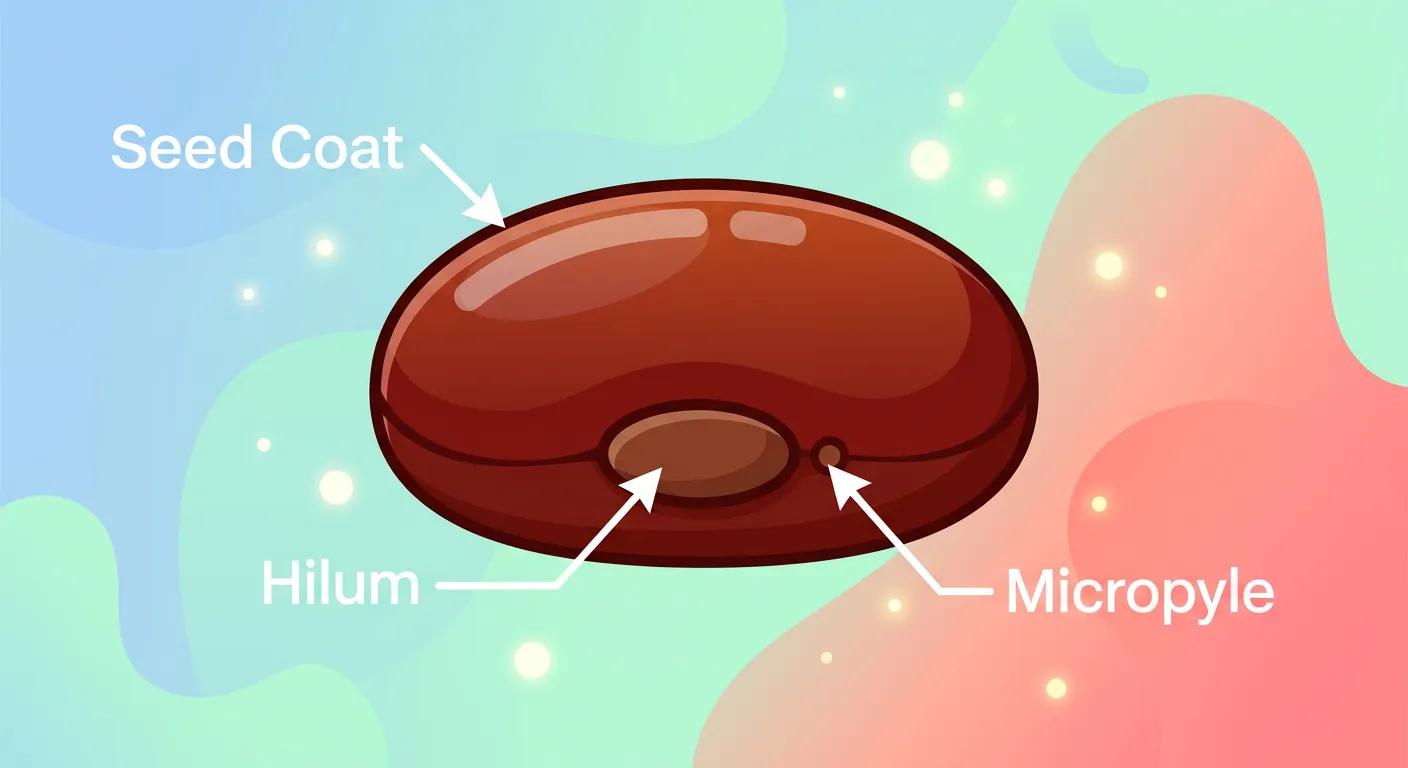
“The outer cover, the seed coat, is like a sturdy raincoat. It protects the delicate embryo from harsh weather. See that tiny dot? That’s the hilum, the 'belly button' where the seed was attached to the fruit. It’s the gateway for water to enter!”
The first thing you notice when examining a seed is its exterior, primarily the seed coat. This 'integumentary' derivative is the first line of defense against mechanical injury, pathogens, and desiccation. In most seeds, the seed coat is composed of two distinct layers: the outer, often tough and colorful layer called the testa, and the inner, thinner, more delicate layer known as the tegmen. This double-layering is particularly evident in dicot seeds like the pea or gram, where the coat must be peeled away after soaking to reveal the underlying structures.
On the surface of the seed coat, you will find a distinct scar called the hilum. The hilum marks the point where the developing seed was once attached to the fruit wall (pericarp) via a stalk called the funicle. It is essentially the plant version of a belly button. Just above or near the hilum is a tiny, microscopic pore known as the micropyle. While the micropyle's initial job was to facilitate the entry of the pollen tube during fertilization, its post-fertilization role is equally vital. It serves as the primary gateway for the entry of water and oxygen during the initial stages of germination, a process known as imbibition.
| Feature | Layer/Part | Primary Function |
|---|---|---|
| Testa | Outer Seed Coat | Heavy-duty protection against external environment. |
| Tegmen | Inner Seed Coat | Fine-tuned protection and moisture retention. |
| Hilum | Surface Scar | Site of previous attachment to the fruit stalk. |
| Micropyle | Tiny Pore | Entry point for water (imbibition) and O2 during germination. |
For NEET students, the micropyle is a high-yield term. You must remember that without a functional micropyle, the seed cannot absorb the water necessary to activate the enzymes required for growth. Furthermore, structural variations in seed coats—such as the winged seeds of Cinchona or the hairy seeds of Cotton—are specific adaptations for dispersal that you might encounter in 'Match the Column' type questions.
Quick Revision Points
- Seed coat layers: Outer Testa (thick) and Inner Tegmen (thin).
- Hilum: The attachment scar on the seed coat.
- Micropyle: A small opening for air and water exchange.
- Imbibition: The physical process where the seed swells due to water entry through the micropyle.
NEET Exam Angle
- Identification: Be prepared to identify the hilum and micropyle in a diagram of a bean seed.
- Physiology Link: Connect the micropyle's function to the 'Plant Water Relations' chapter regarding water potential and swelling.
- Coat Origin: Recall that the integuments of the ovule harden to become the seed coat.
03Monocots vs. Dicots: Comparing Cotyledonous Arrangements
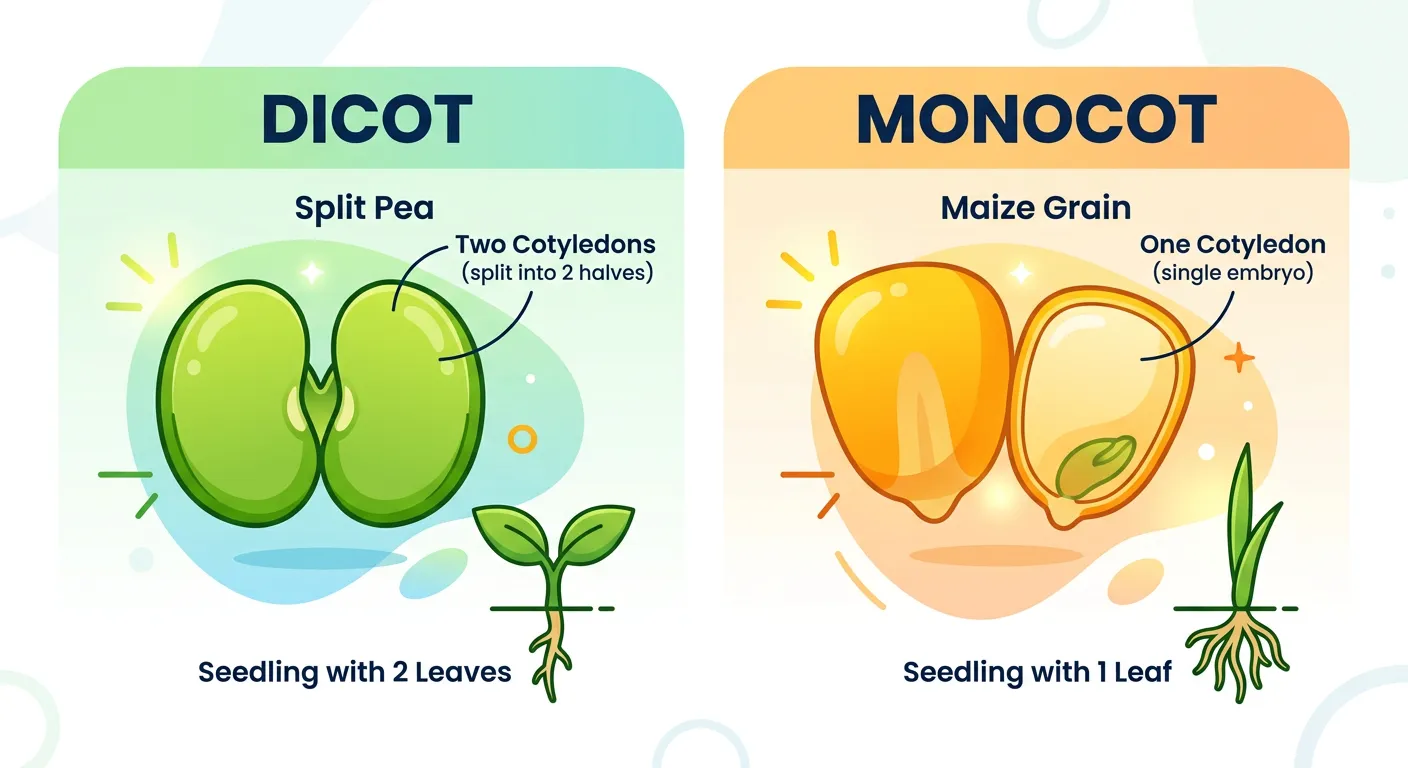
“Are all seeds the same? Definitely not! We divide them into Monocots and Dicots. Dicot seeds like beans have two chunky cotyledons, while Monocots like maize have just one. It’s like having a backpack with one big compartment versus two smaller, organized ones.”
One of the most fundamental classifications in botany is based on the number of embryonic leaves, or cotyledons, present within the seed. This distinction divides flowering plants into two major groups: Dicots and Monocots. In Dicotyledonous seeds (like gram, pea, and beans), the embryo typically contains two cotyledons. These cotyledons are often fleshy and thick because they act as the primary storage organ for food reserves. Because the food is stored in the cotyledons, the endosperm is often consumed during development, resulting in non-endospermous or non-albuminous seeds.
Conversely, Monocotyledonous seeds (like maize, wheat, and rice) possess only a single cotyledon. In these plants, the cotyledon is generally thin and specialized for nutrient absorption rather than storage. Instead, the bulk of the food is stored in a separate tissue called the endosperm. These are referred to as endospermous or albuminous seeds. However, nature always has exceptions! A classic NEET favorite is the Castor seed, which is a dicot but remarkably retains its endosperm, making it endospermous. Orchids, on the other hand, are monocots that produce non-endospermous seeds. These exceptions are the 'trap' questions often found in competitive exams.
| Feature | Dicot Seed (General) | Monocot Seed (General) |
|---|---|---|
| Cotyledons | Two | One (Scutellum in grasses) |
| Endosperm | Usually absent (Non-albuminous) | Usually present (Albuminous) |
| Examples | Pea, Gram, Bean | Maize, Wheat, Rice |
| Exception | Castor (is endospermous) | Orchids (are non-endospermous) |
When studying for NEET, pay close attention to the term 'Albuminous.' This refers to the presence of the endosperm, which is rich in proteins (like albumin) and starches. The layout of these tissues dictates how the plant will grow during its first few days of life, before it can perform photosynthesis. Mastery of these categories is essential for correctly identifying plant families in later chapters.
Quick Revision Points
- Dicots: Two cotyledons; food usually in cotyledons (e.g., Pea).
- Monocots: One cotyledon; food usually in endosperm (e.g., Maize).
- Albuminous: Seeds with persistent endosperm.
- Non-albuminous: Seeds where the endosperm is consumed during embryo development.
NEET Exam Angle
- High-Yield Exceptions: Memorize Castor (Endospermous Dicot) and Orchid (Non-endospermous Monocot).
- Terminology: Understand that 'Albuminous' = 'Endospermous.'
- Taxonomy Link: Use seed structure to distinguish between Fabaceae (non-albuminous dicots) and Poaceae (albuminous monocots).
04The Embryonal Axis: Decoding the Plumule and Radicle
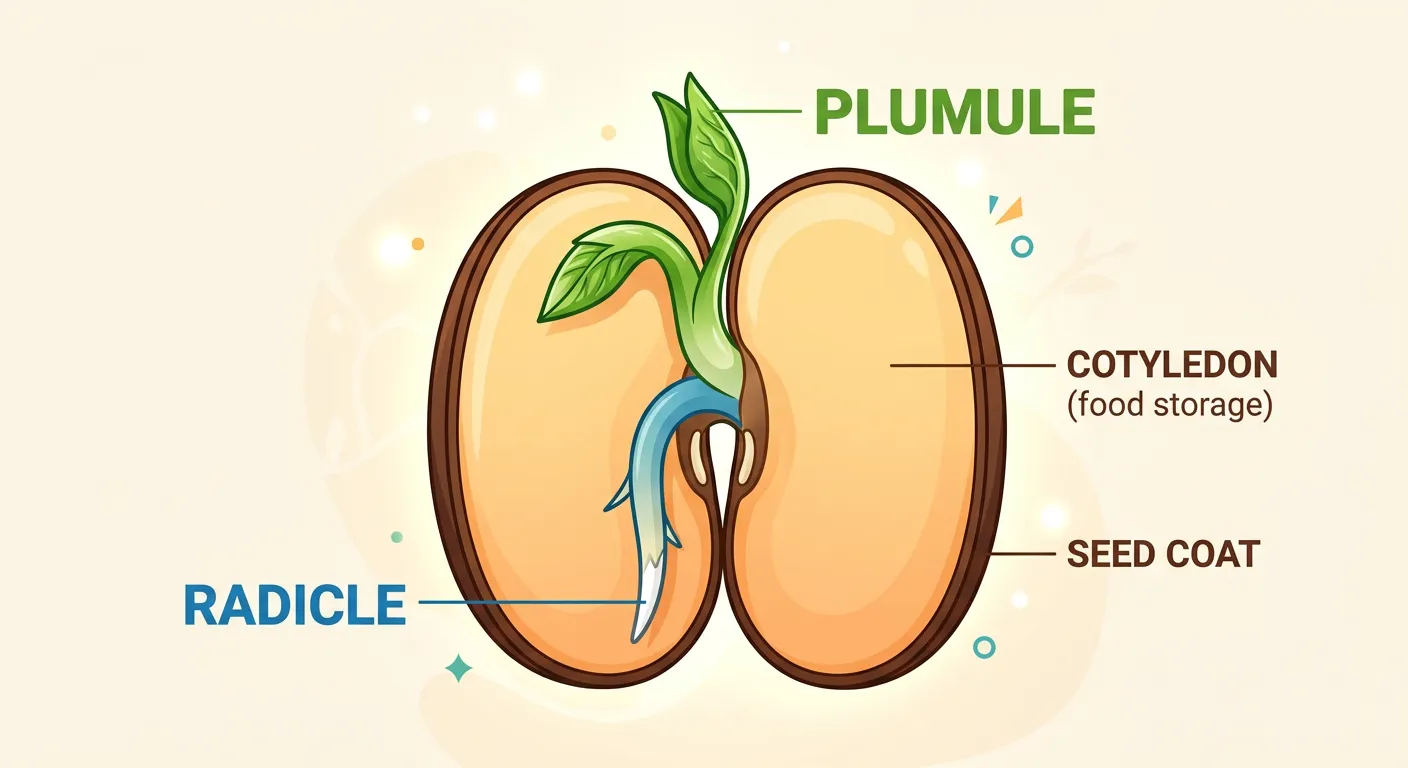
“Inside the seed lies the embryo—the superstar of the show! It has two main parts: the Plumule, which grows into the shoot, and the Radicle, which dives deep to become the root. It’s like the plant’s internal GPS, knowing exactly where to go.”
At the heart of every seed lies the embryo, which is oriented along a central 'pole' known as the embryonal axis. This axis is the blueprint for the entire plant body. The portions of the axis are defined by their position relative to the cotyledons. The part of the embryonal axis above the level of the cotyledons is the epicotyl, which terminates in the plumule. The plumule is the embryonic shoot, containing the precursor cells for the stem and leaves. Conversely, the cylindrical portion below the level of the cotyledons is the hypocotyl, which terminates at its lower end in the radicle or root tip.
The radicle is always the first part to emerge during germination because establishing a water source is the seedling's top priority. In most dicots, the radicle is covered by a protective root cap. The embryonal axis is a masterclass in biological efficiency; even while the seed is dormant, these regions are primed with meristematic tissue, ready to divide rapidly the moment the seed 'wakes up.' In your studies of root and stem morphology, you will learn that the primary root always develops directly from the elongation of the radicle, while the primary shoot develops from the plumule.
| Embryo Part | Location on Axis | Adult Structure |
|---|---|---|
| Plumule | Apex of Epicotyl | Shoot System (Stem/Leaves) |
| Radicle | Base of Hypocotyl | Primary Root System |
| Epicotyl | Above Cotyledons | Upper Stem Segment |
| Hypocotyl | Below Cotyledons | Transition Zone/Lower Stem |
It is vital for NEET candidates to distinguish between these terms clearly. Many students confuse 'epicotyl' with 'plumule.' Remember: the epicotyl is the region or segment of the axis, whereas the plumule is the actual tip that becomes the shoot. This distinction is often the focal point of tricky multiple-choice questions regarding the 'regions of the embryo.'
Quick Revision Points
- Embryonal axis: The main body of the embryo.
- Plumule: Develops into the shoot system.
- Radicle: Develops into the root system.
- Epicotyl: The region of the axis between the plumule and cotyledonary node.
- Hypocotyl: The region between the radicle and cotyledonary node.
NEET Exam Angle
- Developmental Biology: Know that the radicle emerges first to ensure moisture absorption.
- Morphology Connection: The radicle becomes the 'Tap Root' in most dicots.
- Diagram Practice: Be able to label the epicotyl and hypocotyl accurately on a bean seed diagram.
05Endosperm and the Scutellum: Specialized Nutrition in Monocots
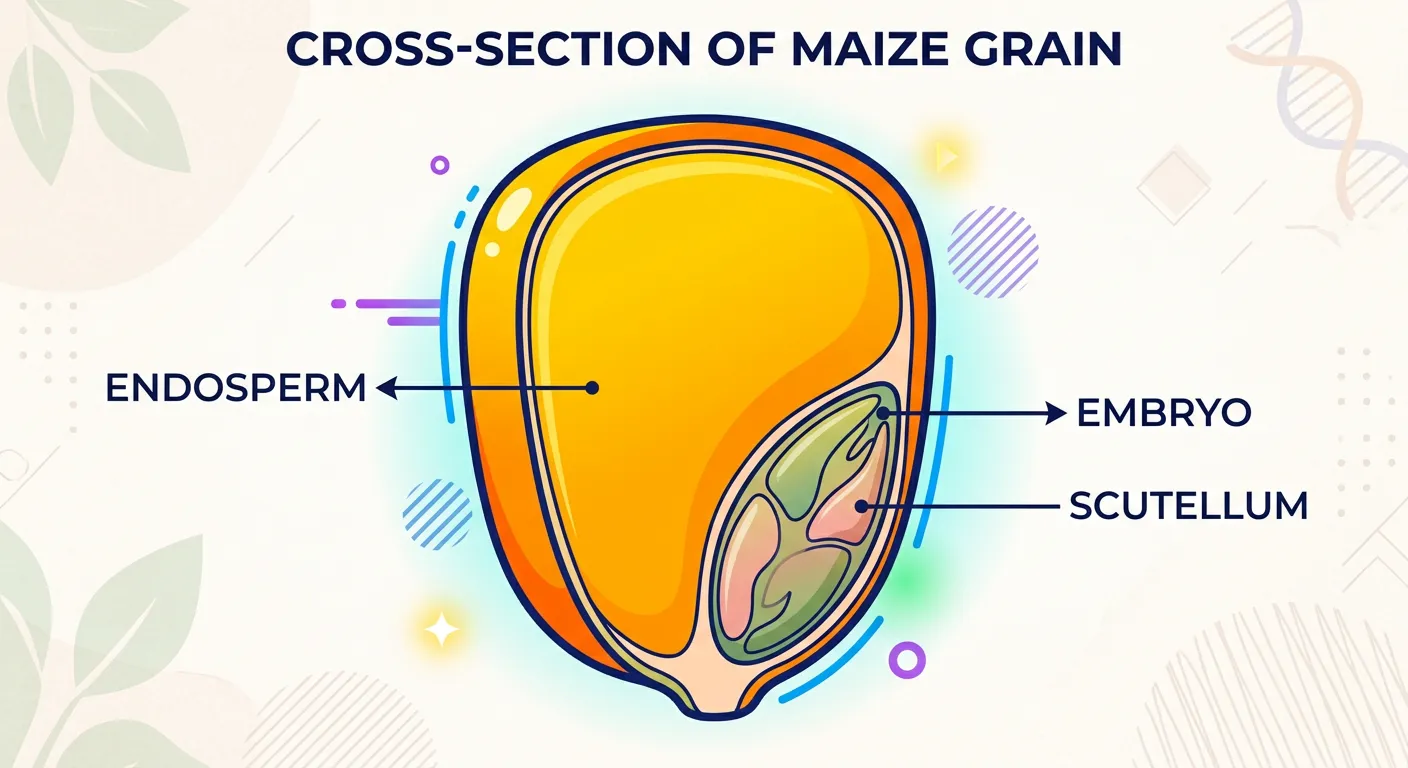
“In Monocots like wheat or corn, the endosperm acts as a massive 'snack bar' filled with starch. It provides energy to the growing seedling. The scutellum is the special shield that absorbs these nutrients. Think of it as a personal delivery system for the baby plant!”
Monocot seeds, particularly those of the grass family (Poaceae) like maize, exhibit a highly specialized and unique anatomy compared to dicots. In these seeds, the seed coat is usually fused with the fruit wall (forming a grain). The most dominant feature is the massive, bulky endosperm, which stores starch to fuel the early growth of the seedling. Surrounding the endosperm is a protein-rich layer called the aleurone layer. This layer is of immense interest to NEET examiners because of its ploidy; since it is part of the endosperm in angiosperms, the aleurone layer is triploid (3n).
The embryo in a monocot is situated in a small notch at one end of the endosperm. Instead of two fleshy cotyledons, it has one large, shield-shaped cotyledon known as the scutellum. The scutellum’s primary role is not to store food, but to act as a bridge, secreting enzymes into the endosperm to break down starch and then absorbing the resulting nutrients for the growing embryo. Additionally, the plumule and radicle in monocots are enclosed in protective sheaths that are absent in dicots: the coleoptile (protecting the plumule) and the coleorhiza (protecting the radicle).
| Structure | Description/Function | Ploidy |
|---|---|---|
| Aleurone Layer | Outer protein layer of endosperm; secretes enzymes. | 3n |
| Scutellum | Shield-shaped single cotyledon; absorbs nutrients. | 2n |
| Coleoptile | Protective sheath covering the embryonic shoot tip. | 2n |
| Coleorhiza | Protective sheath covering the embryonic root tip. | 2n |
For the NEET exam, you must be able to visualize the maize grain cross-section. The spatial relationship between the scutellum, the endosperm, and the protective sheaths is a perennial favorite for 'Label the Diagram' questions. A useful mnemonic for the sheaths: Coleo-Rhiza (R for Root/Radicle) and Coleo-Ptile (P for Plumule).
Quick Revision Points
- Aleurone layer: Proteinaceous outermost part of the endosperm.
- Scutellum: The specialized monocot cotyledon.
- Coleoptile: The 'helmet' for the plumule.
- Coleorhiza: The 'sock' for the radicle.
NEET Exam Angle
- Ploidy Mastery: Remember the Aleurone layer is 3n, while the Scutellum and Coleoptile are 2n.
- Function: The Scutellum is for nutrient transfer, not just storage.
- Taxonomy: These features (Coleoptile/Coleorhiza) are diagnostic for the family Poaceae.
06Seed Dormancy and Germination: Breaking the Sleep Cycle
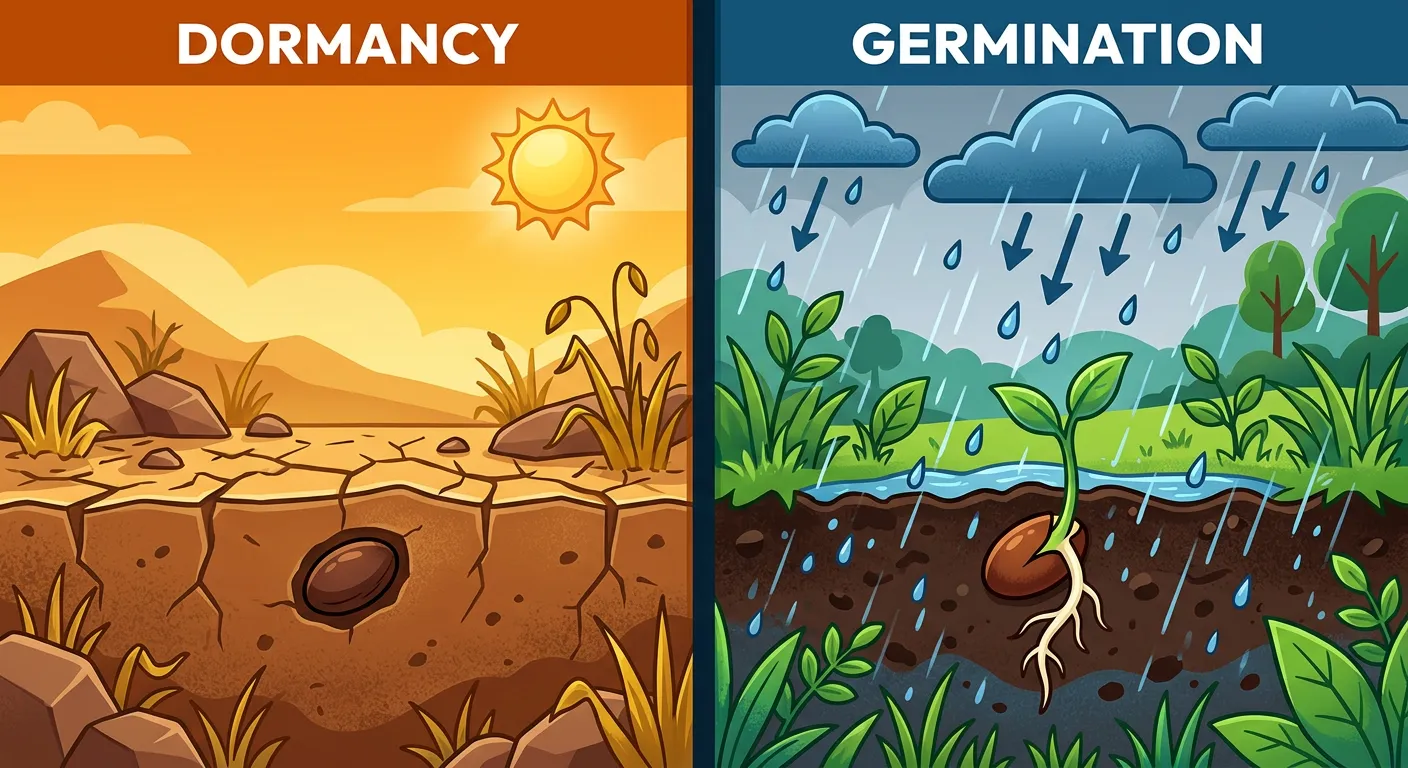
“Why don't seeds sprout in the pantry? Because they are in 'dormancy'—a deep, protective sleep. They wait for the perfect moment: enough water, oxygen, and warmth. Once those conditions hit, the seed wakes up, breaks its shell, and begins its journey toward the sun!”
A seed is not a dead object; it is a living organism in a state of 'suspended animation' known as dormancy. Dormancy is a physiological state where the embryo's metabolic activity is reduced to a minimum. This is a crucial survival strategy that prevents seeds from sprouting in the middle of a drought or a frozen winter. Breaking this dormancy requires specific environmental triggers, primarily the availability of water (moisture), oxygen for aerobic respiration, and a suitable temperature. Without these, the seed remains 'asleep' even if it is technically viable.
When conditions become favorable, the process of germination begins. The first physical sign is the uptake of water via the micropyle (imbibition), which causes the seed to swell and the seed coat to rupture. This hydration activates internal enzymes like amylase and protease. Amylase breaks down the stored starch in the endosperm or cotyledons into simple sugars, providing the energy required for cellular division in the plumule and radicle. At the hormonal level, this shift is governed by a balance between Abscisic Acid (ABA), which maintains dormancy, and Gibberellins (GA), which promote germination and growth.
| Phase | Main Event | Key Regulator/Factor |
|---|---|---|
| Dormancy | Metabolic arrest | Abscisic Acid (ABA) |
| Imbibition | Physical water uptake | Micropyle / Water Potential |
| Activation | Enzyme production | Gibberellins (GA) |
| Emergence | Radicle breaks the coat | Hydrostatic Pressure |
For NEET, it is important to link seed germination with 'Plant Growth and Development.' You should understand that the transition from a 'sink' (stored food) to a 'source' (photosynthesizing leaves) is the ultimate goal of germination. Factors like light (photoblastism) also play a role in some species, though moisture and temperature remain the universal requirements for most crop plants.
Quick Revision Points
- Dormancy: A period of inactive growth and low metabolism.
- Triggers: Water, Oxygen, and Optimum Temperature.
- GA (Gibberellic Acid): The hormone that breaks dormancy.
- ABA (Abscisic Acid): The hormone that promotes dormancy.
NEET Exam Angle
- PGR Link: Questions often ask which hormone opposes ABA in seed germination (Answer: Gibberellins).
- Metabolism: Understand that the first respiration in a germinating seed is often anaerobic before the coat breaks, then becomes aerobic.
- Sequence: Imbibition -> Enzyme activation -> Radicle emergence -> Plumule emergence.
07Conclusion: Seed Anatomy as a Foundation for NEET Success

“From a tiny speck to a towering tree! Understanding the seed structure is vital for your NEET exams. Remember, every seed is a story of persistence. Keep studying, keep growing, and you’ll reach the top. See you in the next lecture, future doctors!”
Mastering the topic of seed structure is a prerequisite for understanding the broader concepts of plant life cycles and agriculture. From the protective testa to the specialized scutellum, every part of the seed has a functional significance that has been honed by millions of years of evolution. For a NEET aspirant, the key to success lies in the ability to differentiate between the general rules and the specific exceptions. You must be comfortable identifying structures in both dicot (e.g., Bean) and monocot (e.g., Maize) diagrams, as these are frequent visitors in the biology section of the entrance exam.
As you conclude this topic, review the high-yield terms one last time. Ensure you can explain why the endosperm is triploid, how the micropyle functions as more than just a 'hole,' and why the castor seed is a botanical anomaly. This chapter provides the bridge between 'Morphology of Flowering Plants' and 'Plant Growth and Development.' A clear grasp of how a seed is built and how it functions will make the more complex physiological processes you study later much easier to digest.
| Term | Essential Fact for NEET |
|---|---|
| Non-albuminous | Endosperm used up (Pea, Groundnut, Beans). |
| Albuminous | Endosperm remains (Maize, Barley, Castor, Coconut). |
| Perisperm | Persistent nucellus in some seeds like Black Pepper and Beet. |
| Seed Viability | The period for which a seed retains the power to germinate. |
Remember, your preparation for NEET is much like the life of a seed. It requires a solid foundation (conceptual clarity), the right environment (focused study), and the internal drive to break through the shell of difficult topics. Keep practicing diagrams, keep reviewing the exceptions, and you will find that plant morphology becomes one of your strongest sections on exam day. See you in the next module where we explore the fascinating world of fruits!
Quick Revision Points
- Review structural differences between monocot and dicot seeds.
- Master the diagrams of maize and bean seeds.
- Recall the specific examples of albuminous and non-albuminous seeds.
- Note that perisperm (found in Black Pepper) is different from endosperm.
NEET Exam Angle
- Diagram Identification: Always practice labeling the Maize grain and the Bean embryo.
- Ploidy Summary: Zygote (2n), Endosperm (3n), Perisperm (2n), Seed Coat (2n).
- Comparison Questions: Be ready to compare the functions of cotyledons in dicots vs. the scutellum in monocots.
Recommended Reading
Explore related Biology topics to build deeper chapter connections for NEET.
- Morphology and Modifications · Topic 2.1
- Families · Topic 2.10
- Animal Tissues · Topic 2.11
- Frog Morphology · Topic 2.12
- Digestive System · Topic 2.13
- Circulatory System · Topic 2.14
- Jump to Key Terms (Quick Revision)
- Review Common NEET Mistakes
- Solve NEET Practice MCQs
- Read Topic FAQs
- Practice NEET MCQs
- Solve NEET PYQs
📚 Key Terms
⚠️ Common NEET Mistakes
- 1Confusing the ploidy of the aleurone layer (it is 3n, just like the endosperm).
- 2Switching the functions of the coleoptile (shoot) and coleorhiza (root). Remember: Rhiza = Root.
- 3Assuming all dicots are non-endospermous; always remember the exception of Castor.
- 4Mistaking the hilum for the micropyle in diagrams (the hilum is the scar, the micropyle is the small pore).
- 5Believing that the scutellum stores food in maize; its role is primarily nutrient absorption from the endosperm.
📝 NEET PYQ & Practice Questions
Test your understanding of Seed with NCERT-aligned sample questions.
Which of the following statements is correct regarding "Scutellum" in the context of NEET Biology?
In NEET question papers, questions related to "Seed" predominantly test:
Consider Plumule associated with Seed. What is the primary characteristic expected in NEET MCQs?
Master Seed with NeetQ AI Tutor
Practice 50+ topic-wise MCQs, previous 15 years NEET questions, and get step-by-step doubt resolution instantly.
❓ Frequently Asked Questions
What is the specific function of the scutellum in a maize seed?
In maize (a monocot), the scutellum is the single, shield-shaped cotyledon. Its primary function is to absorb nutrients from the endosperm and transfer them to the growing embryo during germination. It secretes enzymes that break down the stored starch in the endosperm into glucose.
How does a non-endospermous seed differ from an endospermous seed in terms of nutrient storage?
In endospermous (albuminous) seeds like maize or castor, nutrients are stored in a specialized tissue called the endosperm. In non-endospermous (non-albuminous) seeds like peas or beans, the endosperm is consumed during development, and the nutrients are instead stored in the thick, fleshy cotyledons.
What role does the micropyle play during the process of seed germination?
During germination, the micropyle acts as a critical pore for the entry of water (imbibition) and oxygen. This water entry activates the dormant enzymes required for metabolic processes, and the oxygen supports aerobic respiration for the embryo's growth.
Why are some seeds, like castor, considered endospermous despite being dicots?
While most dicots consume their endosperm during development, Castor is an exception where the endosperm persists as the primary food storage tissue. Such seeds are termed 'endospermous dicots,' and they are high-yield examples for NEET.
What are the protective sheaths of the plumule and radicle in monocot seeds called?
In monocot seeds like maize, the plumule is enclosed in a protective sheath called the coleoptile, while the radicle is enclosed in a sheath called the coleorhiza. These protect the delicate tissues as they push through the soil.
Which factors are essential to break seed dormancy in most temperate plants?
Most seeds require three essential environmental factors to break dormancy: adequate moisture (water), a supply of oxygen, and an optimum temperature (warmth). Some seeds may also require light or a period of cold (stratification).
Written By
NEET Content Strategist & Biology Expert
Sangita Kumari is a NEET educator and content strategist with over 6 years of experience teaching Biology, Chemistry, and Physics to Class 11 and 12 aspirants. She helps bridge the gap between traditional NCERT preparation and modern AI-powered learning. Her content is trusted by thousands of NEET aspirants across India.