🎬 Video Lesson Available
Watch the full 7-slide video lesson for Root with AI teacher narration and visual explanations.
Root — Master Root Anatomy for NEET. Detailed guide on Tap & Fibrous systems, root regions, internal tissues, and adaptive modifications with expert insights.
01The Origin of the Plant Axis: Radicle and Primary Root Development
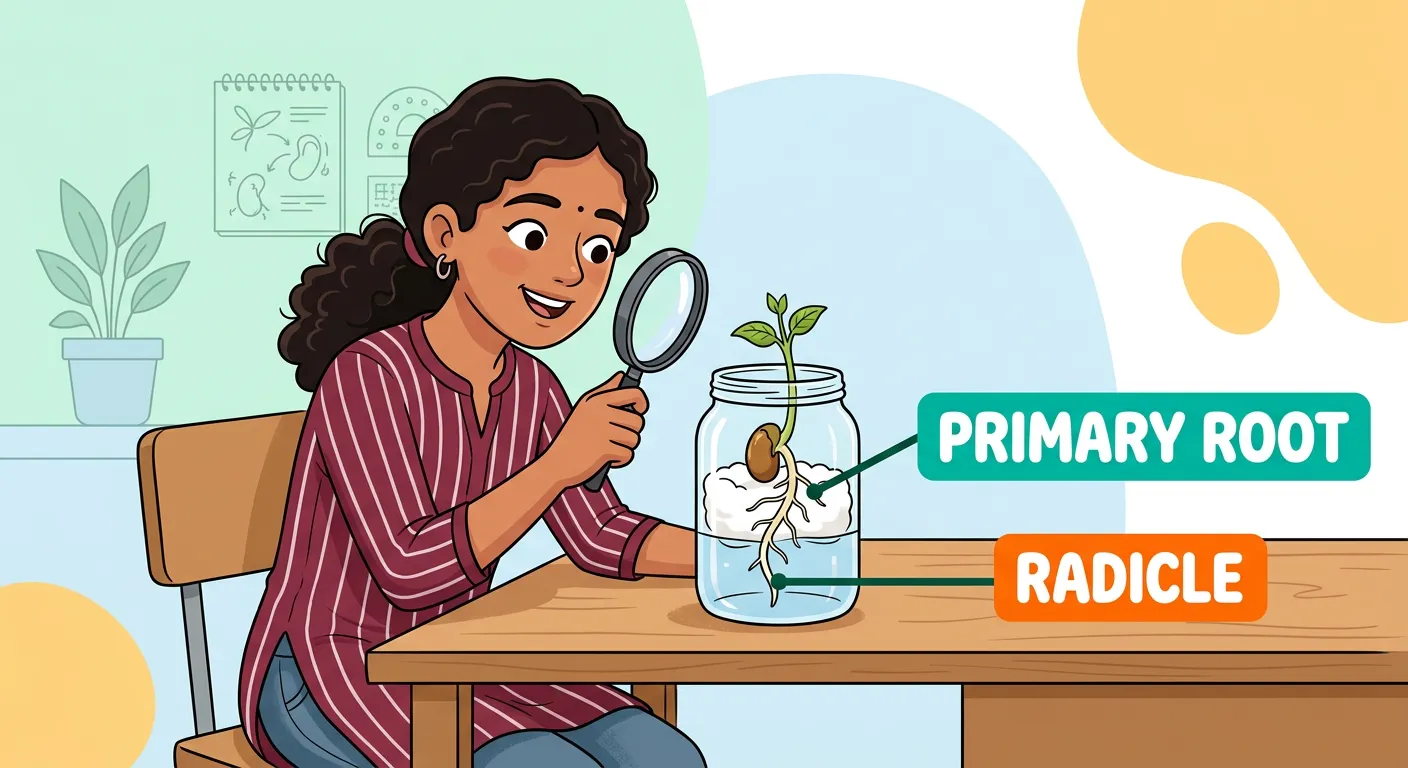
“Welcome, NEET warriors! Imagine the radicle as the pioneer of the plant world. It emerges from the seed, diving deep into the soil to anchor the future giant. In biology, we call this the primary root. It's the foundation—the very first step to success!”
When a seed begins its journey toward becoming a mature plant, the very first sign of biological activity and life is the emergence of the radicle. This embryonic structure is far more than just a random growth; it is the genetically programmed pioneer that establishes the plant’s entire subterranean existence. In the vast majority of dicotyledonous plants, the direct elongation of the radicle leads to the permanent formation of the primary root. This structure serves as the physiological anchor of the plant, setting a firm foundation for all subsequent vegetative development. As this primary axis pushes through the soil particles, it exhibits two fundamental tropisms: positive geotropism (growing downward towards gravity) and negative phototropism (growing away from any light source). These precise directional responses, governed by growth hormones like auxins, ensure that the root system efficiently finds the moisture and essential minerals necessary for survival.
Establishing this primary axis is a critical developmental transition for the seedling. The radicle must transform from a dormant, protected embryonic part into a dynamic, rapidly growing tissue. This process involves a significant shift in water potential, cellular respiration rates, and overall metabolic activity. The primary root doesn't just hold the plant in place; it becomes the central highway for nutrient transport and water conduction. For NEET aspirants, it is essential to distinguish that while the radicle is the embryonic origin, the primary root is the first true organ of the vegetative plant body. It represents the plant's initial and most vital investment in its immediate environment, securing a foothold in the substrate before the shoot system even begins its arduous upward climb toward the sun. Without this successful establishment, the plant would fail to thrive, as it lacks the hydraulic pressure needed to expand its leaves and perform photosynthesis.
Quick Revision Points
- The radicle is the first embryonic part to emerge during seed germination.
- Direct elongation of the radicle forms the primary root specifically in dicots.
- Roots exhibit positive geotropism and negative phototropism to navigate soil depths.
- The primary root acts as the initial physiological anchor and the primary site for nutrient absorption.
- Root development is closely linked to water potential gradients and soil moisture availability.
NEET Exam Angle
- Questions often ask about the embryonic origin of the root; always remember it's the radicle.
- Contrast the 'direct elongation' in dicots with the 'short-lived' nature in monocots.
- Understand 'Tropisms'—NEET frequently tests directional growth terminology in conceptual MCQ formats.
02The Tap Root System: Structural Architecture in Dicotyledonous Plants
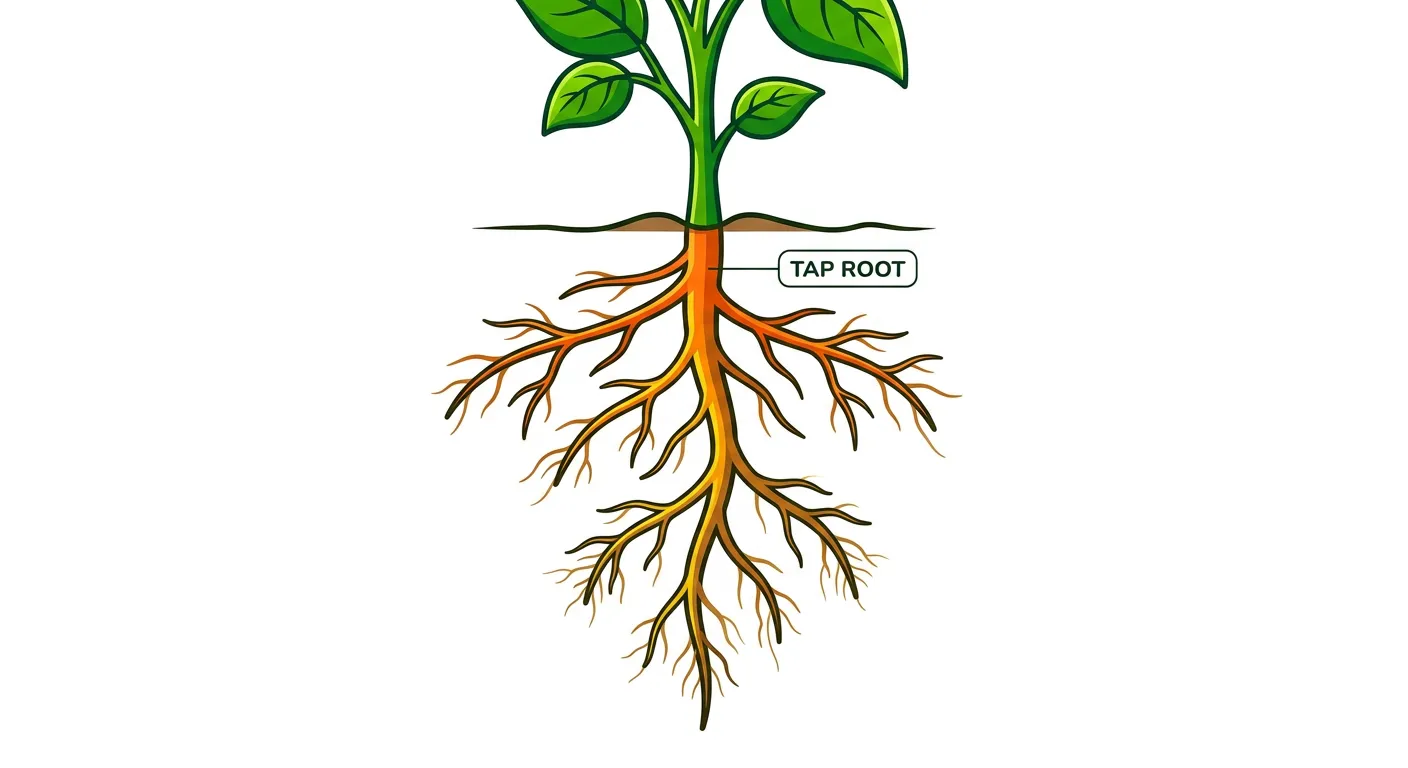
“Think of the Tap Root system like a strong, central pillar. Found in dicots like mustard, the primary root grows directly from the radicle. It’s like a deep-set foundation that doesn’t budge, perfect for plants that need to stand tall and firm in the soil.”
The Tap Root system is the definitive hallmark of dicotyledonous plants, with common examples being Mustard (Brassica campestris) and Gram. In this structural architecture, the primary root persists throughout the entire life of the plant, growing thick, lignified, and deep into the Earth's crust. It acts like a central pillar or a main structural mast from which secondary and tertiary roots emerge in a specific pattern known as acropetal succession-cymose-racemose-neet-biology-class-11)-cymose-racemose-neet-biology-class-11)-cymose-racemose-neet-biology-class-11)-cymose-racemose-neet-biology-class-11)-cymose-racemose-neet-biology-class-11)-cymose-racemose-neet-biology-class-11)-cymose-racemose-neet-biology-class-11)-cymose-racemose-neet-biology-class-11)-cymose-racemose-neet-biology-class-11)-cymose-racemose-neet-biology-class-11)-cymose-racemose-neet-biology-class-11)-cymose-racemose-neet-biology-class-11)-cymose-racemose-neet-biology-class-11)-cymose-racemose-neet-biology-class-11)-cymose-racemose-neet-biology-class-11)-cymose-racemose-neet-biology-class-11)-cymose-racemose-neet-biology-class-11)-cymose-racemose-neet-biology-class-11)-cymose-racemose-neet-biology-class-11)-cymose-racemose-neet-biology-class-11)-cymose-racemose-neet-biology-class-11)-cymose-racemose-neet-biology-class-11)-cymose-racemose-neet-biology-class-11)-cymose-racemose-neet-biology-class-11)-cymose-racemose-neet-biology-class-11)-cymose-racemose-neet-biology-class-11)-cymose-racemose-neet-biology-class-11)-cymose-racemose-neet-biology-class-11)-cymose-racemose-neet-biology-class-11). In this arrangement, the younger, shorter roots are located near the growing tip, while the older, longer roots are found near the base of the stem. This hierarchical branching creates a massive, three-dimensional surface area for absorption while providing superior mechanical stability against environmental forces like wind and rain.
From an evolutionary perspective, the ability to penetrate deep into the lower soil layers allows these plants to access water tables that surface-level roots simply cannot reach. This makes tap-rooted plants incredibly resilient during prolonged dry spells or droughts. When studying for NEET, visualize the taproot as a 'main line' utility with various 'branch lines' or tributaries. The classification into primary, secondary, and tertiary is strictly based on the order of emergence and branching level. The primary root is the direct descendant of the radicle, the secondary roots are the first-order branches of the primary, and the tertiary roots branch off from the secondary. This system is not just about vertical length; it is about the total volume of soil the plant can tap into for nutrients. Dicots use this robust system to support their often larger, heavier, and more complex shoot systems, ensuring the plant remains upright even as its canopy expands.
| Root Type | Origin | Persistence | Example |
|---|---|---|---|
| Primary Root | Direct Radicle Elongation | Long-lived (in Dicots) | Mustard |
| Secondary Root | Lateral branch of Primary | Variable | Sunflower |
| Tertiary Root | Branch of Secondary | Variable | Mango |
Quick Revision Points
- Tap roots are characteristic of dicotyledonous plants like Mustard and Pea.
- The primary root is persistent and forms the main central axis of the entire system.
- Branching follows an acropetal succession: older branches are closer to the stem base.
- Evolutionary advantage: Provides deep soil penetration and massive mechanical anchorage.
- This system is essential for accessing deep-water reserves during environmental stress.
NEET Exam Angle
- Mustard is the classic NCERT example; never forget its association with Tap Roots.
- Be prepared for questions distinguishing between Tap and Fibrous roots based on 'persistence'.
- Know the branching hierarchy: Primary -> Secondary -> Tertiary.
03The Fibrous Root System: Surface Efficiency in Monocotyledonous Species
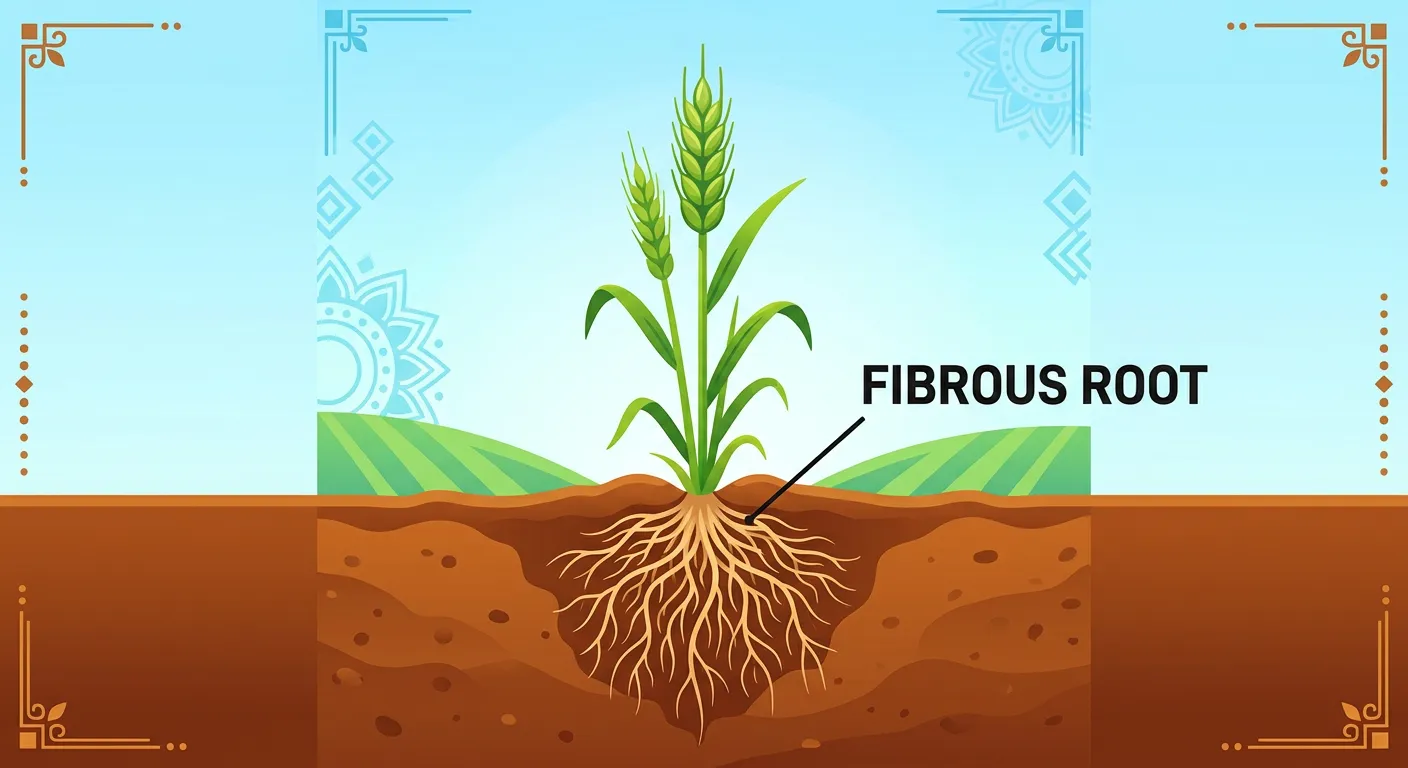
“Now, observe the Fibrous Root system, common in monocots like wheat. Instead of one big pillar, we have a dense, net-like cluster emerging from the stem base. It’s like a widespread, complex network—flexible and efficient at grabbing water from a large surface area.”
In stark contrast to the deep-reaching architecture of dicots, monocotyledonous plants like wheat, maize, and rice take a very different evolutionary approach to their root systems. In these species, the primary root is remarkably short-lived. While it initially emerges from the radicle to provide early hydration, it is quickly replaced by a large number of roots that originate directly from the base of the stem. These are known as fibrous roots. Because they all emerge from a similar point and maintain a relatively uniform thickness, they form a dense, hair-like mat or a tangled cluster in the upper layers of the soil. This net-like arrangement is exceptionally efficient at capturing surface moisture from light rainfall and preventing topsoil erosion by binding the soil particles together.
The fibrous system effectively trades 'depth' for 'breadth.' By colonizing the upper soil horizons, where organic matter and nutrients are often most concentrated, these plants can rapidly absorb what they need for quick growth cycles. For a NEET student, the most critical distinction to memorize is the origin: fibrous roots do not branch off from a persistent primary root; instead, they originate from the tissues at the stem base. This makes them a type of adventitious root by broad definition, although they are specifically categorized as the 'fibrous root system' in monocot descriptions. This system explains why common grasses are so difficult to pull up in one single piece—they are held down by hundreds of small, firm, and interconnected connections to the ground. Furthermore, this system is a classic adaptation for plants living in environments where water is frequent but does not penetrate deep into the substrate. This architectural difference is a key identifying feature in plant morphology and is essential for distinguishing between monocot and dicot seedlings in the field.
Quick Revision Points
- Fibrous roots are common in monocots such as Wheat, Paddy, and Maize.
- The primary root is ephemeral (short-lived) and soon disappears after germination.
- These roots originate from the base of the stem, not the radicle or primary root.
- They form a dense cluster that excels at rapid surface-level moisture absorption.
- They play a vital ecological role in soil conservation and the prevention of erosion.
NEET Exam Angle
- A favorite question: 'Where do fibrous roots originate?' Answer: Base of the stem.
- Focus on the 'short-lived' nature of the primary root in monocots as a defining trait.
- Compare the surface area coverage: fibrous (high surface/shallow) vs tap (high depth/low surface).
04Zonation of the Root: From the Protective Cap to the Maturation Zone
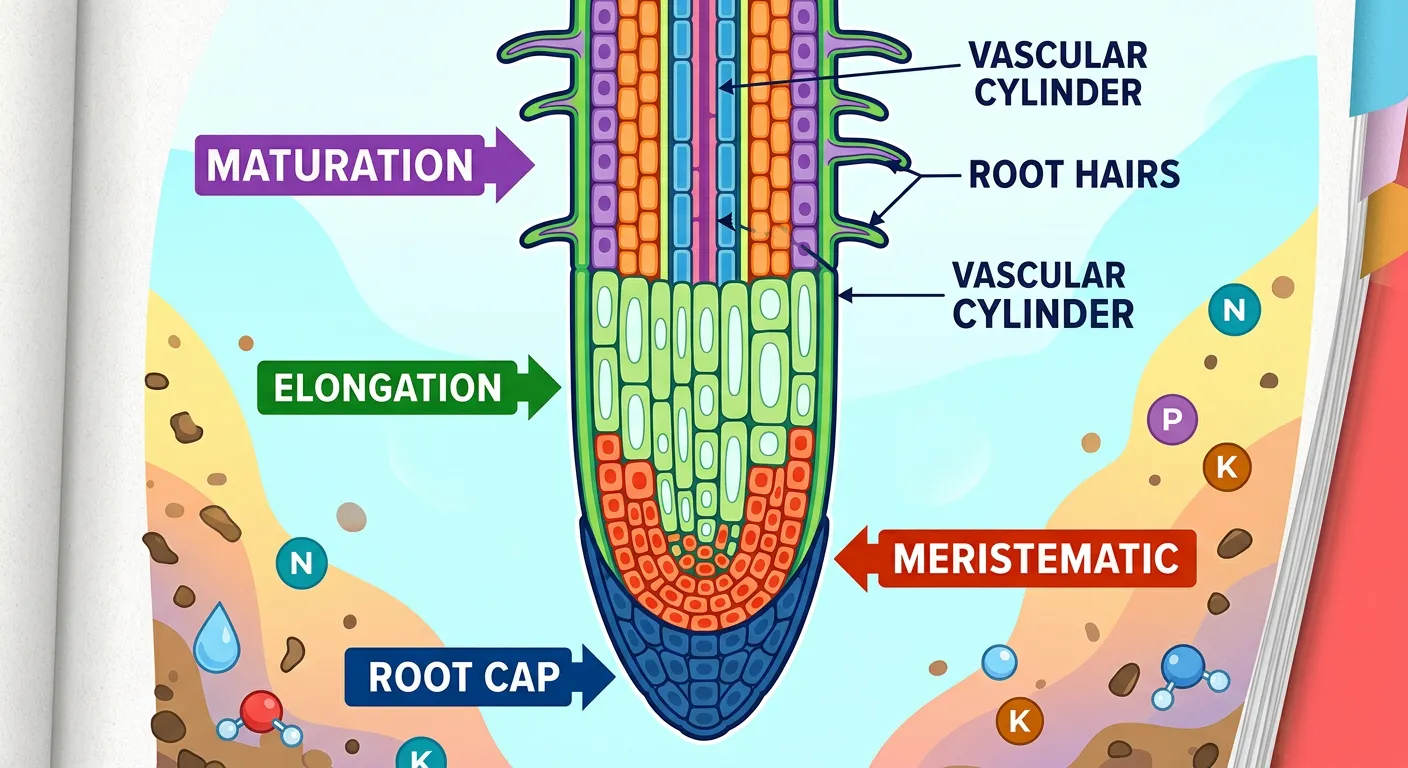
“The root tip is a busy factory! The Root Cap protects the tender apex, the Meristematic zone is where cells divide rapidly, the Elongation zone adds length, and the Maturation zone differentiates into specialized tissues. It’s a perfectly organized production line beneath our feet.”
The microscopic anatomy of a root tip is a masterpiece of biological organization and spatial division of labor. If you examine a longitudinal section under a microscope, you will see it divided into four distinct functional zones. At the very tip is the Root Cap (Calyptra), a thimble-like structure that protects the tender growing apex as it pushes through abrasive soil particles. It also secretes mucilage to lubricate the root's path. Just a few millimeters above the cap lies the Zone of Meristematic Activity. This is the 'engine room' of the root, where cells are very small, thin-walled, and packed with dense protoplasm. Here, rapid mitosis occurs, producing a constant stream of new cells.
Moving slightly upwards, we encounter the Zone of Elongation. This is where the actual increase in root length occurs. The newly formed cells undergo rapid expansion and vacuolation, which physically pushes the root deeper into the soil. These cells lose their ability to divide but gain the ability to stretch. Finally, we reach the Zone of Maturation. In this region, cells stop growing in length and begin to differentiate into specialized tissues like the epidermis, cortex, and vascular bundles. This is also the only region where you will find the microscopic root hairs. For NEET, remembering the correct sequence from tip to base is crucial: Root Cap -> Meristematic -> Elongation -> Maturation. Each zone has a specific cellular 'signature' (like cell wall thickness or vacuole size) that relates directly to its physiological function. Understanding this zonation helps explain how roots can grow continuously (indeterminate growth) while simultaneously performing complex functions like absorption and transport in the older, matured sections.
| Zone | Key Feature | Cellular Characteristics |
|---|---|---|
| Root Cap | Protection | Thimble-shaped, secretes mucilage, protects apex |
| Meristematic | Cell Division | Small cells, thin walls, very dense protoplasm |
| Elongation | Length Increase | Rapid enlargement, large vacuoles, no division |
| Maturation | Differentiation | Cells specialize; primary site for root hairs |
Quick Revision Points
- The root cap protects the apical meristem from mechanical soil friction.
- Meristematic cells are characterized by high metabolic rates and thin primary walls.
- The elongation zone is the region primarily responsible for increasing root length.
- Differentiation into xylem, phloem, and root hairs occurs in the maturation zone.
- Protoplasm is at its highest density in the meristematic zone.
NEET Exam Angle
- The sequence of zones (from tip to base) is a high-yield 'Ordering' question.
- Identify the zone where root hairs develop (Maturation Zone)—this is a very common PYQ.
- Cell characteristics (dense protoplasm vs. large vacuoles) are often used in 'Statement Type' questions.
05Root Hairs: Unicellular Adaptations for Absorption Excellence
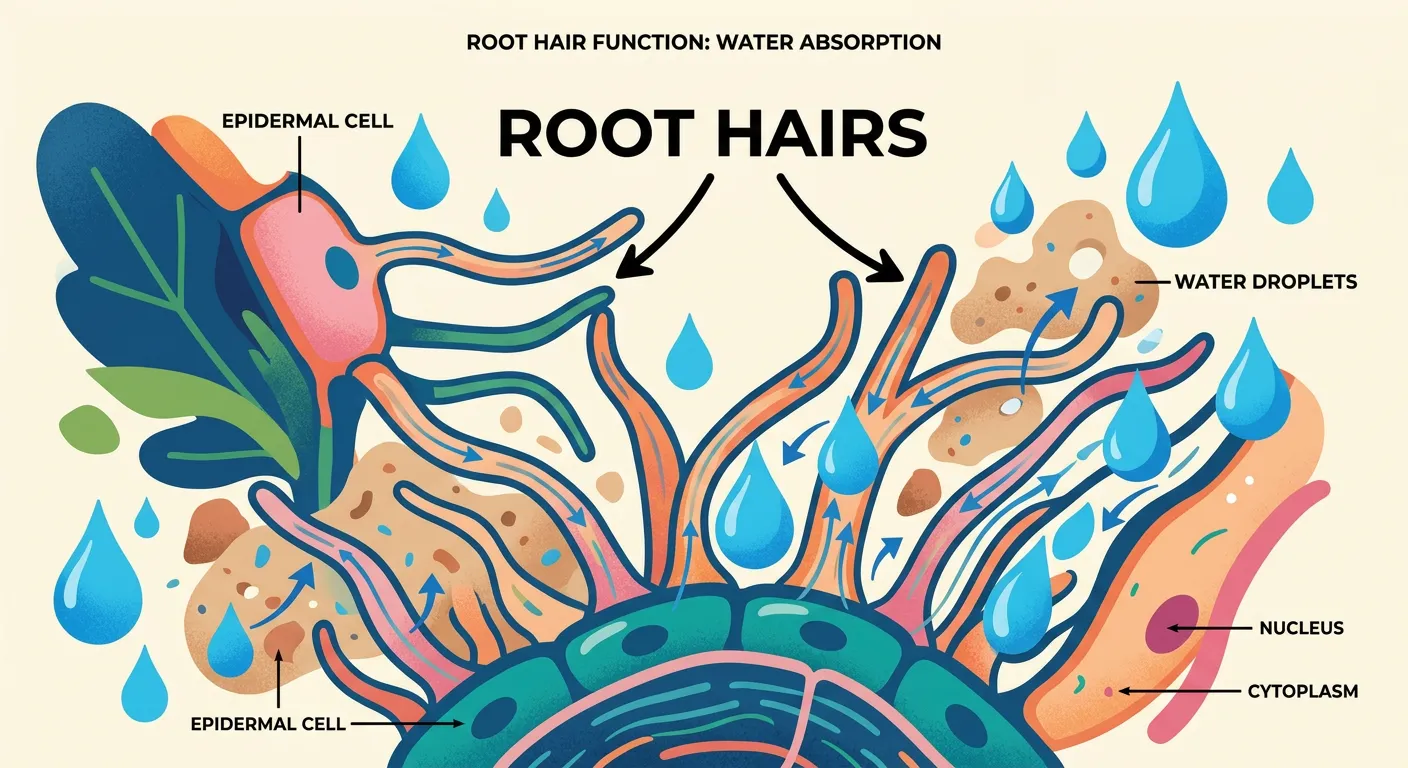
“Meet the unsung heroes—Root Hairs! These are thin, delicate extensions of epidermal cells. They dramatically increase the surface area for water and mineral absorption. Think of them like thousands of tiny, thirsty straws working together to keep the plant hydrated and nourished.”
Root hairs are the primary interface between the plant and the soil solution, acting as the frontline for all water and nutrient intake. Found exclusively in the zone of maturation, these are delicate, unicellular lateral elongations of the epidermal cells. In botanical terms, this epidermal layer is often called the epiblema or the piliferous layer. Their primary biological mission is to increase the surface area available for water and mineral absorption by several hundred-fold. Because they are unicellular and possess extremely thin walls composed primarily of cellulose and pectin, they offer minimal resistance to the passage of water through osmosis and the active transport of essential ions like nitrates and phosphates.
These structures are remarkably short-lived, often lasting only a few days, and are constantly being replaced by new hairs as the root continues its downward growth into new soil regions. They are small enough to penetrate the tiny capillary spaces between soil particles to tap into water that larger structures cannot access. For NEET aspirants, it is vital to remember the anatomical distinction: root hairs are extensions of a single cell, which contrasts sharply with the multicellular trichomes (hairs) typically found on stems. This structural simplicity is the key to their high efficiency. When a plant is transplanted and subsequently wilts, it is often because these delicate root hairs have been torn away during the move, temporarily cutting off the plant's entire water supply until new hairs can form. They represent one of the best examples of how biological form follow functional necessity in plant anatomy, ensuring that the plant can maintain the high hydraulic pressure required for growth and transpiration. Furthermore, they are involved in complex signaling with soil microbes, creating a specialized environment known as the rhizosphere.
Quick Revision Points
- Root hairs are unicellular elongations of the root epidermis (Epiblema).
- They are found exclusively in the Zone of Maturation.
- Their primary function is increasing the total surface area for efficient absorption.
- Water moves into root hairs via osmosis; minerals are often absorbed actively against gradients.
- They are delicate and short-lived, requiring constant replacement by the plant.
NEET Exam Angle
- Distinction: Root hairs are unicellular, while stem hairs (trichomes) are usually multicellular.
- Location: Always link root hairs to the 'Maturation Zone', never the elongation zone.
- Transport: Connect root hair function to 'Transport in Plants' (water potential and active uptake).
06Internal Anatomy: Exploring the Stele, Cortex, and Endodermal Guard
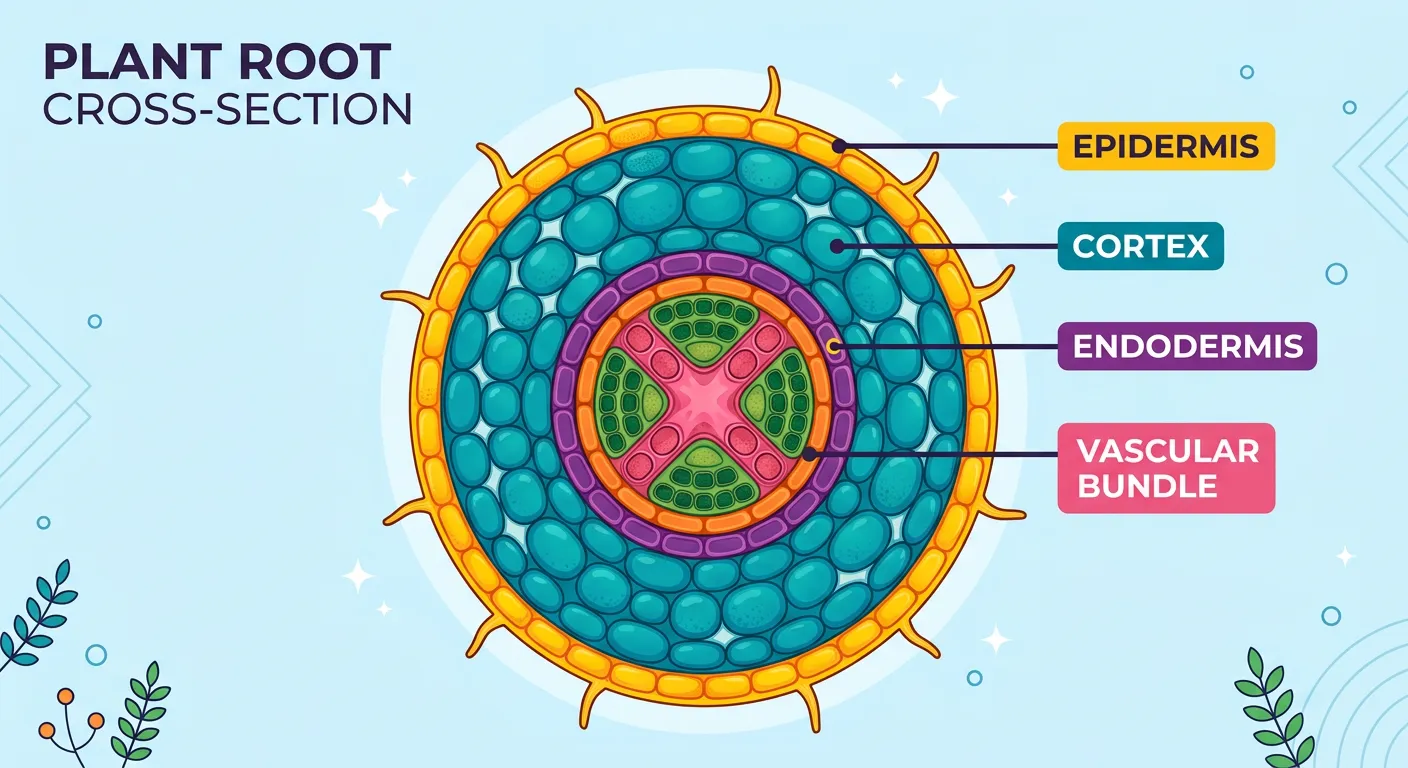
“Inside the root, it’s all about layers. From the protective Epidermis and storage-heavy Cortex to the exclusive Endodermis, and finally the central Vascular bundle. The Endodermis acts like a strict security guard, controlling what enters the xylem. Biology is all about precision, right?”
The internal landscape of the root is organized into distinct concentric layers, each playing a specialized role in physiology. The outermost layer is the Epiblema. Beneath it lies the Cortex, a thick region consisting of thin-walled parenchyma cells with large intercellular spaces. These spaces are vital for gas exchange and for the storage of food reserves like starch. The innermost boundary of the cortex is the Endodermis. This layer is the 'biological checkpoint' of the root. Its cells are barrel-shaped and are uniquely characterized by the Casparian Strip—a band of water-impermeable, waxy suberin. This strip prevents the 'apoplastic' (between-cell) movement of water, forcing all water and minerals to pass through the semi-permeable cell membrane of endodermal cells. This allows the plant to regulate exactly which ions enter the vascular system.
At the center of the root lies the Stele, which includes all tissues internal to the endodermis: the pericycle, vascular bundles, and pith. In roots, the vascular bundles are arranged 'radially,' meaning the xylem and phloem are located on different radii. This is a key diagnostic feature for identifying roots. The pericycle is particularly important for NEET because it is the site where lateral roots originate—a process described as 'endogenous' because it begins in the deep internal tissues rather than the surface. The pith (central core) is usually very small or completely absent in dicot roots, but it is quite large and well-developed in monocot roots. Additionally, the xylem in roots is 'exarch,' meaning the smaller protoxylem is toward the outside (periphery) and the larger metaxylem is toward the center. Understanding these internal boundaries and tissue arrangements is essential for mastering plant physiology and anatomy questions.
| Layer | Key Characteristic | Function |
|---|---|---|
| Endodermis | Casparian Strip (Suberin) | Regulates water and mineral entry into the stele |
| Pericycle | Meristematic potential | Site of origin for all lateral roots |
| Vascular Bundle | Radial arrangement | Transport (Xylem for water, Phloem for food) |
| Cortex | Parenchyma cells | Storage and facilitating lateral transport |
Quick Revision Points
- The Casparian strip is made of suberin and found only in the endodermis.
- Lateral roots originate from the pericycle (endogenous origin).
- Root vascular bundles are radial, with protoxylem towards the periphery (Exarch xylem).
- The endodermis acts as a physiological valve or filter for the vascular cylinder.
- Pith is small/absent in dicot roots and large/conspicuous in monocot roots.
NEET Exam Angle
- Suberin and the Casparian Strip are recurring NEET favorites—know their exact location.
- Compare 'Endogenous' (root branches) vs 'Exogenous' (stem branches/leaves) origins.
- Radial vascular bundles are a diagnostic feature for roots in 'Identify the Section' questions.
07Evolutionary Modifications: Storage, Support, and Physiological Adaptation
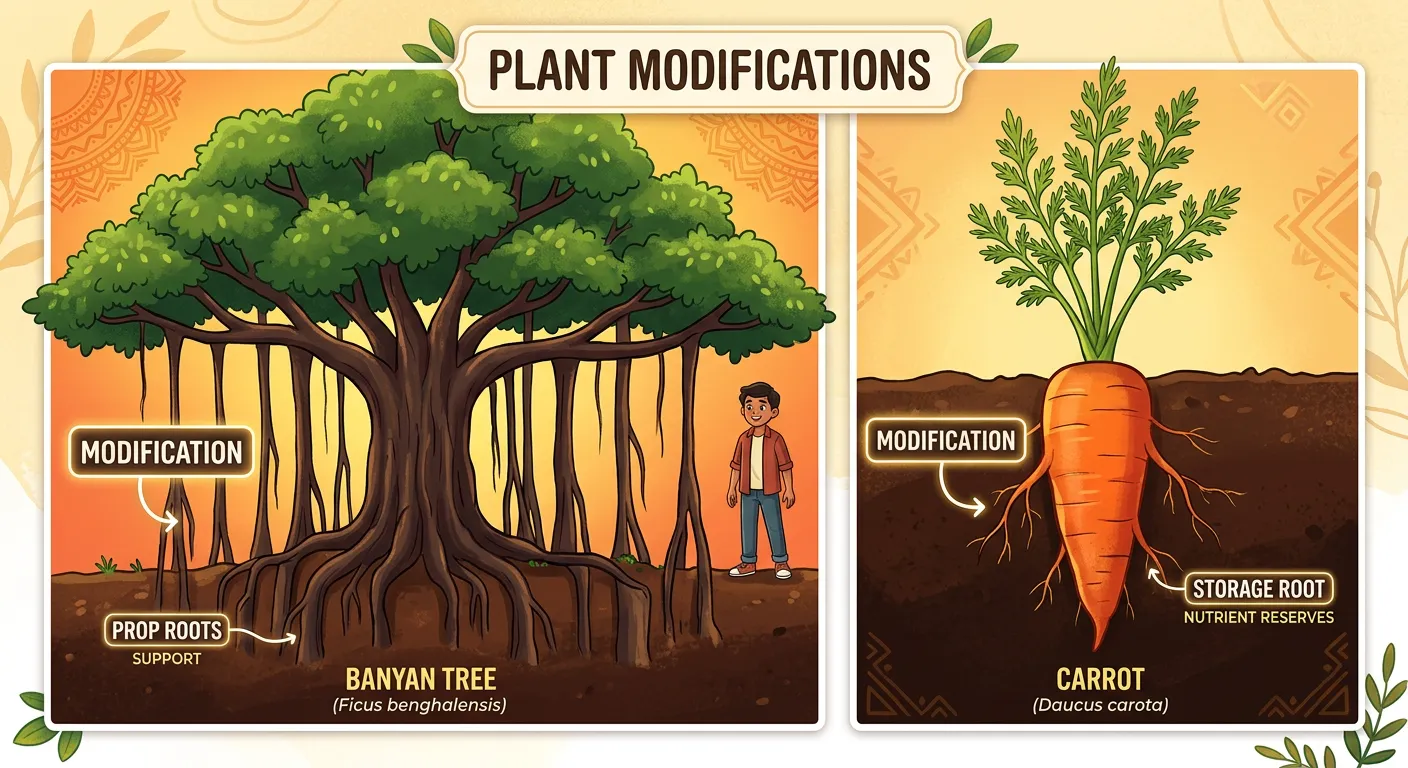
“Finally, roots aren't just for anchoring! Sometimes they moonlight for other jobs—like storing food in carrots or providing extra support in Banyan trees. These modifications prove that evolution is the ultimate problem solver. Keep learning, stay curious, and crack that NEET exam!”
Roots often evolve beyond their primary biological roles of anchorage and absorption to perform specialized tasks essential for survival. One of the most common modifications is food storage. In plants like Carrot (conical), Turnip (napiform), and Radish (fusiform), the taproots become fleshy and swollen with starch reserves to support the plant during flowering. Even adventitious roots can modify for storage, as seen in the Sweet Potato. Another vital modification is for mechanical support. Banyan trees develop Prop Roots—thick, pillar-like structures that grow down from horizontal branches into the soil to support the massive weight of the tree. Similarly, plants like Maize and Sugarcane produce Stilt Roots from the lower nodes of the stem to provide extra stability against wind and to prevent the tall, slender stalk from toppling.
Perhaps the most fascinating adaptation is found in halophytes like Rhizophora, which grow in swampy, oxygen-poor (anoxic) soils. To survive, they develop Pneumatophores (respiratory roots) that grow vertically upwards out of the mud, exhibiting negative geotropism. These roots are covered in tiny pores called lenticels or pneumathodes that allow the plant to obtain oxygen directly from the atmosphere for root respiration. For NEET, you must distinguish between the origins of these modifications: while storage can happen in both tap and adventitious roots, prop and stilt roots are always adventitious because they originate from the stem or branches rather than the radicle. These diverse modifications highlight the incredible plasticity of plant organs in response to environmental pressures and niche requirements. Understanding these examples is not just about memorization; it's about seeing how plants 'engineer' solutions to gravity, oxygen deprivation, and the need for energy storage. Always keep the NCERT examples like Monstera and Asparagus at the forefront of your revision, as they are frequently used in matching-type questions.
| Modification | Purpose | Example |
|---|---|---|
| Prop Roots | Mechanical Support | Banyan Tree |
| Stilt Roots | Mechanical Support | Maize, Sugarcane |
| Pneumatophores | Respiration | Rhizophora (Mangroves) |
| Storage Tap Root | Food Storage | Carrot, Turnip, Radish |
| Storage Adventitious | Food Storage | Sweet Potato, Asparagus |
Quick Revision Points
- Both Tap roots (Carrot) and adventitious roots (Sweet potato) can store food.
- Prop roots (Banyan) and Stilt roots (Maize) provide critical mechanical support.
- Pneumatophores are negatively geotropic and facilitate respiration in saline swamps.
- Adventitious roots arise from any part other than the radicle (e.g., Monstera leaves/stems).
- Lenticels on pneumatophores are the specific structures for gas exchange.
NEET Exam Angle
- 'Match the Following' questions are extremely common for root modifications.
- Remember: Sweet potato is a modified root, while potato is a modified stem (frequent trap!).
- Rhizophora and its pneumatophores are the top example for physiological adaptations.
Recommended Reading
Explore related Biology topics to build deeper chapter connections for NEET.
- Morphology and Modifications · Topic 2.1
- Families · Topic 2.10
- Animal Tissues · Topic 2.11
- Frog Morphology · Topic 2.12
- Digestive System · Topic 2.13
- Circulatory System · Topic 2.14
- Jump to Key Terms (Quick Revision)
- Review Common NEET Mistakes
- Solve NEET Practice MCQs
- Read Topic FAQs
- Practice NEET MCQs
- Solve NEET PYQs
📚 Key Terms
⚠️ Common NEET Mistakes
- 1Confusing the origin of sweet potato (root modification) with the potato (stem modification).
- 2Assuming all roots are positively geotropic; remember pneumatophores grow upwards (negative geotropism).
- 3Thinking root hairs are multicellular like stem trichomes; they are always unicellular extensions.
- 4Stating that lateral roots emerge from the epidermis; they actually emerge from the internal pericycle (endogenous).
- 5Misidentifying the zone of elongation as the site of root hair formation; it happens in the maturation zone.
📝 NEET PYQ & Practice Questions
Test your understanding of Root with NCERT-aligned sample questions.
Which of the following statements is correct regarding "Radicle" in the context of NEET Biology?
In NEET question papers, questions related to "Root" predominantly test:
Consider Adventitious Roots associated with Root. What is the primary characteristic expected in NEET MCQs?
Master Root with NeetQ AI Tutor
Practice 50+ topic-wise MCQs, previous 15 years NEET questions, and get step-by-step doubt resolution instantly.
❓ Frequently Asked Questions
What is the main difference between Tap roots and Adventitious roots?
Tap roots develop directly from the elongation of the radicle and are typically found in dicots. Adventitious roots develop from any part of the plant other than the radicle, such as the stem base, leaves, or branches.
In which zone of the root do the root hairs develop?
Root hairs develop exclusively in the Zone of Maturation. This is the region where cells have finished elongating and have differentiated into specialized tissues like the epidermis.
How does the root cap protect the root during soil penetration?
The root cap is a thimble-shaped structure that covers the root apex. It protects the delicate meristematic cells from mechanical injury and often secretes mucilage to lubricate the root's passage through the soil.
What are pneumatophores and why are they found in swampy areas?
Pneumatophores are specialized respiratory roots that grow upwards out of the water or mud. They are found in plants like Rhizophora (halophytes) growing in swampy areas where the soil is waterlogged and deficient in oxygen.
What is the function of the Casparian strip in the root endodermis?
The Casparian strip is a band of suberin that makes the endodermal cell walls impermeable to water. It forces water and dissolved minerals to pass through the plasma membrane, acting as a selective filter before they enter the xylem.
Give examples of plants that have stilt roots for mechanical support.
Stilt roots are commonly found in Maize and Sugarcane. They emerge from the lower nodes of the stem and grow into the soil to provide additional support to the tall, slender plant.
Written By
NEET Content Strategist & Biology Expert
Sangita Kumari is a NEET educator and content strategist with over 6 years of experience teaching Biology, Chemistry, and Physics to Class 11 and 12 aspirants. She helps bridge the gap between traditional NCERT preparation and modern AI-powered learning. Her content is trusted by thousands of NEET aspirants across India.