🎬 Video Lesson Available
Watch the full 7-slide video lesson for Frog Morphology with AI teacher narration and visual explanations.
Frog Morphology — Master Rana tigrina morphology and anatomy for NEET Biology. Detailed breakdown of digestive, circulatory, and respiratory systems with PYQ insights.
01Introduction to Rana tigrina: Taxonomy and Integumentary Adaptations
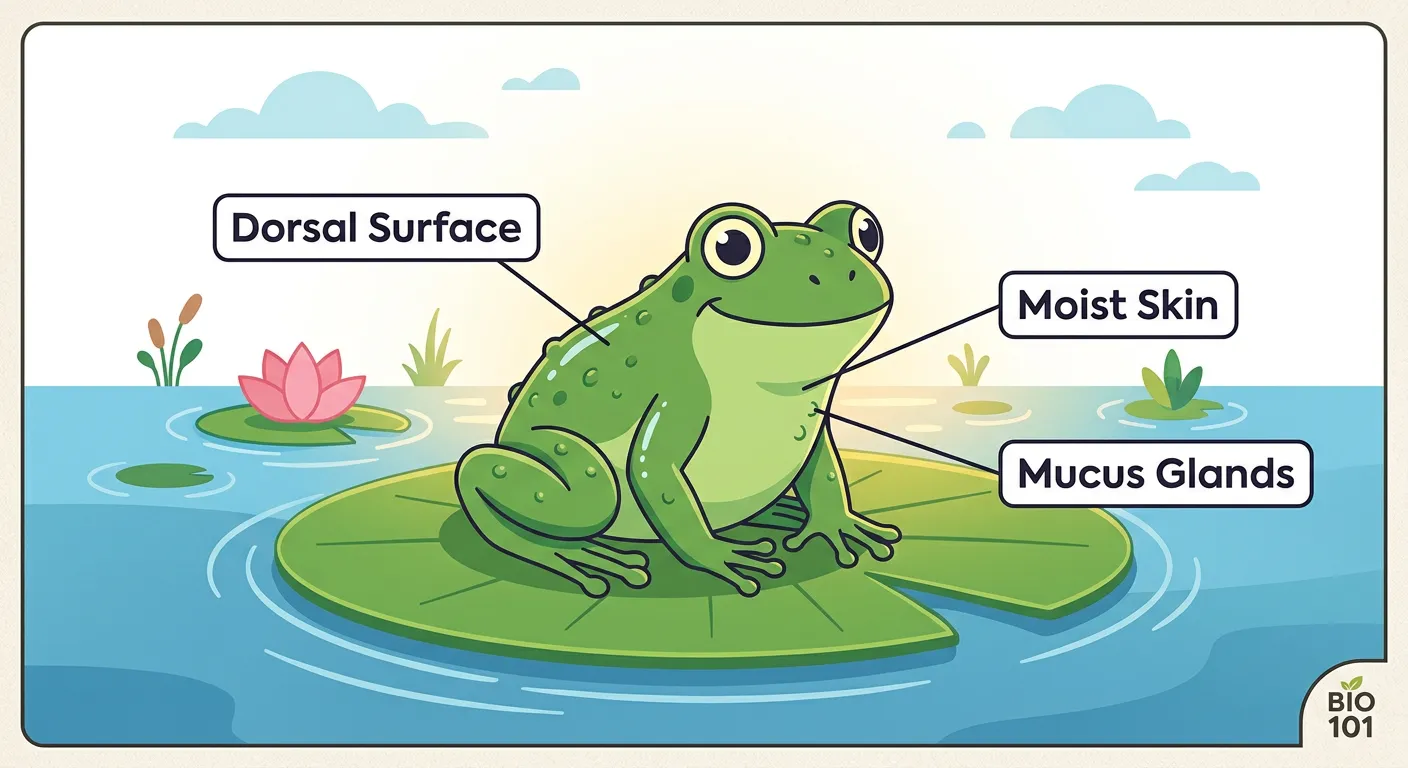
“Meet our green friend, the frog! In NEET, Rana tigrina is our star. Think of them like humans wearing a slimy raincoat; their skin is always moist due to mucus glands, which helps them breathe underwater. It's their secret weapon for surviving in both land and water!”
When we step into the world of amphibians for NEET Biology, the Indian bullfrog, Rana tigrina, stands as the most representative model. Belonging to the Phylum Chordata-neet-biology)-neet-biology)-neet-biology)-neet-biology)-neet-biology)-neet-biology)-neet-biology)-neet-biology)-neet-biology)-neet-biology)-neet-biology)-neet-biology)-neet-biology)-and-systematics)-neet-biology), Subphylum Vertebrata, and Class Amphibia, these creatures are the ultimate bridge between aquatic and terrestrial life. One of the first things you must grasp about the frog is its poikilothermic nature. Being 'cold-blooded' means they lack an internal thermostat to regulate body temperature. Instead, their metabolic rate and body heat fluctuate with the environment. This is why you don’t see frogs hopping around in the peak of a scorching summer or a freezing winter; they undergo aestivation (summer sleep) and hibernation (winter sleep) to survive extreme conditions within deep burrows.
The frog's skin is not just a covering; it is a sophisticated physiological tool. It is always moist, slippery, and smooth to the touch. This isn't just for aesthetics; the skin is highly vascularized and contains numerous mucus glands. The skin consists of two layers: an outer epidermis and an inner dermis. This moisture is critical because it allows the frog to perform cutaneous respiration—breathing through the skin—both on land and in water. Furthermore, the skin's coloration is a masterclass in survival. The dorsal side is usually olive green with dark irregular spots, while the ventral side is pale yellow. This allows for camouflage, or mimicry, protecting the frog from predators like snakes or birds by blending into the muddy or leafy surroundings. Frogs never drink water directly; instead, they absorb it through the skin, making the integumentary system vital for hydration and osmoregulation.
| Feature | Description | Biological Significance |
|---|---|---|
| Mucus Glands | Secretory cells in the skin | Maintains moisture for gas exchange |
| Camouflage | Dark dorsal/pale ventral | Protection from predators (Mimicry) |
| Poikilothermy | Ectothermic regulation | Adaptation to environmental temp |
| Aestivation | Summer sleep | Survival during high heat/drought |
Quick Revision Points
- Rana tigrina is the common Indian bullfrog belonging to Class Amphibia.
- Frogs are poikilotherms (cold-blooded) and show seasonal dormancy like hibernation.
- The skin is always moist due to mucus glands and serves as a respiratory organ.
- Coloration differs between the dorsal (dark) and ventral (light) surfaces for mimicry.
NEET Exam Angle
- Focus on the distinction between aestivation and hibernation; NEET often tests the seasonal context of these terms.
- Remember that the frog does not drink water; it absorbs it through the skin.
- Identify the Class (Amphibia) and Phylum (Chordata) as basic but essential taxonomic data.
02External Morphology: Sensory Organs and Aquatic Adaptations
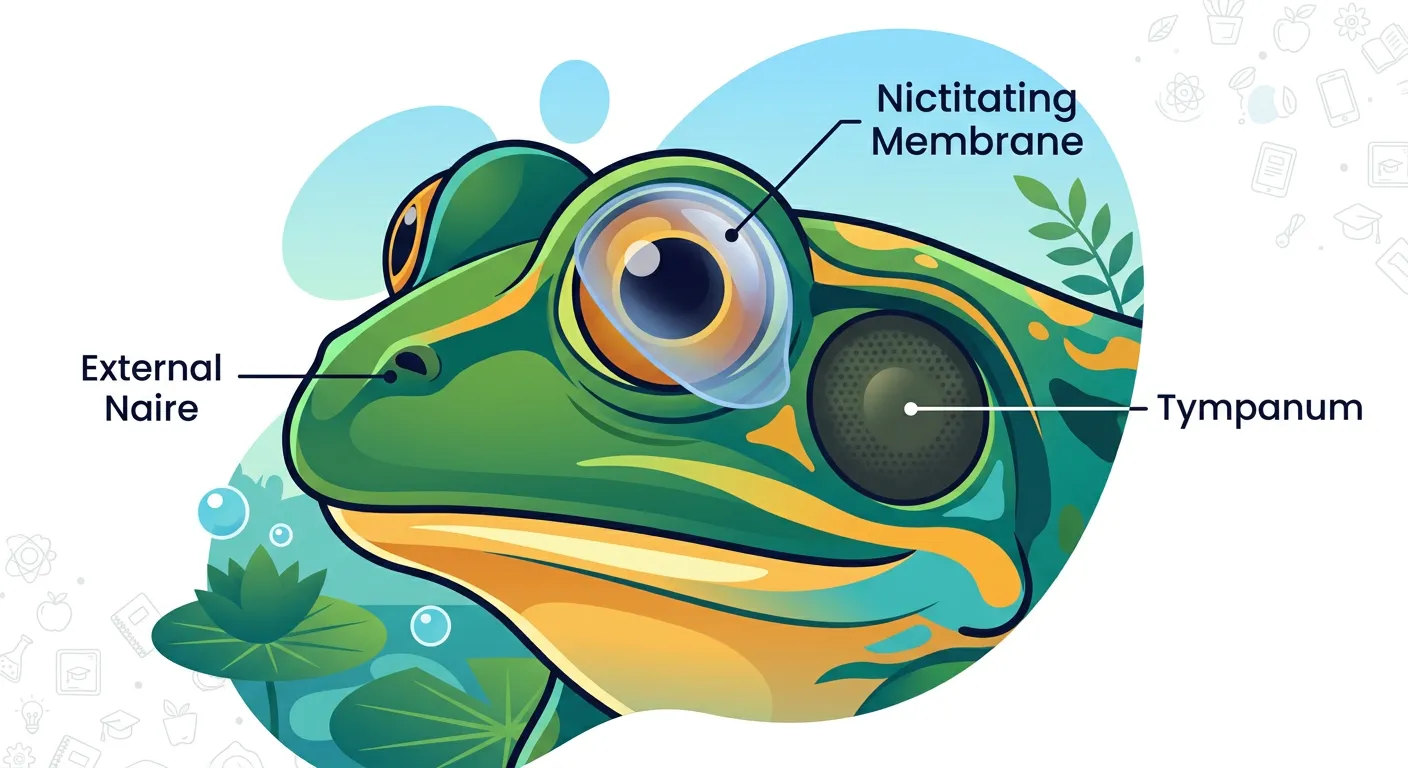
“Frogs have cool built-in gear! They use nictitating membranes like swimming goggles to protect eyes underwater. And those big circles behind their eyes? That's the tympanum, acting like an eardrum. They don't have external ears like us, but they hear perfectly well to stay safe from predators.”
A frog's body is streamlined and compact, divided strictly into a head and a trunk. One of the most common traps for students is looking for a neck or a tail—in adult frogs, both are entirely absent. This body plan is an evolutionary adaptation for hopping and swimming. The head is triangular and houses several specialized sensory organs. The eyes are large and bulging, providing a wide field of vision. To protect these eyes while swimming in murky water, frogs possess a nictitating membrane. This transparent third eyelid acts like biological goggles, keeping the eye moist and shielded while allowing the frog to see its surroundings underwater.
Just behind each eye, you will notice a circular, pigmented patch called the tympanum. This is the frog's ear. Unlike humans, frogs do not have an external pinna; the tympanum receives sound vibrations directly from the air or water. The frog's limbs are also highly specialized. The forelimbs end in four digits and are used primarily for supporting the body during rest, while the hindlimbs are much larger, more muscular, and end in five webbed digits. These webbed feet are essential for efficient swimming, acting like flippers to push through the water.
Another critical area for NEET is sexual dimorphism. Male frogs are generally smaller and possess two distinct features: vocal sacs and copulatory pads. The vocal sacs are located in the throat area and are used to amplify croaking sounds to attract females during the breeding season. The copulatory pad is found on the first digit of the forelimb and helps the male grip the female during amplexus (the mating embrace). These features are completely absent in female frogs, making them easy to distinguish during the monsoon months.
Quick Revision Points
- Adult frogs lack a neck and a tail; the body is divided into head and trunk.
- The nictitating membrane protects the eyes underwater and maintains moisture.
- The tympanum is the auditory organ; there is no external ear (pinna).
- Webbed digits on the hindlimbs are the primary adaptation for swimming.
NEET Exam Angle
- Frequently asked: The specific location of the copulatory pad (first digit of the forelimb in males).
- Identify the difference between forelimbs (4 digits) and hindlimbs (5 digits).
- The function of the tympanum is purely sensory (hearing), often confused with respiration in low-quality questions.
03The Digestive System: Alimentary Canal and Accessory Glands
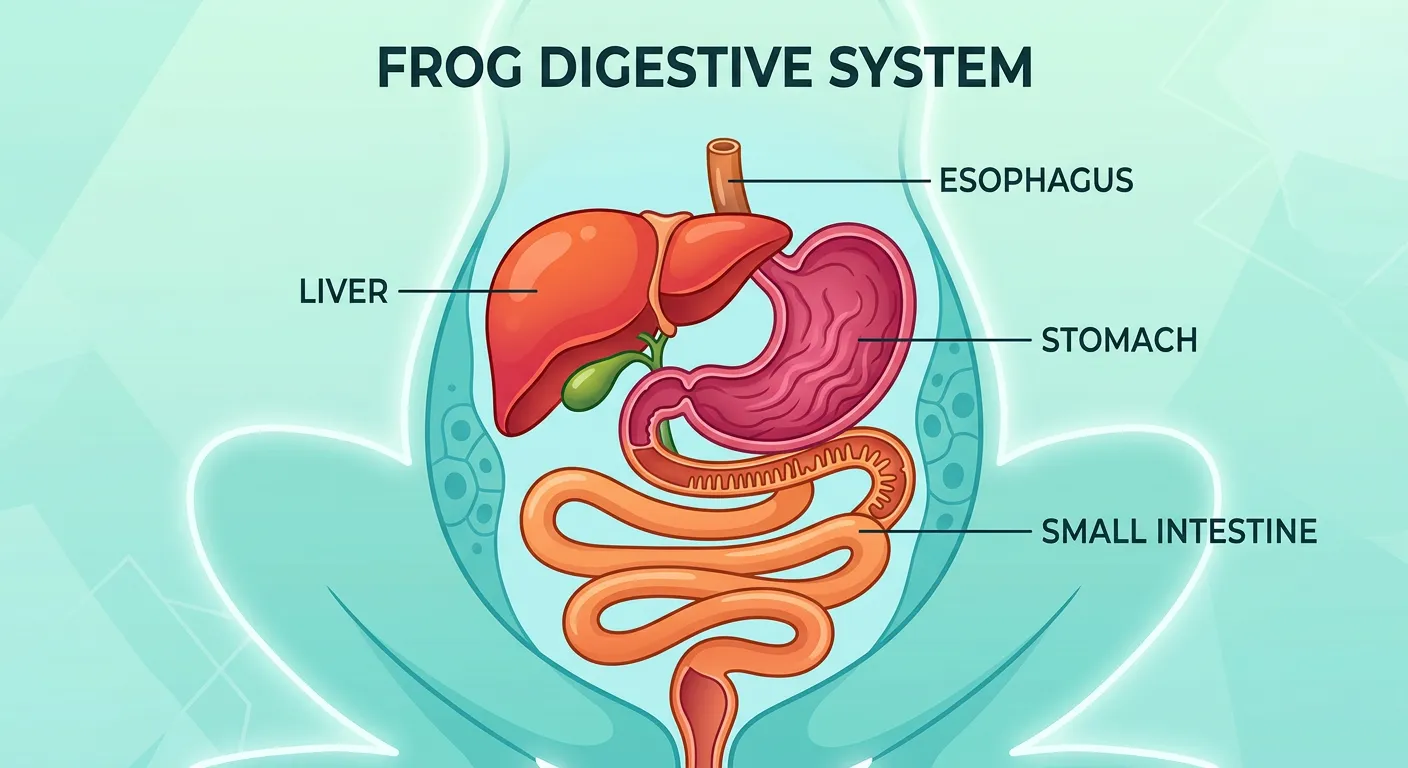
“A frog's digestion is like a super-fast assembly line. They swallow food whole! Their powerful stomach churns the prey, while the liver produces bile to break down fats. Just like your digestive system, it turns food into energy to keep them hopping and hunting throughout the day.”
The digestive system of Rana tigrina is relatively simple yet highly efficient. Because frogs are carnivores, their alimentary canal is short—a shorter intestine is a classic trait of meat-eaters because animal protein is easier to digest than plant cellulose. The process begins with prey capture using a unique bilobed tongue. The tongue is attached at the front of the mouth and free at the back, allowing it to flick out rapidly and retract with insects stuck to its sticky surface. Once the prey is inside, it passes through the pharynx and a short esophagus into the stomach.
The stomach is the primary site of digestion. Its walls secrete gastric juices and hydrochloric acid (HCl), which break down the food into a semi-liquid state called chyme. From the stomach, chyme enters the first part of the small intestine, the duodenum. This is where the heavy lifting of chemical digestion happens. The liver, the largest gland, produces bile, which is stored in the gall bladder before being released into the duodenum via the common bile duct to emulsify fats. Simultaneously, the pancreas—a gland situated between the stomach and duodenum—secretes pancreatic juice containing enzymes for carbohydrates and proteins. The food then moves to the ileum for absorption, where villi and microvilli increase the surface area. Finally, the undigested waste moves to the rectum and is expelled through the cloaca.
| Organ | Secretion/Action | Function |
|---|---|---|
| Stomach | HCl & Gastric Juices | Chemical breakdown of food into chyme |
| Liver | Bile (Stored in Gall Bladder) | Emulsification of fats |
| Pancreas | Pancreatic Juice | Digestion of proteins and carbs |
| Cloaca | Common Chamber | Exit for feces, urine, and gametes |
Quick Revision Points
- Frogs are carnivores, resulting in a significantly short alimentary canal.
- The tongue is bilobed and attached at the anterior end for rapid prey capture.
- Bile from the liver and pancreatic juice from the pancreas meet in the duodenum.
- The cloaca is a common terminal chamber for the digestive, excretory, and reproductive tracts.
NEET Exam Angle
- A favorite question: The 'bilobed tongue' and its attachment point (anterior attachment).
- Understand the role of the gall bladder; it stores bile but does not produce it.
- Remember that absorption occurs in the ileum via finger-like folds (villi/microvilli).
04Respiratory Mechanisms: Cutaneous vs. Pulmonary Respiration
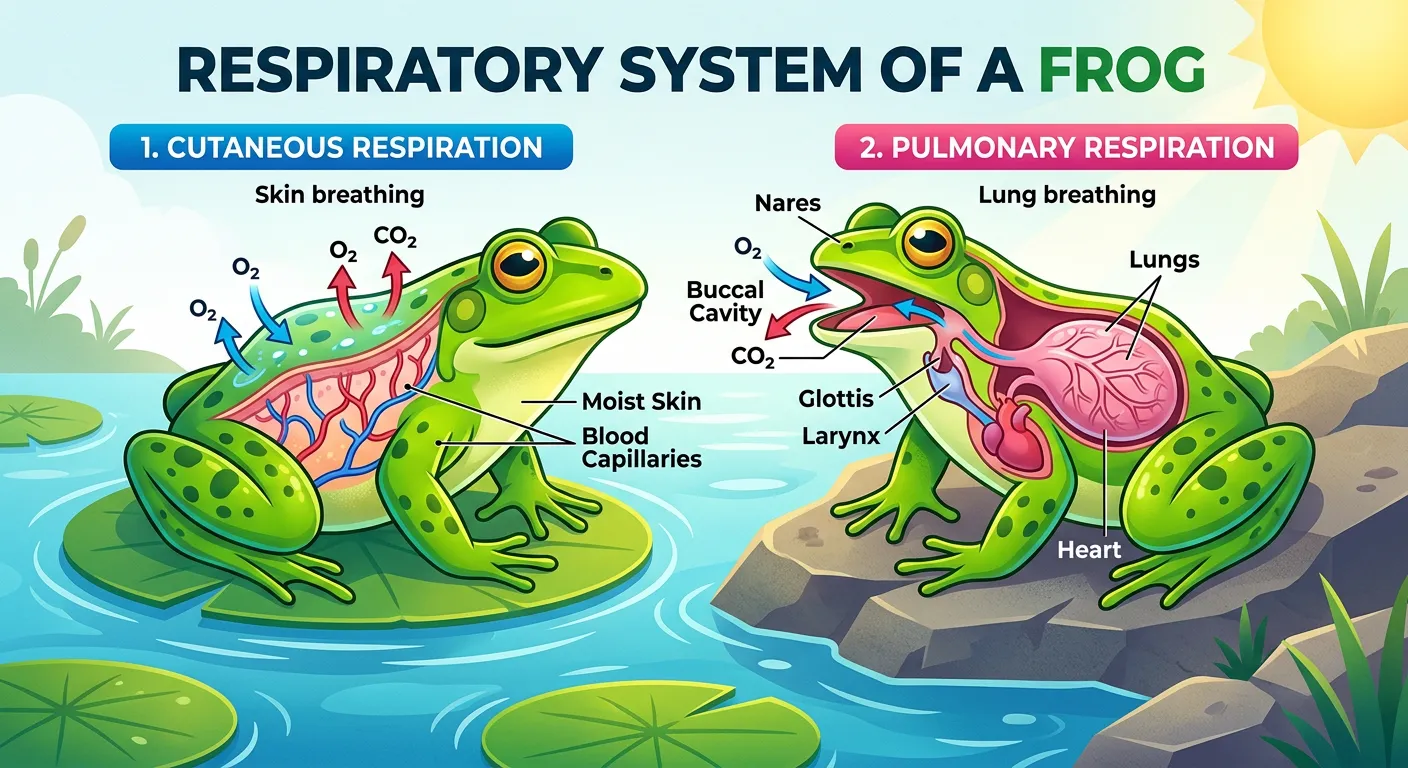
“Frogs are multi-taskers when breathing! On land, they use their lungs, called pulmonary respiration. But underwater, they breathe through their moist skin, known as cutaneous respiration. It’s like having an oxygen tank built directly into your skin. Talk about an evolutionary masterclass for NEET prep!”
Frogs have mastered the art of breathing in multiple environments through three distinct modes of respiration. This versatility is essential for their amphibious lifestyle. In water, they rely exclusively on cutaneous respiration. The skin is highly permeable to oxygen and carbon dioxide, and as long as the frog is submerged, dissolved oxygen from the water diffuses directly into the blood capillaries through the moist skin surface. This is why a frog must never let its skin dry out; if the mucus layer disappears, the frog will suffocate. This skin breathing is also the primary method utilized during hibernation and aestivation.
On land, the frog has more options. It uses buccopharyngeal respiration, where the lining of the mouth cavity acts as a respiratory surface, and pulmonary respiration, which involves the lungs. The lungs of a frog are a pair of elongated, pinkish, sac-like structures located in the upper part of the trunk (thorax). However, frogs possess a unique breathing mechanic because they lack a diaphragm and ribs. They use a 'positive pressure pump' mechanism involving the floor of the buccal cavity. By lowering the floor of the mouth, air is drawn into the nostrils. Then, by closing the nostrils and raising the buccal floor, the air is forced through the glottis into the lungs.
This system is less efficient than human negative-pressure breathing but is sufficient for the frog's metabolic needs. During critical periods of dormancy—hibernation and aestivation—pulmonary respiration is completely suspended, and gaseous exchange continues only through the skin, ensuring the frog survives with minimal energy expenditure. This physiological flexibility is a key high-yield topic for NEET, particularly the fact that the skin acts as a respiratory organ in every life stage and environment.
| Mode | Location | Conditions |
|---|---|---|
| Cutaneous | Moist Skin | Underwater and during dormancy |
| Pulmonary | Lungs | Active terrestrial life |
| Buccopharyngeal | Mouth Cavity | Resting on land |
Quick Revision Points
- Cutaneous respiration is the only mode used during underwater life and hibernation.
- Lungs are simple sac-like structures with very low surface area compared to mammals.
- The frog lacks a diaphragm; air is moved by the pressure of the buccal floor.
- Mucus is essential; dry skin equals zero oxygen absorption.
NEET Exam Angle
- Vital concept: During hibernation, only cutaneous respiration occurs. Lungs are not used.
- The skin is always a respiratory organ, whether on land or in water.
- Distinguish between the 'active' pulmonary respiration and the 'survival' cutaneous respiration.
05The Circulatory System: Three-Chambered Heart and Portal Systems
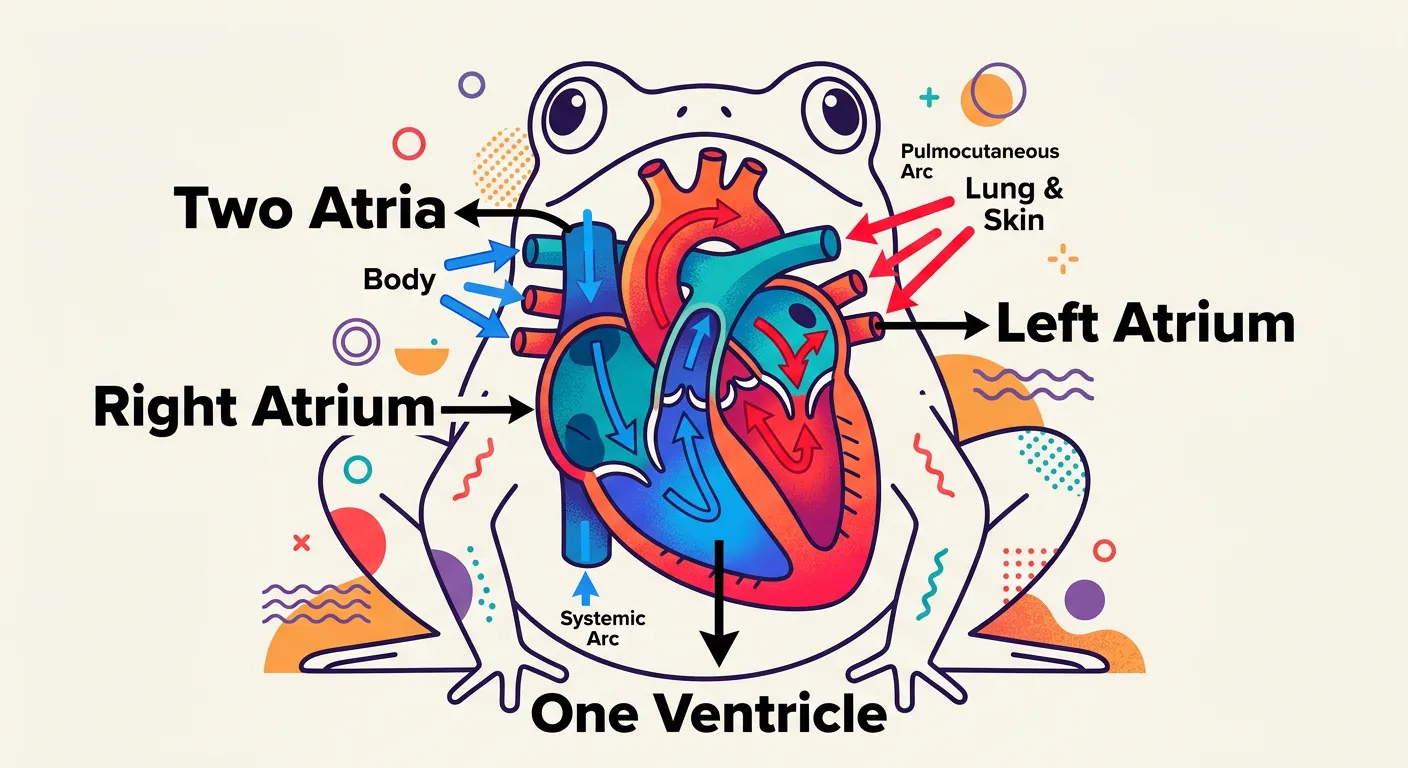
“Unlike our four-chambered heart, frogs have a three-chambered heart with two atria and one ventricle. This means their blood gets a bit mixed. It's not the most efficient system, but it works perfectly for their cold-blooded lifestyle, keeping them moving through the seasons efficiently.”
The frog's circulatory system is a closed type and features a three-chambered heart—a significant evolutionary step between the two-chambered fish heart and the four-chambered mammalian heart. The heart consists of two superior atria (right and left) and one inferior ventricle. Because there is only one ventricle, oxygenated blood from the lungs/skin and deoxygenated blood from the rest of the body mix to some extent. The heart is located in the anterior part of the body cavity and is covered by a protective double-walled membrane called the pericardium.
Two specialized accessory structures assist the heart: the Sinus venosus and the Truncus arteriosus. The Sinus venosus is a triangular chamber on the dorsal side that receives deoxygenated blood from the major veins (superior and inferior vena cava) and empties it into the right atrium. On the ventral side, the ventricle opens into the Truncus arteriosus, which then distributes blood to the rest of the body via the aortic arches.
A high-yield topic for NEET is the portal system. Frogs have a Hepatic Portal System (connecting the gut and liver) and a unique Renal Portal System (connecting the lower body and kidneys). The Renal portal system carries blood from the hindlimbs and tail region to the kidneys before it returns to the heart. The blood itself contains plasma and cells. Note that frog Red Blood Cells (RBCs) are nucleated and oval, which is a key contrast to the enucleated, biconcave RBCs of humans. The lymphatic system is also well-developed, consisting of lymph, lymph channels, and lymph nodes, which help in maintaining fluid balance.
| Feature | Frog Heart | Human Heart (Comparison) |
|---|---|---|
| Chambers | 3 (2 Atria, 1 Ventricle) | 4 (2 Atria, 2 Ventricles) |
| RBCs | Nucleated and Oval | Enucleated and Biconcave |
| Portal System | Hepatic & Renal | Hepatic only (Renal is vestigial) |
| Mixing of Blood | Occurs in the Ventricle | No mixing (Double circulation) |
Quick Revision Points
- The heart has 3 chambers: two atria and one ventricle; mixing of blood occurs.
- Sinus venosus is the receiving chamber for deoxygenated blood.
- The Renal Portal System is well-developed, transporting blood from the hindlimbs to the kidneys.
- Frog RBCs are nucleated, unlike human RBCs.
NEET Exam Angle
- Frequently asked: The presence of nucleated RBCs in frogs.
- The Renal Portal System is a classic comparison point between amphibians and mammals.
- Identify the Truncus arteriosus as the structure carrying blood away from the ventricle.
06Excretory and Osmoregulatory Physiology in Amphibians
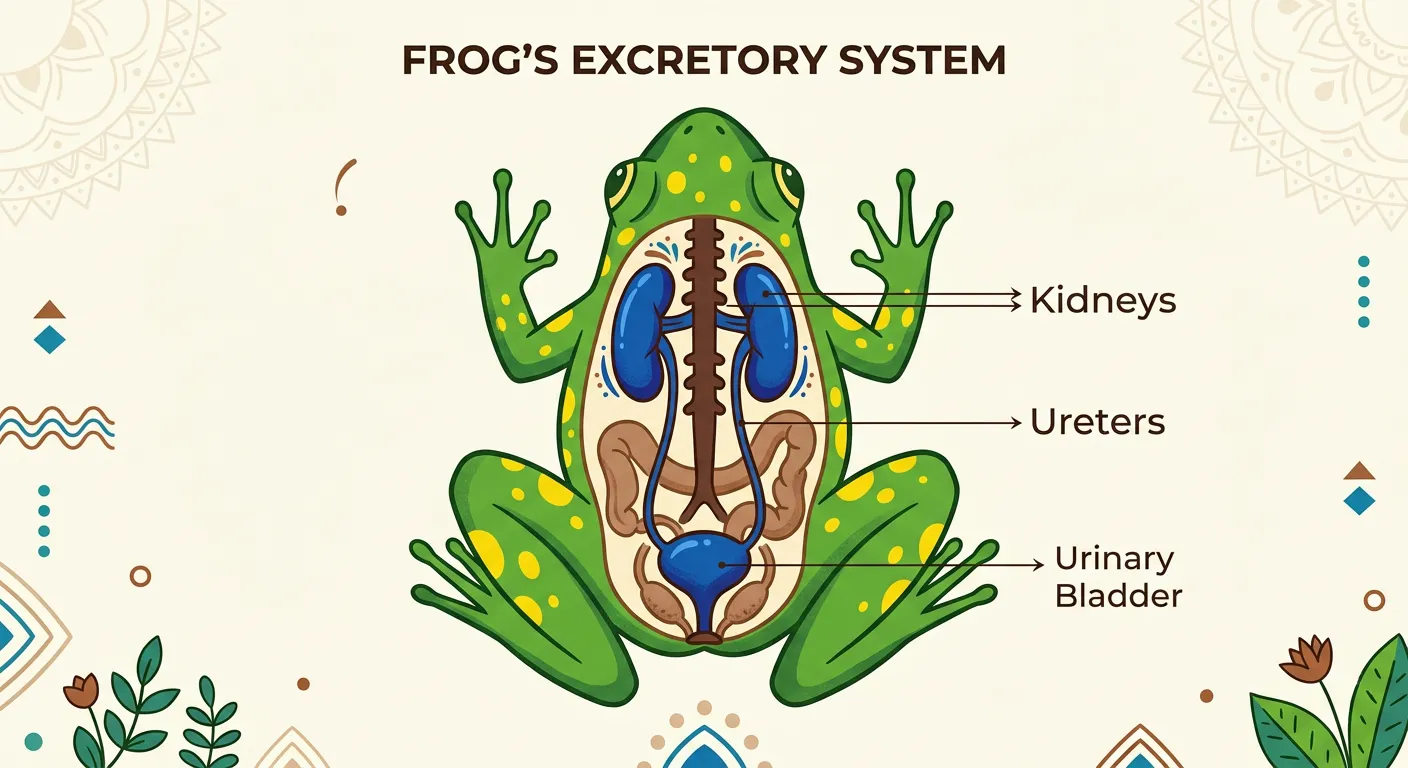
“Frogs act like a water filtration plant. Their kidneys filter out waste to form urine, which travels through ureters to be stored in the urinary bladder. It’s a vital process to keep their internal chemistry balanced, just like our own bodies maintaining homeostasis during a hectic exam season.”
The excretory system of the frog is designed to eliminate nitrogenous waste while maintaining water balance—a process called osmoregulation. The primary organs are a pair of compact, dark red, bean-like kidneys known as mesonephric kidneys. These are located posteriorly in the body cavity on both sides of the vertebral column. Each kidney is made up of thousands of structural and functional units called nephrons or uriniferous tubules. These nephrons filter the blood brought by the renal arteries and renal portal veins, concentrating the waste into urine.
The frog is classified as a ureotelic animal because adult frogs excrete urea as their primary nitrogenous waste. Urea is far less toxic than ammonia and can be stored temporarily in the body without damage. Interestingly, frog larvae (tadpoles) are ammonotelic, reflecting their fully aquatic existence. From the kidneys, two ureters emerge. In male frogs, the ureters serve a dual purpose: they carry both urine from the kidneys and sperm from the testes. Because of this shared function, they are specifically referred to as the urinogenital ducts. In males, these ducts enter the cloaca.
In females, the anatomy differs; the ureters and oviducts open separately into the cloaca. The urine is stored in a thin-walled, distensible urinary bladder located ventral to the rectum until it is expelled through the cloaca. The cloaca thus acts as the final common pathway for the digestive, urinary, and reproductive systems. This system is vital for keeping the frog’s internal chemical balance steady as it moves between aquatic and terrestrial habitats, especially considering they live in freshwater environments where they constantly face the challenge of water entering their body by osmosis through the skin.
Quick Revision Points
- Frogs possess mesonephric kidneys consisting of structural units called nephrons.
- The frog is ureotelic (excretes urea), though tadpoles are often ammonotelic.
- In males, the ureter is a 'urinogenital duct' carrying both gametes and waste.
- The urinary bladder is a thin-walled sac that opens into the cloaca.
NEET Exam Angle
- Critical distinction: The male ureter is a urinogenital duct; the female ureter is purely for urine.
- Know the term 'ureotelic' and why it applies to the adult bullfrog.
- Understand that the cloaca is the common exit for the digestive, excretory, and reproductive systems.
07Neural Control: Central and Peripheral Nervous System of the Frog
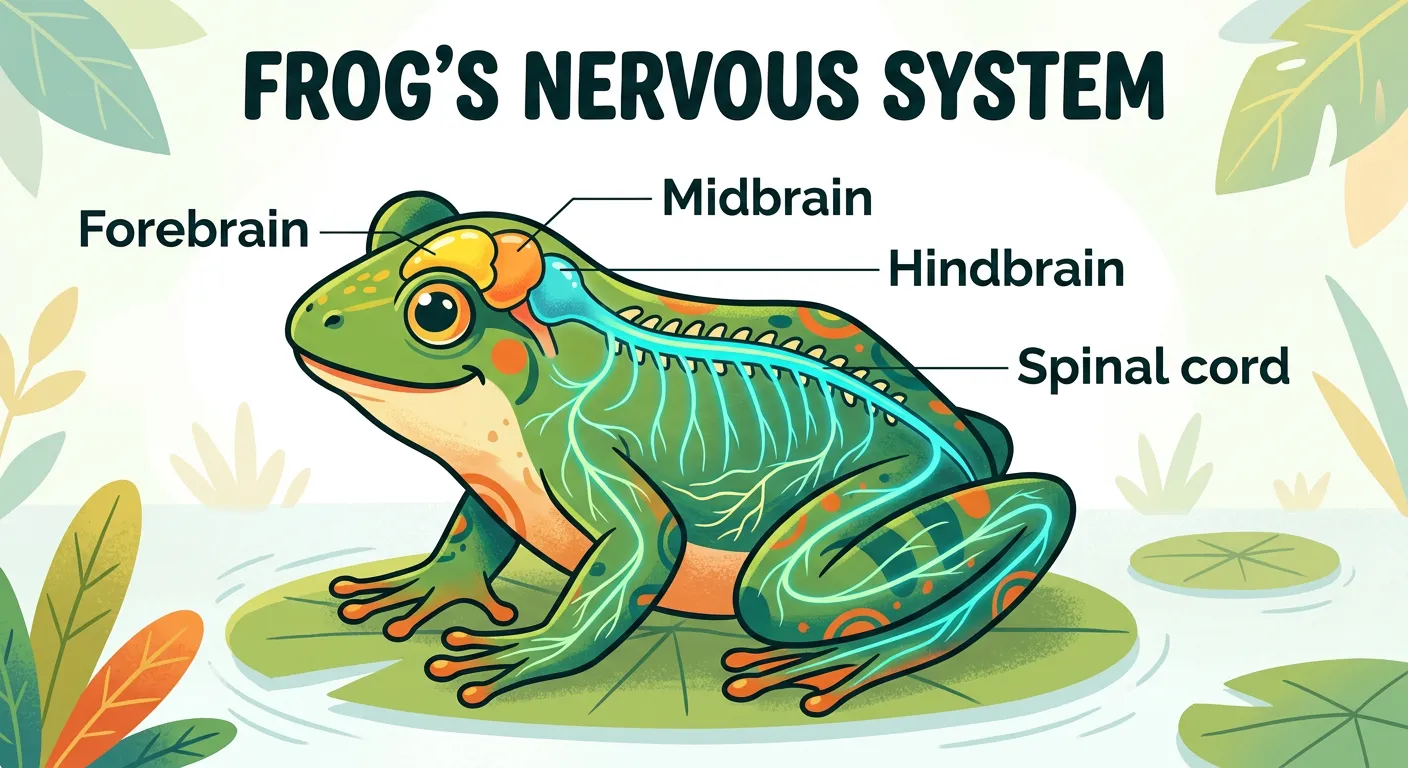
“Finally, the control center! The frog’s brain is divided into forebrain, midbrain, and hindbrain. It processes everything from vision to movement. Everything is connected by the spinal cord. Master these systems, and you've conquered the Morphology of Frog for your NEET exam. Keep learning and stay curious!”
The nervous system of the frog is highly organized, facilitating rapid reflexes and complex behaviors like hunting and mating. It is divided into the Central Nervous System (CNS), consisting of the brain and spinal cord, and the Peripheral Nervous System (PNS), which includes the cranial and spinal nerves. Additionally, an Autonomic Nervous System (sympathetic and parasympathetic) controls involuntary functions. The brain is housed within a protective bony structure called the cranium and is divided into three distinct regions: the forebrain, midbrain, and hindbrain.
The forebrain includes the olfactory lobes, which are responsible for the sense of smell, and the paired cerebral hemispheres. The midbrain is characterized by a pair of prominent optic lobes. These are particularly large in frogs, reflecting the vital importance of vision for a predator that relies on detecting movement. The hindbrain consists of the cerebellum, which coordinates movement, and the medulla oblongata, which controls involuntary vital functions. The medulla oblongata is particularly important because it passes out through an opening at the base of the skull called the foramen magnum and continues posteriorly as the spinal cord, which is protected by the vertebral column.
In terms of peripheral control, frogs possess exactly 10 pairs of cranial nerves that emerge from the brain—a key difference from the 12 pairs found in mammals. There are also 10 pairs of spinal nerves. The frog also has various sense organs: organs of touch (sensory papillae), taste (taste buds), smell (nasal epithelium-class-11-neet-biology)-class-11-neet-biology)), vision (eyes), and hearing/balance (tympanum with internal ear). Only the eyes and the tympanum are well-organized structures; the others are simple cellular aggregations around nerve endings. The coordination between these systems allows the frog to respond instantly to environmental stimuli, ensuring survival in the wild and successful reproduction during the mating season.
Quick Revision Points
- The CNS includes the brain and spinal cord; the brain is protected by the cranium.
- The frog brain has 10 pairs of cranial nerves (different from the 12 pairs in humans).
- The optic lobes (midbrain) are large, reflecting the importance of vision.
- The medulla oblongata exits via the foramen magnum to become the spinal cord.
NEET Exam Angle
- A recurring NEET question: The number of cranial nerve pairs in frogs (10).
- Identify the foramen magnum as the passage for the medulla oblongata.
- Know the regions of the brain and their basic functions (e.g., olfactory lobes for smell).
Recommended Reading
Explore related Biology topics to build deeper chapter connections for NEET.
- Morphology and Modifications · Topic 2.1
- Families · Topic 2.10
- Animal Tissues · Topic 2.11
- Digestive System · Topic 2.13
- Circulatory System · Topic 2.14
- Respiratory System · Topic 2.15
- Jump to Key Terms (Quick Revision)
- Review Common NEET Mistakes
- Solve NEET Practice MCQs
- Read Topic FAQs
- Practice NEET MCQs
- Solve NEET PYQs
📚 Key Terms
⚠️ Common NEET Mistakes
- 1Thinking frogs have an external ear pinna; they only have a tympanum.
- 2Confusing the number of digits: Forelimbs have 4, while hindlimbs have 5.
- 3Assuming frogs drink water like mammals; they actually absorb it through their skin.
- 4Mistaking the male ureter for a purely urinary duct; in males, it is a urinogenital duct carrying sperm too.
- 5Believing lungs are used during hibernation; only the skin is used for gas exchange during dormancy.
📝 NEET PYQ & Practice Questions
Test your understanding of Frog Morphology with NCERT-aligned sample questions.
Which of the following statements is correct regarding "Rana tigrina" in the context of NEET Biology?
In NEET question papers, questions related to "Frog Morphology" predominantly test:
Consider Nictitating membrane associated with Frog Morphology. What is the primary characteristic expected in NEET MCQs?
Master Frog Morphology with NeetQ AI Tutor
Practice 50+ topic-wise MCQs, previous 15 years NEET questions, and get step-by-step doubt resolution instantly.
❓ Frequently Asked Questions
How does the respiratory system of a frog change during hibernation?
During hibernation, pulmonary and buccopharyngeal respiration stop completely. The frog relies solely on cutaneous respiration, where oxygen from the air trapped in soil or water diffuses through its moist skin into the bloodstream.
What is the function of the nictitating membrane in Rana tigrina?
The nictitating membrane is a transparent third eyelid that protects the eye and keeps it moist while the frog is underwater. It allows the frog to see clearly while shielding the eye from debris.
How do you distinguish between a male and female frog based on external morphology?
Male frogs can be identified by the presence of sound-amplifying vocal sacs in the throat and copulatory pads on the first digit of the forelimbs. Females lack these structures and are generally larger.
Why is the frog's heart described as having 'mixed' blood?
Because the frog heart has only one ventricle, oxygen-rich blood from the left atrium and oxygen-poor blood from the right atrium are pumped into the same chamber, resulting in a mixture before being sent to the body.
What is the significance of the cloaca in the frog's anatomy?
The cloaca is a common terminal chamber that receives products from the digestive tract (feces), the excretory system (urine), and the reproductive system (gametes) before they are expelled from the body.
Which nitrogenous waste is excreted by the frog and why?
Adult frogs are ureotelic, meaning they excrete urea. This is an adaptation to terrestrial life to conserve water, as urea is less toxic than ammonia and requires less water for excretion.
Written By
NEET Content Strategist & Biology Expert
Sangita Kumari is a NEET educator and content strategist with over 6 years of experience teaching Biology, Chemistry, and Physics to Class 11 and 12 aspirants. She helps bridge the gap between traditional NCERT preparation and modern AI-powered learning. Her content is trusted by thousands of NEET aspirants across India.