🎬 Video Lesson Available
Watch the full 7-slide video lesson for Concept of Species with AI teacher narration and visual explanations.
Concept of Species — Master the biological concept of species and the 7 obligate taxonomic categories. Essential NEET Class 11 Biology guide with examples and PYQ patterns.
01The Biological Concept of Species: Defining the Fundamental Unit
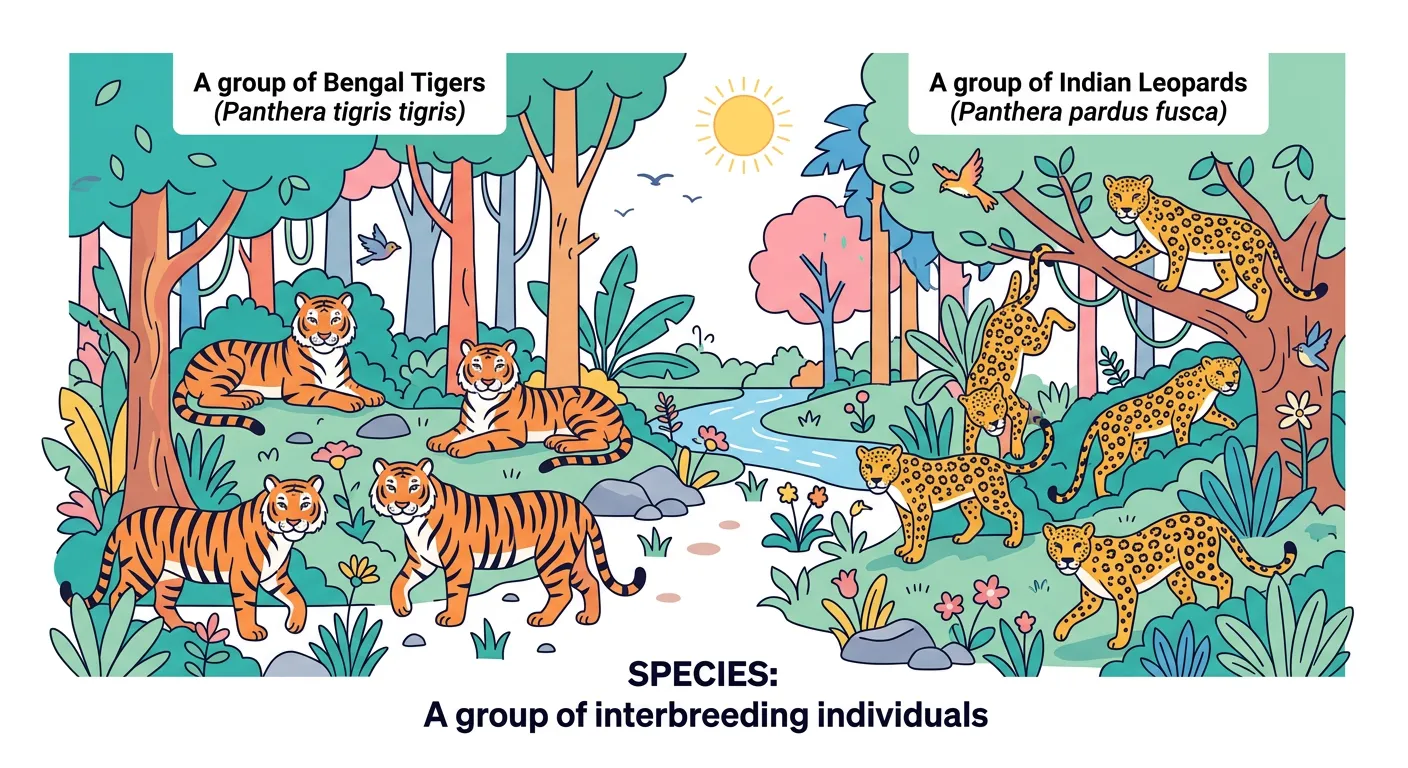
“Welcome, NEET warriors! Today we crack the code of classification. Imagine a species as a big family reunion where everyone can successfully reproduce and have fertile babies. Whether it's a Bengal tiger or a leopard, if they can't interbreed, they simply aren't the same species. It is biology's golden rule!”
To understand the grand complexity of life, we must first start at the very bottom of the ladder: the species. In the eyes of a taxonomist, a species is not just a group of animals that look similar; it is the fundamental unit of classification and the only category that has a real existence in nature. When we talk about a species, we are describing a group of individuals that share fundamental similarities and, most importantly, possess the potential to interbreed among themselves in nature to produce fertile offspring. This isn't just about looks; it's about the ability to sustain a lineage. This is often referred to as the 'Biological Concept of Species,' a definition famously championed by Ernst Mayr, who is frequently hailed as the 'Darwin of the 20th Century.'
Imagine a Bengal Tiger (Panthera tigris) and a Leopard (Panthera pardus). While they both belong to the same genus and share many physical traits like predatory teeth and retractile claws, they are distinct species because, in the wild, they do not interbreed to produce a self-sustaining population. This boundary is known as reproductive isolation. It ensures that the genetic integrity of each species remains intact over generations. Even if hybrids are produced in captivity (like ligers), they are usually sterile or do not occur in natural conditions, failing the 'species test.' For a NEET aspirant, understanding this 'Golden Rule' is crucial because it explains why evolution branches out rather than blending into a uniform soup of life. We distinguish one species from another based on distinct morphological differences that are measurable and consistent, such as the shape of a leaf or the pattern of a skull.
Quick Revision Points
- Fundamental Unit: Species is the lowest and most basic level of the taxonomic hierarchy.
- Ernst Mayr's Definition: A species is a group of actually or potentially interbreeding natural populations.
- Reproductive Isolation: The key mechanism that prevents different species from merging or exchanging genes.
- Fertile Offspring: The true test of a species; offspring must be able to reproduce further (unlike mules).
- Morphological Traits: Physical differences that allow us to tell a Mango (Mangifera indica) from a Potato (Solanum tuberosum).
NEET Exam Angle
- Questions often focus on the scientist associated with the biological concept (Ernst Mayr).
- Understand that species are 'real' biological entities, unlike some higher categories which can be more abstract groupings.
- Focus on the term 'Reproductive Isolation' as it frequently appears in both the 'Diversity in Living Organisms' and 'Evolution' units.
02The Taxonomical Hierarchy: Navigating the Ladder of Life
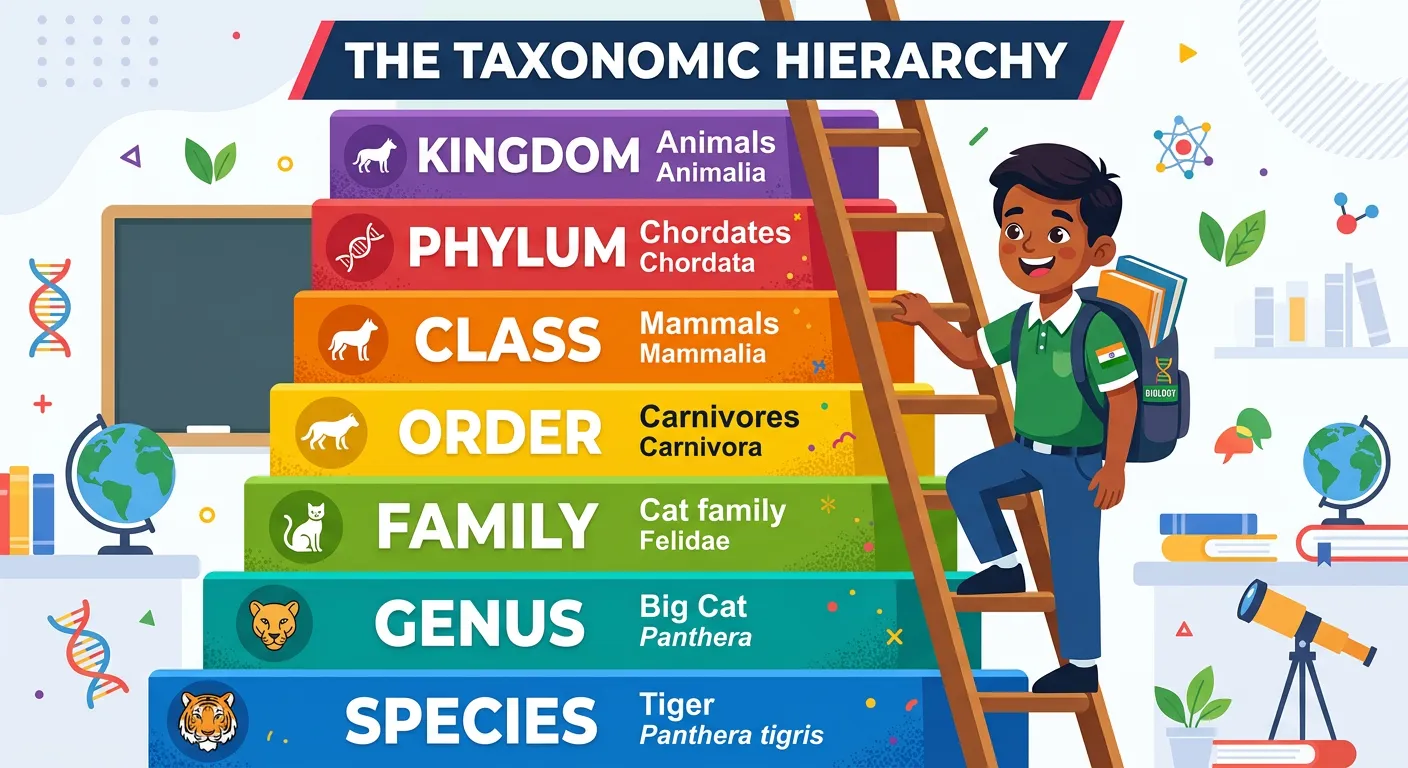
“Think of the taxonomical hierarchy like your home address. You start at your house (Species) and move up to your city, state, and finally the country (Kingdom). As we move up this ladder, the number of shared traits decreases, but the group size gets much, much larger!”
Classification is not a single-step process but involves a hierarchy of steps where each step represents a rank or category. We call this the taxonomical hierarchy. Think of it like your residential address: you live in a specific room (Species), inside a house (Genus), on a street (Family), in a ward (Order), in a city (Class), in a state (Phylum/Division), and finally, in a country (Kingdom). As you move from your room to the country level, the number of people you share the 'space' with increases, but the number of specific things you have in common with every single person in that group decreases. This is the central logic of Linnaean classification, which seeks to organize the millions of known organisms into a manageable system.
In biology, there are seven obligate categories. These are mandatory levels every organism must be assigned to. A common point of confusion for students is the relationship between the rank and the traits shared. Remember this rule of thumb: As we go higher from Species to Kingdom, the number of common characteristics goes on decreasing. Lower the taxa, more are the characteristics that the members within the taxon share. Conversely, at higher levels like Kingdom, it becomes increasingly difficult to determine the relationship between different organisms because they share very few fundamental features, such as basic cell structure or mode of nutrition.
| Taxonomic Category | Trend in Common Characteristics | Group Size (Diversity) |
|---|---|---|
| Species | Maximum | Minimum |
| Genus | High | Low |
| Family | Moderate | Medium |
| Kingdom | Minimum | Maximum |
Quick Revision Points
- Seven Obligate Categories: Kingdom, Phylum/Division, Class, Order, Family, Genus, Species.
- Taxon: Each unit or rank in the hierarchy is technically called a 'taxon' (plural: taxa).
- Inverse Relationship: Common traits decrease as you move up; group size increases.
- Ascending Order: Starting from the most specific (Species) and ending at the most general (Kingdom).
- Descending Order: Starting from Kingdom and ending at Species.
NEET Exam Angle
- A very common MCQ pattern asks to identify the correct sequence (e.g., Family -> Order -> Class).
- Remember: Phylum is used for animals, while Division is the equivalent term used for plants.
- Pay close attention to 'Match the Column' questions involving the classification of Mango, Wheat, Man, and Housefly, as these are taken directly from NCERT tables.
03Understanding the Genus: A Shared Surname in Nature
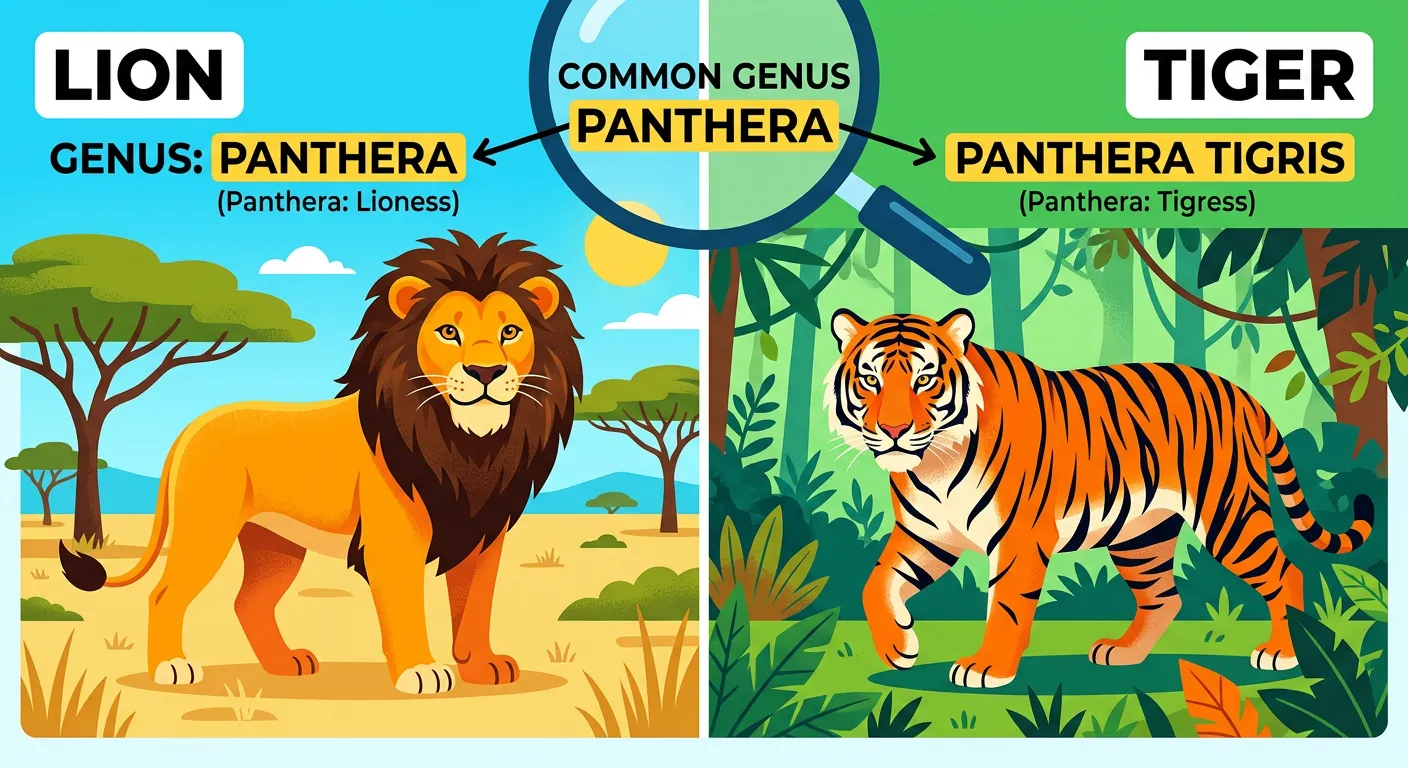
“Meet the Genus! Think of the Genus as a surname. Just like you share a surname with your cousins, the Lion and Tiger share the genus 'Panthera'. They are closely related cousins, but they belong to different species because they are distinct, independent branches of the family tree.”
Moving one step up from the species, we encounter the Genus. A Genus comprises a group of related species which has more characters in common in comparison to species of other genera. If you think of a species as a specific individual's name, the Genus is like the family surname. It signifies a close evolutionary relationship and shared ancestry. For example, the Lion (Panthera leo), the Leopard (Panthera pardus), and the Tiger (Panthera tigris) all belong to the genus Panthera. They share several common features, such as the structure of the hyoid bone which allows for roaring, that distinguish them from, say, the genus Felis, which includes the common house cat.
In the plant world, the same logic applies with equal precision. Take the genus Solanum. It is a massive group that includes the potato (Solanum tuberosum), the brinjal (Solanum melongena), and the makoi (Solanum nigrum). While a potato and a brinjal look very different to a chef or a gardener, a botanist sees shared floral symmetry and vegetative structures that prove they are 'evolutionary cousins.' It is also worth noting that a genus can be monotypic (containing only one species, like Homo sapiens) or polytypic (containing many species). In Binomial Nomenclature, the Genus is always the first word and must always be capitalized. It provides the immediate context for an organism's identity before we get into the specifics of the species name. By grouping these species, scientists can make predictions about the biology of a newly discovered species based on its generic relatives.
Quick Revision Points
- Definition: An aggregate of closely related species sharing common anatomical features.
- Panthera Example: Includes big cats like Leo (Lion), Tigris (Tiger), and Pardus (Leopard).
- Solanum Example: A diverse plant genus including Potato, Brinjal, and Makoi.
- Comparison: Species of one genus share more traits than species belonging to different genera.
- Nomenclature: The generic name is the first part of the scientific binomial and is always capitalized.
NEET Exam Angle
- Be prepared for questions asking which species belong to the genus Panthera or Solanum.
- Genus represents a higher level of abstraction than species; it is the first level where we group different organisms together based on similarities.
- Understand that even though species within a genus are related, they remain reproductively isolated from each other in natural habitats.
04The Family Level: Grouping Genera with Shared Vegetative and Reproductive Features
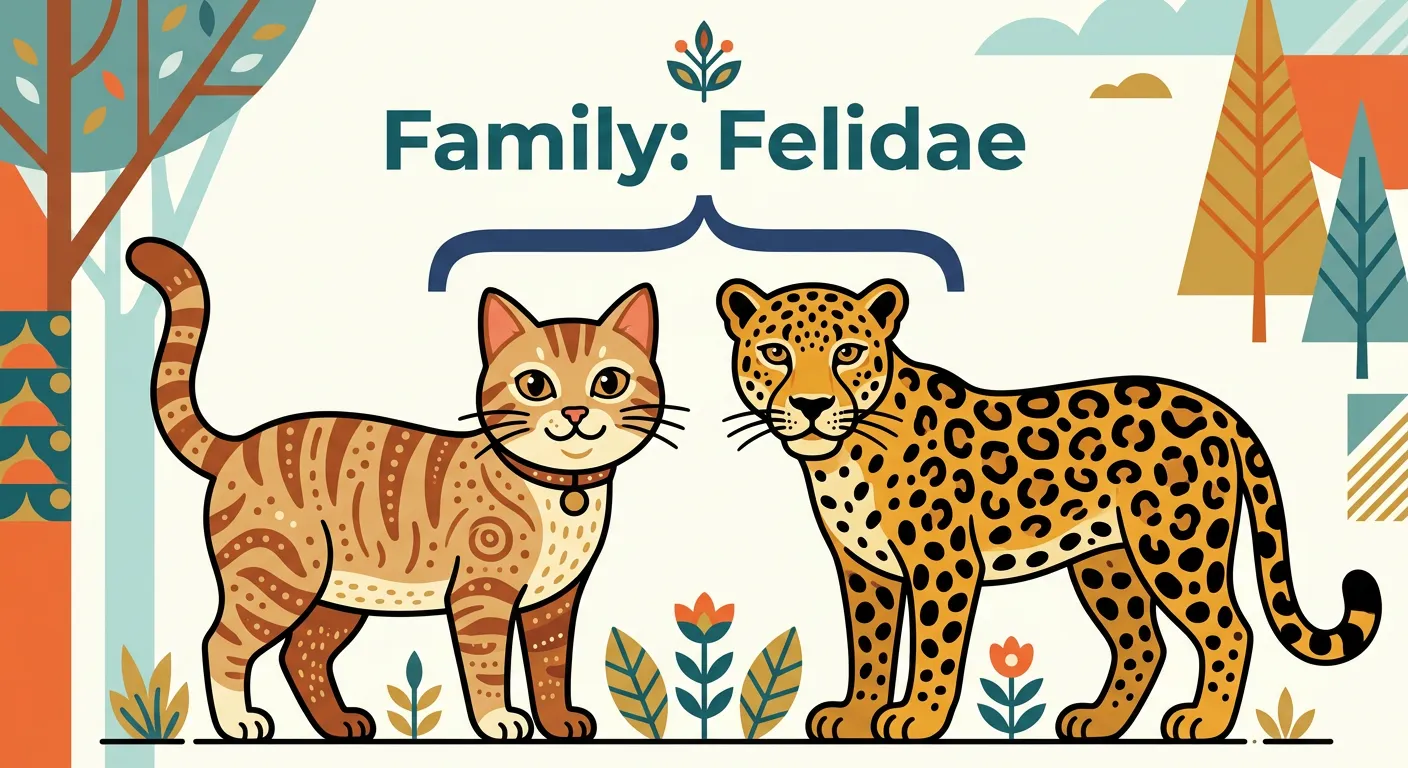
“Moving up to Family! Now, we group related genera together. The cat in your house and the mighty leopard both belong to the family 'Felidae'. They share common ancestors and structural features. It’s like gathering all your extended relatives into one big, organized family hall.”
As we move further up the taxonomic ladder, we reach the 'Family' category. Families are characterized on the basis of both vegetative and reproductive features of plant species, or shared anatomical traits in animals. A family contains a group of related genera. However, compared to the Genus and Species levels, the number of similarities among members of a family is significantly lower. It is a broader bucket that gathers 'distant cousins' who still share a recognizable architectural plan. In plant taxonomy, reproductive (floral) features are often considered more stable and reliable than vegetative features (like leaf shape) for defining families because they are less influenced by environmental changes.
Let’s look at the family Felidae. This family includes the genus Panthera (the big cats) and the genus Felis (the small cats). Although a house cat and a lion are very different in size, habitat, and behavior, they share retractile claws, similar dental patterns (highly specialized for carnivory), and skeletal structures that place them in the same family. In contrast, if you look at a dog, you will notice distinct differences in the way it walks and its non-retractile claws. Therefore, dogs are placed in a completely different family called Canidae. In the plant kingdom, three different genera like Solanum, Petunia, and Datura are all placed in the family Solanaceae based on their common floral characteristics, such as the number of stamens and ovary position. This level of classification helps scientists understand the broad evolutionary trends within a lineage.
| Organism | Genus | Family |
|---|---|---|
| Lion | Panthera | Felidae |
| House Cat | Felis | Felidae |
| Dog | Canis | Canidae |
| Potato | Solanum | Solanaceae |
Quick Revision Points
- Basis of Classification: Uses both vegetative (stems) and reproductive (flowers) traits for plants.
- Felidae vs. Canidae: The classic animal example distinguishing the cat family from the dog family.
- Solanaceae: A key plant family (the Potato family) including Solanum, Petunia, and Datura.
- Decreasing Similarity: Families show fewer common characters than genera.
- Naming Convention: Plant families usually end in '-aceae', while animal families end in '-idae'.
NEET Exam Angle
- Focus on the suffix: Plant families usually end in '-aceae' (e.g., Solanaceae, Fabaceae).
- Animal families often end in '-idae' (e.g., Felidae, Canidae, Hominidae).
- Know the family of the Housefly (Muscidae) and Man (Hominidae) as they are frequently tested and appear in the NCERT summary tables.
05Classifying by Order: Broad Assemblages Based on Aggregated Characters
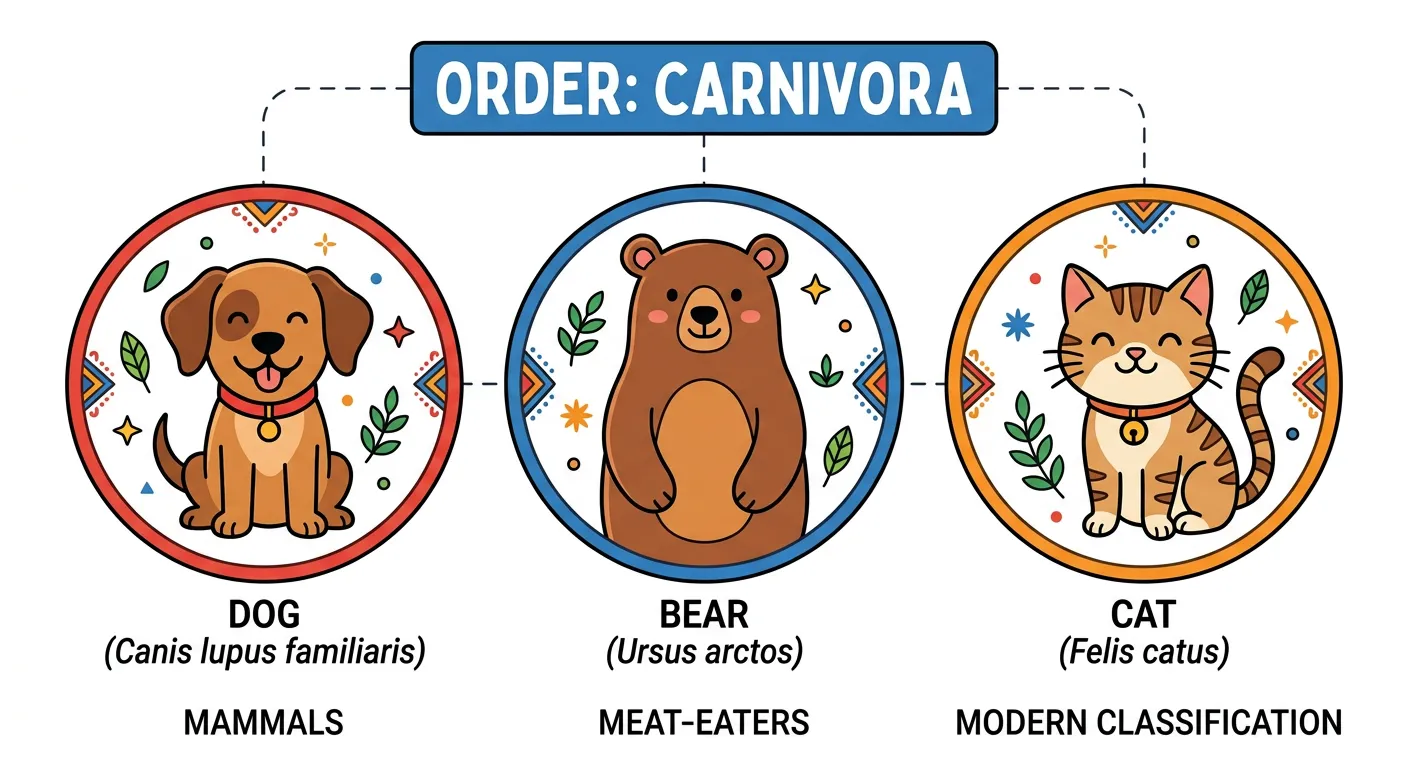
“Next up is Order! Here, we group families that share broad, common features. For instance, the order 'Carnivora' includes families like cats, dogs, and bears. They are all meat-eaters by evolution. It's like grouping different clubs in school based on their shared activities or interests.”
You have seen that categories like species, genus, and families are based on a number of similar characters. Generally, Order and other higher taxonomic categories are identified based on the aggregates of characters rather than just one or two specific traits. An Order is a higher category which is the assemblage of families which exhibit a few similar characters. The similar characters are less in number as compared to different genera included in a family. By the time we reach this level, we are looking at the 'big picture' of biological organization, grouping families that share major developmental or ecological strategies.
Take the order Carnivora as a primary example. This order brings together families that might seem very different at first glance, such as Felidae (cats), Canidae (dogs), Ursidae (bears), and Hyaenidae (hyenas). What do they have in common? They are all primarily meat-eaters with specific dental adaptations, such as prominent canines and carnassial teeth, designed for hunting and tearing flesh. In the plant world, the order Polymoniales includes families like Solanaceae and Convolvulaceae. This grouping is based mainly on floral characters, such as flower symmetry and seed structure. By the time we reach the level of Order, we are grouping organisms that might look totally different in their outward morphology but share a fundamental ecological niche or a major anatomical blueprint. This broadness allows for the inclusion of highly diverse life forms that nonetheless share a deep-seated evolutionary history.
Quick Revision Points
- Assemblage of Families: Order groups related families together.
- Carnivora: Includes families of cats (Felidae), dogs (Canidae), and bears (Ursidae).
- Polymoniales: Includes families like Solanaceae (Potato) and Convolvulaceae (Sweet Potato).
- Aggregated Characters: Classification here is based on a collection of traits rather than a single specific feature.
- Suffix: Plant orders often end in the suffix '-ales'.
NEET Exam Angle
- Identify Carnivora as the order for both tigers and wolves.
- Remember the order for Humans (Primata) and Houseflies (Diptera).
- Understand that as we move up to Order, the number of shared characters drops significantly compared to the Family level, making this a more inclusive category.
| Category | Plant Example | Animal Example |
|---|---|---|
| Family | Solanaceae | Felidae |
| Order | Polymoniales | Carnivora |
06The Class Mammalia: Identifying Fundamental Biological Building Blocks
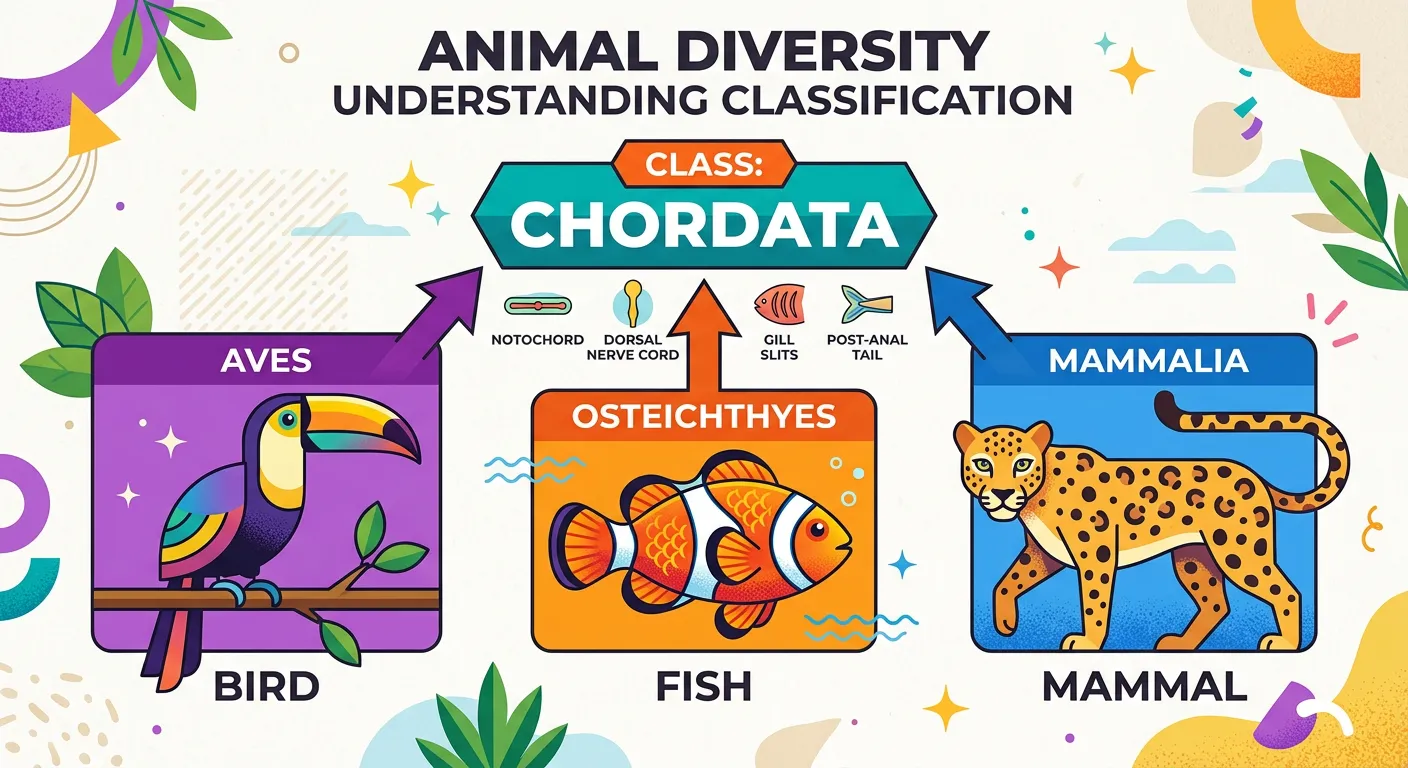
“We are getting high up now! Class brings together different orders. Think of the class 'Mammalia'—it includes everything from humans to whales! Despite looking different, they all share essential features like hair and mammary glands. It’s a very broad group based on fundamental biological building blocks.”
The category of 'Class' represents a major leap in biological organization. A Class includes related orders that share very fundamental and ancient biological building blocks. Consider the class Mammalia. This class is incredibly diverse, containing everything from the tiny shrew to the massive blue whale, and even humans. What could a bat (order Chiroptera), a whale (order Cetacea), and a tiger (order Carnivora) possibly have in common? The answer lies in two diagnostic features that define the entire class: the presence of mammary glands (milk-producing glands to nourish the young) and the presence of hair on the body. These traits are universal within the class, regardless of whether the animal flies, swims, or walks.
Within the class Mammalia, you will find various orders grouped together. For example, order Primata (comprising monkeys, apes, and humans) is placed in class Mammalia along with order Carnivora (comprising tigers, cats, and dogs). This demonstrates how Class acts as a broad umbrella. Despite the massive morphological differences between a human and a tiger—such as brain size, limb structure, and social behavior—their basic reproductive biology, presence of a diaphragm, and skin structures are similar enough to keep them together in this high-level taxon. For NEET, visualizing how these orders fit into the class is essential for understanding the unity of life. In plants, classes like Dicotyledonae (dicots) and Monocotyledonae (monocots) are used to group orders based on seed structure (number of cotyledons), showing that the same hierarchical logic applies across all kingdoms.
Quick Revision Points
- Definition: A taxonomic group consisting of one or more related orders.
- Mammalia Key Features: Presence of mammary glands and hair; three middle ear bones.
- Diversity: High variation in form (e.g., aquatic whales, flying bats, terrestrial humans).
- Orders in Mammalia: Primata, Carnivora, Rodentia, Cetacea, etc.
- Hierarchy Position: Class sits between Order (below) and Phylum (above).
NEET Exam Angle
- A common question asks: 'Which category includes both Primata and Carnivora?' The answer is Class Mammalia.
- Focus on the diagnostic features of Mammals for 'Statement-based' or 'Correct/Incorrect' questions.
- Learn the class of Mango (Dicotyledonae) and Wheat (Monocotyledonae) as they represent the major plant groupings in the NCERT syllabus.
| Order | Common Name Examples | Class |
|---|---|---|
| Primata | Monkeys, Humans | Mammalia |
| Carnivora | Lions, Dogs | Mammalia |
| Rodentia | Rats, Squirrels | Mammalia |
07Phylum and Kingdom: The Highest Tiers of Biological Organization
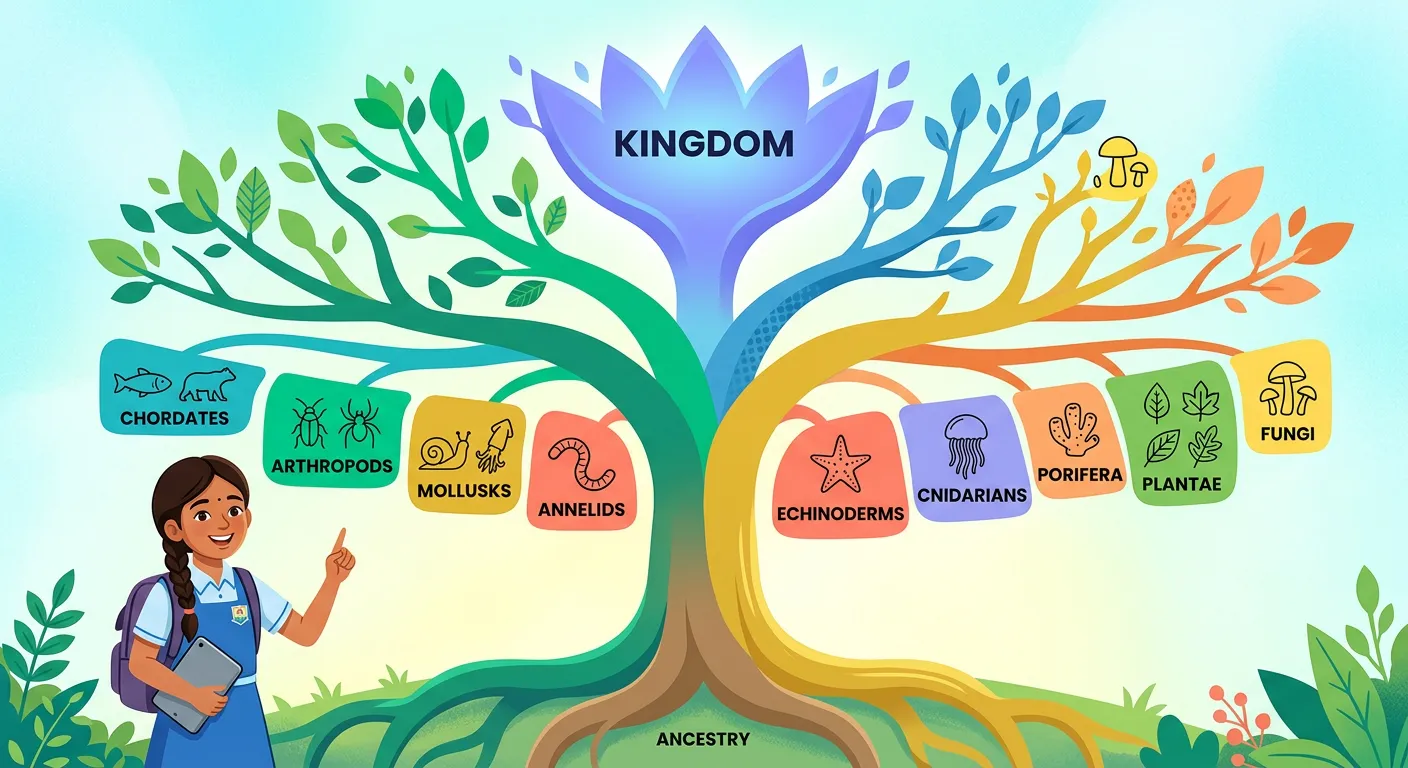
“Finally, we reach Phylum and the massive Kingdom. Kingdom Animalia includes everything from a tiny sponge to an elephant! Classification helps us organize the chaotic diversity of life into a neat, understandable system. Now, you’re ready to master any NEET question on taxonomy. Let's go!”
At the summit of the taxonomic hierarchy, we find the Phylum and the Kingdom. These represent the most inclusive levels of classification. For animals, the term 'Phylum' is used to group classes based on common fundamental features that were established early in evolutionary history. A classic example is Phylum Chordata, which includes classes like Pisces (fishes), Amphibia, Reptilia, Aves (birds), and Mammalia. These diverse groups are all united by the presence of a notochord, a dorsal hollow neural system, and paired pharyngeal gill slits at some stage of their development. In plants, the equivalent level is called 'Division', where classes are grouped based on major structural characters like the presence of vascular tissues (Division Tracheophyta) or seed structures.
All animals, from the simplest sponges and insects to complex mammals, ultimately belong to the Kingdom Animalia. Similarly, all plants, from simple mosses to giant redwood trees, are part of the Kingdom Plantae. At this level, the commonalities are reduced to the most fundamental life processes, such as the mode of nutrition (autotrophic vs. heterotrophic), cellular organization (multicellular vs. unicellular), and the presence or absence of a cell wall. The Kingdom level provides the widest possible lens through which we can view the diversity of life on Earth. Understanding this entire hierarchy allows scientists to catalog millions of species into a neat, predictable, and globally recognized system. For NEET aspirants, mastering this hierarchy is not just about memorization; it's about understanding the evolutionary map that connects a tiny bacterium to the giant blue whale. This systematic organization is what allows us to study the vast complexity of nature in a structured and logical way.
Quick Revision Points
- Phylum vs. Division: Phylum is the term for animal groups; Division is the term for plant groups.
- Chordata: A major phylum characterized by a notochord and dorsal nerve cord.
- Kingdom: The highest and broadest category (e.g., Animalia, Plantae, Fungi).
- Minimum Shared Traits: Members of a Kingdom share the fewest specific characteristics.
- Global Biodiversity: Classification is essential for organizing the 1.7-1.8 million known species.
NEET Exam Angle
- Expect 'True/False' or 'Correct/Incorrect' statements regarding the use of 'Division' for plants.
- The Five Kingdom classification (Monera, Protista, Fungi, Plantae, Animalia) proposed by R.H. Whittaker is the standard for the Kingdom level.
- Be prepared to trace the full classification of a specific organism (like Man or Mango) from Kingdom all the way down to Species.
| Category | Animal (Man) | Plant (Mango) |
|---|---|---|
| Kingdom | Animalia | Plantae |
| Phylum/Division | Chordata | Angiospermae |
| Class | Mammalia | Dicotyledonae |
Recommended Reading
Explore related Biology topics to build deeper chapter connections for NEET.
- What is Living · Topic 1.1
- Kingdom Fungi · Topic 1.10
- Lichens · Topic 1.11
- Viruses and Viroids · Topic 1.12
- Algae · Topic 1.13
- Bryophytes · Topic 1.14
- Jump to Key Terms (Quick Revision)
- Review Common NEET Mistakes
- Solve NEET Practice MCQs
- Read Topic FAQs
- Practice NEET MCQs
- Solve NEET PYQs
📚 Key Terms
⚠️ Common NEET Mistakes
- 1Using the term 'Phylum' when discussing plant classification; remember the correct NCERT term is 'Division'.
- 2Thinking that organisms in the same Kingdom share many physical features; they actually share the fewest number of traits compared to any other rank.
- 3Confusing the suffix '-aceae' (which denotes a Family in plants) with '-ales' (which denotes an Order in plants).
- 4Forgetting that in binomial nomenclature, the generic name (Genus) must always be capitalized while the specific epithet (Species) is lowercase.
- 5Assuming that interbreeding alone defines a species; the definition specifically requires the production of 'fertile' offspring to ensure the lineage continues.
📝 NEET PYQ & Practice Questions
Test your understanding of Concept of Species with NCERT-aligned sample questions.
Which of the following statements is correct regarding "Biological Species Concept" in the context of NEET Biology?
In NEET question papers, questions related to "Concept of Species" predominantly test:
Consider Taxonomic Hierarchy associated with Concept of Species. What is the primary characteristic expected in NEET MCQs?
Master Concept of Species with NeetQ AI Tutor
Practice 50+ topic-wise MCQs, previous 15 years NEET questions, and get step-by-step doubt resolution instantly.
❓ Frequently Asked Questions
What is the biological concept of species defined by Ernst Mayr?
Ernst Mayr defined a species as a group of actually or potentially interbreeding natural populations that are reproductively isolated from other such groups. The key criterion is the ability to produce fertile offspring under natural conditions.
Why does the number of common characteristics decrease as we move from species to kingdom?
As you move up the hierarchy, the groups become broader and more inclusive. While a species shares nearly all genetic and morphological traits, a Kingdom includes extremely diverse organisms that share only the most fundamental cellular, structural, or nutritional features.
How is a 'Division' different from a 'Phylum' in the taxonomic hierarchy?
They occupy the same rank in the hierarchy, but 'Division' is the term specifically used in plant classification, whereas 'Phylum' is the term used in animal classification.
Which taxonomic category includes families like Felidae and Canidae?
Families like Felidae (cats) and Canidae (dogs) are grouped together in the Order Carnivora because they share broad meat-eating traits and similar dental structures.
What are the seven obligate categories in the Linnaean hierarchy?
The seven mandatory categories are Kingdom, Phylum (or Division), Class, Order, Family, Genus, and Species, typically arranged in descending order from broadest to most specific.
Can two different species within the same genus interbreed naturally?
Generally, no. Species within a genus are distinct biological entities that are reproductively isolated. While some might produce hybrids in captivity (like a liger), they do not interbreed to form fertile, self-sustaining populations in their natural wild habitats.
Written By
NEET Content Strategist & Biology Expert
Sangita Kumari is a NEET educator and content strategist with over 6 years of experience teaching Biology, Chemistry, and Physics to Class 11 and 12 aspirants. She helps bridge the gap between traditional NCERT preparation and modern AI-powered learning. Her content is trusted by thousands of NEET aspirants across India.