🎬 Video Lesson Available
Watch the full 7-slide video lesson for Chordate Classes with AI teacher narration and visual explanations.
Chordate Classes — Master Phylum Chordata classes for NEET. Expert notes on Cyclostomata, Pisces, Amphibia, Reptilia, Aves, and Mammalia with 3-5 features and examples.
01The Chordata VIP Club: Defining the Three Fundamental Diagnostic Features
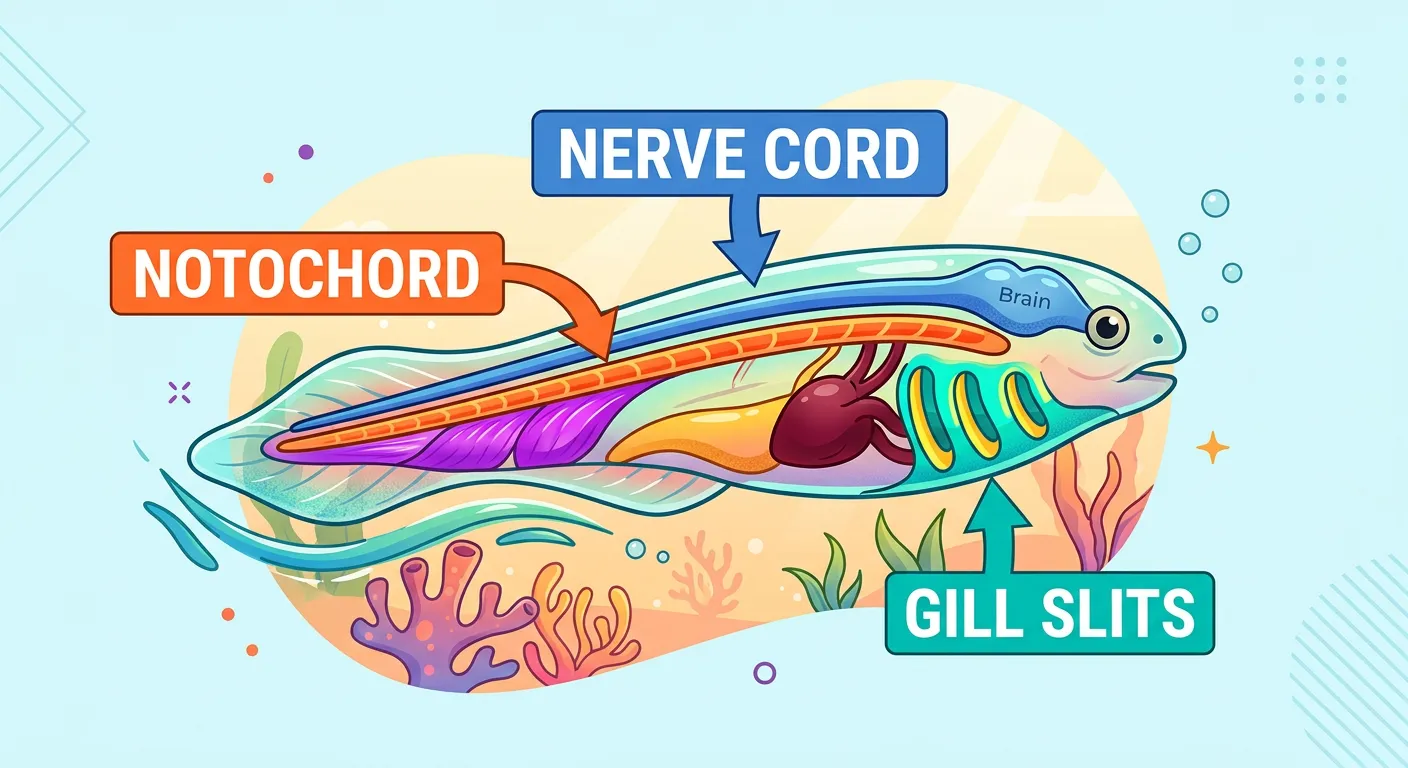
“Welcome, future doctors! Imagine the phylum Chordata as the 'VIP club' of the animal kingdom. To enter, you need three golden tickets: a stiff rod-like Notochord, a hollow nerve cord, and gill slits. Think of the notochord as your skeletal foundation. Let's dive into these classes!”
Phylum Chordata-neet-biology)-neet-biology)-neet-biology)-neet-biology)-neet-biology)-neet-biology)-neet-biology)-neet-biology)-neet-biology)-neet-biology)-neet-biology)-neet-biology) represents the most advanced and complex group in the animal kingdom. For a NEET aspirant, understanding its fundamental blueprint is the essential first step toward mastering animal classification. To be classified as a chordate, an organism must possess three specific structural 'hallmarks' at some stage of its life cycle, though these may be modified or lost in adulthood. The first and most eponymous is the Notochord, a flexible, rod-like structure that runs along the dorsal side between the digestive tube and the nerve cord. It provides skeletal support and serves as an anchor for muscles. In higher vertebrates, this notochord is replaced by the bony vertebral column during embryonic development, but its early presence remains a non-negotiable rule of the phylum.
Beyond the notochord, all chordates are characterized by a dorsal hollow nerve cord. This represents a significant evolutionary shift from non-chordates (like annelids or arthropods), whose nerve cords are typically ventral and solid. In humans and other higher vertebrates, this hollow cord eventually differentiates into the central nervous system, comprising the brain and spinal cord. The third mandatory feature is the presence of paired pharyngeal gill slits. These are openings that connect the pharynx to the outside environment. In aquatic forms, they facilitate respiration and filter-feeding, whereas, in terrestrial chordates, they appear as vestigial structures in the embryo before transforming into components of the ear and throat. Finally, a post-anal tail is a hallmark of this phylum, functioning in locomotion or balance, though it may be drastically reduced in species like humans. These four features ensure that chordates possess a highly organized, triploblastic, and coelomate body plan capable of supporting complex physiological functions.
Quick Revision Points
- Notochord: Longitudinal rod providing skeletal support; located between the nerve cord and the gut.
- Dorsal Nerve Cord: Hollow structure that differentiates chordates from the ventral-solid cord of non-chordates.
- Pharyngeal Slits: Openings in the pharynx used for filter-feeding or respiration; present at some developmental stage.
- Post-anal Tail: An extension of the body past the anal opening, often used for locomotion.
- Symmetry & Body Plan: All chordates exhibit bilateral symmetry, triploblastic development, and an organ-system level of organization.
NEET Exam Angle
- Conceptual Focus: Questions often contrast Chordates and Non-chordates. Remember: Chordates have a dorsal heart (if present) and a dorsal nerve cord, while Non-chordates have a ventral heart and a ventral nerve cord.
- Direct MCQs: Expect questions on the position of the nerve cord (Dorsal vs. Ventral) and its nature (Hollow vs. Solid).
- Critical Example: Mentioning the presence of the post-anal tail in human embryos is a common statement-based question used to test your understanding of 'vestigial' chordate features.
02Class Cyclostomata: The Primitive Jawless and Parasitic Vertebrates
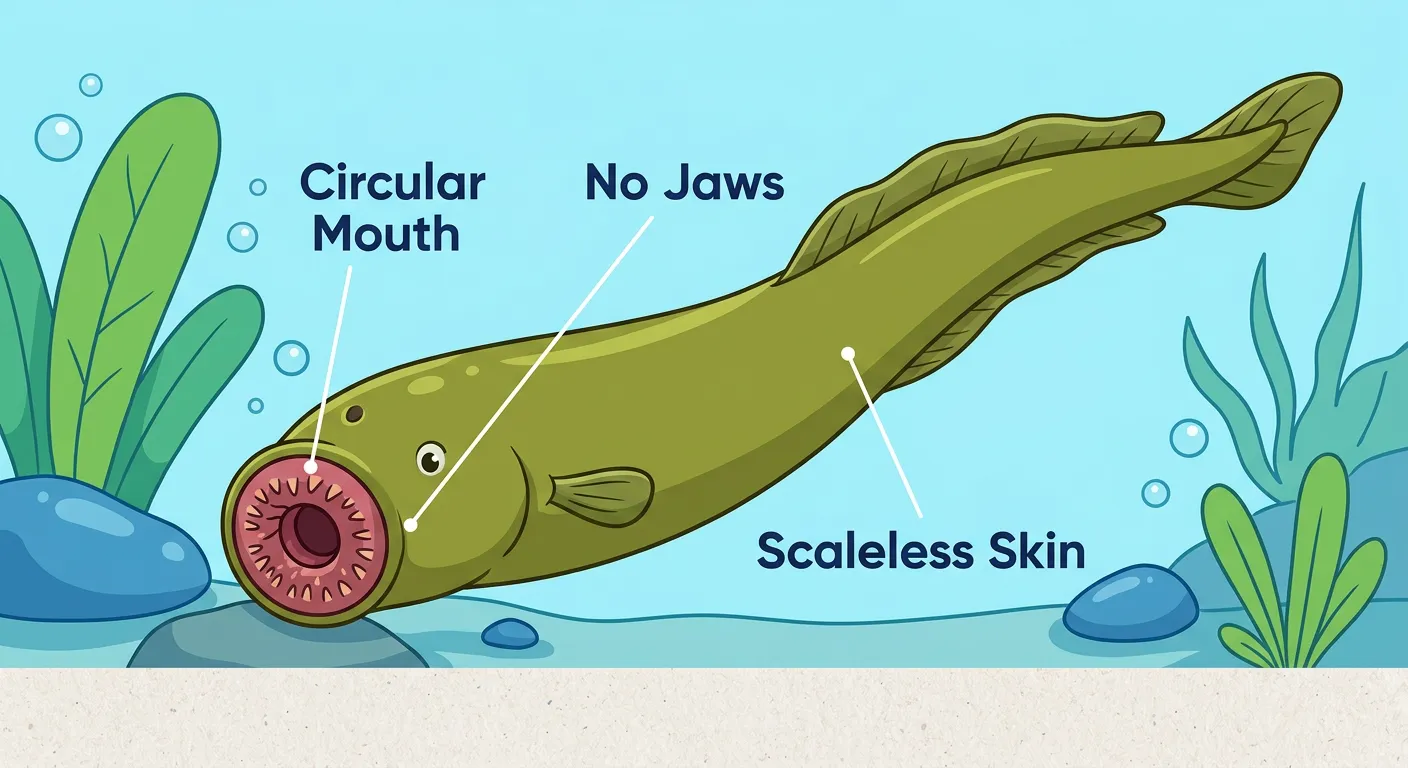
“First up, Cyclostomata! Think of them as the 'vampires' of the sea. They lack jaws and have a circular, sucking mouth to latch onto prey. They’re scaleless and slimy, like a slippery eel. Remember, no jaws means they are the ancient, primitive cousins in our chordate family.”
Class Cyclostomata represents a fascinating branch of the Agnatha division—animals that lack true jaws. These organisms are often described as the 'vampires' of the sea because of their ectoparasitic nature. They latch onto larger fishes using a circular, sucking mouth equipped with rows of horny teeth. Because they lack jaws, they cannot 'bite' in the traditional sense, but their suction is powerful enough to extract blood and tissue from their host. Their bodies are elongated and eel-like, lacking the paired fins and scales that we typically associate with fish. This absence of scales makes their skin feel exceptionally slimy and smooth to the touch, a characteristic furthered by specialized mucus-secreting glands in species like the Hagfish (Myxine).
A critical physiological aspect of Cyclostomes is their cartilaginous endoskeleton. Unlike higher vertebrates with bony skeletons, their cranium and vertebral column remain cartilaginous throughout their entire life. They possess 6 to 15 pairs of gill slits for respiration, which are uncovered. Perhaps the most unique biological phenomenon in this class is their anadromous migration. Even though they are marine animals, they migrate to fresh water to spawn. This journey is taxing; after spawning, the adults die within a few days. However, their larvae—known as Ammocoete larvae—undergo a dramatic metamorphosis after a period of development in freshwater and then migrate back to the ocean to begin their adult parasitic life. The circulatory system is of the closed type, and they possess a two-chambered heart. This life cycle and its specific terminology are favorite topics for NEET examiners looking to test your knowledge of animal behavior and primitive vertebrate life history.
Quick Revision Points
- Mouth Structure: Suctorial and circular mouth without jaws (Agnatha classification).
- Body Covering: Skin is smooth, moist, and lacks scales or paired fins.
- Endoskeleton: Cartilaginous cranium and vertebral column; no bones present.
- Respiration: 6–15 pairs of gill slits; gills are not covered by an operculum.
- Lifestyle: Ectoparasites on other fishes; circulation is of the closed type with a two-chambered heart.
- Examples: Petromyzon (Lamprey) and Myxine (Hagfish).
NEET Exam Angle
- The Migration Factor: Note the term 'Anadromous'. Petromyzon spawns in freshwater, but the adult lives in the sea. This is a high-yield fact for ecological and behavioral questions.
- Agnatha Classification: Always remember Cyclostomata is the only living class under the division Agnatha. This is a common 'Identify the odd one out' question.
- Identification: In matching questions, 'Hagfish' is frequently paired with 'Myxine' and 'Lamprey' with 'Petromyzon'. Know the common and scientific names interchangeably.
03Class Pisces: Comparative Study of Chondrichthyes vs. Osteichthyes
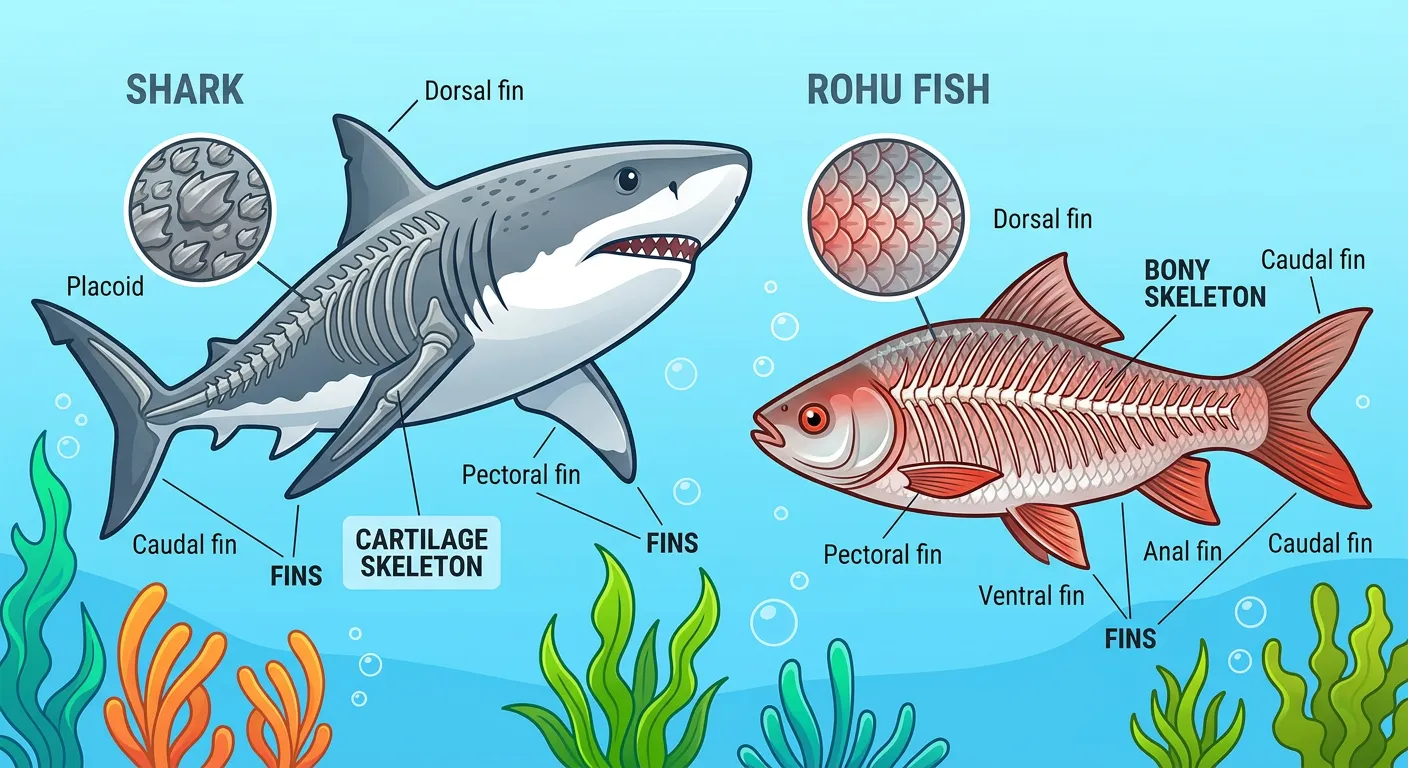
“Next, Pisces! We split them into Chondrichthyes—the tough guys with cartilage skeletons like sharks—and Osteichthyes, the bony fish like Rohu. Sharks have placoid scales and never stop swimming, while bony fish have swim bladders to stay buoyant. Like balancing your NEET study schedule, it’s all about control!”
In the world of fishes (Superclass Pisces), classification is primarily determined by the material of their skeleton. Class Chondrichthyes includes cartilaginous fishes like sharks and rays. These are powerful marine predators characterized by a ventral mouth and skin covered in microscopic, tooth-like placoid scales. A major metabolic and physical constraint for these fish is the absence of an air bladder. This lack of natural buoyancy forces them to swim constantly to avoid sinking—a fact often used in NEET to explain their active, predatory lifestyle. Their gill slits are separate and lack an operculum (gill cover). Interestingly, their teeth are modified placoid scales which are backwardly directed, making them formidable hunters.
In contrast, Class Osteichthyes contains the bony fishes, which inhabit both marine and fresh waters. Their endoskeleton is made of bone, and their mouth is typically terminal (at the tip of the snout). Unlike sharks, bony fish possess an air bladder (swim bladder) that regulates buoyancy, allowing them to remain stationary in the water column without expending energy. Their gills are protected by a bony flap called the operculum. Both classes share a two-chambered heart (one atrium and one ventricle), which pumps blood to the gills in a single-circuit 'venous' circulation. Furthermore, cartilaginous fish have a heterocercal tail (unequal lobes), while bony fish usually have a homocercal tail (equal lobes). Understanding these morphological differences is essential for solving high-weightage comparative MCQs.
| Feature | Chondrichthyes (Cartilaginous) | Osteichthyes (Bony) |
|---|---|---|
| Skeleton | Cartilaginous (Notochord persists) | Bony endoskeleton |
| Scales | Placoid (tough, tooth-like) | Cycloid / Ctenoid scales |
| Air Bladder | Absent (must swim to stay afloat) | Present (regulates buoyancy) |
| Gill Cover | Operculum Absent | Operculum Present |
| Fertilization | Internal (often viviparous) | External (mostly oviparous) |
Quick Revision Points
- Heart: Two-chambered (venous heart) in all fishes; pumps deoxygenated blood only.
- Thermoregulation: Poikilothermic (cold-blooded) organisms.
- Excretion: Chondrichthyes are mostly ureotelic (store urea to balance osmotic pressure); Osteichthyes are mostly ammonotelic.
- Lateral Line System: Both groups possess this sensory organ to detect water vibrations and pressure changes.
- Examples: Scoliodon (Dogfish), Pristis (Saw fish), Labeo (Rohu), and Catla (Katla).
NEET Exam Angle
- The Buoyancy Question: Why must sharks swim constantly? Absence of air bladder. This is a frequent 'Assertion-Reason' candidate in the Biology paper.
- Scale Identification: Placoid scales are actually modified teeth; this structural detail is often tested in histology-related animal kingdom questions.
- Examples to Memorize: Exocoetus (Flying fish) and Hippocampus (Sea horse) are bony fish commonly used as 'trick' examples because they don't look like typical fish.
04Class Amphibia: The Evolutionary Transition to Dual Life Cycles
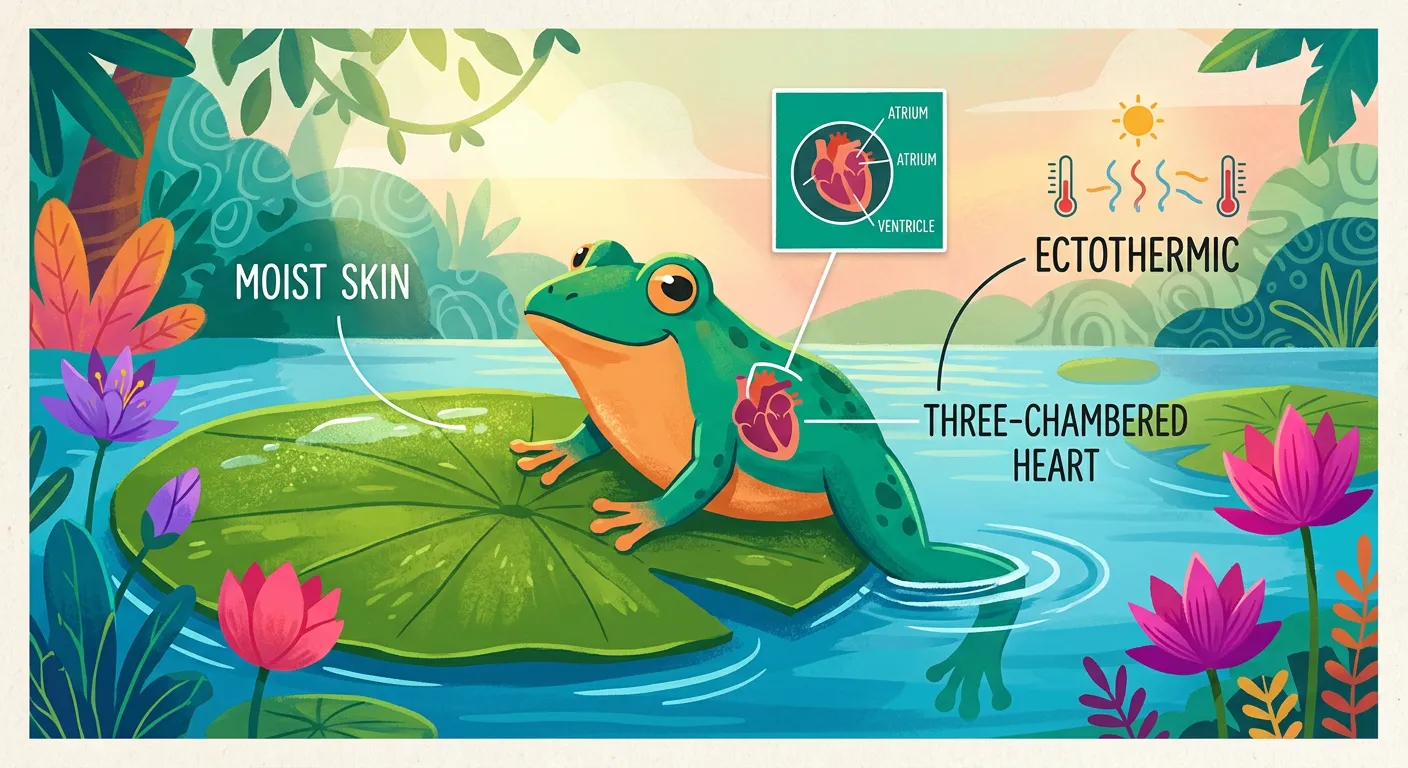
“Amphibians are the ultimate dual-citizens! They live on land but return to water to lay eggs. They have moist skin for breathing and a three-chambered heart. Think of a frog as the 'balanced' student—thriving in two worlds but needing a watery environment to keep the cycle going.”
Amphibians are the biological pioneers that first attempted to bridge the gap between water and land. As the name suggests (Amphi: dual, Bios: life), they require both habitats to complete their life cycle. While many adults are adapted for terrestrial life, they are inextricably tied to water for reproduction. Their eggs lack a protective shell (non-cleidoic) and will desiccate in dry air, requiring a moist environment or standing water for spawning. Their skin is another major evolutionary highlight; it is moist, glandular, and lacks scales. This moist skin isn't just for protection—it serves as a critical respiratory surface (cutaneous respiration), supplementing the work done by the lungs in adults and gills in larvae.
Physiologically, amphibians show an advancement in the circulatory system with a three-chambered heart consisting of two auricles and one ventricle. This leads to 'incomplete double circulation' where oxygenated and deoxygenated blood mix in the single ventricle. Another unique feature is the cloaca, a single common chamber into which the digestive, urinary, and reproductive tracts open. In terms of sensory organs, they lack an external ear (pinna), but possess a visible tympanum on the head surface that receives sound vibrations. Eyes have eyelids, a necessary adaptation for land. These features represent a 'middle-ground' in evolution, making Class Amphibia a critical topic for understanding the transition of life from sea to shore.
Quick Revision Points
- Habitats: Dual existence; need water for spawning and larval development.
- Skin: Moist, scales are absent, and contains mucus glands for gas exchange.
- Respiration: Occurs through gills (larvae), lungs (adults), and skin (adults).
- Heart: 3-chambered; two atria and one ventricle (incomplete double circulation).
- Sensory: Tympanum represents the ear; eyelids are present for terrestrial protection.
- Examples: Rana (Frog), Hyla (Tree frog), Salamandra (Salamander), and Ichthyophis (Limbless amphibian).
NEET Exam Angle
- The Limbless Exception: Ichthyophis is a recurring favorite in 'odd-one-out' questions because it is an amphibian without limbs, often confused with snakes.
- Heart Mixing: Understand that the mixing of blood in the ventricle is a key limitation compared to the efficient four-chambered hearts of birds and mammals.
- Larval Stage: The Tadpole larva is ammonotelic and breathes through gills, while the adult frog is ureotelic and breathes through lungs/skin—a great point for comparative physiology questions regarding nitrogenous waste.
05Class Reptilia: Adaptations for a Truly Terrestrial Existence
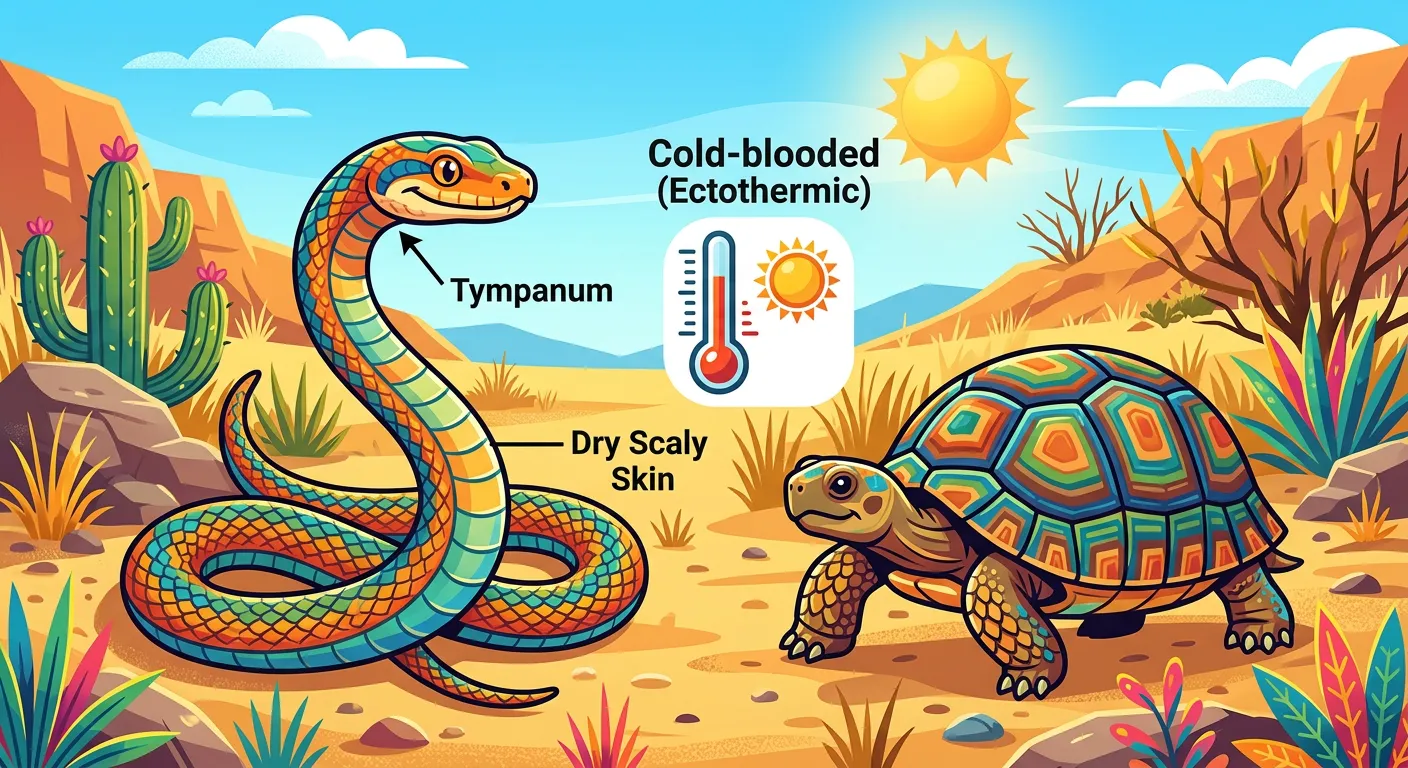
“Reptiles are the true land-dwellers! They have dry, cornified skin that prevents water loss, allowing them to stay away from water bodies. They have a tympanum for ears and are ectothermic. Like a lizard on a sun-baked wall, they rely on the sun to keep their metabolism moving.”
If amphibians were the pioneers of land, reptiles are the conquerors. Class Reptilia refers to animals that exhibit a 'creeping' or 'crawling' mode of locomotion. The secret to their success on land is their skin—it is dry, cornified, and covered in epidermal scales or scutes. Unlike the permeable skin of amphibians, reptilian skin prevents water loss, allowing them to thrive in arid environments. This was a major evolutionary leap that freed vertebrates from constant dependence on moist habitats. Reptiles are also the first group to lay amniotic eggs with leathery shells, providing a self-contained 'pond' for the embryo to develop in on land. This shell is porous enough for gas exchange but tough enough to prevent desiccation.
Internally, reptiles generally possess a three-chambered heart with an incomplete septum in the ventricle, but there is a famous exception: Crocodiles, which have a completely four-chambered heart. This is a high-probability NEET fact. Most reptiles are poikilotherms (cold-blooded), meaning they cannot regulate their internal body temperature and must rely on external heat sources, like basking. Their fertilization is internal, and they are mostly oviparous. Reptiles also possess 12 pairs of cranial nerves and a well-developed Jacobson's organ for olfaction (scent) in snakes and lizards. The transition from the aquatic-dependent amphibian to the land-independent reptile is marked by these clear structural hardening and water-conservation strategies.
| Character | Amphibians | Reptiles |
|---|---|---|
| Skin Texture | Moist and glandular | Dry and cornified (hard) |
| Body Covering | Scales absent | Scales or Scutes present |
| Heart | 3-Chambered | 3-Chambered (4 in Crocodiles) |
| Reproduction | External fertilization; Aquatic eggs | Internal fertilization; Shelled eggs |
| Nitrogenous Waste | Ureotelic (Adults) | Uricotelic (Conserves water) |
Quick Revision Points
- Skin: Dry skin with epidermal scales or scutes; lacks glands (except for a few scent glands).
- Heart: Usually 3-chambered; Crocodiles are the only exception with 4 chambers.
- Thermoregulation: Ectothermic/Poikilothermic (Cold-blooded).
- Excretion: Uricotelic; they secrete uric acid pasty-white to conserve maximum water.
- Examples: Chelone (Turtle), Testudo (Tortoise), Chamaeleon (Tree lizard), and Naja (Cobra).
NEET Exam Angle
- The Crocodile Exception: This is perhaps the most repeated 'exception-based' question in the Chordata unit. Ensure you associate 4-chambers with Crocodilia.
- Uricotelism: Reptiles excrete uric acid. Link this to their 'Terrestrial Adaptation' in your notes to remember why they don't produce liquid urine like we do.
- Classification by Skull: While not in NCERT deeply, knowing that snakes and lizards shed their scales (skin cast) as a periodic process is a unique feature of the order Squamata.
06Class Aves: Mastery of Flight and Endothermic Homeostasis
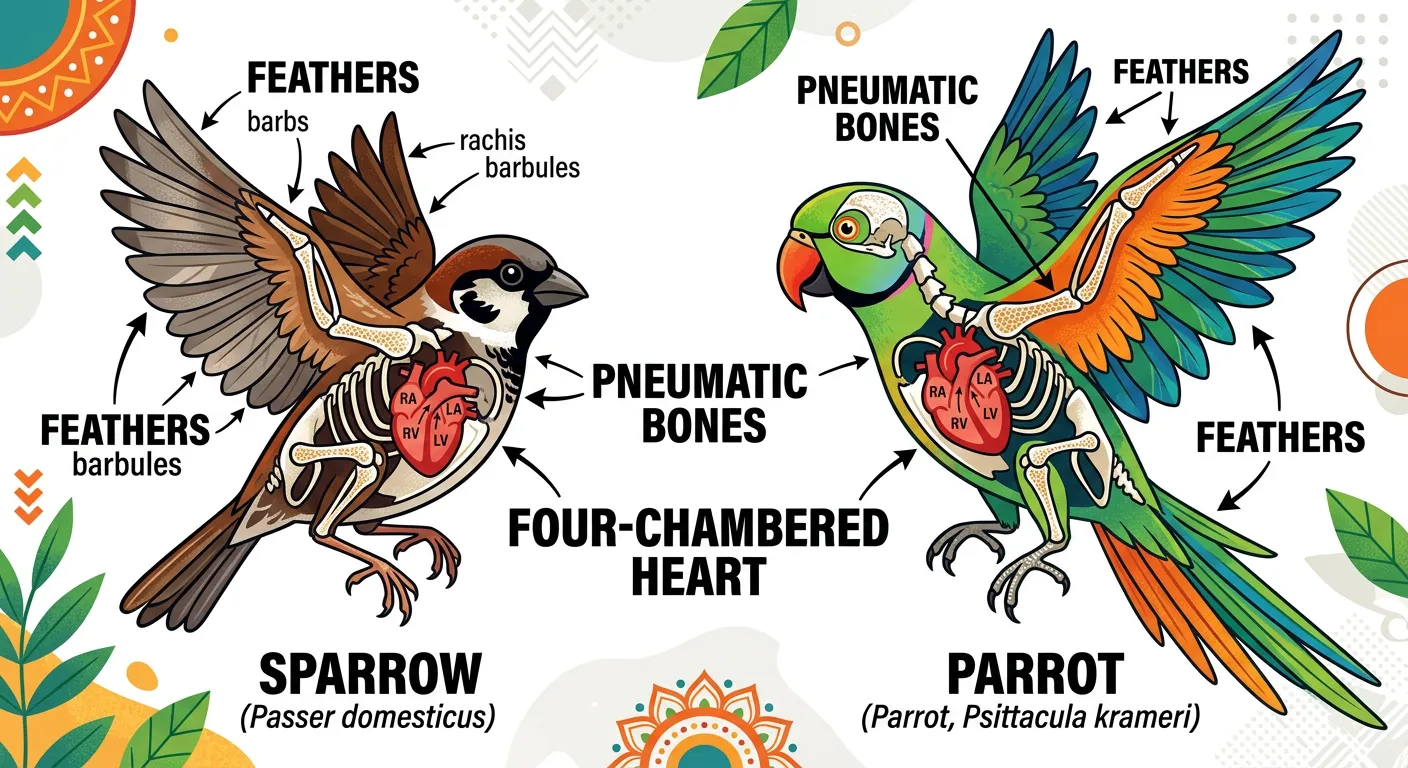
“Aves are the masters of the sky! They have feathers, wings, and light 'pneumatic' bones to stay aerodynamic. With a four-chambered heart, they are endothermic—meaning they generate their own body heat. Like a dedicated NEET topper, they stay warm and focused no matter how cold the competition gets!”
Class Aves consists of birds—organisms that have masterfully adapted to an aerial lifestyle. The most striking feature is the presence of feathers and the modification of forelimbs into wings. To achieve flight, birds have undergone significant weight-reduction adaptations. Their long bones are pneumatic, meaning they are hollow and filled with air cavities, reducing body weight without sacrificing structural strength. Additionally, they lack a urinary bladder and have reduced certain organs (like the right ovary in females of some species) to keep the body light for take-off. Their jaws are modified into a beak, which lacks teeth, further reducing weight.
Beyond flight, Aves represent a significant physiological shift as they are endothermic (homeothermic). Unlike the cold-blooded reptiles, birds maintain a constant internal body temperature regardless of the environment. This requires a high metabolic rate, supported by a fully four-chambered heart and a highly efficient respiratory system. Respiration is by lungs, but birds possess unique air sacs connected to the lungs that supplement oxygen supply and provide buoyancy. Their digestive tract features unique specialized organs: the crop for storing and softening food and the gizzard for grinding it with the help of swallowed stones. These features make Aves one of the most specialized and successful classes in the phylum.
| Adaptation | Benefit for Flight / Survival |
|---|---|
| Pneumatic Bones | Reduces overall body weight for easier lift. |
| Forelimb Wings | Provides the necessary surface area for flight. |
| Air Sacs | Supplements oxygen supply; provides buoyancy. |
| Homeothermy | Allows activity in various climates and altitudes. |
| Gizzard | Mechanical breakdown of food in the absence of teeth. |
Quick Revision Points
- Body Covering: Feathers cover the body; legs have reptilian-like scales.
- Bones: Hollow (Pneumatic) to facilitate flight; sternum is large for muscle attachment.
- Heart: 4-chambered with double circulation; only the right systemic arch persists.
- Metabolism: Homeothermic (Warm-blooded) with high metabolic demands.
- Examples: Columba (Pigeon), Psittacula (Parrot), Struthio (Ostrich - Flightless), and Pavo (Peacock).
NEET Exam Angle
- Air Sacs vs. Lungs: Remember that exchange of gases occurs in the lungs, but air sacs allow for 'double respiration' and ensure a continuous flow of oxygenated air.
- Flightless Birds: Struthio (Ostrich) is a favorite for testing if you know that not all Aves fly. Also, note Aptenodytes (Penguin).
- Tail Gland: Birds generally lack skin glands to keep feathers light, but the oil gland (Preen gland) at the base of the tail is the sole exception used for feather maintenance.
07Class Mammalia: Advanced Features and Diversity of Modern Vertebrates
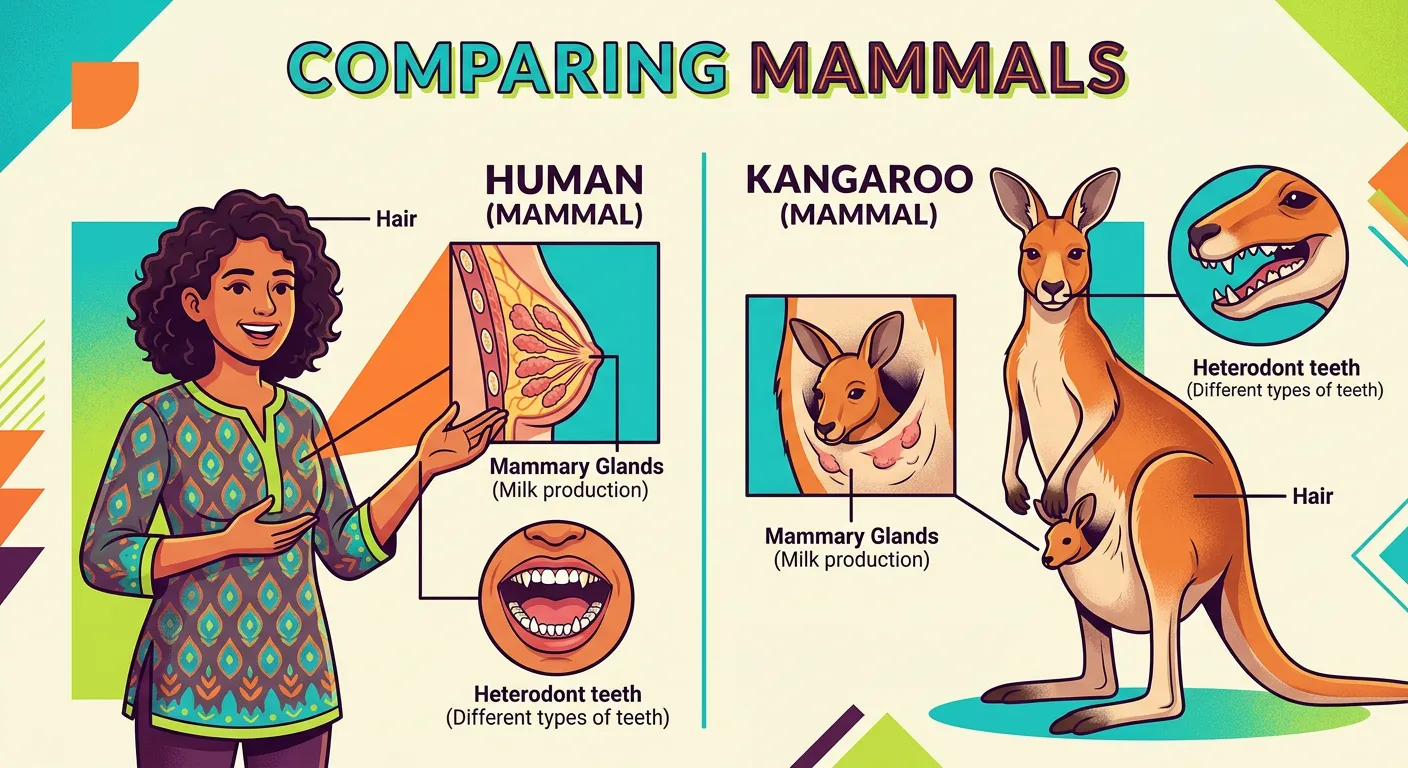
“Finally, Mammalia—the advanced class! We have mammary glands to nourish our young, hair on our skin, and different types of teeth for diverse diets. Whether it’s a kangaroo or a human, we are endothermic icons. That’s your chordate class breakdown—keep revising and ace that NEET exam!”
Class Mammalia represents the pinnacle of vertebrate evolution, found in diverse habitats ranging from polar ice caps and deserts to oceans and dark caves. The most unique and defining characteristic of this class is the presence of mammary glands, which are milk-producing glands used to nourish the young. No other animal group possesses this specialized feature. Mammals are also identified by their skin, which is covered in hair and contains both sweat and sebaceous (oil) glands. Sensory complexity is heightened by the presence of the pinna (external ear) and a variety of specialized teeth, a condition known as heterodont dentition.
Physiologically, mammals are homeothermic (warm-blooded) with a four-chambered heart and a muscular diaphragm that separates the thoracic and abdominal cavities. The diaphragm is the primary muscle for breathing, a feature unique to mammals. While most mammals are viviparous (giving birth to live young), there are primitive exceptions like the Platypus, which is oviparous (lays eggs). Mammals also exhibit different tooth attachments: Thecodont (teeth in sockets), Diphyodont (two sets of teeth in a lifetime), and Heterodont (different types: incisors, canines, premolars, molars). This class shows immense morphological diversity, from the flying Bat (Pteropus) to the aquatic Blue Whale (Balaenoptera), which many students mistakenly classify as a fish. Understanding these specialized traits is vital for NEET and serves as the foundation for the 'Human Physiology' unit.
| Feature | Mammalian Specialty |
|---|---|
| Mammary Gland | Milk production for neonatal nutrition. |
| Dentition | Thecodont, Heterodont, and Diphyodont teeth. |
| Skin | Presence of hair, sweat glands, and oil glands. |
| Ear | External ear or Pinna is present. |
| Respiration | Mediated by a muscular diaphragm; lungs are highly lobed. |
Quick Revision Points
- Milk Production: Unique mammary glands present; functional in females.
- Skin: Possesses hair; unique sweat and sebaceous glands for thermoregulation.
- Heart: 4-chambered with a left systemic arch (unlike birds who have a right arch).
- Reproduction: Mostly viviparous; Ornithorhynchus (Platypus) is the egg-laying exception.
- Examples: Macropus (Kangaroo), Pteropus (Flying fox), Camelus (Camel), and Balaenoptera (Blue whale).
NEET Exam Angle
- The Platypus Fact: Ornithorhynchus is a very frequent MCQ answer for 'Egg-laying mammals' or 'Connecting links between reptiles and mammals'.
- The Whale Trap: Remember that the Blue Whale and Dolphin are mammals, not fish! They breathe through lungs and possess mammary glands. This is a classic trap in diversity questions.
- Dentition Terms: Be absolutely clear on the definitions of Thecodont, Heterodont, and Diphyodont as they appear in both Animal Kingdom and Digestion/Absorption units.
Recommended Reading
Explore related Biology topics to build deeper chapter connections for NEET.
- What is Living · Topic 1.1
- Kingdom Fungi · Topic 1.10
- Lichens · Topic 1.11
- Viruses and Viroids · Topic 1.12
- Algae · Topic 1.13
- Bryophytes · Topic 1.14
- Jump to Key Terms (Quick Revision)
- Review Common NEET Mistakes
- Solve NEET Practice MCQs
- Read Topic FAQs
- Practice NEET MCQs
- Solve NEET PYQs
📚 Key Terms
⚠️ Common NEET Mistakes
- 1Thinking that all chordates have a vertebral column; in some, the notochord persists throughout life.
- 2Confusing the location of the nerve cord; remember, in chordates, it is dorsal and hollow, while in non-chordates, it is ventral and solid.
- 3Forgetting that the Crocodile is an exception and has a 4-chambered heart unlike other reptiles.
- 4Assuming all mammals give birth to live young; remember that the Platypus is an egg-laying mammal.
- 5Believing that sharks have an operculum; they actually have naked, separate gill slits.
📝 NEET PYQ & Practice Questions
Test your understanding of Chordate Classes with NCERT-aligned sample questions.
Which of the following statements is correct regarding "Notochord" in the context of NEET Biology?
In NEET question papers, questions related to "Chordate Classes" predominantly test:
Consider Placoid scales associated with Chordate Classes. What is the primary characteristic expected in NEET MCQs?
Master Chordate Classes with NeetQ AI Tutor
Practice 50+ topic-wise MCQs, previous 15 years NEET questions, and get step-by-step doubt resolution instantly.
❓ Frequently Asked Questions
What are the three diagnostic characteristics of Phylum Chordata?
The three diagnostic characteristics are: (1) A dorsal, longitudinal, rod-like Notochord; (2) A dorsal hollow nerve cord; and (3) Paired pharyngeal gill slits at some stage of development.
How do Chondrichthyes and Osteichthyes differ regarding their swim bladders?
Chondrichthyes (cartilaginous fish) lack an air/swim bladder and must swim constantly to stay buoyant. Osteichthyes (bony fish) possess an air bladder that regulates buoyancy, allowing them to float without effort.
Why are amphibians called 'dual-citizens' of the animal kingdom?
They are called 'dual-citizens' because they inhabit both aquatic and terrestrial environments. While they can live on land, they must return to water for reproduction as their eggs are not shelled and require moisture.
Which reptilian order is an exception to the three-chambered heart rule?
Crocodiles (Order Crocodilia) are the exception; they possess a fully four-chambered heart, unlike other reptiles which have a three-chambered heart.
What specific skeletal adaptation allows birds to fly efficiently?
Birds have 'pneumatic bones'—long bones that are hollow and filled with air cavities. This drastically reduces their body weight for flight without compromising the strength of the skeleton.
Name the unique glandular feature found only in Class Mammalia.
The presence of mammary glands (milk-producing glands) used to nourish the young is the most unique glandular feature found exclusively in mammals.
Written By
NEET Content Strategist & Biology Expert
Sangita Kumari is a NEET educator and content strategist with over 6 years of experience teaching Biology, Chemistry, and Physics to Class 11 and 12 aspirants. She helps bridge the gap between traditional NCERT preparation and modern AI-powered learning. Her content is trusted by thousands of NEET aspirants across India.