🎬 Video Lesson Available
Watch the full 7-slide video lesson for Stem with AI teacher narration and visual explanations.
Stem — Master stem anatomy, nodes, internodes, and modifications for NEET. Detailed Class 11 Biology notes on storage, defense, and vegetative propagation.
01The Ascending Axis: Origin and Structural Foundation of the Stem
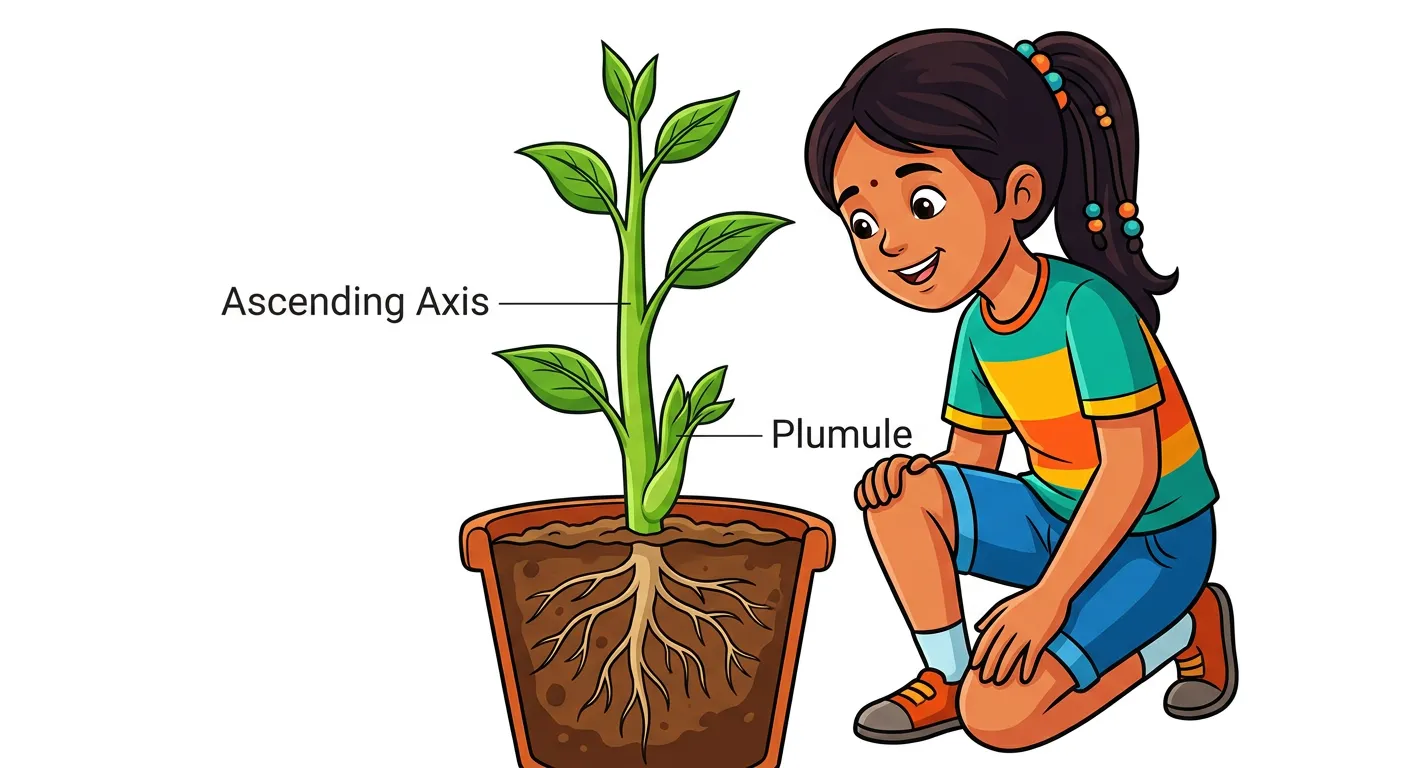
“Meet the stem! Think of it as the elevator of the plant. It emerges from the plumule of the embryo, growing upwards towards the sunlight. It is the ascending part of the plant axis, bearing branches, leaves, flowers, and fruits. It is the plant's backbone!”
When we explore the architecture of a flowering plant, the stem stands out as the central pillar of the shoot system. Biologically, the stem is defined as the ascending part of the plant axis that develops from the plumule of the embryo during seed germination. Unlike roots, which seek the darkness of the soil (positive geotropism), the stem exhibits positive phototropism, stretching toward the light to optimize photosynthesis for the leaves it carries. This primary axis serves as the critical conduit between the site of water absorption (roots) and the site of organic food production (leaves), making it an indispensable component for the plant's survival and growth.
From a structural perspective, the stem is more than just a support beam; it is a dynamic and evolving organ that bears branches, leaves, flowers, and fruits. In the early stages of a plant's life, the stem is often green, herbaceous, and photosynthetic, but as it matures, it typically becomes woody and dark brown in many perennial dicot species. This transition reflects the stem's role in providing long-term mechanical stability and protecting the vascular tissues within. Understanding the origin of the stem from the plumule is a fundamental concept for NEET aspirants, as it connects embryology with morphology. It establishes the polarity of the plant body, distinguishing the descending root system from the ascending shoot system. The growth of the stem is governed by the shoot apical meristem, which produces new cells that eventually differentiate into the various tissues of the stem, such as the epidermis, cortex, and vascular bundles.
Quick Revision Points
- Developed from the plumule of the germinating seed embryo.
- Characterized by positive phototropism (grows toward light) and negative geotropism.
- Forms the primary ascending axis of the plant's shoot system.
- Bears essential lateral appendages including leaves, buds, flowers, and fruits.
- Young stems are often herbaceous and green, becoming woody with secondary growth.
- Functions as a mechanical support system for the plant's reproductive organs and provides the path for translocation.
NEET Exam Angle
- Identifying the plumule as the developmental origin is a recurring basic MCQ in morphology papers.
- Distinguishing between the shoot system (ascending) and root system (descending) in descriptive questions.
- Understanding the phototropic nature of stems vs. the geotropic nature of roots is key for experimental biology questions.
| Feature | Root System | Stem (Shoot Axis) |
|---|---|---|
| Origin | Radicle | Plumule |
| Tropism | Positive Geotropic | Positive Phototropic |
| Appendages | Root hairs, lateral roots | Leaves, buds, flowers, fruits |
| Nodes/Internodes | Absent | Present |
02Morphological Markers: Anatomy of Nodes and Internodes
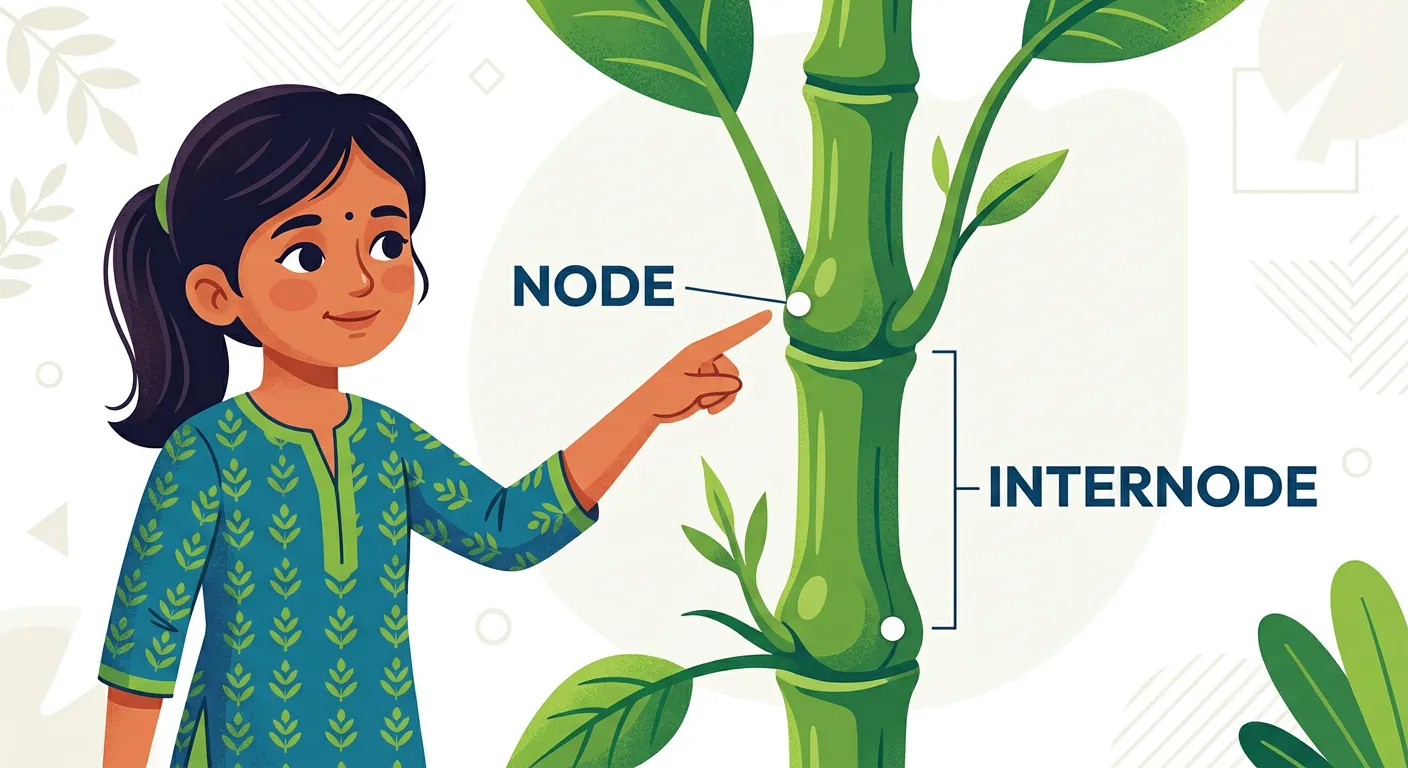
“Ever noticed little bumps on a sugarcane stalk? Those are Nodes! They are the secret growth points where leaves emerge. The space between two nodes is called an Internode. Just remember: nodes are for leaves, internodes are the distance between them. Simple, right?”
One of the most reliable ways to distinguish a stem from a root is the presence of nodes and internodes. Nodes are specific, localized regions on the stem where leaves are attached and where lateral buds typically emerge. These regions are hotspots of meristematic activity, containing the genetic and physiological blueprints that allow the plant to branch out and increase its canopy surface area. The segment of the stem located between two successive nodes is called an internode. The elongation of these internodes is what primarily contributes to the increase in the plant's overall height, a process regulated by various growth hormones, specifically gibberellins.
For a student preparing for NEET, the sugarcane plant (Saccharum officinarum) provides an excellent visual and physical reference for these structures. The prominent, often thickened rings seen on a sugarcane stalk are the nodes, and the smooth, long sections between them are the internodes. Within the axil of the leaf at each node, you will find an axillary bud. These buds are remarkably versatile; they have the potential to develop into a lateral branch or even a flower depending on the plant's developmental stage and environmental cues. This modular growth—repeating units consisting of a node, an internode, and an axillary bud—allows plants to be incredibly flexible in how they occupy space and respond to their environment. Furthermore, the presence of these structures even in underground modified forms (like the eyes of a potato) confirms their identity as stems. The arrangement of nodes also determines the phyllotaxy or leaf arrangement, which is another crucial morphological trait used in plant identification. Without nodes, the organized distribution of leaves and the resulting efficiency of light capture would be impossible for the plant to maintain.
Quick Revision Points
- Nodes are the specific points on the stem where leaves and buds are born.
- Internodes are the longitudinal portions between two consecutive nodes.
- Axillary buds are located at the axils of leaves and can form branches or flowers.
- Meristematic tissue at nodes is responsible for the emergence of lateral organs.
- Stem elongation is primarily due to the longitudinal growth of internodal regions.
- Nodes and internodes are diagnostic features that identify a structure as a 'stem' even when it is buried underground.
NEET Exam Angle
- Questions often ask to identify the location of axillary buds (always at the node/axil).
- Recognition of nodes as the site for leaf attachment in morphological diagrams is a standard skill.
- Sugarcane is frequently used in 'Match the Following' or 'True/False' statements regarding internodal length and sugar storage.
03Underground and Succulent Modifications: Storage and Survival
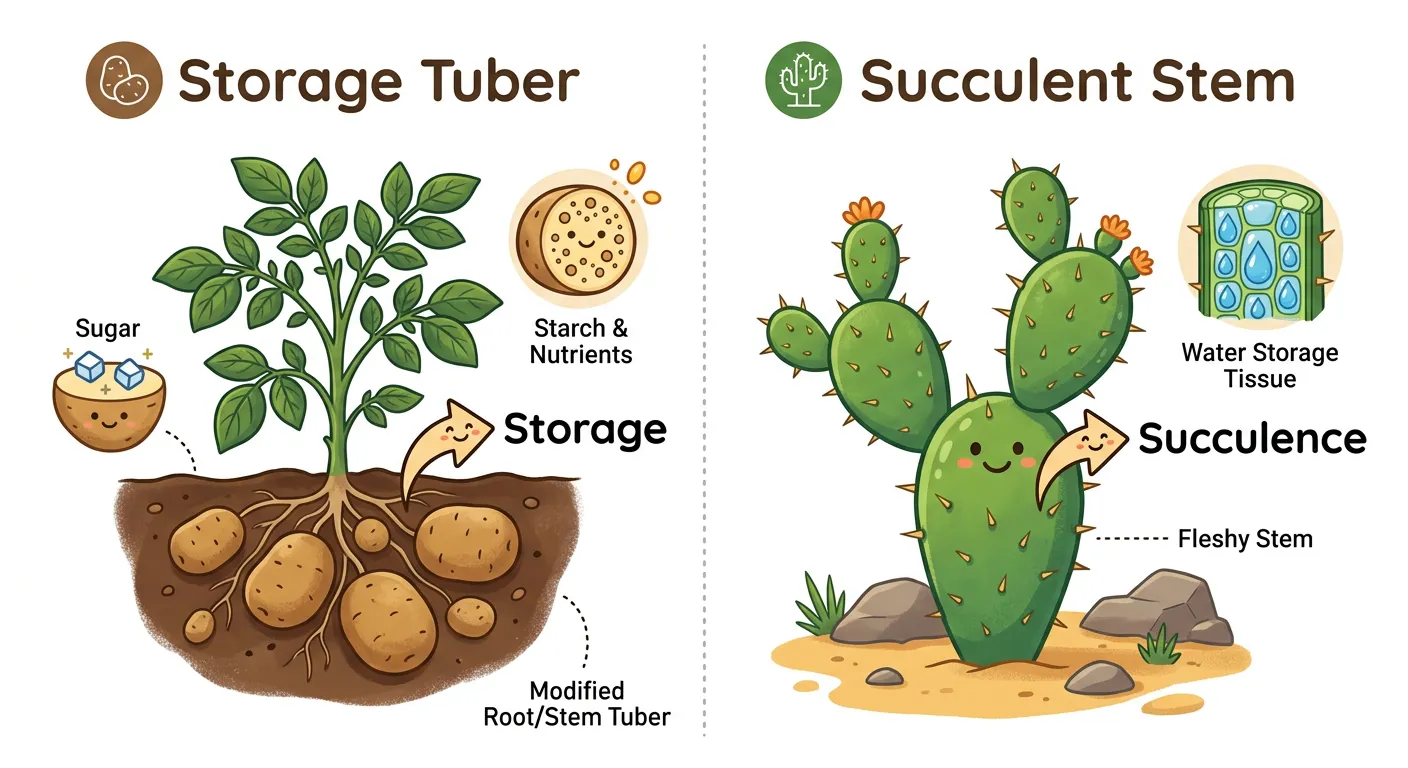
“Stems aren't just for standing tall; they are master multitaskers! Some stems become heavy with food storage, like a potato. Others, like cacti, turn succulent to hoard water in dry deserts. They are nature's ultimate survival kits, adapting to keep the plant alive in harsh conditions.”
Stems are remarkably adaptable, often deviating from their primary role of support and conduction to perform specialized functions like food storage and survival through extreme seasons. Underground stems are the most common example of this flexibility. Structures such as the tubers of Potato (Solanum tuberosum), the rhizomes of Ginger and Turmeric, and the corms of Colocasia and Zaminkand, are modified to store massive amounts of starch and nutrients. These structures serve as organs of perennation. Perennation is the biological strategy that allows the plant to survive through unfavorable conditions, like drought or extreme cold, by remaining dormant in the soil and sprouting new shoots using stored energy when favorable conditions return.
In arid or desert environments where water is the most limiting factor, stems undergo xerophytic modifications to conserve water and take over the photosynthetic role of leaves. These are known as phylloclades. In plants like Opuntia (Cactus), the stem becomes flattened and fleshy, performing photosynthesis while the leaves are reduced to sharp spines to minimize water loss via transpiration. In other plants like Euphorbia, the modified stem is cylindrical and succulent. These modifications are critical because they allow the plant to store significant quantities of water (succulence) while maintaining metabolic activity in harsh, high-temperature climates. For NEET aspirants, it is crucial to remember that these are morphologically stems, not leaves, because they possess nodes, internodes, and the ability to produce flowers from their axillary buds. The internal anatomy of these stems also reflects their storage function, often featuring large vacuoles and specialized water-storing parenchyma tissues.
Quick Revision Points
- Underground stems (Potato, Ginger, Colocasia) act as storage organs and survival tools.
- Perennation is the process of surviving unfavorable seasons via these modifications.
- Phylloclades: Photosynthetic, succulent stems found in xerophytes like Opuntia.
- Flat phylloclades are found in Opuntia; cylindrical ones in Euphorbia.
- These modifications protect the plant from both herbivory and excessive desiccation.
- Despite being underground or leaf-like, they retain basic stem morphology such as nodes.
NEET Exam Angle
- Distinguishing between flat (Opuntia) and cylindrical (Euphorbia) phylloclades is a high-yield detail.
- Common confusion: Potato is a stem (tuber), whereas Sweet Potato is a modified root (adventitious/tuberous).
- Understanding perennation as a strategy for survival in fluctuating environments is essential for ecology-related questions.
| Type | Example | Function |
|---|---|---|
| Tuber | Potato | Food storage / Perennation |
| Rhizome | Ginger, Turmeric | Food storage / Vegetative spread |
| Corm | Zaminkand, Colocasia | Food storage / Survival |
| Phylloclade | Opuntia, Euphorbia | Photosynthesis / Water storage |
04Sub-aerial Modifications: The Mechanics of Runners and Stolons
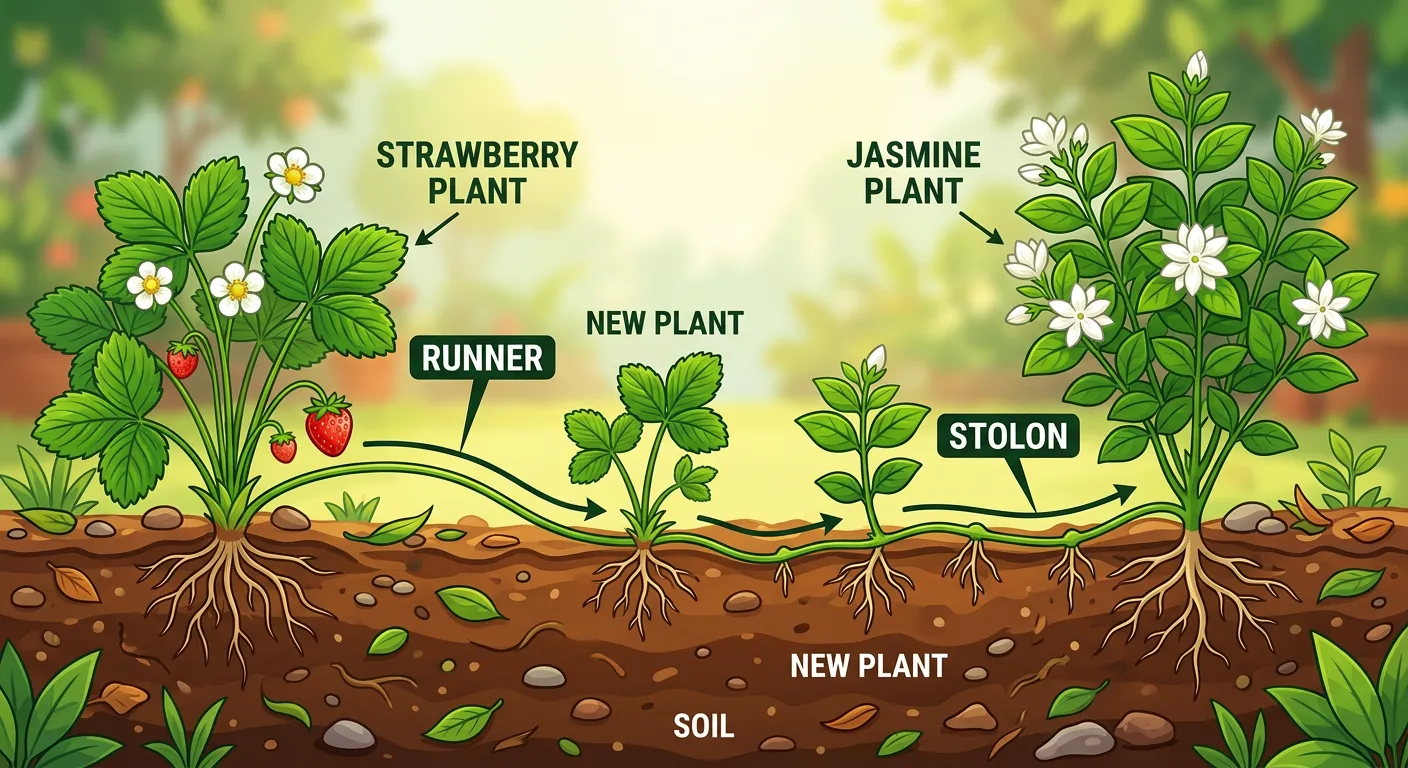
“Want to multiply your garden? Plants use stems to clone themselves! Runners in strawberries and stolons in jasmine crawl horizontally, touching the ground to grow new roots. It is nature's version of copy-paste, allowing plants to spread and conquer new soil rapidly.”
Not all stems grow straight up or stay deep underground; some crawl along the soil surface to expand the plant's territory. These sub-aerial modifications are nature's primary way of facilitating rapid vegetative propagation, ensuring that a plant can colonize an area without the slow process of seed production. Runners are the quintessential example of this, found in plants like Grass, Strawberry, and Oxalis. A runner is a lateral branch with long, thin internodes that grows horizontally along the soil surface. When the nodes of the runner touch the moist soil, they develop adventitious roots and give rise to a new set of aerial shoots. This 'creeping' growth allows the plant to spread across a large area quickly, forming a dense and protective green mat.
Stolons represent a slightly different morphological variation. In plants like Jasmine and Mint, a slender lateral branch arises from the base of the main axis and initially grows upwards and outwards (aerially). After growing for a short period, it arches downward due to its own weight or growth pattern to touch the ground. Once it makes contact with the soil, it strikes roots and produces a new daughter plantlet. While both runners and stolons result in 'cloning' the parent plant, the specific arching behavior of the stolon is its defining characteristic. Another related modification is the 'sucker,' seen in plants like Pineapple, Chrysanthemum, and Banana. In these cases, the lateral branches originate from the basal and underground portion of the main stem, grow horizontally beneath the soil, and then come out obliquely upward to give rise to leafy shoots. For NEET students, understanding these three nuances—Runners (horizontal surface), Stolons (arching aerial), and Suckers (underground to aerial)—is essential for identifying specific examples in plant propagation contexts. These mechanisms allow plants to survive even if the original mother plant is damaged, as each new plantlet is independently rooted and capable of self-sustenance.
Quick Revision Points
- Runners: Horizontal stems (Grass, Strawberry) that root at nodes to form new plants.
- Stolons: Lateral branches that arch downward (Jasmine, Mint) to touch the ground.
- Suckers: Underground lateral branches (Banana, Pineapple) that emerge obliquely upward.
- These modifications facilitate natural vegetative propagation without the need for seeds.
- They allow plants to occupy new ecological niches and 'move' away from the parent.
- Adventitious roots are a key feature that develops at the nodes of these creeping stems.
NEET Exam Angle
- Practice identifying the arching growth of Stolons vs. the horizontal growth of Runners.
- Mint and Jasmine are the most common examples cited for Stolons in NCERT-based exams.
- Strawberry and Oxalis are frequently used to illustrate the Runner modification; Banana is the classic Sucker example.
05Specialized Adaptations: Tendrils for Support and Thorns for Defense
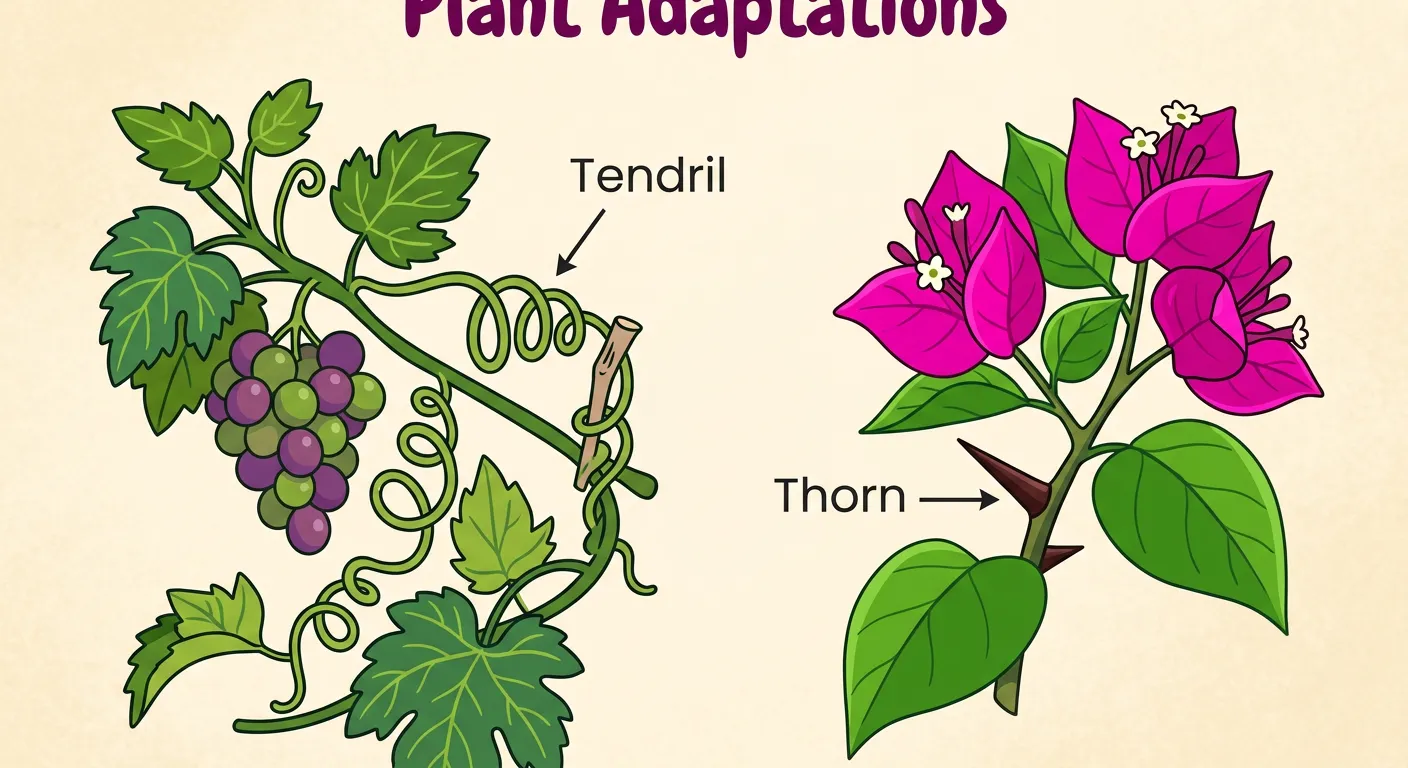
“When plants get weak, they get creative! Weak-stemmed plants develop wiry tendrils to climb and grab onto supports. Others turn their branches into sharp, defensive thorns to scare off hungry herbivores. It is a brilliant mix of 'hold on tight' and 'stay away' tactics!”
In many plant species, axillary buds are modified into highly specialized structures that provide either mechanical support for vertical growth or biological defense against predators. Stem tendrils are slender, green, spirally coiled structures that develop directly from the axillary buds. They are extremely sensitive to touch, a phenomenon known as thigmotropism. This sensitivity allows weak-stemmed plants, such as gourds (cucumber, pumpkin, watermelon) and grapevines, to climb upward by clinging to nearby supports or other vegetation. This adaptation is an evolutionary masterstroke, allowing the plant to reach better light conditions in crowded environments without having to invest the massive energy required to build a woody trunk.
On the other hand, biological defense is just as critical for a plant's long-term survival. In many woody plants, the axillary buds lose their ability to grow into vegetative branches and instead transform into woody, straight, and pointed thorns. Thorns are commonly found in plants like Citrus (Lemon, Orange) and Bougainvillea. Their primary purpose is to protect the plant from browsing herbivores like goats or cattle. It is vital for NEET aspirants to distinguish between 'thorns' (which are modified stems) and 'spines' (which are modified leaves as seen in Cacti). Because thorns originate from the axillary bud, they possess vascular tissue (xylem and phloem) and are deeply integrated into the plant's internal anatomy, making them very difficult to break off compared to superficial prickles like those found on a rose. This distinction is often tested in exams to check a student's understanding of homologous vs. analogous structures. Thorns and tendrils are homologous because they both share the same developmental origin: the axillary bud of the stem.
Quick Revision Points
- Stem tendrils are coiled structures helping weak plants climb (Gourds, Grapevines).
- Thorns are woody, pointed defense organs (Citrus, Bougainvillea).
- Both tendrils and thorns develop from axillary buds, proving they are stem modifications.
- Thigmotropism is the sensory response that triggers tendril coiling upon contact with a support.
- Thorns are distinct from leaf spines (found in Cactus) and epidermal prickles (Rose).
- These structures represent evolutionary adaptations for support and protection respectively.
NEET Exam Angle
- A frequent exam question involves identifying the origin of thorns and tendrils (Axillary bud).
- Comparison between different climbing mechanisms (stem tendrils vs. leaf tendrils in peas).
- Recognizing examples: Citrus (thorns) and Gourds (tendrils) are standard high-priority NCERT examples.
| Feature | Stem Tendril | Stem Thorn |
|---|---|---|
| Origin | Axillary Bud | Axillary Bud |
| Nature | Soft, sensitive, coiled | Hard, woody, pointed |
| Function | Support/Climbing | Protection/Defense |
| Example | Grapevine, Cucumber | Citrus, Bougainvillea |
06Aquatic Specializations: Offsets and the 'Terror of Bengal'
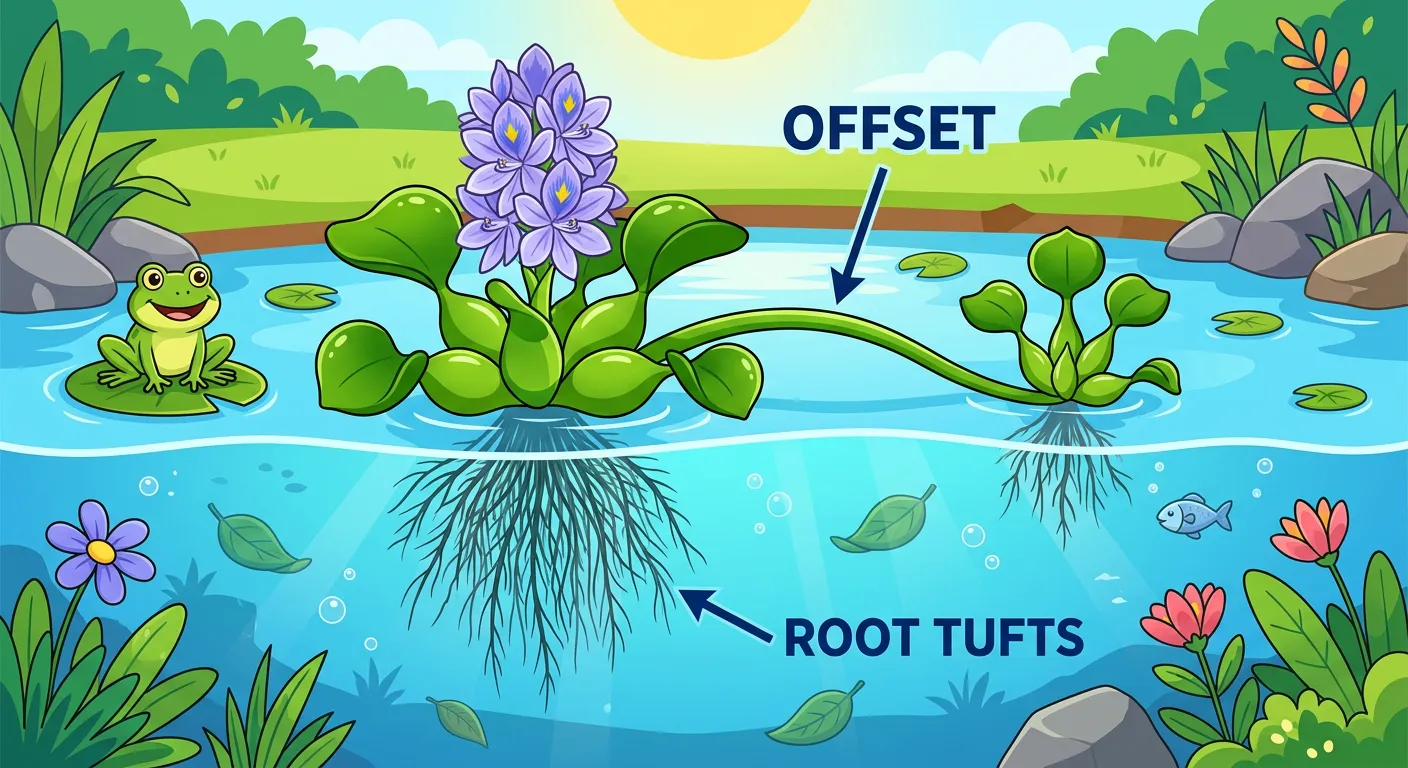
“In water bodies, we find Offsets. These are short, thick lateral branches that bear a rosette of leaves and a tuft of roots. They help aquatic plants like Water Hyacinth spread like wildfire across a pond. Keep an eye out for these in your next biology exam!”
Aquatic environments demand unique structural and physiological adaptations for survival and rapid colonization. The offset is a specialized sub-aerial stem modification specifically evolved for aquatic plants like Pistia (Water Lettuce) and Eichhornia crassipes (Water Hyacinth). An offset is essentially a short, thick lateral branch that possesses extremely short internodes. Each node of the offset produces a rosette of leaves above the water surface and a tuft of adventitious roots submerged below. This compact, buoyant structure allows the plant to float efficiently and reproduce at an exponential rate through vegetative means.
Eichhornia is famously known as the 'Terror of Bengal' in ecological circles because of its ability to multiply rapidly via these offsets, eventually covering entire water bodies in a matter of weeks. This rapid spread creates a dense mat that blocks sunlight from reaching submerged plants and depletes dissolved oxygen in the water, leading to the massive death of fish and other aquatic fauna. From a morphological standpoint, the offset is often described as a 'horizontal branch of only one internode length'—a specific definition that is frequently tested in NEET. It bridges the gap between basic stem morphology and the ecological impact of invasive species, highlighting how a seemingly simple structural modification can have massive, cascading environmental consequences. The offset is basically the aquatic version of a runner, but it is much shorter and thicker to handle the buoyancy requirements of the plant. Mastery of this example is important because it appears in both Class 11 Morphology and Class 12 Ecology chapters, making it a high-frequency topic for competitive exams.
Quick Revision Points
- Offsets: Short, thick lateral branches found in aquatic plants like Pistia and Eichhornia.
- Characterized by a rosette of leaves and a tuft of adventitious roots at each node.
- Often described as having 'one internode length' in specific botanical terminology.
- Facilitates extremely rapid vegetative propagation in still or slow-moving aquatic habitats.
- Eichhornia (Water Hyacinth) is an invasive species that disrupts entire aquatic ecosystems.
- Offsets allow plants to stay buoyant and spread across the water's surface efficiently.
NEET Exam Angle
- Identifying the definition of an offset: 'lateral branch with short internodes and rosette of leaves'.
- Eichhornia and Pistia are the two primary examples you must memorize for this modification.
- Ecological connection: Linking offsets to the rapid depletion of oxygen (BOD increase) in water bodies.
07Physiological Summary: Evaluating the Versatility of the Stem
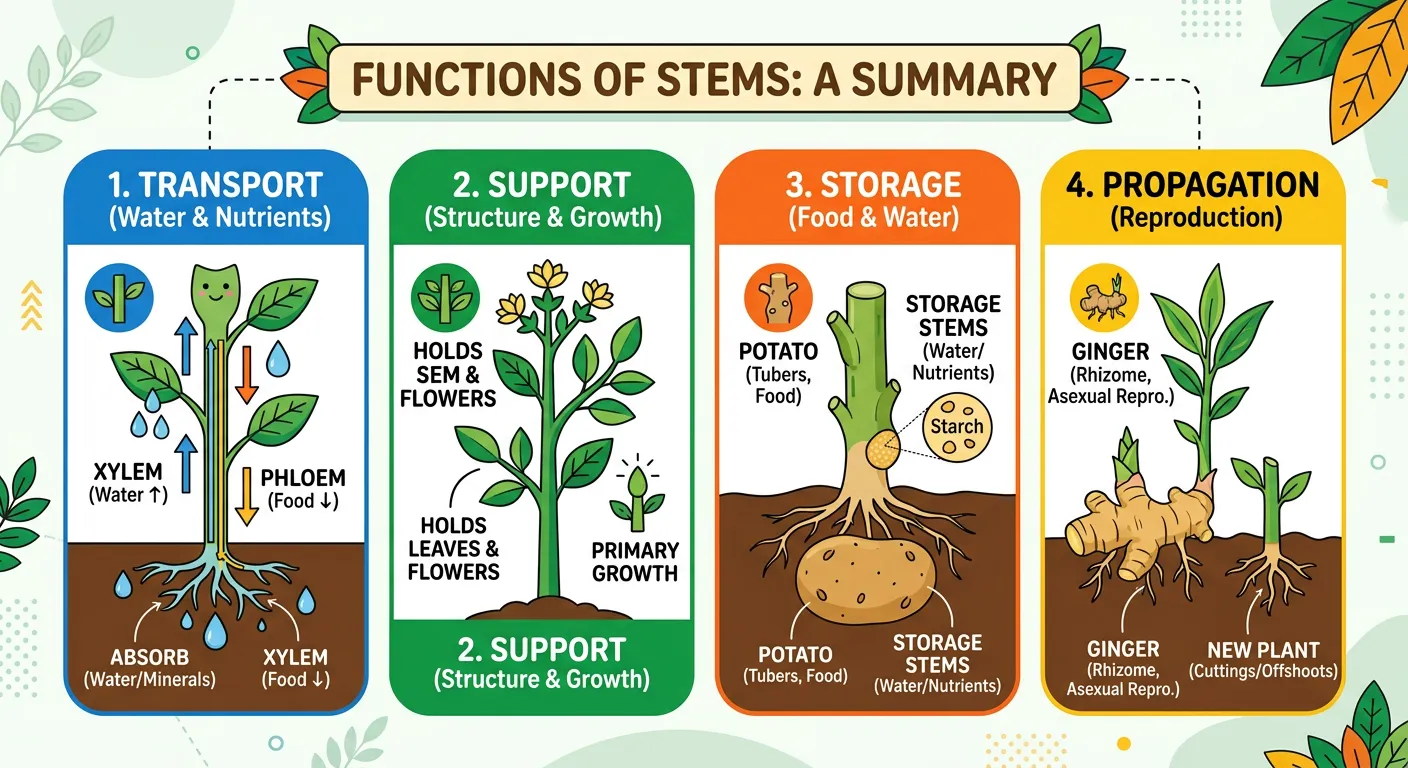
“Let us wrap up! The stem is the plant's hero: it transports water and minerals, supports the weight of leaves, stores vital energy, and helps in vegetative propagation. From potatoes to thorns, the stem is truly versatile. Master these functions, and you are ready for NEET!”
To conclude our study of the stem, it is vital to synthesize its primary and secondary functions to appreciate its role in plant biology. Primarily, the stem acts as the 'highway' of the plant. It conducts water and essential minerals from the roots to the leaves via the xylem and distributes the photosynthates (sugar/food) from the leaves to the roots and storage organs via the phloem. It also serves as the structural framework that positions leaves in the best possible way to capture maximum sunlight, a function that is fundamental to the energy balance and survival of the entire organism. Without the stem's support, the complex reproductive structures like flowers and fruits would not have the stable platform required for successful pollination and seed dispersal.
Secondarily, as we have analyzed throughout this topic, stems can transform into multi-functional units: storage organs, defense mechanisms, and reproductive tools. Whether it is the underground starch reserves of a potato tuber or the protective, woody thorns of a citrus tree, these modifications demonstrate the profound evolutionary plasticity of the stem. For a NEET aspirant, the key to mastering this topic is the ability to look at any plant structure and identify it as a stem based on the presence of nodes, internodes, and its origin from the axillary bud. Developing this 'botanical eye' will help you solve complex multi-statement questions that are increasingly common in modern NEET papers. Remember to always correlate the modification with the specific environmental pressure the plant faces—be it drought, herbivory, or the need for rapid colonization. This holistic understanding ensures that you don't just memorize examples, but understand the 'why' behind the biology.
Quick Revision Points
- Primary functions: Conduction of water/minerals and support for leaves/fruits/flowers.
- Secondary functions: Food storage, protection, climbing, and vegetative propagation.
- The stem's versatility allows plants to adapt to aquatic, terrestrial, and arid niches.
- Xylem and phloem are the internal tissues responsible for the stem's conduction role.
- Sucker (found in Chrysanthemum, Pineapple) is a sub-aerial modification for spread.
- Mastery of this topic requires linking morphological form to the physiological needs of the plant.
NEET Exam Angle
- Be prepared for 'Match the following' questions involving all types of stem modifications.
- Multi-statement questions often test the function vs. the example (e.g., 'Do thorns help in climbing?').
- Remember: Thorns = Stem; Spines = Leaf; Prickles = Epidermal outgrowths. Knowing this distinction is worth 4 marks!
| Modification Category | Specific Type | Key Examples |
|---|---|---|
| Underground (Storage) | Tuber, Rhizome, Corm | Potato, Ginger, Colocasia |
| Sub-aerial (Propagation) | Runner, Stolon, Offset | Grass, Jasmine, Eichhornia |
| Aerial (Support/Defense) | Tendrils, Thorns | Grapevine, Citrus |
| Aerial (Photosynthesis) | Phylloclade | Opuntia, Euphorbia |
Recommended Reading
Explore related Biology topics to build deeper chapter connections for NEET.
- Morphology and Modifications · Topic 2.1
- Families · Topic 2.10
- Animal Tissues · Topic 2.11
- Frog Morphology · Topic 2.12
- Digestive System · Topic 2.13
- Circulatory System · Topic 2.14
- Jump to Key Terms (Quick Revision)
- Review Common NEET Mistakes
- Solve NEET Practice MCQs
- Read Topic FAQs
- Practice NEET MCQs
- Solve NEET PYQs
📚 Key Terms
⚠️ Common NEET Mistakes
- 1Confusing the potato (stem tuber) with the sweet potato (root modification).
- 2Identifying thorns as leaf modifications; they are actually modified axillary buds (stems).
- 3Assuming all underground structures are roots; if it has nodes and internodes, it is a stem.
- 4Misidentifying the flat green structure of a cactus as a leaf instead of a modified stem (phylloclade).
- 5Thinking that Runners and Stolons are the same; remember the 'arching' growth of the Stolon.
📝 NEET PYQ & Practice Questions
Test your understanding of Stem with NCERT-aligned sample questions.
Which of the following statements is correct regarding "Plumule" in the context of NEET Biology?
In NEET question papers, questions related to "Stem" predominantly test:
Consider Internode associated with Stem. What is the primary characteristic expected in NEET MCQs?
Master Stem with NeetQ AI Tutor
Practice 50+ topic-wise MCQs, previous 15 years NEET questions, and get step-by-step doubt resolution instantly.
❓ Frequently Asked Questions
What is the embryological origin of the stem in flowering plants?
The stem develops from the plumule of the embryo during the germination of a seed.
How can you distinguish between a node and an internode in a sugarcane plant?
Nodes are the prominent 'rings' or joints where leaves and buds are attached. Internodes are the smooth segments of the stem found between two consecutive nodes.
Which stem modifications are specifically used for food storage and survival in unfavorable conditions?
Underground stems like tubers (potato), rhizomes (ginger), and corms (Colocasia) are modified for food storage and perennation.
What is the difference between a runner and a stolon in terms of growth pattern?
A runner (e.g., grass) grows horizontally along the soil surface from the start, while a stolon (e.g., jasmine) initially grows aerially before arching down to touch the ground.
Why is the Water Hyacinth often cited as a classic example of an 'offset' modification?
Water Hyacinth (Eichhornia) possesses short lateral branches with a rosette of leaves and a tuft of roots at the nodes, allowing for rapid aquatic propagation, which is the definition of an offset.
How do stem tendrils differ from thorns in their biological function?
Stem tendrils are sensitive, coiled structures used for support and climbing, whereas thorns are hard, woody, and pointed structures used for defense against herbivores.
Written By
NEET Content Strategist & Biology Expert
Sangita Kumari is a NEET educator and content strategist with over 6 years of experience teaching Biology, Chemistry, and Physics to Class 11 and 12 aspirants. She helps bridge the gap between traditional NCERT preparation and modern AI-powered learning. Her content is trusted by thousands of NEET aspirants across India.