Human Physiology for NEET: Complete Chapter-wise Guide 2027
Master Human Physiology with this comprehensive guide covering all 10-12 high-yield topics. Includes diagrams, mnemonics, and PYQ analysis.
Table of Contents
Related Resources
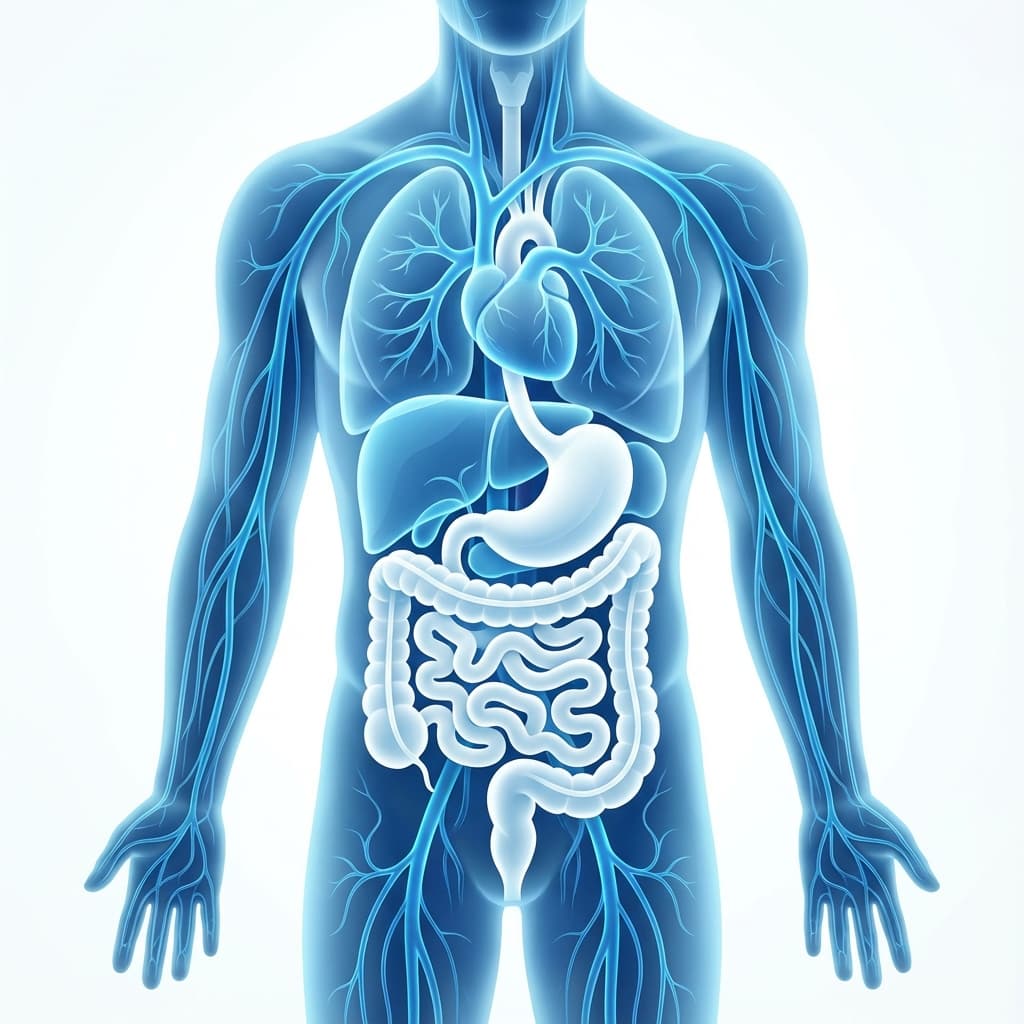
Human Physiology is the most critical unit in NEET Biology, carrying a weightage of 40-48 marks (10-12 questions). It is conceptually deep, interesting, and highly scoring if you understand the mechanisms. This guide breaks down every chapter, highlighting key topics, diagrams, and study strategies.
Unit Overview
Total Chapters: 7
- Digestion and Absorption
- Breathing and Exchange of Gases
- Body Fluids and Circulation
- Excretory Products and their Elimination
- Locomotion and Movement
- Neural Control and Coordination
- Chemical Coordination and Integration
Target Score: 100% accuracy (40+/40 marks)
Chapter 1: Digestion and Absorption
Key Topics:
- Alimentary Canal: Histology of gut wall (Serosa, Muscularis, Sub-mucosa, Mucosa).
- Digestive Glands: Liver (structure, functions), Pancreas, Salivary glands.
- Physiology of Digestion: Action of enzymes (Pepsin, Trypsin, Lipase, Amylase) in different parts.
- Absorption: Mechanisms (Active, Passive, Facilitated) for Glucose, Amino acids, Fats (Micelles & Chylomicrons).
- Disorders: Jaundice, Vomiting, Diarrhea, Constipation, Indigestion.
Topper's Tip:
Focus on the enzyme substrate-product table. Remember the pH values for each enzyme's optimal activity. Don't forget the dental formula!
Chapter 2: Breathing and Exchange of Gases
Key Topics:
- Respiratory Organs: Mechanism of breathing (Inspiration & Expiration).
- Respiratory Volumes & Capacities: Tidal Volume, IRV, ERV, Residual Volume, Vital Capacity (Numerical questions possible).
- Exchange of Gases: Partial pressures (pO2, pCO2) in alveoli vs. tissues.
- Transport of Gases:
- Oxygen dissociation curve (Factors shifting it left/right).
- Transport of CO2 (Bicarbonate, Carbamino-haemoglobin).
- Regulation of Respiration: Respiratory rhythm center, Pneumotaxic center.
- Disorders: Asthma, Emphysema, Occupational Respiratory Disorders.
Topper's Tip:
Master the Oxygen Dissociation Curve. Understand how pH, Temperature, and pCO2 affect the binding of O2 with Hemoglobin.
Chapter 3: Body Fluids and Circulation
Key Topics:
- Blood: Composition (Plasma, Formed elements), Blood Groups (ABO, Rh).
- Heart: Structure, Cardiac Cycle (0.8 sec breakdown), Double Circulation.
- ECG: P-wave, QRS complex, T-wave significance.
- Blood Vessels: Arteries vs. Veins vs. Capillaries.
- Regulation: Neural and Hormonal control.
- Disorders: Hypertension, CAD, Angina, Heart Failure.
Topper's Tip:
ECG is a hot topic. Know what each wave represents and what their deviation indicates. Also, understand the difference between Systole and Diastole clearly.
Chapter 4: Excretory Products and their Elimination
Key Topics:
- Nitrogenous Wastes: Ammonotelism, Ureotelism, Uricotelism.
- Human Excretory System: Kidney structure, Nephron (Cortical vs. Juxtamedullary).
- Urine Formation: Ultrafiltration, Reabsorption, Secretion.
- Counter-Current Mechanism: Henle's Loop & Vasa Recta (Concentration of urine).
- Regulation: RAAS mechanism (Renin-Angiotensin-Aldosterone), ADH, ANF.
- Disorders: Uremia, Renal Calculi, Glomerulonephritis.
Topper's Tip:
The Counter-Current Mechanism is tricky but important. Visualize the movement of NaCl and Water in the loop of Henle.
Chapter 5: Locomotion and Movement
Key Topics:
- Muscles: Types, Structure of Contractile Proteins (Actin, Myosin).
- Mechanism of Contraction: Sliding Filament Theory (Role of Calcium and ATP).
- Skeletal System: Axial vs. Appendicular Skeleton (Bone count).
- Joints: Fibrous, Cartilaginous, Synovial (Ball & Socket, Hinge, Pivot, Gliding, Saddle).
- Disorders: Myasthenia gravis, Tetany, Muscular dystrophy, Arthritis, Osteoporosis, Gout.
Topper's Tip:
Memorize the types of joints with examples. This is a frequent matching-type question.
Chapter 6: Neural Control and Coordination
Key Topics:
- Neuron: Structure, Generation and Conduction of Nerve Impulse (Resting potential, Action potential).
- Synapse: Electrical vs. Chemical transmission.
- CNS: Brain parts (Forebrain, Midbrain, Hindbrain) and their functions.
- Reflex Action: Reflex arc.
- Sensory Organs:
- Eye: Structure, Mechanism of Vision.
- Ear: Structure, Mechanism of Hearing and Balance (Vestibular apparatus).
Topper's Tip:
Nerve Impulse conduction (Na+/K+ pump) is conceptual. For Eye and Ear, focus on the labeling of diagrams and functions of specific parts like Cochlea and Retina.
Chapter 7: Chemical Coordination and Integration
Key Topics:
- Endocrine Glands: Hypothalamus, Pituitary, Pineal, Thyroid, Parathyroid, Thymus, Adrenal, Pancreas, Gonads.
- Hormones: Chemical nature, Functions, Target organs.
- Mechanism of Hormone Action: Membrane-bound receptors vs. Intracellular receptors (Second messengers).
- Disorders: Gigantism, Dwarfism, Acromegaly, Goiter, Diabetes, Addison's disease, Cushing's syndrome.
Topper's Tip:
Create a Master Table with columns: Gland | Hormone | Function | Disorder (Hyper/Hypo). This is the best way to revise this chapter.
Important Diagrams to Master
NCERT diagrams are often asked directly. Practice these:
- Digestive System: Liver and Pancreas duct system.
- Respiratory System: Alveoli exchange site.
- Heart: Sectional view, ECG graph.
- Nephron: Parts and functions.
- Sarcomere: Relaxed vs. Contracted state.
- Brain: Sagittal section.
- Eye & Ear: Detailed structure.
3-Step Strategy to Master Human Physiology
Step 1: NCERT Reading (The Bible)
Read every line of NCERT. Pay attention to "Summary" and "Introduction" paragraphs too. Do not skip the disorders section at the end of each chapter.
Step 2: Concept Clarity
Physiology is about mechanisms. Don't just rote learn. Understand how urine is concentrated, how a muscle contracts, how a nerve impulse travels. Watch animations if needed.
Step 3: MCQ Practice
Solve at least 100 MCQs per chapter.
- 50% NCERT-based direct questions.
- 30% Statement-based/Assertion-Reason questions.
- 20% Previous Year Questions (PYQs).
Common Mistakes to Avoid
- Confusing terms: e.g., Renin (enzyme) vs. Rennin (digestive enzyme).
- Ignoring values: e.g., Tidal volume (500ml), GFR (125 ml/min).
- Skipping diagrams: Many questions are image-based.
- Over-studying: Don't go too deep into MBBS-level physiology. Stick to NCERT + PYQ level.
Conclusion
Human Physiology is the heart of NEET Biology. It connects you to your future profession. Study it with interest and curiosity. If you master this unit, you have 48 marks in your pocket!
Keep revising and stay hydrated!
Frequently Asked Questions
Common questions about this topic.
On average, 10-12 questions (40-48 marks) come from Human Physiology every year, making it the highest weightage chapter in Biology.
Yes, NCERT is more than enough. Read it 3-4 times, focus on diagrams, and solve PYQs. 95% of questions are directly from NCERT.
Neural Control and Coordination is considered challenging due to the mechanism of nerve impulse transmission. However, with proper diagram practice and understanding of ion movements, it becomes manageable.
Use mnemonics and create a master table. Group hormones by gland (Pituitary, Thyroid, Adrenal, Pancreas) and revise daily. Flashcards work great for this.